Water Resistant Lace Button Badge Suppliers and Manufacturers
Explore 19 verified options for Water Resistant Lace Button Badge from China Sichuan and Zhejiang. Compare response times, lead times, certifications, and prices to find suitable partners. Contact suppliers directly to request samples and confirm customization details; review the available evidence before requesting comparable quotations from suitable candidates.
Suppliers List
Meishan Shunjieru Arts & Crafts Co., Ltd.
- Verified by SGS
- Trading Company
- China Sichuan
- Lead time15 days
- Avg. response≤ 2h
Main productsBadge Coin Emblem Medal
Main marketsSoutheast Asia/ Mideast,Europe,Australia,North America

- Trading Company,Manufacturer/Factory
- China Zhejiang
- Lead time23 days
- Avg. response≤ 8h
Main productsKeychain, Patch, Paper Air Freshener, Car Perfume Bottle, Stickers, Badge, Packaging Box, Air Freshener Bottle
Main marketsSouth America,Eastern Europe,Mid East,North America,Southeast Asia,Eastern Asia,Western Europe

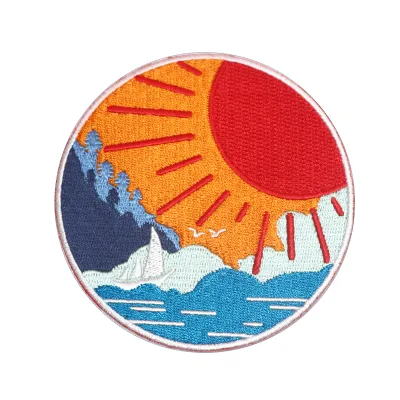
Factory Made Embroidery Button Pin Badge for Promotion, Embroidery Button Badge
$0.10 - $0.21
MOQ: 3000 Pieces


Custom Promotional Metal Pin Tin Badge, Button Badge for Promotional Gifts
$0.11 - $0.18
MOQ: 1000 Pieces


Promotional Tin Button Badge with Safety Pin, Pin Badge for Promotional Gifts
$0.04 - $0.18
MOQ: 1000 Pieces


Golden One (Jiangmen) Gifts Co., Limited
- Verified by TUVRHEINLAND
- Combined
- China Guangdong
- Lead time15 days
- Avg. response≤ 3h
Main productsKey Chain, Pins, Coin, Keyring, Medals, Bottle Opener, Badge, Lanyards, Promotional Gifts, Souvenir
Main marketsEurope

- Verified by BV
- Combined
- China Guangdong
- Lead time15 days
- Avg. response≤ 6h
Main productsSouvenir Badge, Lanyard, Keychain, Medal, Challenge Coin, Silicone Wristband, Fabric Bracelet, Dog Tag, Trolley Token Coin, Tin Button
Main marketsSouth America,Africa,Southeast Asia/ Mideast,East Asia(Japan/ South Korea),Europe,Australia,North America

Zhongshan Artigifts Premium Metal & Plastic Co., Ltd.
- Verified by BV
- Combined
- China Guangdong
- Lead time15 days
- Avg. response≤ 3h
Main productsPin, Key Chain, Label, Coin, Lanyard, Purse Hanger, PVC Key Holder, Button Badge, Trolley Coin, Medal
Main marketsSouth America,Africa,Others(foreignTradeCapacity.exportBusinessCapacityMarketOther),Southeast Asia/ Mideast,East Asia(Japan/ South Korea),Europe,Australia,North America
Shenzhen Yanlsle Cultural and Creative Technology Co., Ltd.
- Verified by SGS
- Trading Company
- China Guangdong
- Lead time15 days
- Avg. response≤ 9h
Main productsBrooch/Coin/Badge/Medal/Pin/Keychain
Main marketsDomestic

Zhongshan Keychain Gifts & Crafts Co., Ltd.
- Combined
- China Guangdong
- Lead time15 days
- Avg. response≤ 6h
Main productsKey Ring, Key Chain, Metal Key Chain, Bag Hanger, Compact Mirror, Medal, Key Chain with Bottle Opener, Promotional Gift, Souvenir, Badge
Main marketsSouth America,Europe,Australia,North America

Zhongshan Leon crafts and gifts Co., Ltd.
- Verified by SGS
- Trading Company,Manufacturer/Factory
- China Guangdong
- Lead time23 days
- Avg. response≤ 7h
Main productsMetal Pin Badge, Wallet Badge, Sports Medal, Honor Medal, Belt & Buckle, Challenge Coins, Fridge Magnet, Different Kind of Security Products, Keychain, Embroidery Patch
Main marketsSouth America,Eastern Europe,Mid East,North America,Southeast Asia,Eastern Asia,Oceania,Western Europe,Africa

Zhongshan Xinyihong Metal Craft Products Factory
- Verified by TUVRHEINLAND
- Combined
- China Guangdong
- Lead time15 days
- Avg. response≤ 2h
Main productsBadge, Lape Pin, Coin, Medal, Key Chain, Cufflink, Tie Clip, Bottle Opener, Golf Divolt, Name Plate
Main marketsNorth America
Zhongshan Hugo Way Gift Co., Ltd.
- Verified by SGS Group
- Trading Company
- Lead time20 days
- Avg. response≤ 2h
Main productsMetal Lapel Pin, Metal Medal, Metal Keychain, Custom Coin, Metal Dog Tag
Main marketsNorth America(57%), Eastern Europe(16%), Western Europe(10%)

Wenzhou Quanfeng Garment Accessories Co., Ltd.
- Trading Company,Manufacturer/Factory
- China Zhejiang
- Lead time23 days
- Avg. response≤ 9h
Main productsLabel Printing Material, Polyester Satin, Seal Tag, Rubber Label, Plastic Seal Tag, Woven Label, Label Ribbon, TTR Ribbon, Woven Edge Satin Ribbon, Cotton Tape
Main marketsSouth America,Eastern Europe,Mid East,North America,Southeast Asia,Eastern Asia,Oceania,Western Europe,Africa
Foshan Jinyusheng Printing Co., Ltd.
- Manufacturer
- Guangdong, China
- Lead time15 days
- Avg. response≤ 2h
Main productsPatchs Velcroes Patches Label,Badges,Plastic Bags,Garment Tags,Paper Bags
Main marketsNorth America(45.00%), South America(15.00%), Western Europe(10.00%), Eastern Europe(10.00%), South Asia(5.00%), Northern Europe(5.00%), Southeast Asia(5.00%), Africa(5.00%)
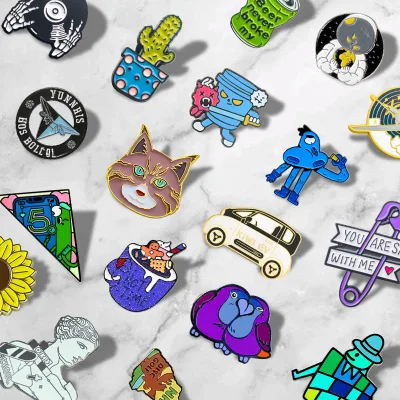
$0.12 - $0.25
MOQ: 100 pieces
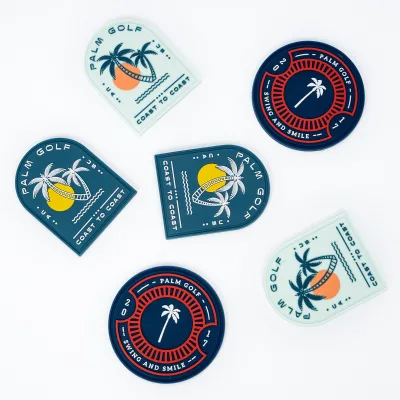
New Product Wholesale Button Badge Elegant Promotion Badges Silicone Thermal Transfer for Decoration
$0.08 - $0.15
MOQ: 100 pieces
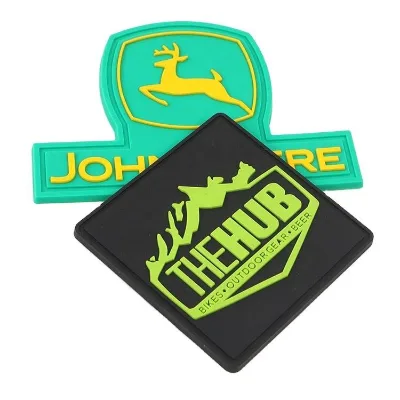
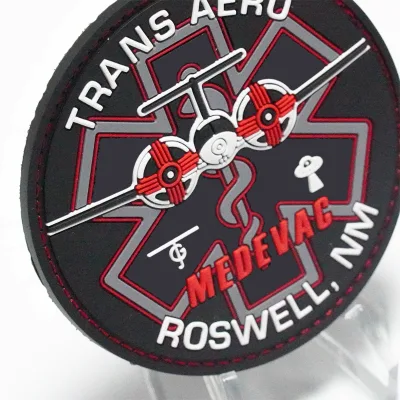
Professional Manufacturer 3D/2D Gifts Badges School Geometric Badge Button for School Uniform
$0.08 - $0.15
MOQ: 100 pieces
Zhejiang Shizan Arts And Crafts Co., Ltd.
- Manufacturer, Trading Company
- Lead time旺季: "1 - 10000":5,"> 10000":"To be negotiated", 淡季: "1 - 10000":5,"> 10000":"To be negotiated"
- Avg. response≤ 3h
Main productsAcrylic craft and keychain, Sticker, Notebook, Cotton Doll, Metal gift and craft
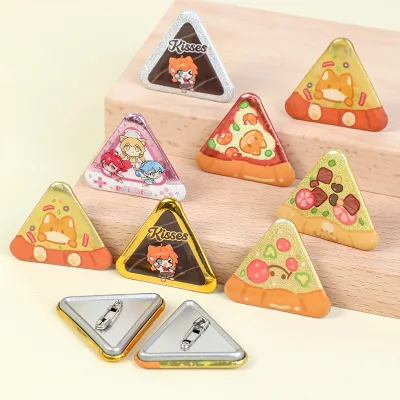
Custom Triangle Glitter Button Pins
$0.14 - $0.50

Dongguan Jing Hong Metal Zipper Co., Ltd.
- Verified by TUVRHEINLAND
- Combined
- China Guangdong
- Lead time15 days
- Avg. response≤ 19h
Main productsMetal Plate, Label, Snap Hook, Keychain, Buckle, Bottle Opener, Dog Tag, Bag Hanger, Jewelry, Zipper Puller
Main marketsDomestic


MOQ: 500 Pieces
Hangzhou Yijinhui Network Technology Co., Ltd.
- Trading Company
- Zhejiang, China
- Lead time0 days
- Avg. response≤ 1h
Main productsButtons, Zippers, Metal Jewelry, Rhinestones, Fabrics
Main marketsNorth America(50.00%)
Wenzhou Guda Technology Co., Ltd.
- Verified by BV
- Combined
- China Zhejiang
- Lead time30 days
- Avg. response≤ 5h
Main marketsEurope


Custom Logo 2D&3D Waterproof Cute Cartoon Soft PVC Rubber Lapel Pin Badge
$0.20 - $0.45
MOQ: 500 Pieces
Zhongshan Lixin Crafts Co.,Ltd.
- Verified by BV
- Combined
- China Guangdong
- Lead time15 days
- Avg. response≤ 2h
Main productsPatch, Sports Event Medal, Enamel Pin, Custom Keychain, Challenge Coin, Fridge Magnet
Main marketsDomestic

- Verified by TUVRHEINLAND
- Trading Company,Manufacturer/Factory
- China Zhejiang
- Lead time23 days
- Avg. response≤ 6h
Main productsGarment Accessories, Zipper, Button, Lace Trim, Metal Zipper, Nylon Zipper, Plastic Zipper, Metal Button, Snap Button, Cotton Lace
Main marketsNorth America,Africa
Shenzhen Awells Gift Co., Ltd.
- Verified by SGS
- Combined
- China Guangdong
- Lead time15 days
- Avg. response≤ 1h
Main productsEmbroidery Patch, PVC Patch, Woven Patch, Chenille Patch, Embroidery Keychain, Woven Keychain, PVC Keychain, Lanyard, Lapel Pin, Cap
Main marketsSoutheast Asia/ Mideast,Europe,Australia,North America






Comprehensive Sourcing Guide
Water Resistant Lace Button Badge Supplier Concentration and Factory Types
The current supplier landscape for water resistant lace button badges reveals a concentration of manufacturing and trading entities primarily located in China, with specific clusters identified in Sichuan and Zhejiang provinces. Suppliers in Sichuan are explicitly noted as trading companies specializing in metal badges, coins, and emblems, while those in Zhejiang operate as a hybrid of trading companies and manufacturers offering a broader range of products including keychains, patches, and air fresheners alongside badges. This geographic distribution suggests that buyers seeking lace button badges must navigate a market where the core competency often lies in metal crafting and enamel techniques rather than textile-specific lace integration, requiring careful verification of material capabilities.
Factory types vary significantly between pure trading firms and those claiming manufacturing capacity, which directly impacts the ability to customize complex features like lace integration. The observed data indicates that some suppliers possess OEM and ODM capabilities, allowing for design modifications, while others function strictly as intermediaries sourcing from external factories. Buyers should prioritize suppliers who explicitly list "Manufacturer/Factory" alongside their trading status, as this often correlates with better control over production timelines and quality standards. However, the absence of specific establishment years in the provided facts means buyers cannot rely on tenure as a primary filter and must instead focus on the tangible evidence of their product lines and technical specifications to determine if a supplier can genuinely deliver water-resistant lace components.
How to Verify Water Resistant Lace Button Badge Suppliers
Verification of supplier credibility for water resistant lace button badges relies heavily on cross-referencing third-party audit results and specific product attributes rather than general company descriptions. The available data highlights that some suppliers hold SGS verification status, which serves as a critical indicator of operational legitimacy and quality control adherence. Buyers should explicitly request to see the current SGS report or similar third-party audit documents to confirm that the supplier's claims regarding their manufacturing processes and product safety are accurate. Without such verification, the risk of engaging with a non-compliant entity increases, as the absence of system certifications like ISO 9000 or BSCI in certain profiles suggests a potential gap in standardized quality management systems.
Beyond external audits, buyers must scrutinize the detailed product attributes provided in supplier listings to ensure the specific "water resistant" and "lace" requirements are met. The observed product evidence shows a heavy emphasis on metal, enamel, and pin-based badges, with attributes like "Material: Metal" and "Technics: Enamel" being prevalent. This suggests that a supplier claiming to offer lace button badges must demonstrate a clear deviation from standard metal-only production or possess a specialized sub-line for textile-metal hybrids. Buyers should verify if the supplier's product descriptions explicitly mention lace materials, waterproof coatings, or specific testing results for water resistance, as the default product evidence often defaults to standard metal badges without these specialized features.
What to Compare Across Water Resistant Lace Button Badge Suppliers
When evaluating potential partners, buyers must compare key operational metrics such as lead times, minimum order quantities, and response speeds to ensure alignment with project requirements. The data shows a wide variance in lead times, ranging from 15 days for some metal badge producers to 23 days for others, while response times fluctuate between 1.46 and 7.56 hours. These differences are critical for supply chain planning, as a supplier with a 23-day lead time may not be suitable for urgent promotional campaigns compared to one offering 15-day production cycles. Additionally, minimum order quantities (MOQ) vary significantly, with some suppliers requiring as few as 5 units while others demand 3,000 units, necessitating a clear assessment of the buyer's volume needs before initiating contact.
Price structures and payment terms also require rigorous comparison to avoid unexpected costs and financial risks. The observed price ranges for similar badge products span from $0.10 to $2.00 per unit, depending on the complexity of the design, material, and plating options. Buyers should not assume that lower prices equate to better value, especially when specialized features like water resistance and lace integration are involved, as these may incur hidden costs not reflected in the base price. Furthermore, payment methods vary from standard T/T and PayPal to more complex options like L/C and credit cards, and buyers must verify which terms are acceptable for their specific transaction size and risk tolerance before finalizing any agreements.
Common Water Resistant Lace Button Badge Sourcing Risks
One of the primary risks in sourcing water resistant lace button badges is the potential mismatch between the advertised product capabilities and the actual manufacturing output. The current supplier data heavily features metal, enamel, and pin-based products, with limited explicit evidence of lace integration or water-resistant textile treatments. This discrepancy creates a risk that a supplier may claim to offer the desired product but ultimately deliver a standard metal badge that lacks the specific aesthetic or functional requirements of a lace button. Buyers must mitigate this by requesting physical samples that explicitly demonstrate the water resistance and lace composition before committing to large-scale orders.
Another significant risk involves the lack of standardized certifications and the variability in quality control measures across different supplier types. While some suppliers display SGS verification, others show "NIL" for system certifications, indicating a potential lack of adherence to international quality standards. This inconsistency can lead to batch failures, where a portion of the order does not meet the water resistance or durability expectations. Additionally, the absence of specific establishment years in the data makes it difficult to assess the supplier's long-term stability and experience with complex customizations, increasing the likelihood of communication breakdowns or production delays that could disrupt the buyer's supply chain.
Water Resistant Lace Button Badge Regional Sourcing and Logistics
Sourcing from the identified regions of Sichuan and Zhejiang in China offers distinct logistical advantages and challenges that buyers must account for in their planning. Suppliers in Sichuan are noted as trading companies focused on metal badges, while those in Zhejiang operate as a mix of manufacturers and traders with broader product portfolios. The geographic concentration in these provinces suggests that logistics networks are well-established, yet the specific shipping methods available, such as sea, air, or courier services like DHL and FedEx, vary by supplier. Buyers should verify the specific shipping capabilities of each supplier to ensure they can meet the delivery deadlines required for their market, as the lead times observed range from 15 to 23 days before shipment even begins.
Logistics planning must also consider the packaging standards and the potential for damage during transit, particularly for delicate items like lace button badges. The product evidence indicates that suppliers typically use bubble bags, plastic, or velvet boxes for packaging, which provides a baseline level of protection. However, for water-resistant products, the packaging must also ensure that the moisture-resistant properties are not compromised during shipping. Buyers should confirm that the supplier's packaging protocols include moisture barriers or desiccants if the product is sensitive to humidity, and verify that the chosen shipping method aligns with the product's fragility and the urgency of the delivery schedule to prevent costly delays or damage.
Water Resistant Lace Button Badge Commercial Terms and Order Planning
Commercial terms for water resistant lace button badges vary significantly in terms of payment flexibility and sample policies, requiring careful negotiation to align with buyer needs. The observed data shows that suppliers accept a range of payment methods including T/T, PayPal, Western Union, L/C, and credit cards, offering buyers multiple options to manage cash flow and risk. Some suppliers even offer free samples, which is a valuable opportunity to verify product quality and specifications before placing a bulk order. However, buyers must clarify the cost structure for these samples, including shipping fees, and ensure that the sample approval process is clearly defined to avoid misunderstandings regarding the final product specifications.
Order planning must also account for the specific customization requirements and the associated production timelines to ensure timely delivery. The product attributes indicate that customization is widely available, with options for different logos, plating, and designs, but the production time for these customizations can extend the lead time beyond the standard 15 to 23 days. Buyers should plan for a buffer period to accommodate the sampling phase, which typically takes 7 to 10 days, followed by the production phase of 12 to 15 days. Additionally, the MOQ requirements, which can range from 5 to 3,000 units, must be factored into the financial planning to ensure that the order volume is economically viable and meets the supplier's minimum thresholds for production.
FAQs
What is the price range for metal button badges?
Metal button badges typically range from 0.10 to 2.00 USD per unit depending on the specific design and customization level. Some enamel options start at 0.15 USD while magnetic variants may reach 2.00 USD. Prices vary based on material quality and order volume.
What are the minimum order quantities for badges?
Minimum order quantities vary significantly by product type. Custom metal badges often require a minimum of 5 units, whereas embroidered promotional badges usually demand a much larger order of 3000 units. Buyers should check specific product listings to confirm the exact MOQ required.
How long does production take for custom badges?
Production lead times generally range from 12 to 23 days depending on the supplier and order complexity. Sampling typically takes 7 to 10 days, while full production runs can extend up to 15 days for standard items or 23 days for more complex manufacturing requirements.
Where are these badge manufacturers located?
Manufacturers for these badges are primarily located in China, specifically in the Sichuan and Zhejiang provinces. These regions host both trading companies and manufacturers capable of producing metal, enamel, and embroidered badge varieties for international buyers seeking cost-effective sourcing solutions.
What certifications do the badge suppliers hold?
Certification status varies among suppliers, with some holding BSCI, ISO 9000, and ISO 14001 standards. Others may have no listed system certifications but possess SGS verification. Buyers should verify specific supplier credentials before placing large orders to ensure compliance with their quality standards.
What customization options are available for badges?
Customization is widely available including logo printing, specific sizes, and various plating options like gold or silver. Techniques range from enamel and embroidery to laser engraving. Buyers can request custom colors, shapes, and packaging to match their specific branding or promotional needs effectively.
How quickly do suppliers respond to inquiries?
Supplier response times vary, with some responding within 1.46 hours and others taking up to 7.56 hours. Faster response times are often associated with trading companies, while manufacturers might have slightly longer intervals. Buyers should expect varying levels of communication speed based on the supplier type.