Source 1U Enterprise Level Server with Liquid Cooling for AI, HPC, and Data Centers
Compare 30 listings of 1U Enterprise Level Server with Liquid Cooling designed for high-density computing. Buyers can evaluate specifications including cooling systems, processor types, and memory capacity across multiple suppliers.
Key considerations
Products List


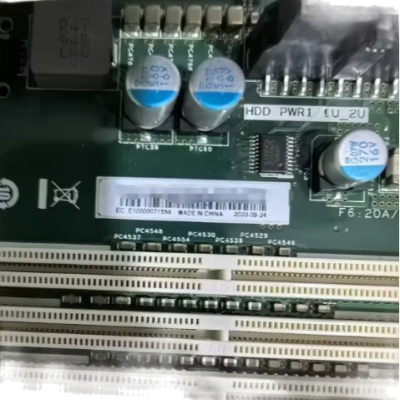


Robust Dl580g12 4u Rack Server with Intel Xeon 6 Processors 3-Year Warranty
$12999.00 - $99999.00
MOQ: 1 Pieces

Premium Dl580g12 4u Rack Server with Intel Xeon 6 Processors and Hpe
$12999.00 - $99999.00
MOQ: 1 Pieces


High-Performance 24/7 Rack Server with Intelligent Remote Management
$3999.00 - $7999.00
MOQ: 1 Pieces


R750 Server - Poweredge R750 Server 2u Rack Server for Enterprise Storage
$1000.00 - $2000.00
MOQ: 1 Sets
Comprehensive Sourcing Guide
Strategic Sourcing Guide for 1U Enterprise Liquid-Cooled Servers
The procurement of 1U enterprise-level servers with liquid cooling represents a specialized segment of the data center infrastructure market, driven by the need for high-density computing and thermal efficiency. Buyers entering this space must navigate a complex landscape where standard air-cooling architectures are replaced by closed-loop liquid systems to manage the intense heat generated by high-performance processors. This guide synthesizes available product attributes and industry standards to provide a disciplined framework for sourcing, evaluating, and acquiring these high-performance units. The focus remains on verifying technical specifications, ensuring compliance, and understanding the cost drivers inherent in liquid-cooled enterprise hardware.
Technical Architecture and Cooling System Specifications
The fundamental distinction of a liquid-cooled 1U server lies in its thermal management architecture. Unlike traditional air-cooled units that rely on fans and heatsinks, these systems utilize a closed-loop mechanism to transfer heat directly from the processor and other critical components to a liquid coolant. The observed product data indicates that the system type is explicitly defined as a "Closed System," which is a critical safety and efficiency feature. This design minimizes the risk of leaks and ensures that the coolant circulates within a sealed environment, often utilizing a plate heat exchanger to transfer thermal energy to a secondary cooling loop or external chiller.
In terms of component configuration, the target hardware often features a "Double-speed fan" auxiliary system, which may be used for specific subsystems or as a backup, though the primary cooling is liquid-based. The power supply units are typically rated for high efficiency, with observed specifications noting power inputs of 400/3n/50Hz/60Hz, indicating compatibility with global power grids. For high-density applications, the cooling capacity is substantial, with some configurations supporting up to 600 Kw of thermal load, although this figure likely represents the total system capacity rather than a single 1U unit. The physical dimensions are constrained by the 1U form factor, with observed standards listing widths around 447mm and heights of 87mm, though exact depth can vary based on the specific model and internal component layout.
Buyers must verify the specific coolant distribution unit (CDU) integration. The product attributes mention a "Coolant Distribution Unit Cdu" as a distinct product name, suggesting that the server may be sold as part of a larger ecosystem or requires a dedicated CDU for operation. The material composition of the chassis and internal cooling loops is critical for corrosion resistance and durability, with stainless steel grades SS304 and SS316L being the observed standards. These materials ensure longevity in humid or chemically active data center environments.
Compliance, Certification, and Regulatory Standards
When sourcing enterprise-grade liquid-cooled servers, compliance with international safety and quality certifications is non-negotiable. The available data confirms that products in this category often carry ISO and CE certifications. The ISO certification generally indicates adherence to international quality management standards, while the CE mark signifies conformity with health, safety, and environmental protection standards for products sold within the European Economic Area. Buyers must request valid, current certificates for these specific standards before finalizing any purchase, as counterfeit or expired documentation is a risk in the global supply chain.
Beyond general certifications, specific industry standards for data center equipment must be verified. The product data references a standard weight of 811kg and 447mm(W)*87mm(H)*720mm(D) for certain configurations, which serves as a benchmark for physical verification. However, these figures likely represent a rack or a specific high-density unit rather than a single 1U server, as a single 1U unit typically weighs significantly less. Buyers should verify the actual weight and dimensions of the specific 1U model against the supplier's technical datasheet to ensure compatibility with existing rack infrastructure.
Additionally, the operating environment must align with the product's thermal and electrical standards. The systems are designed for "Enterprise Level" applications, implying they must meet rigorous uptime and reliability standards. The power supply redundancy is a key compliance feature, with observed specifications noting support for redundant power supplies and a minimum power rating of 550W. This redundancy is essential for maintaining continuous operation in critical enterprise environments. Buyers should also confirm that the cooling system meets local fire safety codes, as liquid cooling introduces unique fire suppression considerations compared to air-cooled systems.
Cost Drivers and Procurement Economics
The cost structure of 1U liquid-cooled servers is influenced by several unique factors beyond the base hardware price. The primary cost driver is the complexity of the cooling technology itself. The integration of a plate heat exchanger, variable frequency water pumps, and specialized coolant distribution units adds significant manufacturing and engineering costs. The observed price range in the market spans from $0.12 to $99,999, a vast disparity that reflects the difference between individual components, accessories, and fully configured high-end server systems. Buyers must be cautious when interpreting low-end prices, as these often refer to small parts or accessories rather than the complete server unit.
Another significant cost factor is the customization availability. The product attributes confirm that customization is available, which allows buyers to tailor the server to specific workloads. However, custom configurations typically incur higher unit costs and longer lead times compared to standard off-the-shelf models. The minimum order quantity (MOQ) also plays a role in the total cost of ownership, with observed ranges spanning from 1 to 215,000 units. Small orders may attract a premium per unit, while bulk purchases can leverage economies of scale, though the high MOQs for some configurations may require significant capital commitment.
Shipping and packaging costs are also relevant, with observed specifications mentioning "Export Packaging" and "Cartons." Given the sensitivity of liquid cooling systems to vibration and impact, specialized packaging is essential, which adds to the logistics cost. Furthermore, the origin of the product, often listed as Shanghai, China, influences shipping times and tariffs. Buyers should factor in the total landed cost, including duties and freight, when comparing suppliers. The long-term operational costs, such as the energy efficiency of the variable frequency water pump and the maintenance of the cooling loop, should also be calculated to determine the true cost of ownership.
Typical Applications and Performance Requirements
1U enterprise-level servers with liquid cooling are primarily deployed in high-performance computing (HPC) environments, artificial intelligence (AI) training clusters, and large-scale data centers where thermal density is a limiting factor. The observed processor types, such as Intel Xeon, and the support for up to 1TB of memory or higher, indicate that these systems are designed for demanding computational tasks. The system architecture is typically X86-based, ensuring compatibility with a wide range of enterprise software and operating systems, including Windows Server.
The specific application profile often dictates the required specifications. For instance, the "Server Type" is listed as "Rack," and the "Workstation Type" as "Desktop Workstation," suggesting that these units can be part of a broader infrastructure that includes both server racks and high-performance workstations. The storage capacity, ranging from 500GB to 1TB or more, and the hard disk slots (observed as 8 3.5-inch pieces in some configurations), support large-scale data processing and storage needs. The RAID configuration, with 1G Cache or above, ensures data integrity and performance for mission-critical applications.
In addition to HPC and AI, these servers are suitable for financial modeling, scientific simulations, and cloud computing services where high throughput and low latency are paramount. The "Low" noise level observed in the product attributes is a significant advantage for data centers located in urban environments or where noise regulations are strict. The ability to support multiple CPUs and high memory capacity makes these units ideal for virtualization environments where resource consolidation is key. Buyers should align their specific workload requirements with the observed specifications, such as the number of CPU threads and the type of network cards (e.g., 4 Port Gigabit Network Card), to ensure optimal performance.
Supplier Evaluation and Quality Assurance
Evaluating suppliers for liquid-cooled servers requires a rigorous due diligence process. The origin of the product is a critical factor, with Shanghai, China, being a common manufacturing hub. Buyers should verify the supplier's manufacturing capabilities, quality control processes, and track record in delivering complex liquid-cooling solutions. The availability of "New" condition products is standard, but buyers must ensure that the units are not refurbished or reconditioned unless explicitly stated and priced accordingly.
Quality control should focus on the integrity of the cooling system. Buyers must request test results or certification of the leak-free operation of the closed system. The use of SS304 and SS316L materials should be verified through material certificates to ensure corrosion resistance. The integration of the variable frequency water pump and the plate heat exchanger should be tested for efficiency and reliability under load. Additionally, the packaging standards, such as "Export Packaging," should be inspected to ensure that the units are protected during transit.
Suppliers should also demonstrate their ability to provide technical support and maintenance services. The complexity of liquid cooling systems requires specialized knowledge for installation and troubleshooting. Buyers should inquire about the availability of spare parts, such as coolant distribution units and pumps, and the supplier's response time for technical issues. The observed specifications, such as the model numbers SHSL-100W, 5280M5, and SR658, should be cross-referenced with the supplier's official product catalog to ensure authenticity and compatibility.
Long-Term Procurement and Lifecycle Management
Procuring 1U liquid-cooled servers is not just a one-time transaction but a long-term commitment that involves lifecycle management. The initial investment must be weighed against the long-term benefits of energy efficiency and thermal management. The "Low" noise level and the efficiency of the variable frequency water pump contribute to lower operational costs over time. However, the maintenance of the cooling loop, including coolant replacement and system checks, adds to the ongoing operational expenses.
Buyers should consider the scalability of the solution. As data center needs evolve, the ability to add more units or upgrade existing ones is crucial. The observed specifications, such as the support for up to 1TB of memory and the X86 architecture, suggest that these systems are scalable and can be integrated into larger clusters. The "Enterprise Level" application designation implies that the systems are designed for long-term deployment with high reliability.
Finally, buyers should plan for the end-of-life disposal of the equipment. Liquid cooling systems may contain specialized fluids that require proper disposal in accordance with environmental regulations. The supplier should provide guidance on the decommissioning process and the recycling of materials. By considering these long-term factors, buyers can ensure that their investment in 1U liquid-cooled servers delivers sustained value and aligns with their organizational sustainability goals.
FAQs
What certification standards do these servers meet?
These servers typically meet ISO and CE certification standards. Buyers must verify current certificates to ensure compliance with international quality and safety regulations before purchase.
Can the server configuration be customized for specific needs?
Yes, customization is available for these units. This allows buyers to tailor specifications to specific workloads, though custom orders may incur higher costs and longer lead times.
What cooling system type is used in these 1U servers?
The system type is a closed system utilizing a plate heat exchanger. This design ensures coolant circulates within a sealed environment to manage high thermal loads efficiently.
Which materials are used for the chassis and cooling loops?
The materials include SS304 and SS316L stainless steel. These grades provide necessary corrosion resistance and durability for humid or chemically active data center environments.
What is the typical power supply specification for these units?
Power specifications often include 400/3n/50Hz/60Hz compatibility. Redundant power support is also common, ensuring continuous operation with a minimum rating of 550W per unit.
Where are these servers typically manufactured?
The product origin is frequently listed as Shanghai, China. Buyers should factor in shipping times and tariffs associated with this manufacturing hub when calculating total landed costs.