Source 3 in 1 Crossbody Bag for Travel Work and Daily Use
Compare 30 listings of the 3 in 1 Crossbody Bag featuring leather, nylon, and PU materials with options for mixed colors and European styles. Buyers can review customization, packing details, and lead times for bulk orders.
Key considerations
Products List


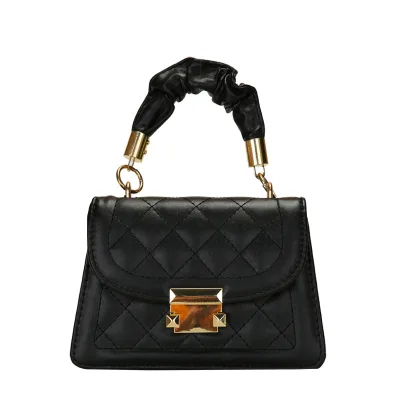


Durable Portable & Crossbody Minimalist Multifunctional Black Should Bag
$10.50 - $13.50
MOQ: 500 Pieces


Comprehensive Sourcing Guide
Strategic Sourcing Guide for 3-in-1 Crossbody Bag Procurement
Defining the Product Category and Functional Versatility
The term "3-in-1 crossbody bag" in the B2B market typically refers to a versatile accessory designed to offer multiple carrying configurations or modular functionality within a single unit. Based on observed market data, this category often encompasses styles such as "One Shoulder Crossbody Handbag" and "Bucket Bag," which can be adapted for various usage scenarios. The core value proposition for buyers lies in the flexibility of the design, allowing a single SKU to serve as a shoulder bag, a crossbody, or potentially a standalone clutch depending on the strap configuration and internal structure.
When sourcing this specific category, procurement teams must first clarify the exact definition of "3-in-1" with potential suppliers. Does the design feature a detachable strap, a removable inner pouch, or a convertible closure mechanism? The observed product attributes indicate a prevalence of "European Style" and "Candy Color" fashion elements, suggesting that the target demographic often includes younger consumers or those seeking trendy, multi-functional accessories. The "Popular Style Name" field frequently lists "Handbag" or "Bucket Bag," which are the foundational forms for these convertible designs. Understanding the specific mechanical implementation of the "3-in-1" feature is critical before proceeding to technical specification reviews, as it directly impacts the complexity of the mold or pattern making required.
Technical Specifications and Material Composition
A rigorous evaluation of technical specifications is essential to ensure the product meets durability and aesthetic requirements. The supply chain data reveals a diverse range of materials used in this category, necessitating a clear selection strategy. Common material compositions include "Leather," "PU Leather," and "Nylon." For buyers seeking a premium feel, "PU Leather" is a frequent choice, often paired with "Fabric" or "Polyester" lining. The "Inside Material" and "Lining Material" are distinct attributes; while the exterior may be "PU Leather Bag," the interior often utilizes "Polyester" or "Polyester-Cotton" blends for durability and cost efficiency.
The structural integrity of the bag is defined by its "Hardness," which in observed listings is described as "Medium Soft." This attribute is crucial for crossbody bags, as it affects how the bag sits on the shoulder and its ability to maintain shape when not fully loaded. The "Shoulder Strap Material" is another critical specification, often matching the exterior material (e.g., "PU") to ensure visual consistency. Buyers must verify the exact thickness and tensile strength of the strap material, as crossbody bags endure significant stress during daily use.
Furthermore, the "Closing Method" is a key functional specification. The data highlights "Magnetic Snap" as a common mechanism, which offers ease of access but requires quality control to ensure the magnets do not fail or interfere with electronic devices. For waterproof variants, the attribute "Waterproof" is explicitly noted, contrasting with "Non-Waterproof" options. When sourcing, buyers should request physical samples to test the water resistance claims, as this is a performance claim that varies significantly by material treatment and stitching quality.
Compliance, Certification, and Safety Standards
In the global B2B market, compliance with safety and environmental standards is non-negotiable, particularly for products containing leather, synthetic leather, and fabric linings. While specific certification statuses are not universally listed in the provided product data, buyers must verify that suppliers adhere to relevant international standards for chemical safety, such as REACH in Europe or CPSIA in the United States, especially regarding the "PU Leather" and "Nylon" components.
The "Standard" field in the product data often refers to physical dimensions rather than regulatory compliance. For instance, observed dimensions include "33723cm" and "22716CM." These measurements are vital for logistics and packaging but do not substitute for material safety certifications. Buyers should explicitly request test reports for the "Material Craftsmanship" to ensure that the dyes and adhesives used in the "PU Leather" and "Fabric" lining do not contain prohibited substances.
Additionally, the "Place of Origin" is listed as "China," with specific regions like "Hebei" and "Zhejiang" mentioned. While these are manufacturing hubs, the origin itself does not guarantee compliance. Procurement teams must treat the origin as a logistical fact and demand independent third-party testing for every batch. The "Custom" standard attribute suggests that many suppliers offer bespoke sizing, which further complicates compliance as each custom dimension may require unique material testing to ensure consistency with safety regulations.
Cost Drivers and Pricing Dynamics
The pricing structure for 3-in-1 crossbody bags is influenced by several variable factors, including material selection, customization levels, and order volume. The observed price range in the market spans from $1.02 to $65 USD, indicating a wide disparity in quality and positioning. This broad range suggests that the lower end of the spectrum likely corresponds to basic "Nylon" or simple "PU Leather" models with standard "Carton" or "PE Bag" packing, while the higher end reflects premium "Leather" materials, complex "Custom" designs, and enhanced "Waterproof" treatments.
The "MOQ" (Minimum Order Quantity) is a significant cost driver, with observed values ranging from 1 to 500 units. However, specific product attributes list an MOQ of "100 PCS" for certain configurations. Buyers must balance the desire for lower unit costs against the risk of overstocking. The "Customization" attribute is available, which typically incurs additional setup fees and higher MOQs. The "Printing" attribute, listed as "Custom," further adds to the cost structure, as custom logos or patterns require screen printing or digital printing setups.
Payment terms also impact the financial planning of the procurement process. The standard term observed is "30% Deposit, 70% Balance Pay Before Shipping." This structure requires buyers to have sufficient working capital to cover the initial deposit. The "Sample Time" of "7 Days" and "Bulk Time" of "15-20 Days" are critical for cash flow management. Delays in sample approval can extend the lead time, potentially pushing the bulk production start date and affecting the overall cost due to expedited shipping requirements if the launch date is fixed.
Supplier Evaluation and Operational Capabilities
Evaluating suppliers for 3-in-1 crossbody bags requires a deep dive into their operational capabilities beyond just the product catalog. The "Product name" and "Model Number" fields (e.g., "W20241230-03", "B999000153") indicate a high volume of SKUs, suggesting that capable suppliers have robust inventory management and design teams. Buyers should assess whether the supplier can handle the "Custom" aspect of the product, including the "Fashion Element" of "Candy Color" and the "Style Name" variations.
The "Brand Name" field, which lists "MANUFACTORY" in some instances, highlights the prevalence of OEM and ODM models. Buyers must determine if they are working with a factory that produces generic goods or one that can support private labeling. The "Product Origin" being "China" is a standard fact, but the specific province (e.g., "Zhejiang, China") can indicate the type of manufacturing ecosystem available. Zhejiang is known for a diverse range of light industries, while Hebei may have different specializations.
Key evaluation criteria should include the supplier's ability to meet the "Sample Time" of 7 days and the "Bulk Time" of 15-20 days consistently. These timelines are relatively tight and require efficient production lines. Buyers should also verify the "Packing" methods, which range from "Carton" to "PE Bag + Carton" and "PP Bag." The choice of packing affects the final product condition and shipping costs. A supplier that offers "PE Bag + Carton" provides better protection than a simple "PP Bag," which is a crucial consideration for high-value items in the $65 range.
Quality Control and Long-Term Procurement Strategy
Implementing a robust quality control (QC) strategy is essential for maintaining brand reputation in the crossbody bag sector. Given the "Medium Soft" hardness and "Magnetic Snap" closure, QC checks must focus on the durability of the magnetic mechanism and the structural integrity of the bag when carried. The "Waterproof" attribute requires specific testing protocols, such as water spray tests, to verify the claims. For "Non-Waterproof" variants, the focus shifts to stain resistance and ease of cleaning.
Long-term procurement considerations involve building a relationship with suppliers who can scale production while maintaining quality. The "Customization" availability suggests that suppliers are willing to adapt to changing market trends, such as shifting from "European Style" to other fashion elements. Buyers should establish clear communication channels regarding the "Model Number" changes and ensure that any updates to the "Material" or "Lining Material" are documented and approved before mass production.
The "30% Deposit, 70% Balance" payment term is standard, but buyers should negotiate terms that align with their cash flow, especially for repeat orders. Establishing a long-term partnership can lead to more favorable lead times and potentially lower MOQs. The "Sample Time" of 7 days should be a baseline for future orders, and any deviation should be addressed immediately. Finally, buyers must remain vigilant about the "Place of Origin" and ensure that all logistics partners are aware of the specific packaging requirements to prevent damage during transit.
Comparative Analysis of Product Attributes
To facilitate decision-making, the following table summarizes key attributes observed in the 3-in-1 crossbody bag market, highlighting the variations buyers must navigate.
| Attribute Category | Observed Options | Procurement Consideration |
|---|---|---|
| Material | Leather, PU Leather, Nylon, PU Leather Bag | Verify durability and cost; PU is common for fashion; Nylon for utility. |
| Lining | Fabric, Polyester, Polyester-Cotton | Check for tear resistance and colorfastness; Polyester is standard. |
| Water Resistance | Waterproof, Non-Waterproof | Request test data for waterproof claims; critical for outdoor use. |
| Hardness | Medium Soft | Affects shape retention; test with weight load. |
| Closure | Magnetic Snap | Test magnet strength and alignment; ensure no interference with cards. |
| Packing | Carton, PE Bag + Carton, PP Bag | "PE Bag + Carton" offers best protection; "PP Bag" is minimal. |
| MOQ | 1, 100, 500 (Observed Range) | Negotiate based on volume; 100 PCS is a common threshold. |
| Lead Time | Sample: 7 Days, Bulk: 15-20 Days | Tight timelines require early planning; verify capacity. |
| Style | European Style, One Shoulder, Bucket Bag | Align with target demographic; "Candy Color" is a popular trend. |
This comparative analysis underscores the need for precise specification definition. Buyers cannot assume that all "3-in-1 crossbody bags" share the same attributes. The variation in materials, from "Nylon" to "Leather," and the differing packing methods directly influence the final product cost and quality. By systematically evaluating these attributes against the specific needs of their target market, procurement teams can select suppliers that offer the optimal balance of cost, quality, and functionality. The "Custom" nature of many models allows for significant differentiation, but it also requires a disciplined approach to quality assurance to ensure that the "3-in-1" functionality remains reliable across all units.
FAQs
What customization options are available for 3 in 1 crossbody bags?
Customization is available for these bags, including custom printing and specific model numbers. Buyers can request variations in color and style, such as candy colors or European styles, while suppliers typically require a minimum order quantity of 100 pieces for custom runs.
How long does it take to receive samples and bulk orders?
Sample time is typically seven days, while bulk production requires fifteen to twenty days. These lead times apply to standard configurations, but custom designs may require additional time for mold or pattern adjustments before mass production begins.
Which materials are commonly used for 3 in 1 Crossbody Bag linings?
Common lining materials include polyester, fabric, and polyester-cotton blends. The exterior often features PU leather or nylon, while the interior lining is selected for durability and cost efficiency, with options ranging from simple fabric to more robust synthetic blends.
Can I find waterproof options for 3 in 1 crossbody bags?
Waterproof options are available alongside non-waterproof variants in the current market. Buyers should verify specific material treatments and stitching quality through physical samples, as water resistance depends heavily on the specific craftsmanship and material selection used by the manufacturer.
What are the standard payment terms for bulk orders?
The standard payment term is a 30 percent deposit with the 70 percent balance paid before shipping. This structure requires buyers to have sufficient working capital for the initial deposit, and it applies across most suppliers offering these specific bag configurations.
Which packing methods are used for shipping these bags?
Packing methods vary from simple PP bags to PE bags combined with cartons. Carton packing is common for bulk shipments, while PE bag plus carton options offer better protection for higher-value items, ensuring the product arrives in good condition.
What is the minimum order quantity for custom designs?
The minimum order quantity is often set at 100 pieces for specific configurations. While some listings show lower MOQs, custom designs involving unique printing or specific model numbers typically require this threshold to cover setup and production costs effectively.