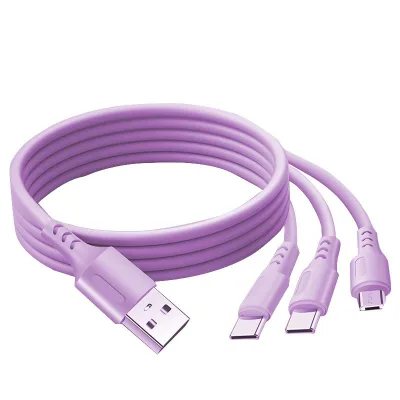
Source 3-in-1 Super Fast Charging Cable for phones, cameras, and players
Compare 30 listings for the 3-in-1 Super Fast Charging Cable designed for mobile phones, MP3 players, and cameras. Buyers can review specifications like data transmission, quick charging, and interface types to find suitable options.
Key considerations
Products List




Comprehensive Sourcing Guide
Strategic Sourcing Guide for 3-in-1 Super Fast Charging Cables
Understanding the Core Product Architecture and Technical Specifications
The market for "3-in-1 super fast charging cables" represents a convergence of convenience and high-performance data transfer. When sourcing this specific category, buyers must first distinguish between the physical architecture of the cable and the electronic components that enable rapid power delivery. Based on available product data, the defining characteristic of these units is their ability to interface with multiple device types, specifically Type-C, Lightning, and Micro-USB connectors, often referred to as "3 Tips." This multi-interface capability is designed to serve a broad range of mobile devices, including Android mobile cell phones, MP3 and MP4 players, video game players, and cameras.
A critical technical observation in the current supply landscape is the variance in internal construction. Some listings explicitly state the presence of an IC (Integrated Circuit) chip, while others specify the absence of one. The inclusion of an IC chip is generally a significant differentiator for "super fast charging" claims, as these chips manage voltage and current regulation to prevent overheating and ensure compatibility with fast-charging protocols. Conversely, cables listed as "Without IC Chip" may rely on simpler conductive paths, which could limit their ability to sustain high amperage safely over long distances. Buyers must verify the specific internal architecture of the unit they intend to procure, as the presence of an IC chip directly correlates with the safety and efficiency of the charging function.
The physical specifications of these cables also vary significantly across different models. Length is a primary variable, with observed specifications ranging from 120cm (1.2m) to 2.5m, and some listings describing lengths between 4 to 5.9 feet. This variance impacts the user experience; a 1.2m cable is standard for desktop use, while longer lengths are preferred for charging while traveling or in larger spaces. Additionally, the interface type is predominantly USB, with some references to USB3.0 standards, though the primary function remains power delivery. The data transmission function is also a key feature, allowing these cables to serve dual purposes as data transfer cables for syncing files and media.
Compliance, Certification, and Safety Standards Verification
In the realm of electrical accessories, compliance and safety are non-negotiable, particularly for products claiming "super fast charging" capabilities. The supply chain for these cables often originates from manufacturing hubs in China, with specific mentions of Guangdong as a production origin. While the exact certification status of individual suppliers cannot be assumed without direct verification, buyers must insist on evidence of compliance with international safety standards before placing orders.
The absence of a display on these cables is a standard design feature, simplifying the user interface and reducing potential points of failure. However, the internal safety mechanisms are paramount. Many observed product attributes include "Over-Current Protection," a critical safety feature that prevents the cable from delivering excessive current that could damage the connected device or cause a fire hazard. When evaluating a potential supplier, procurement teams should request documentation proving that the over-current protection circuits are tested and functional.
Furthermore, the packaging and labeling standards provide indirect evidence of compliance. Some suppliers utilize "Box" packaging, while others use "OPP Bag/Color Box/Customized" options. The presence of a standardized product size, such as 10105cm or 10510cm, suggests a level of manufacturing consistency. However, buyers should not rely solely on packaging dimensions to infer safety. Instead, they must verify that the product meets the electrical safety standards required for the target export market, such as UL, CE, or RoHS compliance. The "12 Months Warranty" observed in some listings indicates a supplier's confidence in their product's longevity, but this warranty should be backed by clear terms regarding defect rates and replacement protocols.
Cost Drivers and Pricing Dynamics in the Supply Chain
The pricing structure for 3-in-1 charging cables is influenced by several distinct factors, primarily the complexity of the internal components and the volume of the order. The observed price range for these products in the market spans from $0.21 to $12.25 USD. This wide disparity is not merely a reflection of brand value but is heavily driven by the technical specifications discussed earlier.
The most significant cost driver is the inclusion of the IC chip. Cables equipped with IC chips for fast charging and data transfer command a higher price point due to the added component cost and the engineering required to integrate them safely. In contrast, cables listed as "Without IC Chip" tend to fall at the lower end of the price spectrum. Additionally, the length of the cable impacts the cost; a 2.5m cable requires more copper and insulation material than a 1.2m cable, increasing the raw material cost.
Minimum Order Quantity (MOQ) is another critical factor in the total cost of ownership. The observed MOQ range for these products is between 20 and 1000 units. Suppliers with lower MOQs (e.g., 20 units) often charge a higher unit price to cover the administrative and logistical costs of small-batch production. Conversely, suppliers offering MOQs of 1000 units may provide more competitive unit pricing, but this requires the buyer to have sufficient capital and storage capacity. The "Customized" attribute is also a cost variable; while customization is available, it often incurs additional tooling or setup fees, which can affect the final unit price.
Buyers must also consider the packaging costs. Options range from simple OPP bags to custom color boxes. Customized packaging, while beneficial for branding, adds to the per-unit cost. The "Brand Name" attribute, such as "GZQY," suggests that branded cables may carry a premium over generic unbranded options. When negotiating, buyers should request a detailed breakdown of costs to understand how much of the price is attributed to materials, labor, and branding, ensuring they are not overpaying for features they do not require.
Typical Applications and Use Case Scenarios
The versatility of 3-in-1 super fast charging cables makes them suitable for a diverse array of applications, from personal consumer electronics to commercial and industrial settings. The primary use case is charging and data synchronization for mobile devices. The specific compatibility with Type-C, Lightning, and Micro-USB interfaces allows these cables to serve as a universal solution for households and businesses managing mixed device ecosystems.
In the consumer sector, these cables are ideal for users who own multiple devices from different manufacturers. For instance, a user might have an Android smartphone, an Apple tablet, and an older digital camera, all requiring different charging ports. A single 3-in-1 cable eliminates the need to carry multiple chargers, reducing clutter and improving portability. The "Portable" classification of these products reinforces their suitability for travel, commuting, and outdoor activities.
Beyond personal use, these cables have significant applications in the corporate and hospitality sectors. Hotels, for example, often provide charging stations in lobbies or guest rooms. A 3-in-1 cable can serve a wide range of guests without the need to stock multiple cable types. Similarly, in office environments, shared charging stations can benefit from the universal compatibility of these cables, reducing the administrative burden of managing different cable types for employees.
The data transmission function also opens up applications in media and entertainment. The ability to connect MP3 players, video game players, and cameras to computers or charging hubs makes these cables valuable for content creators and gamers. The "Fast Charging" function is particularly relevant for users who need to quickly power their devices between tasks, such as gamers who need to recharge controllers or cameras between shoots. The "Universal" nature of the product ensures that it can adapt to evolving device standards, making it a future-proof investment for procurement teams.
Supplier Evaluation and Quality Control Protocols
Selecting the right supplier for 3-in-1 charging cables requires a rigorous evaluation process that goes beyond price comparisons. Given the variance in product attributes, such as the presence or absence of IC chips and the specific models (e.g., N79, N78, N39, TS-127), buyers must implement strict quality control protocols. The first step is to verify the supplier's ability to provide samples that match the exact specifications required.
Buyers should request detailed technical datasheets that confirm the internal components of the cable. Specifically, they must verify the presence of the IC chip if fast charging is a priority. The datasheet should also outline the over-current protection mechanisms and the data transmission speeds. It is essential to test the cable's durability, particularly the retractable or non-retractable nature of the design. Some listings indicate "Not Scalable" or "Retractable" features, which can affect the cable's lifespan and user experience.
Quality control should also extend to the packaging and labeling. The "Box" or "OPP Bag" packaging must be robust enough to protect the cable during shipping. Customized packaging options should be evaluated for print quality and material durability. Additionally, buyers should verify the supplier's warranty terms. A "12 Months Warranty" is a positive indicator, but the terms of the warranty must be clear regarding defect rates and replacement procedures.
When evaluating suppliers, buyers should also consider their production capacity and lead times. While specific lead times are not provided in the source data, the MOQ range suggests that suppliers have varying production scales. Buyers should ensure that the supplier can meet their volume requirements without compromising quality. Communication is key; suppliers who are transparent about their manufacturing processes and quality control measures are more likely to deliver consistent results.
Long-Term Procurement Considerations and Market Trends
Sourcing 3-in-1 super fast charging cables is not just a one-time transaction but a strategic decision that impacts long-term operations. As the market evolves, the demand for faster charging speeds and more durable cables is expected to grow. Buyers should anticipate that the technology for IC chips and fast-charging protocols will continue to advance, potentially rendering older models obsolete. Therefore, it is crucial to select suppliers who are committed to innovation and can keep pace with technological changes.
The customization options available in the market, such as "Customized" branding and packaging, offer opportunities for buyers to differentiate their products. However, customization also introduces complexity in the supply chain. Buyers must balance the benefits of branding against the potential for increased costs and longer lead times. The "Customized" attribute suggests that suppliers are willing to adapt to specific buyer needs, but this should be managed carefully to avoid supply chain disruptions.
Another long-term consideration is the environmental impact of the products. As sustainability becomes a priority for many organizations, buyers should inquire about the materials used in the cables and the recyclability of the packaging. The "Without Display" and "Portable" attributes suggest a focus on simplicity and efficiency, which can align with sustainability goals if the materials are eco-friendly.
Finally, buyers should monitor the market for changes in pricing and MOQ requirements. The observed price range and MOQ flexibility indicate a competitive market, but fluctuations can occur based on raw material costs and global supply chain dynamics. Establishing long-term relationships with reliable suppliers can help mitigate these risks and ensure a steady supply of high-quality 3-in-1 charging cables. By focusing on technical specifications, compliance, and supplier reliability, buyers can secure a procurement strategy that supports their operational needs and adapts to future market trends.
FAQs
What is the typical length range for these cables?
The observed length range spans from 1.2 meters to 2.5 meters. Some listings specify lengths between 4 to 5.9 feet, while others offer 120cm options. Buyers should verify the exact length required for their specific use case before ordering.
Which models include an IC chip for safety?
Some models like TS-127 include an IC chip, while others like N79 do not. The presence of an IC chip is critical for managing fast charging protocols and preventing overheating. Buyers must confirm the specific model's internal architecture to ensure safety compliance.
Can I find cables with over-current protection?
Yes, many listed products feature over-current protection to prevent damage to connected devices. This safety mechanism is a standard attribute for reliable fast charging cables. Buyers should request proof of this feature when evaluating potential suppliers for bulk orders.
What is the minimum order quantity for these cables?
The minimum order quantity ranges from 20 to 1000 units depending on the supplier. Lower MOQs often result in higher unit prices, while larger orders may offer better rates. Buyers should check specific supplier terms to align with their budget and storage capacity.
How are these cables typically packaged for shipping?
Packaging options include standard boxes, OPP bags, or customized color boxes. Some suppliers offer customized packaging to meet specific branding requirements. The product standard dimensions often vary between 10x10x5cm and 10x5x10cm depending on the packaging type selected.
Which interface types are supported by these cables?
These cables support Type-C, Lightning, and Micro-USB interfaces, making them universal for various devices. They are designed to work with Android phones, MP3 players, cameras, and video game players. The interface type is consistently listed as USB across the product range.
What is the warranty period for these products?
Some suppliers offer a 12-month warranty for their charging cables. This warranty indicates confidence in product longevity but requires clear terms regarding defect rates. Buyers should verify the specific warranty conditions before finalizing any procurement agreement.