Source 3-in-1 shaking head laser light for Stage, Outdoor, and Advertising
Explore 30 listings for the 3-in-1 shaking head laser light suitable for stage performances, outdoor events, and advertising gifts. Buyers can compare specifications like DMX512 control, IP65 ratings, and power consumption to find the right supplier.
Key considerations
Products List


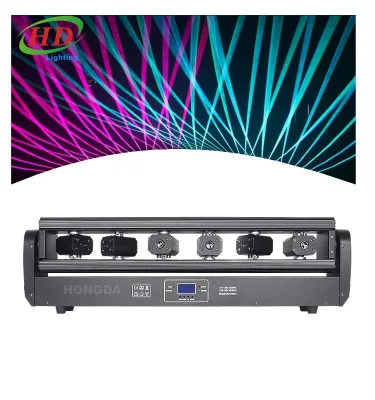
2024 Hot Selling Laser Light RGBW 4in1 120 W 6 Bee Eye Moving Head Laser Effect
$116.00 - $139.00
MOQ: 19 Pieces


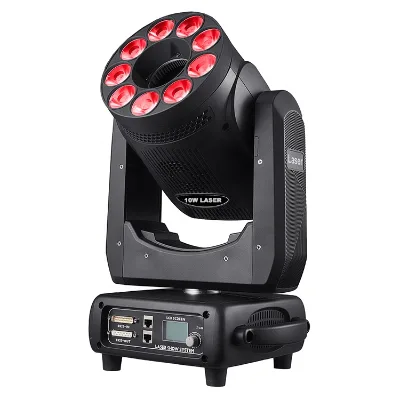

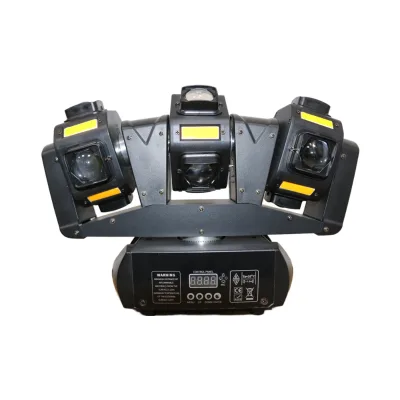
Moving Stage Laser Bar Equipment Stage Light 3W RGB 3in1 Moving Head Laser Light
$295.00 - $323.00
MOQ: 1 Pieces


8 Eyes RGB Full Color Laser Array Laser Bar Light Moving Head Laser Light
$269.23 - $304.62
MOQ: 1 Pieces

3W Animation DJ Laser Light Stage Lighting Moving Head Laser for Disco Party
$295.00 - $323.00
MOQ: 1 Pieces


Comprehensive Sourcing Guide
Strategic Sourcing Guide for 3-in-1 Shaking Head Laser Light Systems
Understanding Technical Specifications and Control Architecture
When sourcing a 3-in-1 shaking head laser light, buyers must first dissect the technical architecture that defines performance. The core of these systems typically integrates multiple light sources, often combining laser diodes with LED modules to achieve a "3-in-1" effect that offers both high-intensity beams and broad wash capabilities. The supplied product data indicates that these units frequently utilize an Aluminum or Aluminum Alloy chassis, a material choice critical for heat dissipation in high-power environments. The light source is explicitly identified as LED in several configurations, while other models rely on high-power laser sources ranging from 260W to 300W, with specific models citing 5W or 10W laser outputs.
Control architecture is paramount for integration into complex stage setups. The dominant control mode observed in the market data is DMX512, which allows for precise channel management. Some advanced units expand this capability to include Voice Control, Self-Walking modes, and Computer Ilda interfaces, providing versatility for automated shows. The number of control channels varies significantly; data points show configurations ranging from 16CH to 30CH, with some units operating in Master Slave Mode. This variation dictates the complexity of the lighting console required. For instance, a 30-channel unit offers granular control over individual parameters, whereas a 16-channel unit may be sufficient for simpler installations.
The scanning system is another critical technical differentiator. High-performance units employ a Galvanometer Scan system with speeds up to 30kpps (kilo-pulses per second), enabling rapid and fluid movement of the laser head. This speed is essential for creating dynamic animation patterns, with specific models boasting 256 laser animation patterns. The physical movement is facilitated by a shaking head mechanism, which allows the beam to traverse wide angles. The beam angle is typically narrow, often cited as 1 Degree, ensuring the laser maintains intensity over long distances. Additionally, modulation signals are available via TTL (Analog Modulation), allowing for synchronization with audio or other digital inputs.
Compliance and Certification Verification Protocols
Navigating the regulatory landscape for stage lighting equipment requires rigorous verification of certifications and standards. The supplied data highlights that reputable manufacturers in this sector typically provide CE and RoHS certifications. These are non-negotiable for entry into many international markets, ensuring the product meets European safety and environmental standards. Some listings go further, citing specific Chinese national standards such as GB7000.15 through GB7000.217, which relate to the safety of luminaires. Buyers must treat these certifications as baseline requirements rather than optional features.
Electrical safety is a primary concern, particularly given the high power consumption observed in these units. Power ratings in the dataset range from 300W to 380W, and operating voltages are listed as 100-240V or 110-240V. This wide voltage range suggests the inclusion of auto-switching power supplies, which is a critical feature for global procurement. However, buyers must verify the specific voltage tolerance of the unit they intend to purchase to prevent damage during operation.
Environmental durability is another aspect of compliance, often measured by the IP Rating. The data indicates an IP65 rating for certain models, which signifies that the unit is dust-tight and protected against water jets from any direction. This makes the equipment suitable for outdoor applications, a use case explicitly mentioned in the product attributes. For indoor stage use, while IP ratings may be less critical, the material construction (Aluminum) and the presence of safety features like thermal protection are essential. Buyers should also verify the lifespan of the components, with some data points suggesting a lifespan of 20,000 hours, which impacts the long-term cost of ownership and maintenance schedules.
Cost Drivers and Pricing Dynamics
The pricing for 3-in-1 shaking head laser lights is influenced by a complex matrix of technical specifications, materials, and certification levels. The observed price range in the market spans from $1 to $2,786 USD, a variance that reflects the difference between basic LED-based units and high-end, high-power laser systems. Several key factors drive these costs. First, the power of the laser source is a primary driver; units with 260W or 300W outputs command significantly higher prices than those with lower wattage or LED-only configurations. Second, the complexity of the scanning system, such as the 30kpps Galvanometer, adds to the manufacturing cost.
Material quality also plays a substantial role. The use of Aluminum Alloy for the housing, as opposed to standard aluminum or plastic, increases durability and heat management capabilities, thereby justifying a higher price point. The inclusion of advanced control features like Voice Control, Ilda interfaces, and extensive channel counts (up to 30CH) further elevates the cost. Additionally, the packaging and shipping logistics are cost drivers. The data lists various packing options, including Flight Cases, Wooden Cases, and Cartons. Units shipped in robust Flight Cases or Wooden Cases, which are necessary for international transport and protecting delicate optical components, will have higher landed costs.
Minimum Order Quantity (MOQ) is another variable affecting the effective unit cost. The observed MOQ range is between 1 and 19 units. Buyers purchasing a single unit for a small venue may face a higher per-unit price compared to those ordering in bulk. However, the flexibility of an MOQ of 1 allows for smaller venues or event planners to test the equipment without a significant financial commitment. Buyers should also consider the warranty terms, with a standard 1-year warranty observed in the data. Extended warranties or service packages may be available as an add-on cost, influencing the total procurement budget.
Typical Applications and Operational Environments
The versatility of 3-in-1 shaking head laser lights makes them suitable for a diverse range of applications, from large-scale concerts to corporate events. The primary usage category identified is "Stage," where these lights are employed to create dynamic visual effects. The ability to produce 256 laser animation patterns and the high-speed scanning capability make them ideal for music festivals, theater productions, and nightclubs. The "Shaking Head" mechanism allows for sweeping beams that can cover large audiences, while the "3-in-1" nature ensures a mix of sharp laser lines and softer wash effects.
Beyond traditional stage use, the data indicates applications in "Advertising Gifts" and "Laser Module" contexts. This suggests that these units are sometimes repurposed for promotional events, trade shows, or outdoor advertising displays. The IP65 rating and the "Outdoor" application tag confirm that these lights are engineered to withstand environmental factors, making them suitable for outdoor festivals, building projections, and open-air events. The "Special Efficacy" demonstration effect further supports their use in immersive experiences where visual impact is the primary goal.
The control flexibility also expands their utility. The inclusion of "Self-Walking" and "Voice Control" modes allows for autonomous operation in environments where a dedicated lighting operator may not be present. This is particularly useful for retail environments, hotel lobbies, or background entertainment in restaurants. The "Computer Ilda" interface enables integration with professional lighting control software, allowing for complex, synchronized shows that respond to audio or pre-programmed cues. Buyers should assess their specific venue requirements against these capabilities to ensure the selected unit matches the intended operational environment.
Supplier Evaluation and Geographic Considerations
When evaluating suppliers for 3-in-1 shaking head laser lights, geographic origin is a significant factor. The supplied data consistently points to manufacturers located in Guangzhou, China, and Guangdong, China. These regions are established hubs for the lighting industry, offering a mature supply chain and a high concentration of specialized manufacturers. Buyers should verify the specific location of the supplier to ensure they are dealing with a legitimate manufacturer rather than a middleman. The presence of a "Mainland" designation in the origin data is a common indicator of the manufacturing base.
Supplier credibility can be assessed through their certification portfolio and product documentation. A reputable supplier will provide clear documentation regarding CE, RoHS, and GB standards. The specificity of the standards cited, such as the detailed GB7000 series, indicates a level of regulatory compliance that should be verified. Buyers should also examine the supplier's ability to offer customization, as the data notes that customization is available. This could include branding, specific voltage configurations, or tailored control protocols.
The product model numbers, such as X-P04, FJ260C, and GBR-FJ260, serve as unique identifiers for specific product lines. Buyers should request detailed datasheets for these specific models to understand the exact specifications. The consistency of the "Single-head" laser head configuration across many models suggests a standard design approach, but buyers must confirm if multi-head options are available for larger venues. Additionally, the warranty terms, typically 1 year, should be clearly defined in the contract. Buyers should inquire about the process for warranty claims, including whether the supplier provides replacement parts or if the entire unit must be returned.
Quality Control and Long-Term Procurement Strategy
Ensuring quality in the procurement of 3-in-1 shaking head laser lights requires a proactive approach to quality control. Given the high power and precision optics involved, buyers should request pre-shipment inspection reports. These reports should verify the functionality of the Galvanometer scan system, the accuracy of the DMX512 control channels, and the integrity of the IP65 sealing. The lifespan of the light source, cited as 20,000 hours in some data, should be validated through independent testing or manufacturer guarantees.
Packaging is a critical component of quality control, as the delicate optical components are susceptible to damage during transit. The data lists Flight Cases, Wooden Cases, and Carton Cases as options. For international shipping, a Flight Case or Wooden Case is strongly recommended to protect the unit from impact and moisture. Buyers should verify that the packaging dimensions, such as 60×55×70 cm or 66×62×89 cm, align with their logistical capabilities and storage requirements.
Long-term procurement considerations involve planning for maintenance and scalability. The 1-year warranty is a standard starting point, but buyers should negotiate extended warranty terms or service level agreements (SLAs) for large deployments. The availability of spare parts, such as laser diodes or scanning motors, is crucial for minimizing downtime. Furthermore, the modularity of the control system, with options for DMX512, Voice Control, and Ilda, ensures that the equipment remains relevant as technology evolves. Buyers should also consider the energy efficiency of the unit, given the 300W to 380W power consumption, to manage operational costs over the lifespan of the equipment. By focusing on these quality and strategic factors, buyers can secure reliable, high-performance lighting solutions that meet their specific needs.
FAQs
What control modes are available for 3-in-1 shaking head laser light?
These units typically support DMX512 control alongside voice control and self-walking modes. Some advanced models also feature computer Ilda interfaces to allow for complex automated show synchronization and precise channel management.
Which certifications should I verify for these laser lights?
Reputable units usually carry CE and RoHS certifications to meet international safety standards. Some listings also specify compliance with Chinese national standards like GB7000.15 through GB7000.217 for additional regulatory assurance.
Can these lights be used for outdoor applications?
Yes, certain models feature an IP65 rating, making them dust-tight and protected against water jets for outdoor use. This durability allows them to function effectively in open-air events and building projections.
How many control channels do these systems typically offer?
The number of control channels varies significantly, with observed configurations ranging from 16CH to 30CH. Higher channel counts provide granular control over individual parameters, while lower counts suit simpler installations.
What is the typical operating voltage range for these devices?
Most units support a wide operating voltage range of 100-240V or 110-240V. This feature indicates the inclusion of auto-switching power supplies suitable for global procurement without needing voltage converters.
Which scanning system speeds are available for these laser heads?
High-performance units employ a Galvanometer Scan system with speeds up to 30kpps. This rapid scanning capability enables the creation of dynamic animation patterns and fluid movement of the laser beam.
What materials are used to construct the housing of these lights?
The chassis is typically constructed from Aluminum or Aluminum Alloy to ensure effective heat dissipation. This material choice is critical for maintaining performance and longevity in high-power environments.