Source 4x2 Diesel Oil Tanker Truck for delivery, refueling, and storage
Find 30 listings for the 4x2 Diesel Oil Tanker Truck designed for oil delivery, refueling, and storage applications. Buyers can compare models with varying tank volumes, chassis brands, and emission standards to select the right unit for their fleet needs.
Key considerations
Products List


High Quality Oil Fuel Tank 4X2 Truck for Fuel Transport, 8400L Diesel Power
$11000.00 - $15000.00
MOQ: 1 Pieces

High Capacity 8400L Fuel Transport Vehicle, 4X2 Diesel Truck for Oil Transport
$11000.00 - $15000.00
MOQ: 1 Pieces


100p 4X2 4000L Mini Tank Petrol Fuel Oil Diesel Gasoline Tanker Truck
$21900.00 - $36000.00
MOQ: 1 Unit


3 Axles 40000 Liters Diesel Oil Petrol Fuel Semi Trailer Tanker Truck
$8100.00 - $8500.00
MOQ: 1 Pieces


Factory Direct Sales 6X4 4X2 Heavy Duty 18000 Liter Water Tanker Oil Tanker Truck
$8000.00 - $10000.00
MOQ: 1 Pieces


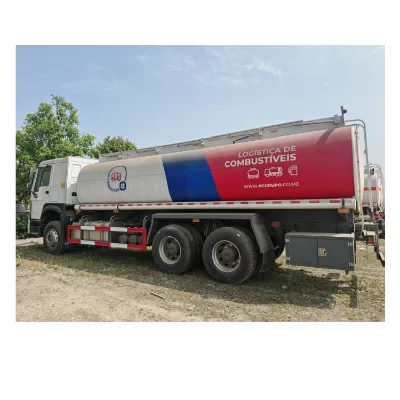
Heavy Duty 3 Axles 15000 Petrol Diesel Oil Prices Fuel Tank Tanker Truck
$5575.05 - $8109.16
MOQ: 1 pieces
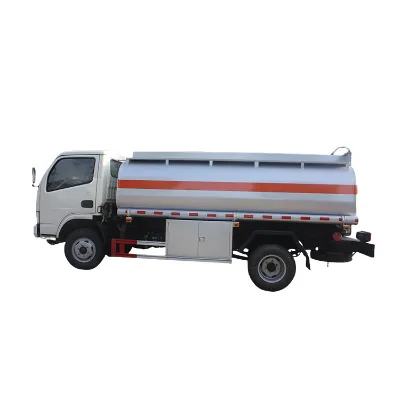

Dongfeng 4X2 Fuel Truck Oil Tanker 4000 Gallon Diesel Transport Fuel Tank Truck
$19800.00 - $25600.00
MOQ: 1 Pieces

Oil Tank Truck 4cubic 5000liters Fuel Tank Truck Oil Transport Truck Diesel Tanker
$12850.00 - $16500.00
MOQ: 1 Pieces


Comprehensive Sourcing Guide
Strategic Sourcing Guide for 4x2 Diesel Oil Tanker Trucks
The procurement of a 4x2 Diesel Oil Tanker Truck represents a critical investment for logistics operators, fuel distributors, and municipal service providers. This vehicle class is specifically engineered for medium-range fuel delivery, balancing payload efficiency with the robustness required for hazardous material transport. When sourcing these assets, buyers must navigate a complex landscape of technical specifications, regulatory compliance, and supplier capabilities. The following guide outlines the essential factors for evaluating 4x2 diesel oil tanker trucks, ensuring that procurement decisions are grounded in verified data and industry standards rather than unverified marketing claims.
Technical Architecture and Powertrain Configuration
The core identity of a 4x2 Diesel Oil Tanker Truck lies in its drivetrain and chassis configuration. The "4x2" designation indicates a vehicle with four wheels, where only two are driven. This configuration is typically optimized for urban and regional distribution routes where extreme off-road capability is unnecessary, but fuel economy and maneuverability are paramount. In the observed market data, the drive wheel configuration is explicitly noted as 4x2, paired with a diesel power source. This combination allows for a lower center of gravity and reduced maintenance costs compared to heavier 6x4 or 8x4 configurations, making it ideal for payloads ranging from 3 tons to 21 tons depending on the specific chassis and tank volume.
The engine specifications are a primary determinant of performance. Buyers should verify that the engine model aligns with the required duty cycle. Available data points to specific engine models such as the 4kh1cn6lb, which delivers a maximum output of 88kw (120HP). For heavier duty applications within the 4x2 class, engines may range from 351 to 450 horsepower, often utilizing a 6-8L engine capacity. The transmission type is predominantly manual, offering drivers direct control over gear selection for varying load conditions. The tire design is consistently radial, with specific sizes like 7.00r16 or 295/80r22.5 observed in the market. These tires are selected for their durability and load-bearing capacity, often supplied as a set of six units plus a spare. The wheelbase, a critical factor for stability and turning radius, can vary significantly, with configurations like 1900+4500+1350mm observed in larger models, while smaller units may feature more compact dimensions.
Tank Volume and Payload Dynamics
The functional capacity of the tanker is defined by the interplay between tank volume and payload limits. The "4x2" chassis imposes a natural limit on the maximum gross vehicle weight, which in turn restricts the volume of liquid that can be legally transported. Market observations reveal a wide spectrum of tank volumes, ranging from compact 4000L units to massive 15001-30000L tanks. However, the payload capacity is equally critical. Data indicates payload figures such as 3 tons for smaller configurations, while larger chassis may support loads between 21 and 30 tons.
Buyers must distinguish between the physical volume of the tank and the legal payload. A tank with a volume of 15001-30000L may not be fully loadable on a 4x2 chassis if the resulting weight exceeds the vehicle's Gross Vehicle Weight Rating (GVWR). Conversely, a 4000L tank might be fully utilized. The standard dimensions for these tanks often follow specific ratios, such as 6100x2000x2400 mm, ensuring compatibility with road regulations. The storage capacity is explicitly categorized as "Oil," necessitating specialized internal coatings and structural integrity to prevent leakage and contamination. The volume classifications, such as 5001-10000L or 1-10t, serve as useful benchmarks for categorizing vehicles into light, medium, and heavy duty segments.
Compliance, Certification, and Emission Standards
Regulatory compliance is non-negotiable in the fuel transport sector. The safety of the vehicle and the legality of its operation depend heavily on adherence to international and local standards. The supply chain for these trucks often originates from manufacturing hubs in China, specifically Hubei, where production standards are rigorously applied. Buyers must verify that the vehicle holds valid certifications. Observed data lists a comprehensive array of certifications including ISO9000, CCC, Ts16949, EPA, EEC, RoHS, and CE. These certifications indicate that the manufacturing process meets quality management standards and that the vehicle components comply with environmental and safety regulations.
Emission standards are a critical compliance factor. The market data references Euro 4 as an observed emission standard. However, buyers must be aware that emission regulations vary significantly by destination country and region. A vehicle compliant with Euro 4 may not meet the stricter Euro 5 or Euro 6 standards required in the European Union or parts of North America. Therefore, verification of the specific emission standard against the target market's current laws is essential. Additionally, tire certifications such as GCC, ISO, and DOT are observed, ensuring that the rolling stock meets safety requirements for specific geographic zones. The product standard itself is often categorized by capacity, such as 1-10t or 10t, which serves as a proxy for the regulatory class of the vehicle.
Cost Drivers and Procurement Economics
Understanding the cost structure of a 4x2 Diesel Oil Tanker Truck is vital for budgeting and total cost of ownership (TCO) analysis. The observed price range for these vehicles in the market spans from 4000 to 38000 USD. This wide variance is driven by several factors, including the engine horsepower, tank volume, chassis brand, and the level of customization. A basic model with a 120HP engine and a 4000L tank will sit at the lower end of this spectrum, while a high-specification unit with a 450HP engine, a 30,000L tank, and advanced safety features will command the higher prices.
The Minimum Order Quantity (MOQ) is a significant factor in procurement strategy. Data indicates an MOQ of 1 unit, suggesting that these trucks are available for individual purchase, which is advantageous for small to medium-sized logistics companies. However, buyers should be cautious of the "Nude" or "Naked Package" shipping conditions observed in the data. This implies that the vehicle may be shipped without certain accessories or final assembly, potentially requiring additional local costs for fitting and registration. Customization is available, and OEM custom options are explicitly supported, allowing buyers to tailor the vehicle to specific operational needs, though this will inevitably impact the final price. The payload capacity and volume are the primary cost drivers, as larger tanks and more powerful engines require more raw materials and complex engineering.
Supplier Evaluation and Quality Assurance
Selecting the right supplier requires a rigorous evaluation of their manufacturing capabilities and after-sales support. The product origin is consistently noted as China, with specific regions like Hubei identified as manufacturing centers. Buyers should verify the supplier's ability to provide a "Lifetime Warranty" or at least a robust "One Year" warranty as observed in the market. The availability of after-sales service is a critical differentiator; a supplier that offers lifetime support can significantly reduce long-term operational risks.
Quality control should be assessed through the lens of the certifications held by the supplier. The presence of ISO9000 and Ts16949 certifications suggests a commitment to quality management systems. Furthermore, the condition of the product is listed as "New," but buyers must ensure that "New" implies factory-fresh units rather than refurbished stock. The packaging method, described as "Nude" or "Whole Vehicle," affects the condition upon arrival. A "Whole Vehicle" delivery might imply a more protected transport method compared to a "Nude" shipment. Buyers should also evaluate the chassis brand, with I-Suzu being a noted option, indicating the use of reputable sub-components. The feature set, including pressure-resistant and anti-corrosion properties, must be verified through documentation rather than assumed, as these features are essential for the safe transport of oil.
Operational Applications and Long-Term Viability
The 4x2 Diesel Oil Tanker Truck is designed for specific applications, primarily oil delivery and refueling. The product features, such as pressure resistance and good safety ratings, are tailored to handle the volatile nature of liquid fuels. The application scope includes both commercial fuel distribution and municipal refueling operations. The seating capacity, typically 3 seats, accommodates a driver and necessary support staff. The drive type, 4X2, ensures that the vehicle is agile enough for frequent stops and starts in urban environments while maintaining the power to navigate regional highways.
Long-term procurement considerations involve the durability of the vehicle and its adaptability to future regulations. The "Customization" and "OEM Custom" attributes suggest that the vehicle can be adapted for changing operational needs, such as different tank coatings or updated safety equipment. However, buyers must consider the obsolescence risk associated with emission standards. A vehicle built to Euro 4 standards may face restrictions in the future as regulations tighten. Therefore, investing in a vehicle with the potential for upgrade or one that meets the highest current standards in the target market is a prudent strategy. The payload capacity of 3t to 30t allows for scalability, but the buyer must ensure that the chosen model aligns with the specific route requirements and weight limits of the operating region.
Final Procurement Checklist
To conclude the sourcing process, buyers should compile a checklist based on the verified data points. This includes confirming the exact engine model and horsepower, verifying the tank volume against payload limits, and ensuring all necessary certifications (ISO, EPA, EEC, etc.) are current and valid for the destination. The price range of 4000-38000 USD should be used as a baseline for negotiation, with adjustments made for customization and packaging requirements. The MOQ of 1 unit allows for flexibility, but buyers should negotiate for favorable after-sales terms, including the warranty period and service availability. By adhering to these evidence-based guidelines, procurement teams can secure a 4x2 Diesel Oil Tanker Truck that meets operational demands while ensuring regulatory compliance and long-term reliability.
FAQs
What is the price range for a 4x2 Diesel Oil Tanker Truck?
The observed price range spans from 4000 to 38000 USD. This variance depends on engine horsepower, tank volume, and customization options like OEM specifications.
Can I customize the truck with specific tank volumes?
Yes, customization is available for various tank volumes including 4000L and ranges up to 30000L. Buyers can select specific dimensions and capacities to match their operational needs.
Which certifications do these trucks typically hold?
Trucks often carry ISO9000, CCC, Ts16949, EPA, EEC, RoHS, and CE certifications. Tire certifications may also include GCC, ISO, and DOT depending on the specific model and destination.
What is the minimum order quantity for purchasing one unit?
The minimum order quantity is one unit, allowing for individual purchases. This flexibility supports small to medium logistics companies without requiring bulk commitments.
How long is the warranty period for the vehicle?
A one-year warranty is standard, with some suppliers offering lifetime warranty options. Buyers should verify specific after-sales service terms before finalizing the procurement agreement.
What is the typical payload capacity for these trucks?
Payload capacities vary from 3 tons for smaller models to 21-30 tons for larger chassis. The specific limit depends on the engine power and tank volume configuration selected.
Where are these trucks manufactured and what is the origin?
The products originate from China, with specific manufacturing hubs identified in Hubei. Buyers should confirm the exact production location to ensure compliance with regional standards.