Source 50 ml Deodorant Roller Bottle for Skin Care, Perfume, and Eye Cream
Compare 30 listings of 50 ml Deodorant Roller Bottle options featuring plastic or glass materials, roll-on or screw cap closures, and custom logo printing. Buyers can evaluate MOQs, sample availability, and packaging details from Chinese manufacturers offering OEM services.
Key considerations
Products List


Empty Deodorant Plastic Roller Bottle 50ml Roll on Deodorant Bottle for Essential Oil
$0.10 - $0.12
MOQ: 10000 Pieces

50ml 60ml Cosmetic Package Plastic Roll on Bottle for Perfume Deodorant
$0.07 - $0.16
MOQ: 10000 Pieces


Wholesale 50ml 65ml Deodorant Cosmetic Plastic Roll on Bottle Roll on Bottle for Perfume
$0.05 - $0.15
MOQ: 10000 Pieces


25g 40g Deodorant Cosmetic Plastic Deodorant Roll on Bottle with Best Services
$0.18 - $0.35
MOQ: 10000 Pieces


30ml 60ml Hot Sale High Quality Essential Oil Roller Bottle Deodorant Cosmetic PP Roll on Bottle
$0.22 - $0.28
MOQ: 10000 Pieces
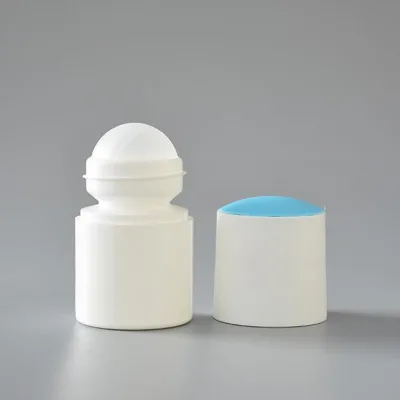


Wholesale 50ml Cosmetic Packaging Roller Bottle Customized Deodorant Bottle
$0.15 - $0.17
MOQ: 5000 Pieces


Customized Color 50ml PP Plastic Roller Bottles for Deodorant Packaging
$0.15 - $0.17
MOQ: 10000 Pieces

Factory Sale 50ml Customized Color Refillable Deodorant Roll-on Bottles
$0.15 - $0.17
MOQ: 10000 Pieces


Wholesale Special Shape 50ml Antiperspirant Roll-on Bottles for Deodorant Packaging
$0.15 - $0.17
MOQ: 10000 Pieces


Gray White Color 75ml Plastic Empty Essential Oil Deodorant Roller Bottle
$0.09 - $0.30
MOQ: 10000 Pieces
Comprehensive Sourcing Guide
Strategic Sourcing Guide for 50 ml Deodorant Roller Bottles
Understanding Technical Specifications and Material Composition
When sourcing a 50 ml Deodorant Roller Bottle, the primary technical focus must be on the compatibility between the container material and the specific formulation of the deodorant. The supply market for this category is diverse, with manufacturers offering containers in both plastic and glass compositions. Plastic variants, often identified by specific model numbers such as SJ-ROLL ON BOTTLE or SJ-6551, are prevalent due to their durability and cost-effectiveness. These units are frequently constructed from materials like PE (Polyethylene), which offers a balance of flexibility and chemical resistance suitable for personal care products. The physical dimensions are critical; while the core keyword specifies 50 ml, the actual market inventory includes models with standard capacities of 30 ml, 50 ml, 60 ml, 65 ml, and ranges extending up to 100 ml. Buyers must verify that the selected model number, such as SJ-2792 or BP0021, aligns precisely with the required volume to ensure the roller mechanism functions correctly without leakage or overflow.
The mechanical design of the roller ball is equally significant. The sealing type is a defining characteristic, with "Roll on" and "Screw Cap" being the most common configurations observed in the current market. The roller ball itself must be made of a material that does not react with the deodorant formula, typically stainless steel or high-grade plastic, though the specific internal mechanism details are often proprietary. The closure type is explicitly noted as "Rollerball" in many listings, ensuring the product dispenses correctly. Additionally, the surface handling capabilities, such as screen printing or silk screen printing, allow for branding directly on the bottle. This is crucial for deodorant manufacturers who require custom logos and labels. The standard packing for these units often involves strong paper cartons and pallets, ensuring that the fragile roller mechanisms are protected during transit.
Compliance, Certification, and Regulatory Verification
Navigating the regulatory landscape for personal care packaging requires a rigorous verification of supplier certifications and adherence to international standards. While specific test results and performance claims cannot be generalized across all listed products, buyers should actively seek suppliers who hold recognized certifications such as ISO. This certification indicates that the manufacturer adheres to established quality management systems, which is a strong indicator of process reliability. The origin of the product is another critical compliance factor; the majority of these 50 ml roller bottles originate from China, with specific production hubs noted in regions like Hebei.
Buyers must verify that the materials used meet the safety standards for cosmetics and personal care products. The market data indicates that some products are marketed as "Eco-Friendly," suggesting the use of recyclable or sustainable materials. However, this attribute should not be assumed for every listing without direct confirmation from the supplier. The standard capacity of 50 ml is a common benchmark, but buyers must ensure that the specific model they select complies with the labeling and volume regulations of their target export markets. For instance, if the deodorant is intended for the European market, the packaging must meet specific EU cosmetic regulations regarding material safety and labeling. Similarly, for the North American market, compliance with FDA guidelines for cosmetic packaging is essential. The "Small Orders: Accepted" attribute suggests flexibility for new entrants, but larger volume buyers should confirm that the supplier can maintain consistent compliance standards across bulk production runs.
Cost Drivers and Pricing Dynamics
The pricing structure for 50 ml deodorant roller bottles is influenced by several key variables, including material type, customization level, and order volume. The observed price range in the market spans from $0.04 to $1.00 USD per unit. This wide variance is primarily driven by the choice between plastic and glass materials, with glass typically commanding a higher price point due to manufacturing complexity and fragility. The level of customization also plays a significant role; bottles featuring a "Customized Logo" or specific "Silk Screen Printing" will generally cost more than standard, unbranded units.
Minimum Order Quantity (MOQ) is a decisive factor in the final cost per unit. The market data shows an MOQ range from 30 units to 30,000 units. Suppliers often offer tiered pricing structures where the unit cost decreases as the order volume increases. For example, a supplier might list an MOQ of 10,000 pieces for a specific model, while another might accept small orders starting at 30 pieces, albeit at a higher per-unit cost. Buyers should also consider the cost of samples, which are frequently available for free or at a nominal cost (1-5 pieces), allowing for quality verification before committing to a large order. The packaging requirements, such as "Strong Paper Carton+Pallet," add to the overall logistics cost and should be factored into the total landed cost calculation.
Typical Applications and Market Versatility
The 50 ml Deodorant Roller Bottle is a versatile container designed for a wide array of applications beyond just traditional deodorants. The product attributes indicate usage in essential oils, eye creams, perfume, and general skin care creams. This versatility makes the container suitable for brands looking to expand their product lines or for companies that require a unified packaging solution for multiple product categories. The "Roll on" sealing type is particularly advantageous for liquid and gel-based formulations, ensuring a smooth and controlled application.
The market also notes usage in chemical applications, suggesting that these bottles can be adapted for industrial or specialized personal care products. The "PE Roller Bottle" designation highlights its suitability for a broad range of chemical compatibilities. The shape is predominantly "Round Bottle," which is ergonomic and easy to handle, making it ideal for retail display. The capacity range of 30 ml to 65 ml allows for flexibility in product positioning, from travel-sized samples to full-size retail units. The ability to customize the logo and label further enhances its application in the cosmetics and personal care sectors, where branding is a critical differentiator.
Supplier Evaluation and Selection Criteria
Selecting the right supplier requires a multi-faceted evaluation process that goes beyond price comparison. Buyers should prioritize suppliers who demonstrate a clear capacity for customization, as indicated by the "Customization: Available" and "OEM/ODM: Custom Logo Printing/Label" attributes. The ability to provide free samples is a strong indicator of a supplier's confidence in their product quality and their willingness to engage in a transparent procurement process.
The origin of the product, specifically from regions like Hebei, China, suggests a mature supply chain with established manufacturing capabilities. However, buyers must verify the specific production standards of the supplier. The presence of an ISO certification is a positive signal, but it should be accompanied by a request for specific quality control documentation relevant to cosmetic packaging. The "Small Orders: Accepted" attribute is beneficial for testing the supplier's responsiveness and communication, while the "MOQ: 10000PCS" data point helps buyers understand the scale required for cost-effective production.
Quality Control and Inspection Protocols
Implementing a robust quality control (QC) protocol is essential to ensure that the 50 ml roller bottles meet the required standards. Buyers should establish clear acceptance criteria for the roller mechanism, ensuring that the ball rolls smoothly without sticking or leaking. The surface printing quality, including screen printing and silk screen printing, must be inspected for clarity, adhesion, and color consistency. The "Strong Paper Carton" packaging should be evaluated for its ability to protect the bottles during shipping, preventing damage to the roller balls.
Inspection should also cover the material integrity, checking for any defects in the plastic or glass that could compromise the seal. For products claiming to be "Eco-Friendly," buyers should request documentation or third-party verification to substantiate these claims. The capacity verification is another critical step; while the standard is 50 ml, buyers must ensure that the actual fill volume aligns with the labeled capacity to avoid regulatory issues. Regular audits of the supplier's production line can help maintain consistent quality over time, especially for large volume orders.
Long-Term Procurement and Supply Chain Stability
For long-term procurement, buyers must consider the stability of the supply chain and the supplier's ability to scale production. The wide range of MOQs, from 30 to 30,000 units, indicates that suppliers can accommodate both startup brands and established enterprises. However, buyers should assess the supplier's lead times and capacity to handle peak demand periods. The "Sample: Freely Supply" and "Sample: Free" attributes suggest a willingness to support new product development, which is crucial for long-term partnerships.
Sustainability is becoming an increasingly important factor in long-term procurement strategies. The "Eco-Friendly" attribute observed in some listings aligns with global trends toward sustainable packaging. Buyers should explore suppliers who can offer recyclable materials or reduce packaging waste. The "Customized Logo" capability allows for brand evolution, ensuring that the packaging can adapt to changing market trends. Finally, maintaining a diverse supplier base can mitigate risks associated with supply chain disruptions, ensuring a steady flow of 50 ml deodorant roller bottles to meet market demands.
Comparative Analysis of Key Product Attributes
To assist in the decision-making process, the following table summarizes the key attributes observed in the market for 50 ml deodorant roller bottles. This comparison highlights the variations in material, capacity, and customization options available to buyers.
| Attribute | Option A (Plastic Focus) | Option B (Glass Focus) | Option C (General/Standard) |
|---|---|---|---|
| Material | Plastic (PE) | Glass | Plastic/Glass |
| Model Examples | SJ-ROLL ON BOTTLE, SJ-6551 | Various | SJ-2792, BP0021 |
| Capacity | 30ml, 50ml, 60ml | 50ml, 65ml | 30ml, 50ml, 65ml |
| Sealing Type | Roll on, Screw Cap | Roll on | Roll on Bottle |
| Printing | Screen Printing, Silk Screen | Available | Custom Logo Printing |
| MOQ Range | 30 - 10,000 PCS | 10,000 PCS | 30 - 30,000 PCS |
| Origin | China (Hebei) | China | Made in China |
| Certification | ISO | ISO | ISO |
| Packing | Strong Paper Carton+Pallet | Strong Paper Carton | Carton |
This table serves as a reference point for buyers to identify the specific attributes that align with their product requirements and budget constraints. By carefully evaluating these factors, buyers can make informed decisions that balance cost, quality, and functionality in their procurement of 50 ml deodorant roller bottles.
FAQs
What materials are used for 50 ml deodorant roller bottles?
These bottles are primarily made from plastic or glass. Plastic variants often use PE for flexibility, while glass options offer a premium feel. Buyers should verify the specific material composition to ensure compatibility with their deodorant formula before ordering.
Which sealing types are available for these roller bottles?
The available sealing types include Roll on and Screw Cap configurations. The Rollerball closure type is standard for ensuring smooth application. Selecting the correct sealing mechanism is critical to prevent leakage and ensure proper dispensing of the product.
Can I get a customized logo on these bottles?
Yes, customization is available with options for custom logos and labels. Surface handling methods like screen printing and silk screen printing allow for branding directly on the bottle. This feature supports OEM and ODM requirements for personal care product manufacturers.
What is the minimum order quantity for these products?
The minimum order quantity ranges from 30 to 30,000 pieces depending on the supplier and model. Some suppliers accept small orders starting at 30 units, while others require a minimum of 10,000 pieces. Buyers should confirm the specific MOQ for their chosen model number.
Where are these 50 ml roller bottles manufactured?
These products originate from China, with specific production hubs located in regions like Hebei. The origin is consistently listed as Made in China across various listings. Buyers should verify the specific factory location to assess logistics and supply chain stability.
Are samples available for quality verification before bulk order?
Samples are frequently available and can be supplied freely or for a nominal cost of 1-5 pieces. This allows buyers to verify the roller mechanism and print quality before committing to a large order. Checking sample availability is a key step in the supplier evaluation process.