Source 6-Speed Automatic Transmission Repair Kit for SUVs, Sedans, Trucks
Find a 6-Speed Automatic Transmission Repair Kit from 30 verified listings. Compare specifications, prices, and delivery times for gasoline vehicles and various transmission models like 5HP19 and A760E.
Key considerations
Products List


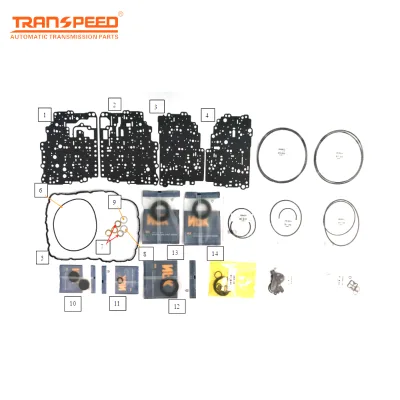
9t50 Automatic Transmission Master Rebuild Kit for 9-Speed Gearbox Overhaul
$245.00 - $248.00
MOQ: 1 Pieces




$0.10 - $1.00
MOQ: 20 Pieces



Comprehensive Sourcing Guide
Strategic Sourcing Guide for 6-Speed Automatic Transmission Repair Kits
The global automotive aftermarket continues to demand high-reliability components for complex powertrain systems, with the 6-speed automatic transmission repair kit representing a critical segment for fleet maintenance and independent repair shops. Sourcing these kits requires a disciplined approach that balances technical compatibility, regulatory compliance, and supply chain resilience. Buyers must navigate a landscape where product attributes vary significantly between manufacturers, and where the distinction between a generic rebuild component and a precision-engineered solution is paramount. This guide outlines the essential factors for evaluating suppliers and products, ensuring that procurement decisions are grounded in verifiable data rather than marketing assertions.
Technical Specifications and Compatibility Verification
The foundation of any successful procurement for a 6-speed automatic transmission repair kit lies in the precise identification of technical specifications. Unlike single-gear components, a transmission rebuild kit is a complex assembly of pistons, steel plates, seals, and friction materials designed to restore specific transmission models to factory standards. The first step in verification is matching the product model to the vehicle's transmission architecture. Market observations indicate that kits are often categorized by specific model codes such as A6GF1, 5HP19, 4L60, and 6F50. These identifiers are not merely labels but serve as the primary key for compatibility checks.
Buyers must scrutinize the OE (Original Equipment) numbers and reference numbers provided by the supplier. For instance, a kit intended for a specific transmission variant may list OE numbers like T21200A or A6GF1, while another might reference T13902b, Zf5HP-19, or 5HP19. The presence of multiple reference numbers, such as A760e, A761e, and A760f, suggests a kit designed for a broader range of applications within a specific transmission family. It is critical to cross-reference these numbers against the vehicle's service manual rather than relying solely on the product title. The material composition is another vital technical attribute; while some components are forged from aluminum alloy to reduce weight and improve heat dissipation, others may utilize standard steel or specialized alloys. The type of component, whether identified as a piston or a steel plate, dictates the specific machining tolerances required.
Furthermore, the drive type and efficiency ratings of the transmission influence the kit's design. Kits designed for four-wheel-drive systems or those marketed as fuel-efficient and eco-friendly often incorporate different friction coefficients or sealing technologies compared to standard gasoline vehicle applications. The condition of the components, whether described as "Genuine OEM New" or "Brand New," must be verified against the actual manufacturing process. A "forging" technique, for example, implies a specific metallurgical process that enhances durability compared to casting. Buyers should request detailed technical drawings or material safety data sheets to confirm that the physical attributes align with the transmission's operational requirements.
Compliance, Certification, and Quality Standards
In the B2B automotive sector, certification is not merely a badge of honor but a prerequisite for liability management and supply chain integration. When sourcing transmission repair kits, buyers must verify that the supplier holds recognized quality management certifications. Observed market data indicates that reputable manufacturers often maintain ISO 9000, ISO 14001, and ISO 14000 certifications, alongside OHSAS/Ohsms 1800 for occupational health and safety. These standards ensure that the production process adheres to international quality benchmarks and environmental regulations. Additionally, specific industry certifications such as TSCE and ISOCCC may be present, indicating compliance with specialized automotive testing protocols.
However, the presence of a certification label does not automatically guarantee that every batch of products meets the same standard. Buyers must treat certification as a baseline requirement and demand evidence of ongoing compliance. The product standard itself, often listed as "OE Standard" or specific dimensional standards like 30x30x10 cm or 45.22x25x10 cm, provides a framework for packaging and physical integrity. These dimensions are crucial for logistics planning and ensure that the kit arrives in a condition suitable for immediate installation. The "Standard Component" designation further implies that the parts are interchangeable and meet general industry specifications, but this should be validated against the specific transmission model.
Compliance also extends to the materials used. For example, aluminum alloy components must meet specific purity and strength grades to withstand the thermal and mechanical stresses of a 6-speed transmission. The "Eco-Friendly" and "Fuel-Efficient" attributes often cited in product descriptions should be backed by third-party testing data rather than internal claims. Buyers should inquire about the environmental impact of the manufacturing process, particularly regarding the disposal of waste materials and the energy consumption of the forging or machining processes. Ensuring that the supplier adheres to these standards mitigates the risk of regulatory fines and protects the buyer's brand reputation in the eyes of end consumers.
Cost Drivers and Pricing Structure Analysis
Understanding the cost structure of 6-speed automatic transmission repair kits is essential for budgeting and negotiation. The price range observed in the market spans from $0.10 to $248.00 USD, a variance that reflects differences in component quality, packaging, and supplier overhead. Several factors drive these costs. First, the complexity of the kit plays a significant role; a kit containing high-grade aluminum alloy pistons and precision-forged steel plates will inherently cost more than a basic set of seals and gaskets. The "High Quality" designation often correlates with a higher price point, but this must be substantiated by the material specifications and certification status.
Packaging is another cost driver. Products listed with "Neutral Box" packaging may be priced lower than those with "International Standard Packaging" or "Carton Packaging" that includes custom branding or enhanced protective materials. The "Standard Component" kits may be more economical due to economies of scale, whereas "Customized Packing" options add to the unit cost. Additionally, the origin of the product influences pricing. Components manufactured in regions like Shandong or Guangzhou, China, may offer competitive pricing due to local supply chain efficiencies, but buyers must factor in potential logistics costs and import duties.
Payment terms also affect the total cost of ownership. Suppliers offering terms such as "30% Deposit, 70% Delivery" can help buyers manage cash flow, but the total financial commitment must be weighed against the lead time. The "MOQ" (Minimum Order Quantity) is a critical variable; observed ranges from 1 set to 100 sets allow for flexibility, but higher volumes often unlock better unit pricing. Buyers should analyze the cost per unit at different volume tiers to determine the most economical procurement strategy. It is important to note that the lowest price does not always equate to the best value; a kit that fails prematurely due to inferior materials can result in significant rework costs and customer dissatisfaction.
Typical Applications and Vehicle Compatibility
The application of 6-speed automatic transmission repair kits is diverse, spanning various vehicle types and transmission architectures. These kits are primarily designed for gasoline vehicles, as indicated by market observations, but the specific transmission model dictates the exact application. The A6GF1 model, for instance, is associated with specific transmission configurations, while the 5HP19 and 4L60 models serve different vehicle segments. The 6F50 model is another common variant found in various passenger and light commercial vehicles. Understanding the specific transmission model is crucial because the internal geometry, gear ratios, and hydraulic systems differ significantly between models.
Buyers must consider the condition of the vehicle and the intended purpose of the repair. Kits are often marketed for "Replace/Repair" scenarios, suggesting they are suitable for both complete overhauls and partial component replacements. The "Brand New" and "Genuine OEM New" conditions imply that the parts are intended to restore the transmission to its original factory performance, which is critical for maintaining vehicle warranty compliance and resale value. The "Efficiency" attributes, such as "Fuel-Efficient" and "Eco-Friendly," are particularly relevant for modern vehicles where emissions and fuel consumption are strictly regulated.
The compatibility with "Four-Wheel Drive" systems adds another layer of complexity. These systems often experience higher stress levels and require more robust components, such as forged pistons and reinforced steel plates. Buyers should verify that the kit is explicitly rated for the specific drive type of the vehicle in question. The "Number of Gears" being 6-speed is a standard specification, but the internal design of the 6-speed transmission can vary widely between manufacturers. Therefore, relying on the transmission model code rather than the gear count alone is the most reliable method for ensuring compatibility.
Supplier Evaluation and Quality Control Protocols
Evaluating a supplier for 6-speed automatic transmission repair kits requires a multi-faceted approach that goes beyond simple price comparisons. The first step is to verify the supplier's location and logistical capabilities. Observations indicate that many suppliers are based in China, with specific hubs in Shandong and Guangzhou. While these regions offer robust manufacturing capabilities, buyers should assess the supplier's ability to manage international shipping via "Sea, Land and Air" transport methods. The "Delivery Time" is another critical factor; observed ranges include "3-7 days" for expedited orders and "Within 15-30 Workdays" for standard production runs. Buyers must align these lead times with their inventory management strategies to avoid stockouts.
Quality control is the cornerstone of supplier evaluation. Buyers should request detailed quality assurance reports that cover material testing, dimensional accuracy, and performance validation. The "High Quality" and "Standard Component" attributes should be backed by tangible evidence, such as test results or third-party audit reports. The "Customization" availability is a valuable feature, allowing buyers to tailor the kit to specific needs, but this requires a robust quality control process to ensure that custom specifications are met consistently. The "Stock" status, whether "in Stock" or made-to-order, also impacts the procurement timeline and risk profile.
Suppliers should be evaluated on their ability to provide transparent documentation. This includes clear product descriptions, accurate OE number cross-references, and detailed packaging specifications. The "Neutral Box" or "Color / Customized Packing" options should be clearly defined to avoid confusion during the receiving process. Additionally, the supplier's responsiveness to inquiries and their willingness to provide samples for pre-shipment inspection are strong indicators of their commitment to quality. Buyers should establish a clear communication channel to address any technical issues or discrepancies that may arise during the procurement process.
Long-Term Procurement Considerations and Risk Management
Sourcing 6-speed automatic transmission repair kits is not a one-time transaction but a long-term relationship that requires strategic planning. Buyers must consider the sustainability of the supply chain and the potential for future disruptions. The "Efficiency" and "Eco-Friendly" attributes suggest a growing market trend towards environmentally responsible manufacturing, which may become a regulatory requirement in the future. Suppliers who proactively adopt these practices are more likely to remain compliant and competitive in the long run.
Risk management involves diversifying the supplier base to mitigate the impact of potential disruptions. Relying on a single source for critical components like transmission kits can be risky, especially given the variability in lead times and production capacity. Buyers should establish relationships with multiple suppliers who can provide similar products under different conditions. The "MOQ" flexibility, ranging from 1 set to 100 sets, allows for a phased procurement approach that can adapt to changing demand patterns.
Furthermore, buyers should plan for the lifecycle of the products. Transmission repair kits are essential for maintaining vehicle longevity, and a consistent supply is crucial for fleet operators and repair shops. The "Payment" terms, such as the "30% Deposit, 70% Delivery" structure, should be negotiated to optimize cash flow while ensuring that the supplier has the necessary capital to maintain production. Finally, buyers should stay informed about industry trends and technological advancements that may impact the design and performance of 6-speed transmission kits. By maintaining a proactive and informed approach, buyers can ensure a stable and reliable supply chain for their critical automotive components.
FAQs
What certifications do these transmission kits hold?
These kits hold ISO 9000, ISO 14001, ISO 14000, and OHSAS 1800 certifications. Some products also feature TSCE and ISOCCC certifications to ensure compliance with international quality and safety standards for automotive components.
Which transmission models are compatible with these kits?
The kits are compatible with models including A6GF1, 5HP19, 4L60, and 6F50. They also reference OE numbers like T21200A and T13902b to ensure precise fitment for specific gasoline vehicle transmissions.
How long is the delivery time for these orders?
Delivery times range from 3 to 7 days for expedited orders or within 15 to 30 workdays for standard production runs. This variation depends on stock availability and the specific customization requirements of the order.
Can I customize the packaging for these transmission kits?
Yes, customization is available for packaging options including neutral boxes, color boxes, or international standard packaging. Buyers can also request specific carton packaging to meet their logistical or branding needs.
What is the minimum order quantity for these kits?
The minimum order quantity starts at 1 set for most products. However, observed market ranges extend up to 100 sets, allowing flexibility for both small repair shops and larger fleet maintenance operations.
Which materials are used in the piston components?
Piston components are manufactured using aluminum alloy and standard aluminum materials. These materials are selected for their durability and ability to withstand the thermal and mechanical stresses of 6-speed automatic transmissions.