Source 6 Spring with Cover Car Clutch Plate for Tractors, Trucks, and Racing
Find and compare 6 Spring with Cover Car Clutch Plate options from 30 verified listings. Evaluate specifications such as steel material, ISO/TS16949 certification, and usage for cars, tractors, and heavy-duty trucks to identify suitable industrial and automotive components.
Key considerations
Products List


Clutch Disc Clutch Pressure Plate Clutch Cover 6spring Friction Material
$9.00 - $12.70
MOQ: 20 Pieces


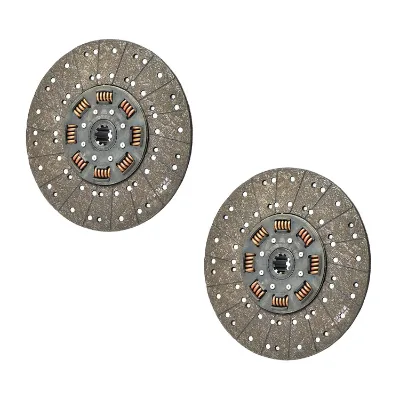


Factory Clutch Cover with Truck Car Auto Spare Parts Clutch Plate Embrague
$10.00 - $25.00
MOQ: 1 Pieces


Hot Sale High Performance Auto Parts Clutch Kit Clutch Plate Clutch Cover
$40.00 - $50.00
MOQ: 1 Pieces


Comprehensive Sourcing Guide
6 Spring with Cover Car Clutch Plate Sourcing Guide
Sourcing a 6-spring clutch cover assembly requires a disciplined approach to verifying mechanical compatibility and material integrity. The core component, often referred to as a clutch cover or pressure plate, serves as the critical interface between the engine’s flywheel and the clutch disc. In this configuration, six springs provide the necessary clamping force to engage the drivetrain smoothly while absorbing torsional vibrations. Buyers must recognize that this assembly is not a generic part; it is a precision-engineered unit where the interaction between the cover, the diaphragm spring (or individual coil springs in some designs), and the release bearing determines the vehicle’s shift quality and durability. The presence of six springs typically indicates a design optimized for balanced pressure distribution, which is essential for heavy-duty applications or high-torque engines.
Procurement decisions for these assemblies are heavily influenced by the specific classification of the clutch system, whether hydraulic, electromagnetic, or mechanical linkage. The supplied data indicates that suppliers offer products classified under ISO/TS16949 standards, which is a baseline requirement for automotive component manufacturing. However, the term "6 spring with cover" can refer to various internal configurations, including pressed steel covers with integrated spring seats or modular designs where springs are replaceable. Buyers must distinguish between OEM replacements and aftermarket variants, as the latter may vary in material grade and heat treatment processes. Understanding these distinctions is vital to avoid sourcing parts that fail under high thermal loads or excessive wear cycles.
Product Scope and Observed Listing Signals
The observed market signals reveal a diverse range of product attributes associated with clutch covers and related spring assemblies. Listings frequently cite materials such as high-carbon spring steel, specifically mentioning oil-tempered quenched wire, which is crucial for fatigue resistance. The standard wire range observed spans from 0.1mm to 12mm, indicating that suppliers cater to both light-duty and heavy-duty truck applications. Additionally, the product scope includes various clutch types, such as hydraulic clutches and electromagnetic clutches, suggesting that the "6 spring" configuration may be adapted for different actuation methods. Buyers should note that while the core function remains pressure application, the surrounding components like the release bearing and pilot bearing may vary significantly between listings.
Packing and origin data provide further context for logistics planning. Most products originate from China and are packed in cartons, sometimes with pallets for bulk shipments. This standardization simplifies inbound logistics but requires buyers to verify the structural integrity of the packaging to prevent damage to the delicate spring mechanisms during transit. The observed models, such as TH0023, LHQ003, and various OEM numbers like 31250-12070, highlight the importance of cross-referencing part numbers. The customization availability noted in several listings suggests that suppliers can modify dimensions or spring rates to meet specific vehicle requirements, offering flexibility for fleet operators or specialized machinery manufacturers.
Technical Specifications to Verify
Verifying technical specifications is the most critical step in ensuring the clutch cover assembly fits the target vehicle and performs as expected. The primary dimension to confirm is the mounting hole diameter and the overall diameter of the cover, as these determine physical compatibility with the flywheel and transmission housing. Observed standards include specific dimensions such as 1801251921.6 mm and 2001351418.7 mm, which likely correspond to different clutch disc sizes or bolt patterns. Buyers must also verify the stroke length, with observations indicating a 2-stroke configuration, which affects the pedal feel and release point. Incorrect stroke verification can lead to incomplete clutch disengagement or premature wear of the release bearing.
Material standards and heat treatment processes are equally important for long-term reliability. The data references standards such as DIN17223 and specific steel grades like 55SiCr and Fd Sicr, which denote the chemical composition and mechanical properties of the spring steel. Buyers should request mill certificates or material test reports to confirm that the springs are made from oil-tempered quenched high-carbon spring steel, as this treatment provides the necessary tensile strength and elasticity. Additionally, the production process, often cited as cold roll forming, impacts the grain structure of the metal. Verifying that the springs are properly tempered ensures they will not lose their clamping force under repeated thermal cycling, which is a common failure mode in heavy-duty applications.
Compliance and Safety Documentation
Compliance with international automotive standards is non-negotiable for sourcing clutch components. The most frequently cited certification in the observed listings is ISO/TS16949, which is a quality management standard specific to the automotive industry. This certification indicates that the supplier has implemented rigorous processes for design, production, and service, reducing the risk of defects. Buyers should verify that the certification is current and covers the specific manufacturing site of the clutch cover. While ISO9001 is mentioned in background data, ISO/TS16949 is the more relevant benchmark for automotive parts, as it includes additional requirements for risk management and continuous improvement.
Beyond quality management, safety and environmental certifications may be required depending on the destination market. Some listings mention CE, E-Mark, and RoHS certifications, which are critical for European and other regulated markets. E-Mark certification, in particular, is often mandatory for components that affect vehicle safety, such as clutch systems. Buyers must ensure that the supplier can provide valid certificates for these standards, as counterfeit or expired documentation is a risk in global sourcing. Additionally, verifying that the materials used are RoHS compliant ensures that hazardous substances are not present in the springs or cover, which is important for environmental regulations and worker safety during assembly.
Cost Drivers and Commercial Terms
Cost drivers for 6-spring clutch covers are primarily influenced by material costs, manufacturing complexity, and order volume. High-carbon spring steel prices fluctuate with global commodity markets, directly impacting the unit cost. The complexity of the cover design, including the precision of the spring seats and the balance of the assembly, also affects pricing. Listings show a wide price range from $0.1 to $190, reflecting the disparity between simple aftermarket parts and high-performance OEM equivalents. Buyers should analyze the cost structure to understand whether a lower price is due to material substitution or reduced quality control measures.
Commercial terms, including MOQ and lead times, vary significantly among suppliers. The observed MOQ range spans from 1 to 10,000,000 units, indicating that suppliers cater to both individual replacements and large-scale fleet contracts. For smaller orders, buyers may face higher per-unit costs due to setup fees. Lead times are not explicitly detailed in the provided data, but buyers should negotiate clear delivery schedules, especially for customized parts. Payment terms should be structured to protect against quality issues, such as using letters of credit or escrow services for large transactions. Understanding these commercial dynamics helps buyers optimize their total cost of ownership.
Supplier Qualification and Quality Control
Supplier qualification requires a thorough assessment of manufacturing capabilities and quality control systems. Buyers should prioritize suppliers who hold ISO/TS16949 certification and have a proven track record in automotive component manufacturing. Requesting samples for physical inspection is essential to verify dimensions, material quality, and spring rate. The samples should be tested for balance and runout, as imbalance can cause vibration and noise in the drivetrain. Additionally, buyers should inquire about the supplier’s inspection processes, including in-process checks and final random inspections, to ensure consistency across production batches.
Quality control extends beyond the initial sample approval. Buyers should establish clear acceptance criteria for defects, such as surface cracks, improper heat treatment, or dimensional deviations. Regular audits of the supplier’s facility can provide insights into their production processes and quality management practices. For long-term partnerships, implementing a supplier scorecard that tracks defect rates, delivery performance, and responsiveness can help maintain high standards. Buyers should also verify that the supplier has a robust traceability system, allowing them to track each batch of springs back to its raw material source, which is crucial for recalling defective parts if necessary.
Long-Term Procurement Checks
Long-term procurement success depends on continuous monitoring of supplier performance and market trends. Buyers should regularly review supplier quality metrics and address any recurring issues promptly. Building a relationship with multiple qualified suppliers can mitigate supply chain risks and provide leverage in negotiations. Additionally, staying informed about advancements in clutch technology, such as improved spring materials or new manufacturing techniques, can help buyers identify opportunities for cost savings or performance improvements. Regularly updating the approved supplier list ensures that the procurement team has access to the best available options.
Finally, buyers should maintain a comprehensive database of part numbers, specifications, and supplier certifications. This documentation facilitates quick reordering and simplifies the qualification of new suppliers. As vehicle models evolve, buyers must ensure that their sourcing strategy adapts to new requirements, such as changes in clutch design or regulatory standards. By maintaining a proactive approach to supplier management and quality assurance, buyers can secure a reliable supply of 6-spring clutch covers that meet their operational and financial goals.
FAQs
What certifications do the clutch plates hold?
The clutch plates hold ISO/TS16949 certification for friction, hydraulic, and electromagnetic classifications. This standard ensures quality management for automotive components used in cars, tractors, and heavy-duty trucks.
Which materials are used for the spring steel?
The springs are made from oil-tempered quenched high carbon spring steel wire. Specific material standards include DIN17223, 55SiCr, and various Sicr grades to ensure durability under compression loads.
Can the products be customized for specific needs?
Yes, customization is available for these clutch components. Buyers can request specific dimensions, colors, and packaging options like cartons with pallets to match their unique industrial or automotive requirements.
What is the minimum order quantity for these parts?
The minimum order quantity ranges from 1 to 10,000,000 units depending on the specific model and supplier. This flexibility allows buyers to source small batches or large industrial volumes efficiently.
How are the products packed for shipping?
Products are typically packed in cartons, with some options including pallets for bulk transport. This packaging ensures the clutch plates and springs remain secure during international shipping from China.
What applications support these clutch components?
These components support applications in cars, motorcycles, farm machinery, tractors, and racing cars. They are also suitable for industrial, furniture, and home appliance uses requiring compression or restoration functions.