Source 915MHz ELRS RC Receiver with T-Shaped Antenna for Drones, Cars, and Toys
Explore 30 listings for the 915MHz ELRS RC Receiver with T-Shaped Antenna, featuring varying frequencies, power outputs, and compatibility options. Buyers can compare specifications like input voltage, refresh rates, and antenna types to find suitable components for FPV systems and remote control applications.
Key considerations
Products List


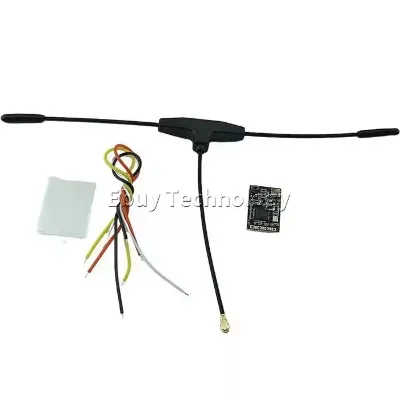
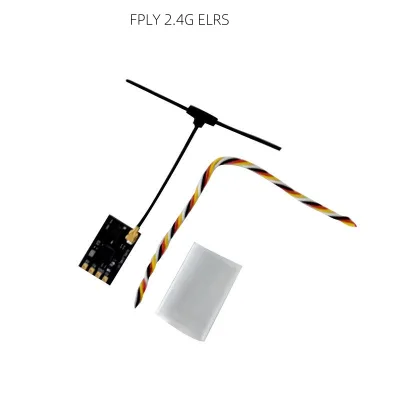
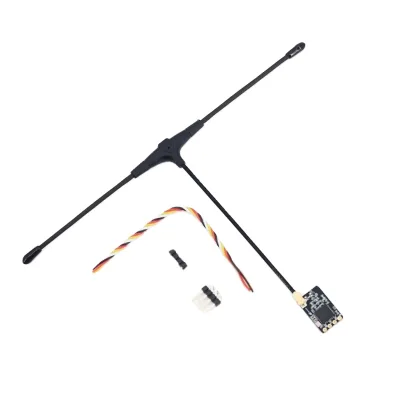
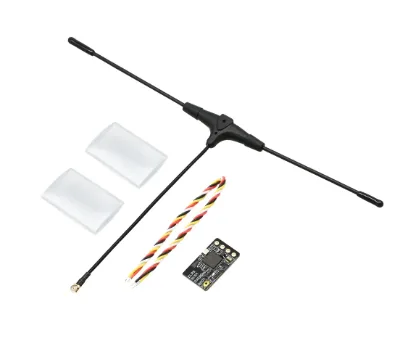
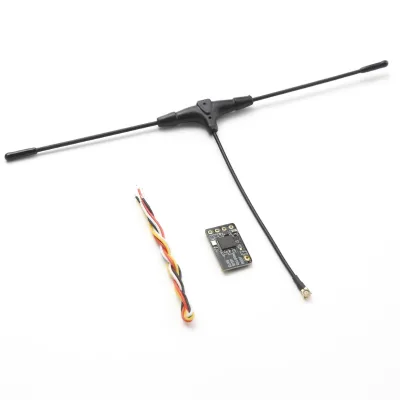
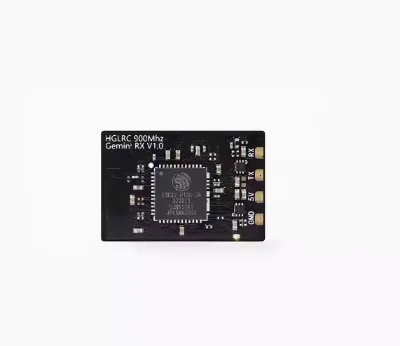
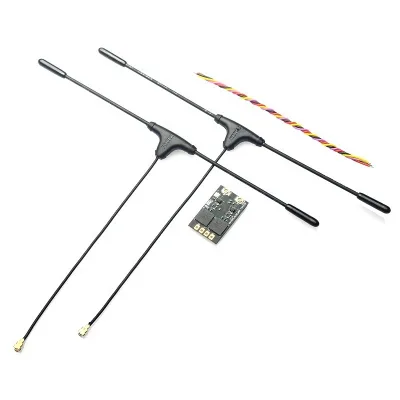
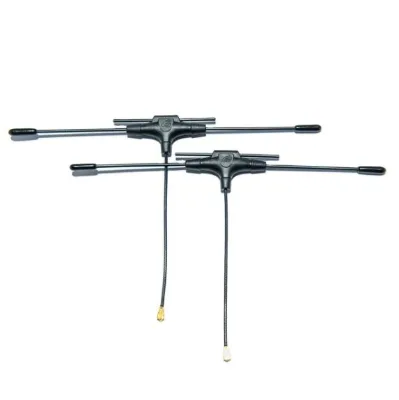
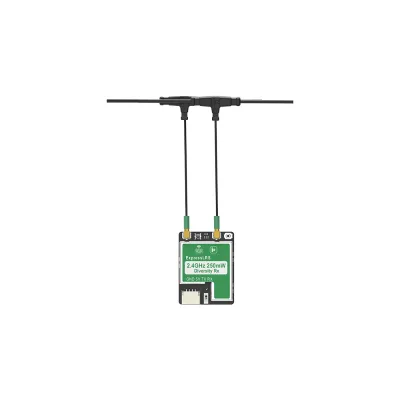
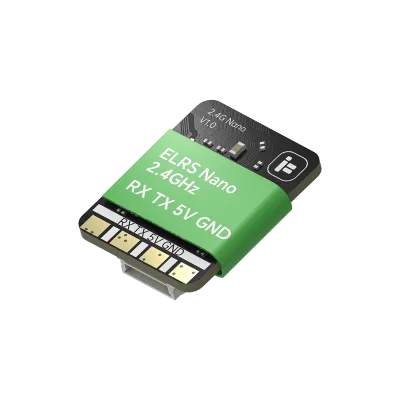
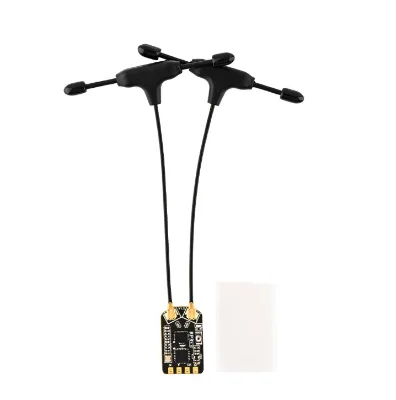
IFlight ELRS 2.4GHz/915MHz RX Gemini True Diversity Dual Antenna Receiver
$20.00 - $25.00
MOQ: 10 Minimum
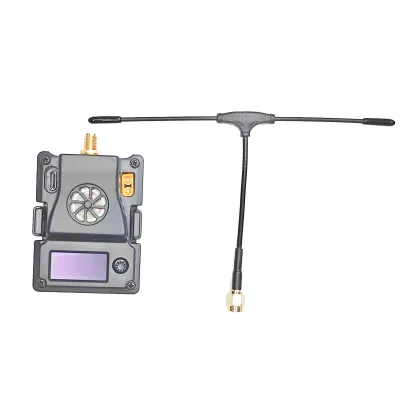
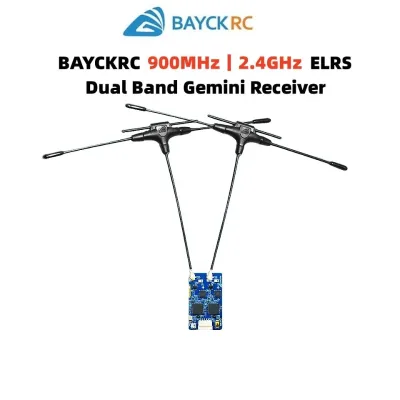
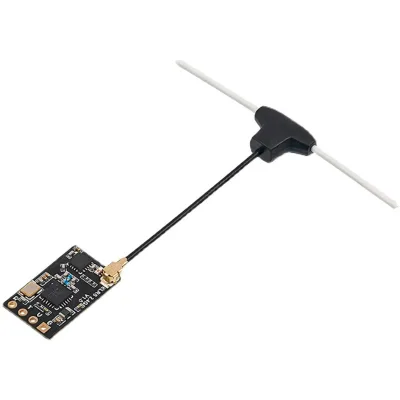


Comprehensive Sourcing Guide
Strategic Sourcing Guide for 915MHz ELRS RC Receivers with T-Shaped Antennas
The procurement of radio control (RC) components, specifically the 915MHz ELRS (ExpressLRS) receiver equipped with a T-shaped antenna, represents a critical decision point for buyers in the drone and remote control toy sectors. This guide synthesizes available product attributes and industry standards to provide a disciplined framework for sourcing these modules. The focus remains on verifying technical consistency, understanding cost structures, and establishing robust supplier evaluation criteria without relying on unverified market claims. The 915MHz frequency band is particularly relevant for specific regional regulatory environments and long-range applications, distinguishing it from the 2.4GHz and 433MHz variants also present in the broader market.
Technical Specifications and Frequency Band Verification
When sourcing a 915MHz ELRS receiver, the primary technical differentiator is the operating frequency band. While the market contains modules operating at 433MHz, 915MHz, and 2.4GHz, the specific requirement for a 915MHz unit necessitates strict verification of the frequency band attribute. Buyers must confirm that the product specification explicitly lists "915MHz" as the operating frequency, as the 433MHz variant operates on a different spectrum with distinct propagation characteristics and regulatory requirements. The core technology, ExpressLRS, is known for high-speed telemetry and low latency, but the physical implementation of the antenna is equally critical.
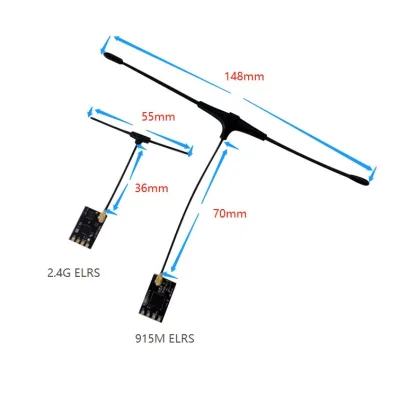
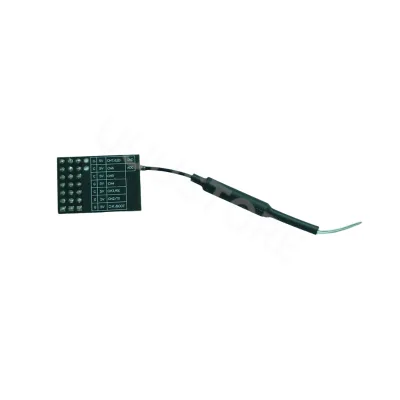
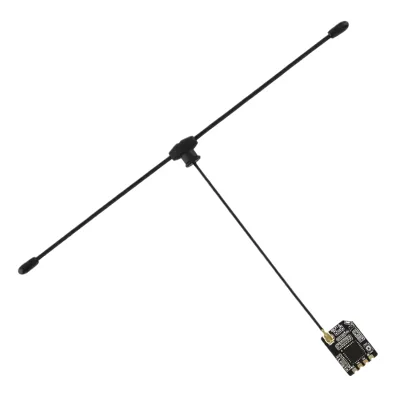
The T-shaped antenna is a specific design feature observed in several listings. This form factor is often chosen for its omnidirectional radiation pattern and mechanical durability in high-vibration environments typical of FPV (First Person View) drones. Procurement teams must verify that the "T-Shaped" attribute is not merely a cosmetic description but corresponds to the actual physical dimensions and impedance matching required for the 915MHz band. Additionally, the input voltage range for these modules is typically specified between 5V and 12V, often compatible with 2S battery configurations. Buyers should cross-reference the "Input Voltage" attribute against their power systems to ensure compatibility. The refresh rate, often cited as 25Hz or higher in similar telemetry systems, dictates the responsiveness of the control link, which is vital for high-performance applications.
Regulatory Compliance and Certification Checks
Compliance is a non-negotiable aspect of sourcing electronic communication devices. The 915MHz frequency band is primarily utilized in North America and parts of South America, whereas 433MHz is common in Europe and Asia. Sourcing a 915MHz module for use in a region where this frequency is restricted can lead to legal penalties and product seizure. Buyers must verify that the supplier can provide evidence of compliance with local regulatory bodies, such as the FCC in the United States or ETSI in Europe, depending on the destination market. The provided data indicates a "prod_standard" of 655, which may refer to physical dimensions or a specific internal standard, but it does not constitute a regulatory certification.
Furthermore, the "prod_origin" is listed as China, with specific locations noted as Shenzhen and Guangdong. While these are major manufacturing hubs, the "place of origin" being listed as Andorra in some data points suggests potential inconsistencies in supplier data entry or re-export scenarios. Buyers must exercise caution when origin data is conflicting. The "standard" attribute must be scrutinized to ensure it aligns with international safety and electromagnetic compatibility (EMC) standards. Without explicit certification data in the source material, procurement teams should request third-party test reports verifying that the 100MW output power and T-shaped antenna design do not exceed local transmission limits. The "Warranty" of 6 months is a common baseline, but it does not replace the need for regulatory compliance documentation.
Cost Drivers and Pricing Structure Analysis
The observed price range for these modules spans from 6.49 USD to 60 USD, a significant variance that reflects differences in brand, build quality, and included features. The lower end of this spectrum typically corresponds to generic OEM (Original Equipment Manufacturer) products, while the higher end may include branded units from manufacturers like RadioMaster or specialized kits with enhanced telemetry capabilities. The "Selling Units" attribute indicates that these are often sold as single items, which simplifies initial procurement but may impact bulk pricing tiers.
Cost drivers for the 915MHz ELRS receiver include the complexity of the RF circuitry, the quality of the T-shaped antenna, and the packaging specifications. The "Single package size" varies, with dimensions ranging from 10x5x2 cm to 12x0x8.0x5.0 cm, affecting shipping costs. The "Single gross weight" is extremely low, ranging from 0.010 kg to 0.020 kg, which suggests that air freight costs will be minimal, but the value density is high. Buyers should also consider the "MOQ" (Minimum Order Quantity), which ranges from 1 to 100 units. A higher MOQ often correlates with a lower unit price, but the flexibility of sourcing single units allows for prototyping and small-batch testing. The "Private mold" attribute being "Yes" for some items indicates that custom branding is possible, which can add to the initial tooling costs but reduces long-term unit costs for large volumes.
Typical Applications and System Integration
The primary application for the 915MHz ELRS receiver is within the FPV System ecosystem, specifically for drones and remote control vehicles. The "Type" attribute explicitly categorizes these as "Receiver" or "Transmitter & Receiver" modules, confirming their role in bidirectional communication. The "Compatible model" attribute lists specific frequencies like 750MHz and 500MHz, which may indicate backward compatibility or the need for specific frequency hopping sequences, though the primary focus remains on the 915MHz band. The "Use" attribute confirms suitability for "Vehicles & Remote Control Toys," encompassing a wide range of consumer and hobbyist applications.
Integration into an FPV system requires attention to the "System" attribute, which is defined as an "FPV System." This implies that the receiver must interface seamlessly with flight controllers and video transmitters. The "Principle of Work" described as "Slip Frequency Control Transducer" and "High Carrier Frequency PWM Control" suggests advanced signal processing capabilities that enhance link stability. Buyers should verify that the receiver's "Switch Mode" and "Refresh Rate" meet the latency requirements of their specific drone models. The "Age Range" of 14 years and up and "Gender: Unisex" attributes highlight the consumer nature of these products, but the technical complexity often appeals to professional pilots and engineers as well.
Supplier Evaluation and Origin Verification
Evaluating suppliers for ELRS components requires a rigorous approach to data consistency. The provided data contains conflicting origin information, with "China" listed alongside "Andorra." This discrepancy necessitates a verification step where buyers request official business licenses and factory audit reports to confirm the actual manufacturing location. The "Brand Name" attribute shows a mix of "OEM," "RadioMaster," and "Uangel," indicating a market with both generic and branded options. Buyers should prioritize suppliers who can clearly distinguish between their own brand and the OEM partners they utilize.
The "Compatible Brand" attribute lists "Others" and "DJI," suggesting that some modules are designed to work with specific ecosystems. However, the "Compatible Model" data also includes generic frequency references. Buyers must ensure that the "Compatible Brand" claim is supported by technical documentation, especially if integrating with proprietary systems like DJI. The "Private Mold" status of "Yes" is a positive indicator for suppliers capable of customization, but it also implies a higher barrier to entry for smaller buyers. Supplier evaluation should include a review of their "Warranty" terms, with the observed 6-month period serving as a benchmark for quality assurance.
Quality Control and Long-Term Procurement Considerations
Quality control for RF modules involves rigorous testing of the T-shaped antenna's performance and the stability of the 915MHz transmission. The "Tx Power" of 100MW is a critical parameter that must be verified through independent testing to ensure it meets the stated specifications without causing interference. The "Material" attribute is listed as "Other," which is vague; buyers should request specific material composition details to assess durability and heat resistance. The "Packing" method, described as "Carton," is standard, but the "Single package size" variations suggest that packaging optimization could be a factor in reducing logistics costs.
Long-term procurement considerations include the availability of spare parts and the lifecycle of the product. The "Refresh Rate" and "Function" attributes suggest that these are active components with ongoing development. Buyers should establish relationships with suppliers who offer consistent stock levels and have a clear roadmap for product updates. The "MOQ" range of 1-100 allows for flexible scaling, but buyers should negotiate volume discounts for orders exceeding 100 units. Finally, the "Warranty" of 6 months provides a baseline for returns, but buyers should consider the total cost of ownership, including potential downtime and replacement costs, when selecting a supplier.
Comparative Analysis of Module Attributes
To assist in decision-making, the following table summarizes key attributes observed in the market for 915MHz ELRS receivers and their implications for procurement.
| Attribute | Observed Value/Range | Procurement Implication |
|---|---|---|
| Frequency Band | 915MHz, 433MHz, 2.4GHz | Must verify 915MHz specifically for regional compliance. |
| Antenna Type | T-Shaped | Verify physical dimensions and impedance match. |
| Input Voltage | 5-12V (2s) | Ensure compatibility with drone battery systems. |
| Output Power | 100MW | Verify against local regulatory transmission limits. |
| Origin | China (Shenzhen/Guangdong) | Verify actual factory location; resolve conflicting data. |
| Brand | OEM, RadioMaster, Uangel | Distinguish between generic and branded quality. |
| MOQ | 1-100 | Flexible for prototyping; negotiate for bulk. |
| Warranty | 6 Months | Standard baseline; check for extended options. |
| Package Size | 10x5x2 cm to 12x8x5 cm | Affects shipping costs and storage. |
| Compatible Brand | Others, DJI | Verify integration compatibility with existing systems. |
This table highlights the variability in the market and the necessity for precise verification. The "Frequency Band" and "Origin" are the most critical fields to validate, as errors here can lead to regulatory non-compliance or supply chain disruptions. The "Antenna Type" and "Input Voltage" are technical parameters that directly impact the performance and safety of the final product. By systematically evaluating these attributes, buyers can mitigate risks and ensure the procurement of high-quality 915MHz ELRS receivers that meet their specific operational requirements.
FAQs
What frequency bands are available for ELRS receivers?
The available frequency bands include 915MHz, 2.4GHz, and 433MHz. Buyers must verify the specific band required for their region, as 915MHz is distinct from the 433MHz variant used in Europe and Asia.
Can I customize the product with a private mold?
Yes, customization is available and some listings indicate a private mold option. This allows for branding but may involve higher initial tooling costs compared to standard OEM units.
What is the typical input voltage for these modules?
The input voltage typically ranges from 5 to 12V, compatible with 2S battery configurations. This range ensures compatibility with standard drone power systems without requiring additional voltage regulators.
How does the T-shaped antenna affect performance?
The T-shaped antenna provides an omnidirectional radiation pattern suitable for high-vibration environments. This design is chosen for mechanical durability and consistent signal coverage in FPV drone applications.
What is the minimum order quantity for these receivers?
The minimum order quantity ranges from 1 to 100 units depending on the supplier. This flexibility allows for prototyping with single items or bulk purchasing for larger production runs.
Which brands are associated with these ELRS modules?
Brands observed include OEM, RadioMaster, and Uangel. Buyers should distinguish between generic OEM products and branded units to ensure the desired build quality and support levels.
Where are these products primarily manufactured?
Products originate from China, specifically Shenzhen and Guangdong regions. Some data lists Andorra, so buyers must verify the actual factory location to ensure supply chain accuracy.