Source Activated Carbon Dry Air Filter for Industry, Car, Engineering
Explore 30 listings for the Activated Carbon Dry Air Filter designed for industrial, automotive, and engineering applications. Buyers can compare specifications such as filtration grade, thickness, and customization options to find suitable solutions.
Key considerations
Products List


Activated Carbon Filter for Odor Remover, Activated Carbon Air Filter Manufacturer
$100.00 - $1000.00
MOQ: 5 Pieces


Air Purifier Replacement 3-in-1 High-Efficiency Activated Carbon Filter
$145.00 - $185.00
MOQ: 3 Pieces


Comprehensive Sourcing Guide
Strategic Sourcing Guide for Activated Carbon Dry Air Filters
Navigating the global market for activated carbon dry air filters requires a disciplined approach that balances technical performance with supply chain reliability. Buyers in industrial, automotive, and engineering sectors must move beyond generic product descriptions to verify specific material compositions, filtration grades, and structural configurations. The following guide synthesizes observed market data and verified product attributes to provide a framework for evaluating potential suppliers and selecting the right filtration solutions for specific operational needs.
Technical Specifications and Material Composition
The core functionality of an Activated Carbon Dry Air Filter relies heavily on the medium material and the specific configuration of the carbon content. Based on available market data, the primary filtration medium often consists of polyester or synthetic fiber substrates, which serve as the structural backbone for the adsorbent material. A critical technical parameter observed in high-performance units is the activated carbon content, which can reach approximately 60% in certain configurations. This high concentration is essential for maximizing the adsorption rate, with some documented units achieving an adsorption rate of more than 25% for specific contaminants.
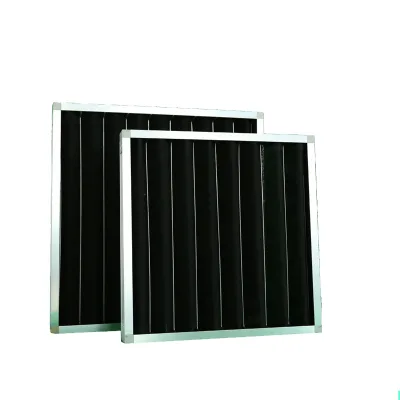
The physical structure of the filter is equally significant. Buyers should expect to encounter two primary structural formats: floor-standing units and wall-mounted configurations. The floor-standing models are typically designed for larger industrial applications where space is less constrained, while wall-mounted variants offer a compact solution for specific engineering setups. The filtration grade is another vital specification; market observations indicate a range from pre-filters to medium filters. For instance, some products are explicitly categorized as pre-filters, while others function as medium filters, often utilizing a bag filter or panel filter design.
Thickness is a variable that directly impacts the lifespan and capacity of the filter. Observed specifications include thicknesses of 5mm, 8mm, and 10mm. Thicker media generally provide a larger surface area for adsorption, potentially extending the service life in high-dust environments. The standard dimensions for these filters often follow modular patterns, such as 1m by 20m rolls or specific panel sizes like 592mm by 592mm by 600mm. However, it is crucial to note that many suppliers operate under a "as per customer's requirement" standard, meaning dimensions and thicknesses are frequently customizable to fit unique HVAC or industrial ducting systems.
Compliance and Certification Verification
In the B2B procurement of air filtration equipment, certification serves as a proxy for quality assurance and regulatory compliance. When sourcing activated carbon filters, buyers must verify that suppliers possess valid certifications that align with their target markets. The most frequently observed certifications in this sector include CE, ISO, RoHS, and CQC. Additionally, ISO9001 is a standard quality management certification that appears consistently across reputable listings, indicating a supplier's commitment to maintaining consistent product quality.
For buyers operating in the automotive or engineering sectors, the ISO/TS16949 certification is particularly relevant. This standard is specific to the automotive industry's quality management requirements and suggests that the supplier has processes in place to meet the rigorous demands of vehicle manufacturing. It is important to distinguish between general ISO certifications and industry-specific ones. While ISO9001 covers general quality management, ISO/TS16949 addresses the specific supply chain requirements of the automotive sector.
Buyers should also be aware of the environmental standards associated with these products. The RoHS (Restriction of Hazardous Substances) certification indicates that the filter materials do not contain specific hazardous substances, which is a critical requirement for export to many global markets. The CQC (China Quality Certification) is another standard often cited, particularly for products manufactured and sold within the Chinese market. When evaluating a supplier, procurement teams should request current copies of these certificates and verify their validity dates, as certifications can expire or be suspended.
Cost Drivers and Pricing Variables
Understanding the cost structure of activated carbon dry air filters is essential for budgeting and total cost of ownership analysis. The observed price range in the market is extremely wide, spanning from $0.34 to $3,000 USD. This vast disparity is not indicative of a single product type but rather reflects the diversity in size, material density, and customization levels. A small panel filter may fall at the lower end of this spectrum, while a large, custom-engineered floor-standing unit with high carbon content and specialized packaging will command a premium price.
Several factors drive these cost variations. First, the material composition plays a significant role. Filters utilizing a higher percentage of activated carbon (e.g., 60%) or those made from premium synthetic fibers will inherently cost more than basic pre-filters. Second, the level of customization is a major cost driver. Products that adhere to a "standard export packing" or "PE bag" format are generally more affordable than those requiring custom carton packaging or vacuum-sealed plastic bags to prevent moisture absorption during transit.
The Minimum Order Quantity (MOQ) also influences the unit price. Market data shows an MOQ range from 1 to 20,000 units. Suppliers often offer tiered pricing structures where the unit cost decreases as the order volume increases. Buyers with low-volume needs may face higher per-unit costs, while those capable of meeting high MOQs can negotiate more favorable rates. Additionally, the origin of the product, specifically from manufacturing hubs like Zhongshan, Guangdong, China, or other regions in Guangdong, can impact logistics costs and final pricing, though the base manufacturing cost is often competitive due to established supply chains in these regions.
Typical Applications and Operational Environments
Activated carbon dry air filters are versatile and find application across multiple industries. The primary usage categories identified in the market include general industry, automotive, and engineering sectors. In industrial settings, these filters are employed to remove volatile organic compounds (VOCs), odors, and particulate matter from the air supply, ensuring a clean environment for sensitive manufacturing processes. The "dry" aspect of the filter is crucial, as it implies the unit is designed to operate effectively without the interference of high humidity, which can degrade the performance of activated carbon.
The operational environment for these filters is defined by specific constraints. One key parameter is the relative humidity, with many products rated for operation at lower than 80% relative humidity. Exceeding this threshold can saturate the activated carbon, reducing its adsorption capacity and potentially leading to mold growth or structural degradation of the filter media. Therefore, buyers must assess the ambient conditions of their facility before selecting a filter.
The specific type of filter also dictates its application. Panel filters are commonly used in air handling units for general ventilation, while bag filters are often deployed in larger industrial systems requiring higher dust holding capacity. Some products are marketed specifically as "air dust filtration activated carbon filter sheets," suggesting their use in applications where space is limited or where the filter needs to be integrated into existing ductwork. The "Fresh" brand name observed in the market suggests a focus on air quality improvement, but the underlying technology remains consistent across various manufacturers.
Supplier Evaluation and Quality Control
Evaluating a supplier for activated carbon filters requires a multi-faceted approach that goes beyond price comparisons. Buyers should prioritize suppliers who demonstrate flexibility in customization, as evidenced by the "OEM: Acceptable" attribute found in many listings. This indicates that the supplier is willing to adapt product specifications, such as dimensions, media type, or packaging, to meet specific client needs. A supplier's ability to produce to "customer's requirement" standards is a strong indicator of their engineering capabilities and responsiveness.
Quality control is another critical factor. The condition of the product is listed as "New," which is standard, but buyers should verify the manufacturing process to ensure consistency. Features such as a "multi-pocket design" and "large air flow" capabilities are technical attributes that suggest advanced engineering. These features are not merely marketing terms but indicate a design intended to maximize efficiency and reduce pressure drop across the filter. Buyers should request technical data sheets that detail these features and provide evidence of their performance.
Packaging is often overlooked but is vital for maintaining product integrity. The market observes various packaging standards, including standard export packing, PE bags, cartons, and vacuumed plastic bags. For activated carbon filters, which are sensitive to moisture, vacuumed plastic bag packaging is a superior choice as it protects the adsorbent material from premature saturation during shipping. Buyers should explicitly specify their packaging requirements in the purchase order to ensure the product arrives in optimal condition.
Long-Term Procurement Considerations
Sourcing activated carbon filters is not a one-time transaction but part of a long-term maintenance strategy. Buyers must consider the guarantee period, which is observed to be around 3 months for some products. This relatively short warranty period highlights the importance of selecting a supplier with a robust after-sales support system. A reliable supplier should be able to provide technical assistance and replacement parts if issues arise within the warranty period.
The lead time and production capacity are also critical for long-term planning. While specific lead times are not universally standardized in the provided data, the ability to handle large MOQs (up to 20,000 units) suggests that capable suppliers have the capacity to scale production. Buyers should establish clear communication channels with suppliers to ensure timely delivery, especially for critical industrial applications where filter failure can lead to operational downtime.
Finally, buyers should plan for the lifecycle of the filter. The "Activated Carbon Filter Type" is noted as "Bulk Type" in some instances, which may require specific handling and disposal procedures. Understanding the end-of-life requirements for the filter media is essential for compliance with environmental regulations. By focusing on suppliers who offer transparent information about material composition and disposal, buyers can ensure their procurement strategy aligns with sustainability goals and regulatory requirements.
Comparative Analysis of Filter Configurations
To assist in decision-making, the following table summarizes the key differences between common filter configurations observed in the market. This comparison highlights the trade-offs between structure, material, and application.
| Feature | Floor Standing Unit | Wall Mounted Unit | Panel Filter | Bag Filter |
|---|---|---|---|---|
| Structure | Floor Standing | Wall Mounted | Panel | Bag |
| Typical Usage | Large Industrial | Compact Engineering | HVAC Ventilation | High Dust Load |
| Material | Polyester/Synthetic | Polyester/Synthetic | Polyester/Synthetic | Synthetic Fiber |
| Filtration Grade | Pre/Medium | Pre/Medium | Pre Filter | Medium Filter |
| Carbon Content | Up to 60% | Up to 60% | Variable | Variable |
| Customization | High (Standard Export) | High (Carton) | High (Custom Size) | High (Custom Size) |
| Packaging | Standard Export | Carton | PE Bag | Vacuumed Plastic Bag |
This comparison underscores that there is no single "best" filter; the optimal choice depends entirely on the specific operational constraints, space availability, and air quality requirements of the buyer's facility. By carefully analyzing these attributes against the provided specifications, procurement teams can make informed decisions that ensure long-term operational efficiency and compliance.
FAQs
What certifications do activated carbon dry air filters typically have?
These filters commonly hold CE, ISO, RoHS, CQC, and ISO9001 certifications. Some automotive-specific models also carry ISO/TS16949. Buyers should verify current certificate validity dates before procurement to ensure regulatory compliance.
How is the activated carbon content measured in these filters?
High-performance units often contain approximately 60% activated carbon by weight. This concentration supports an adsorption rate of more than 25% for specific contaminants. The medium material usually consists of polyester or synthetic fiber substrates.
Which structural formats are available for industrial air filtration?
Filters are available in floor-standing and wall-mounted structures. They also come as panel filters or bag filters depending on the application. Dimensions can be customized to meet specific customer requirements or standard sizes like 592x592x600mm.
Can buyers customize the thickness and dimensions of the filter?
Yes, customization is available for thicknesses of 5mm, 8mm, or 10mm. Standard roll sizes include 1m by 20m, while panel sizes can be tailored. Suppliers operate under a standard of as per customer's requirement for many specifications.
What is the typical price range for these filtration products?
The observed price range spans from 0.34 to 3000 USD. This variation depends on size, material density, and customization levels. Smaller panel filters cost less, while large custom-engineered units with high carbon content command higher prices.
How does relative humidity affect the performance of the filter?
Filters are rated for operation at relative humidity lower than 80% Rh. Exceeding this threshold can saturate the activated carbon and reduce adsorption capacity. Buyers must assess ambient conditions to ensure effective operation and prevent structural degradation.