Source Adjustable Brass Cover Fabric Button for Sweater Jacket Uniform
Find Adjustable Brass Cover Fabric Button options from 30 suppliers offering various sizes and styles for sweater, jacket, and uniform garments. Compare specifications including metal type, color matching, and packing details to select the right fasteners for your production needs.
Key considerations
Products List




Comprehensive Sourcing Guide
Strategic Sourcing Guide for Adjustable Brass Cover Fabric Buttons
Understanding the Product Category and Technical Specifications
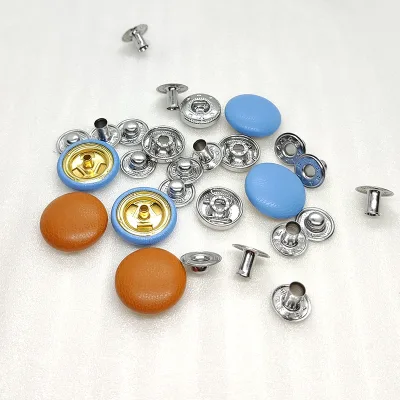
The core keyword "Adjustable Brass Cover Fabric Button" refers to a specialized fastener component that combines structural durability with aesthetic versatility. In the context of B2B procurement, this item is distinct from standard metal buttons or simple fabric-covered variants. The product is defined by a specific construction where a metal core, typically brass or iron, is encased in a fabric covering. This design allows for a seamless integration with various garment types, offering a soft touch while maintaining the strength required for heavy-duty applications.
Based on observed market data, the technical attributes of these buttons vary significantly across different suppliers. The material composition is a primary differentiator. While the core is frequently identified as brass or iron, the outer layer is consistently described as cloth or fabric. The shape is predominantly round, though variations exist. A critical technical specification to verify is the adjustability feature. Some listings explicitly state that the product is "Adjustable," allowing for size variance or fit customization, while other similar items are marked as "Non Adjustable." Buyers must carefully distinguish between these two states during the sourcing phase, as the mechanism for adjustment (if present) impacts the manufacturing process and the final cost.
The sizing specifications for these components are equally diverse. Observed data indicates a wide range of dimensions, including metric measurements such as 12mm, 15mm, 17mm, 20mm, and larger sizes extending up to 40L in certain contexts, though "L" in this context may refer to a specific sizing standard rather than a linear measurement. Other listings specify sizes in millimeters like 10mm, 12mm, 15mm, 17mm, and 20mm. The standard capacity for some models ranges from 12L to 64L, while others adhere to a 14-40L standard. This inconsistency highlights the necessity for buyers to request precise dimensional drawings and physical samples before committing to a bulk order. The button type is generally categorized as a snap button or a flatback button, with some featuring a covered technics where the metal is entirely concealed by the fabric.
Compliance, Certification, and Safety Standards
In the global textile and apparel supply chain, compliance is not merely a formality but a critical requirement for market access. For fabric-covered buttons, particularly those intended for use in children's clothing, uniforms, or high-end fashion, certification plays a pivotal role. The most prominent certification observed in the product data is "Okeo," likely referring to the Oeko-Tex Standard. This certification ensures that the textile components, including the fabric covering and the adhesives used, are free from harmful substances.
When evaluating suppliers, buyers should verify the specific Oeko-Tex standard applicable to the product. The data mentions "Okeo" and "Cetificater" (Certificater) as attributes, indicating that some manufacturers provide documentation for their materials. However, the presence of this attribute in a listing does not guarantee that every unit in a specific batch is certified. Buyers must request the actual certificate number and verify its validity with the issuing body. The standard should cover the fabric material, the metal core (if plating is involved), and the dyeing processes used.
The manufacturing technics also influence compliance. The data lists "Dyeing+Plating" as a specific technique. This combination requires scrutiny regarding the chemicals used in the dyeing process and the heavy metal content in the plating. For instance, if the button is made of brass, the plating process must ensure that lead and cadmium levels are within the limits set by regulations such as REACH in Europe or CPSIA in the United States. The "Eco-Friendly" feature mentioned in some listings suggests a commitment to sustainable practices, but this should be substantiated by third-party testing reports rather than marketing claims.
Furthermore, the "Dry Cleaning" feature noted in the product attributes indicates that the button is designed to withstand chemical cleaning processes. This is a crucial performance claim for garments that require professional maintenance. Buyers should ask for test results that demonstrate the button's resistance to solvents and its ability to retain color and structural integrity after dry cleaning cycles. Without such verification, the risk of product failure in the field increases, potentially leading to costly recalls or brand reputation damage.
Cost Drivers and Pricing Dynamics
The pricing of adjustable brass cover fabric buttons is influenced by a complex interplay of material costs, labor intensity, and order volume. The observed price range in the market is extremely low, spanning from 0 to 3 USD, which suggests that these figures may represent unit costs for very large volumes or specific promotional listings. However, relying solely on the lowest observed price can be misleading. The actual cost is heavily driven by the complexity of the "covered" technics. Unlike a simple metal button, a fabric-covered button requires multiple steps: cutting the fabric, wrapping it around the metal core, and securing it with adhesive or stitching. This labor-intensive process increases the unit cost compared to standard snap buttons.
Material selection is another significant cost driver. Brass is generally more expensive than iron, and the quality of the fabric covering also varies. High-quality, durable fabrics that resist fading and wear will command a higher price. Additionally, the customization options, such as "Customized Engraved Logo," add to the cost. The data indicates that customization is available, but the MOQ (Minimum Order Quantity) for such customizations is likely higher than for standard items.
The MOQ range observed in the market is substantial, varying from 100 to 20,000 units. This wide range indicates that suppliers have different production capacities and cost structures. Smaller MOQs, such as 100 or 1,000 sets, may come with a higher per-unit price due to the setup costs being amortized over fewer units. Conversely, larger orders, potentially up to 20,000 units, can leverage economies of scale to reduce the unit cost. Buyers must balance their inventory needs with their cash flow constraints. The "Not Stock" status of some items suggests that these are made-to-order products, which may affect lead times and pricing stability.
Packing methods also influence the final landed cost. The data mentions packing options like "10gross/Bag" and "500PCS/Bag," as well as "Carton" and "Carton Packing." Efficient packing reduces shipping volume and damage risk, which can lower logistics costs. However, specialized packing for custom orders may incur additional fees. Buyers should request a detailed breakdown of costs, including material, labor, packaging, and shipping, to understand the true cost drivers and negotiate effectively.
Typical Applications and Usage Scenarios
The versatility of adjustable brass cover fabric buttons makes them suitable for a wide array of applications across the fashion and utility sectors. The observed usage data lists "Sweater," "Jacket," "Trousers," "Shoes," "Toys," "Hat," and "Bags" as primary use cases. This broad applicability stems from the button's ability to blend seamlessly with different fabric textures while providing a secure fastening mechanism.
In the garment industry, these buttons are particularly popular for outerwear such as jackets and sweaters. The "Fashion" and "Simple" styles noted in the data suggest that they are often used in contemporary designs where a clean, unobtrusive look is desired. The "OL" (Office Lady) style indicates a suitability for professional attire, where a polished appearance is essential. The "Luxurious" element attribute suggests that these buttons can also be used in high-end fashion lines, where the quality of the fabric covering and the finish of the metal core are paramount.
Beyond apparel, the usage data points to applications in accessories and toys. For bags and hats, the button serves both a functional and decorative purpose. The "Monocolor" and "Color Matching" attributes highlight the ability to customize the button to match the specific color palette of the product. This is crucial for brands that require strict color consistency across their product lines. In the toy industry, the "Eco-Friendly" and "Okeo" certified attributes are particularly important, as safety and non-toxicity are paramount concerns for parents and regulators.
The "Uniform Garments" usage category further expands the potential market. Schools, corporate entities, and service industries often require durable and standardized fasteners. The "Dry Cleaning" feature ensures that these buttons can withstand the rigorous cleaning processes required for uniforms. The "Snap Button" type is particularly advantageous in this context, as it offers ease of use and durability. However, buyers must ensure that the button's adjustability, if required, does not compromise the security of the fastening in high-stress environments.
Supplier Evaluation and Quality Control Protocols
Selecting the right supplier for adjustable brass cover fabric buttons requires a rigorous evaluation process that goes beyond simple price comparisons. The first step is to verify the supplier's location and production capabilities. The data indicates that the place of origin is primarily "China," with specific mentions of "Guangdong, China." This region is known for its robust textile and hardware manufacturing base, but it also hosts a wide range of suppliers with varying quality standards. Buyers should assess the supplier's factory capacity, quality control systems, and ability to meet specific customization requirements.
Quality control is a critical aspect of the procurement process. Given the "Not Stock" status of many items, the production process must be tightly controlled to ensure consistency. Buyers should request a detailed quality control plan that covers material inspection, in-process checks, and final product testing. The "Dyeing+Plating" technics require specific attention to color consistency and plating adhesion. Tests should be conducted to verify that the fabric covering does not peel or fray after repeated use or cleaning.
The "7_days_sample_order_lead_time: Not Support" attribute is a significant red flag for buyers who need rapid prototyping or quick turnaround times. This suggests that the supplier may have a rigid production schedule or limited flexibility. Buyers should clarify the actual lead time for sample orders and bulk production. A lack of sample support can delay the product development cycle and increase the risk of receiving non-compliant goods.
When evaluating suppliers, buyers should also consider their certification status. While "Okeo" is mentioned, the validity and scope of the certification must be verified. Suppliers should be able to provide up-to-date certificates and test reports for the specific batch of products. The "Customized Engraved Logo" feature requires a separate evaluation of the supplier's engraving capabilities and the durability of the engraving. Buyers should request samples with custom logos to assess the quality of the engraving and its resistance to wear.
Long-Term Procurement Considerations and Risk Management
Sourcing adjustable brass cover fabric buttons is not a one-time transaction but a long-term partnership that requires careful risk management. The variability in product attributes, such as the "Adjustable" vs. "Non Adjustable" status and the diverse size ranges, necessitates clear communication and detailed specifications to avoid misunderstandings. Buyers should establish a comprehensive specification sheet that defines all critical parameters, including material composition, dimensions, color, and performance requirements.
Inventory management is another key consideration. The "Not Stock" status of many items means that production lead times can be unpredictable. Buyers should plan their inventory levels carefully to avoid stockouts, especially for popular sizes and colors. The wide MOQ range, from 100 to 20,000 units, offers flexibility but also requires strategic planning. Smaller MOQs may be suitable for testing new designs, while larger MOQs are necessary for established products to achieve cost efficiency.
Supply chain resilience is crucial in the face of potential disruptions. Buyers should diversify their supplier base to mitigate the risk of production delays or quality issues. Maintaining relationships with multiple suppliers in different regions can provide a buffer against localized disruptions. Additionally, buyers should monitor market trends and regulatory changes that could impact the product, such as new environmental regulations or changes in trade tariffs.
Finally, the long-term success of the procurement strategy depends on continuous improvement and feedback loops. Buyers should regularly review supplier performance, product quality, and cost efficiency. Establishing a feedback mechanism for issues such as color fading, plating peeling, or sizing inconsistencies can help drive improvements in the product and the supply chain. By focusing on these long-term considerations, buyers can ensure a stable and reliable supply of high-quality adjustable brass cover fabric buttons for their products.
FAQs
What materials are used for adjustable brass cover fabric buttons?
These buttons typically use a metal core made of brass or iron encased in cloth. The outer fabric covering provides a soft touch while the metal core ensures structural durability for heavy-duty applications.
Which certifications are available for these fabric-covered buttons?
Some products feature Okeo certification to ensure the textile components are free from harmful substances. Buyers should verify specific certificate numbers and test reports for the fabric and dyeing processes used.
How can I find suppliers with adjustable features for these buttons?
You can identify suppliers by checking if the product attributes explicitly state Adjustable status. Note that some listings are marked as Non Adjustable, so verifying this specific attribute is crucial before ordering.
What is the typical MOQ range for customizing these buttons?
The observed minimum order quantity ranges from 100 to 20,000 units depending on the supplier. Customization options like engraved logos often require higher volumes to amortize setup costs effectively.
Can these buttons withstand dry cleaning processes for uniforms?
Yes, certain listings indicate a Dry Cleaning feature suitable for uniform garments. However, buyers should request test results to confirm resistance to solvents and color retention after multiple cleaning cycles.
What packaging options are available for bulk orders of these buttons?
Common packing methods include 10 gross per bag, 500 pieces per bag, or carton packing. Efficient packaging reduces shipping volume and damage risk, which can lower overall logistics costs for the buyer.