Source Adult Surgical Endotracheal Tube for Anesthesia, ICU, and Emergency
Find 25 Adult Surgical Endotracheal Tube options from verified Chinese manufacturers. Compare features like cuff types, sizes, and sterilization methods to select the right airway management device for your procurement needs; compare the available evidence and request quotations based on your requirements.
Key considerations
Products List

Medical Supply Pediatric and Adult PVC with Cuff Standard Endotracheal Tube
$0.29 - $0.34
MOQ: 5000 Pieces


High-Quality Medical Grade Endotracheal Tube for Precise Airway Management
$0.19 - $0.28
MOQ: 2000 Pieces


Disposable Reinforced Tracheal Suction Tube Endotracheal Tube with Suction Port
$0.24 - $0.32
MOQ: 10000 Pieces


Comprehensive Sourcing Guide
Adult Surgical Endotracheal Tube Sourcing Guide
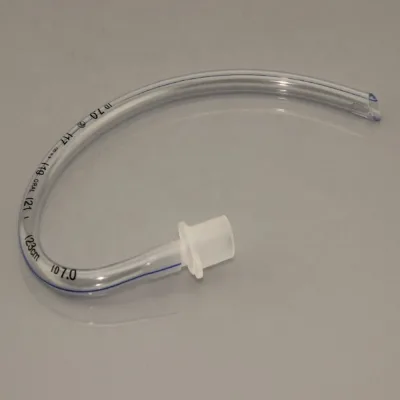
Procurement professionals must first distinguish between standard endotracheal tubes and specialized variants like double-lumen or preformed tubes when sourcing adult surgical equipment. The market offers distinct models ranging from 2.5mm to 10.0mm internal diameters, with specific configurations such as oral and nasal options designed for different airway management needs. Buyers should verify that the listed product name matches the exact clinical requirement, as a standard cuff tube differs significantly from a preformed tube intended for complex surgeries.
Observations indicate that suppliers often list multiple packaging configurations, including blister bags, individual boxes, and bulk cartons, which directly impact logistics planning. The availability of customization and logo printing suggests that many manufacturers support branded procurement, yet the core product specifications must remain consistent with surgical safety standards. It is critical to confirm whether the specific model number, such as HY-035 or Ym-A030, aligns with the intended patient demographic and surgical procedure before finalizing any order.
Product Scope and Observed Listing Signals
Buyers should analyze the observed price range of 0.19 to 500 USD to understand the variance between single-unit samples and bulk commercial orders. The minimum order quantity typically spans from 100 to 10,000 units, requiring a clear assessment of inventory needs before engaging with suppliers. High-volume procurement often benefits from the lower unit costs found in the broader range, while smaller trial orders may incur higher per-piece rates, necessitating a careful cost-benefit analysis for initial stockpiling.
The physical specifications of the packaging, such as box dimensions of 42x38x32 cm or 54x38x37 cm, are essential for calculating shipping volume and storage requirements. Suppliers frequently utilize corrugated boxes or paper-plastic bags, and the gross weight of individual units is recorded at approximately 0.100 kg, which aids in freight cost estimation. Procurement teams must ensure that the selected packaging details match their warehouse capacity and that the unit count per carton aligns with their distribution strategy.
Technical Specifications to Verify
Verification of the internal diameter range is paramount, as adult surgical tubes typically span from 5.5mm to 9.0mm, with some models extending up to 10.0mm. Buyers must confirm that the specific model number corresponds to the required size range, ensuring that the tube fits the patient's anatomy without causing trauma or airway obstruction. The distinction between oral and nasal preformed tubes is also critical, as each design serves unique clinical pathways and requires specific handling during the surgical procedure.
Material properties such as flexibility and transparency are key indicators of tube quality and visibility during insertion. The classification of these items as Class II medical instruments mandates that the polymer materials used meet strict biocompatibility and durability standards. Procurement officers should request detailed material data sheets to confirm that the product is disposable and designed for single-use scenarios, ensuring that the flexibility and structural integrity meet the rigorous demands of adult surgical environments.
Compliance and Safety Documentation
Regulatory compliance is non-negotiable, with most observed listings requiring CE and ISO certifications, including ISO13485 for quality management systems. Buyers must verify that the specific certificate number is valid and corresponds to the exact model being purchased, as certifications can vary between product lines within the same manufacturer. The presence of Ethylene Oxide Sterilization is a standard requirement for these devices, and documentation must explicitly confirm that the sterilization process was completed according to recognized safety protocols.
Safety documentation should also include clear storage requirements, such as the need to keep products in a dry, ventilated, and cool place to maintain material integrity. The instrument classification as Class II implies a moderate risk level, necessitating rigorous traceability and post-market surveillance records from the supplier. Procurement teams should ensure that all provided certificates are current and that the supplier maintains a robust system for managing regulatory updates and compliance changes in the medical device sector.
Cost Drivers and Commercial Terms
The total cost of ownership is influenced by the unit price, which varies significantly based on the order volume and specific model complexity. While sample prices may be as low as 0.35 USD per piece, bulk pricing structures often differ, requiring a detailed negotiation of tiered pricing based on the minimum order quantity of 100 to 10,000 units. Buyers should analyze the cost implications of different packaging options, as larger carton quantities may reduce per-unit shipping costs but increase initial capital outlay.
Commercial terms must clearly define the lead time and payment conditions, which are often tied to the supplier's production capacity and location. The origin of the product, whether from Guangdong or Zhejiang in China, can impact shipping timelines and import duties, making it essential to clarify these logistical details early in the negotiation process. Procurement professionals should also consider the cost of customization, such as logo printing, which may add to the base unit price and affect the overall budget for the project.
Supplier Qualification and Quality Control
Supplier qualification requires a thorough review of the company's background, including their location and history in the medical device manufacturing sector. The presence of multiple product lines, such as endobronchial tubes and standard endotracheal tubes, indicates a diversified manufacturing capability, but buyers must ensure that quality control processes are consistent across all product categories. It is advisable to request audit reports or quality assurance records to confirm that the supplier adheres to international standards for medical device production.
Quality control checks should focus on the consistency of product specifications, such as the internal diameter and material flexibility, across different production batches. Buyers should verify that the supplier has a robust system for handling defects and that they provide clear instructions for storage and handling to prevent damage during transit. Establishing a clear communication channel for quality issues is essential, ensuring that any deviations from the agreed specifications can be addressed promptly and effectively.
Long-Term Procurement Checks
Establishing a long-term partnership requires regular performance reviews to ensure that the supplier consistently meets quality and delivery expectations. Procurement teams should monitor the supplier's ability to maintain certification status and adapt to any changes in regulatory requirements that may affect the product's marketability. Continuous evaluation of the supplier's responsiveness to quality issues and their capacity to scale production during peak demand periods is crucial for maintaining a reliable supply chain.
Buyers should also assess the supplier's commitment to innovation and product improvement, as the medical device landscape is constantly evolving. Regular discussions about potential product enhancements, such as new sizes or improved materials, can help ensure that the procurement strategy remains aligned with clinical needs. Maintaining a proactive relationship with the supplier allows for better anticipation of market trends and ensures that the organization remains competitive in providing high-quality surgical equipment.
FAQs
What sizes are available for adult endotracheal tubes?
Adult endotracheal tubes are available in sizes ranging from 2.5mm to 10.0mm internal diameter. Specific preformed oral and nasal variants typically cover 5.5mm to 8.0mm. These dimensions ensure proper fit for various patient anatomies and clinical requirements during surgical procedures.
Are these endotracheal tubes sterilized and certified?
Yes, the tubes undergo Ethylene Oxide Sterilization to ensure safety. They hold CE and ISO certifications, including ISO13485 compliance. This ensures the products meet international quality and safety standards for medical materials and accessories used in surgical environments.
Can I request custom logo printing on the packaging?
Custom logo printing is available for these medical devices. Buyers can request branding on the blister bags or cartons. This customization service allows distributors and hospitals to maintain their brand identity while sourcing high-quality, disposable surgical supplies from verified manufacturers.
What is the minimum order quantity for these tubes?
The minimum order quantity typically ranges from 100 to 10,000 pieces depending on the specific model and packaging configuration. Standard cartons contain 100 pieces, while bulk boxes may hold 20 pieces. Buyers should confirm exact MOQs with suppliers for large-scale procurement.
How should these tubes be stored after delivery?
Store the tubes in a dry, ventilated, and cool place to maintain sterility and material integrity. Avoid exposure to direct sunlight or high humidity. Proper storage conditions are essential for preserving the flexible polymer materials and ensuring the devices remain safe for clinical use.
What packaging formats are used for these medical tubes?
Products are packed in individual blister bags, with ten pieces per box and one hundred pieces per carton. Some variants use corrugated boxes or paper-plastic bags. The outer carton dimensions vary, such as 42x38x32 cm or 54x38x37 cm, depending on the model.