Source Adult Women Monokini for beach, pool, and resort wear
Compare 30 listings of Adult Women Monokini featuring materials like polyester and nylon, with options for hollowed or pure color patterns. Buyers can review specifications including sizes from S to XL, customization availability, and quick-dry features to find suitable swimwear for various occasions.
Key considerations
Products List


Hot Selling Swimsuit Women Bikini Set High Waist Bottom Plus Size Monokini
$6.99 - $15.00
MOQ: 2 Pieces


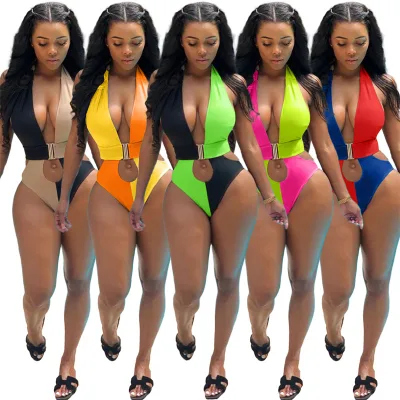

Women's Swimming Suit Long Sleeves Swimwear Female V-Neck Monokini Bathing Suit with Zippe
$8.58 - $10.68
MOQ: 200 Pieces

Comprehensive Sourcing Guide
Strategic Sourcing Guide for Adult Women Monokini Procurement
The global market for Adult Women Monokini swimwear presents a complex landscape where material science, design customization, and supply chain logistics intersect. For procurement professionals, the primary objective is to navigate a diverse array of product attributes while ensuring that the final goods meet specific functional and aesthetic requirements. The core keyword "Adult Women Monokini" encompasses a wide spectrum of designs, ranging from high-elasticity, backless styles to more conservative, pure color options. Successful sourcing in this category requires a disciplined approach to verifying product specifications, understanding cost drivers, and establishing robust quality control protocols. This guide outlines the essential factors buyers must evaluate when engaging with suppliers in this sector, drawing upon observed market data and technical standards.
Technical Specifications and Material Composition
The foundation of any successful monokini procurement strategy lies in the precise definition of technical specifications. The material composition is the most critical variable, as it dictates the garment's performance, durability, and comfort. Market observations indicate a prevalence of synthetic blends, specifically Polyester and Nylon. These materials are often combined with Spandex to achieve the necessary elasticity. For instance, specific product lines have been identified with a composition of 80% Polyester and 20% Spandex, a ratio that balances shape retention with stretch. Other listings highlight Nylon as a primary material, which is often selected for its softness and resistance to chlorine degradation.
Beyond the base fabric, the weaving method is a significant differentiator. Buyers must verify whether the monokini is constructed using Knitted methods, which may include crochet techniques, or Woven Fabric. Knitted structures generally offer superior stretch and a closer fit, aligning with the "High Elasticity" attribute frequently observed in this category. The fabric weight is another measurable specification that influences the garment's opacity and drape. Data points suggest a fabric weight of approximately 200G/M², a standard that provides sufficient coverage without being overly heavy for swim applications.
The structural design of the monokini also varies significantly. Some models feature a "Sexy, Tight, Backless" silhouette with high elasticity, while others prioritize a "Pure Colour" aesthetic with minimal detailing. The presence of underwire and chest pads is a common feature in many designs, though the configuration can differ. Some units come with fixed underwire and chest pads, while others offer removable bra pads, allowing for customization based on the end-user's preference. Additionally, the care instructions are a vital technical specification; many high-quality monokinis require "Hand Wash Only" and explicitly prohibit dry cleaning to maintain the integrity of the elastic fibers and any printed logos.
Design Attributes and Customization Capabilities
The aesthetic and functional customization options available to buyers are extensive. The "Customization" attribute is widely available, allowing brands to tailor products to their specific market needs. This includes the ability to customize logos and brand names, which is essential for private label operations. The printing capabilities vary, with some products featuring "No Print" or "No Printing" to maintain a minimalist look, while others support "Logo" printing or specific pattern applications. The "Hollowed" pattern is another distinct design feature observed in the market, offering a unique visual texture that appeals to specific fashion trends.
Size specifications are equally critical for inventory planning. The market offers a wide range of sizing standards, from specific numeric codes like "42/44/46/48/50/52" to standard alphabetic ranges such as "S/M/L/XL" or "XS/S/M/L/XL." Some suppliers provide flexible sizing options, such as "36/38/40/42/44," which may cater to regional sizing preferences. The "Starlights" and "B07" model numbers represent specific design iterations, while others like "WM22-02" or "ZUSS21-04d" indicate unique product lines. Buyers must ensure that the size charts provided by the supplier align with their target demographic to minimize return rates and ensure customer satisfaction.
Cost Drivers and Pricing Dynamics
Understanding the cost structure of adult women monokinis is essential for maintaining healthy profit margins. The observed price range in the market spans from 2 to 15 USD, a wide variance that reflects differences in material quality, design complexity, and order volume. Several factors drive these costs. The choice of material is a primary driver; blends involving high-quality Nylon or specialized Polyester-Spandex mixes typically command higher prices than standard polyester options. The inclusion of structural elements like underwires and chest pads also adds to the manufacturing cost, as does the complexity of the weaving method, particularly if crochet or intricate knitting is involved.
Minimum Order Quantity (MOQ) is another significant cost driver. The market shows an MOQ range from 1 to 500 pieces, with a specific observation of 100 PCS for certain customized orders. Lower MOQs allow for greater flexibility but often come with a higher unit price due to the setup costs associated with smaller production runs. Conversely, larger orders can leverage economies of scale to reduce the per-unit cost. The packaging method also influences the final cost; options range from "One Piece / Poly Bag" to "Cartons" or "1set/OPP." Bulkier packaging solutions like cartons increase shipping costs but offer better protection during transit, which is crucial for maintaining product quality.
Compliance, Standards, and Certification Verification
While specific certification names are not universally mandated for all monokini listings, buyers must rigorously verify compliance with relevant safety and quality standards. The observed data mentions "many" standards and specific numerical values such as "0.23 kg," which likely refers to a weight specification or a specific standard metric rather than a certification name. Buyers should not assume that a product listing implies full compliance without explicit verification.
Key areas of compliance include chemical safety, particularly regarding the dyes and finishes used on the fabric. The "Highly Stretchy" nature of the fabric suggests the use of elastomers, which must be free from harmful substances like azo dyes or heavy metals. Buyers should request test reports verifying that the fabric meets international safety standards for textile products. Additionally, the "Sample Version" origin noted in some listings indicates that the product may be a prototype or a specific regional variant, necessitating careful verification that the mass-produced version matches the sample in terms of quality and safety.
Supplier Evaluation and Origin Analysis
The geographical origin of the supplier plays a pivotal role in the sourcing strategy. The data indicates that a significant portion of these products originates from Xiamen, China, a major hub for textile and apparel manufacturing. Suppliers in this region often have established supply chains for synthetic fibers and advanced knitting machinery. However, the "Sample Version" attribute suggests that some suppliers may offer custom development services, which requires a higher level of trust and communication.
When evaluating suppliers, buyers should look beyond the basic product listing. The "prod_packing" and "prod_model" details provide insight into the supplier's organization and attention to detail. A supplier offering "Cartons" for packing demonstrates a commitment to protecting the product during shipping, whereas those offering only "Polybag" might be more focused on cost reduction. The availability of "Customization" for logos and branding is a strong indicator of a supplier's flexibility and willingness to partner with the buyer. Buyers should also assess the supplier's ability to handle different shipping methods, such as "by Express," "by Air," or "by Sea," to ensure that the logistics align with their delivery timelines.
Quality Control and Long-Term Procurement Considerations
Implementing a robust quality control (QC) protocol is essential for mitigating risks associated with monokini procurement. Given the "High Elasticity" and "Breathable" features, QC checks should focus on the integrity of the stitching, the stability of the underwire, and the consistency of the fabric weight. The "QUICK DRY" feature, observed in several listings, requires specific testing to ensure that the fabric actually dries within the claimed timeframe. Buyers should verify that the "Fabric Texture" is consistently "Smooth" and free from defects that could cause discomfort or premature wear.
Long-term procurement considerations involve building a sustainable relationship with suppliers who can consistently deliver high-quality products. The "Care Instructions" provided, such as "Hand Wash Only," must be clearly communicated to the end consumer to prevent damage. Buyers should also consider the environmental impact of the materials used, as the shift towards sustainable textiles is becoming increasingly important in the fashion industry. Finally, the ability of the supplier to scale production based on demand, while maintaining the "S/M/L/XL" size consistency and "Pure Colour" or "Logo" customization, is a key factor in ensuring a stable supply chain for future seasons.
Summary of Key Product Attributes
To facilitate quick reference during the sourcing process, the following table summarizes the critical attributes observed in the market for adult women monokinis. This comparison highlights the variability in specifications that buyers must navigate.
| Attribute Category | Observed Variations | Key Verification Points |
|---|---|---|
| Material | Polyester, Nylon, 80% Polyester/20% Spandex | Verify blend ratios and fiber quality. |
| Pattern | Hollowed, Pure Colour, Logo, No Print | Confirm design accuracy and print durability. |
| Size | S, L, XS/S/M/L/XL, 36-52, S-XL | Check size charts against target demographic. |
| Features | QUICK DRY, Breathable, High Elasticity | Test for drying time and stretch recovery. |
| Construction | Knitted (Crochet), Woven, Underwire, Removable Pads | Inspect stitching and structural integrity. |
| Packing | Poly Bag, Cartons, 1set/OPP | Ensure packaging protects product during transit. |
| Origin | Xiamen, China | Verify supplier location and logistics capabilities. |
By adhering to these guidelines and maintaining a rigorous approach to verification, buyers can effectively source high-quality adult women monokinis that meet both functional requirements and market expectations. The diversity of the market offers ample opportunity for customization, but success depends on the buyer's ability to discern quality and reliability amidst the wide range of available options.
FAQs
How can I customize the logo on Adult Women Monokini?
Customization for logos and brand names is available for many Adult Women Monokini models. You can request specific designs to be printed on the fabric, provided you meet the minimum order quantity requirements which often start at 100 pieces for customized orders.
What materials are used for Adult Women Monokini?
Adult Women Monokini are primarily constructed from Polyester or Nylon blends. Some specific models utilize a composition of 80% Polyester and 20% Spandex to ensure high elasticity and shape retention while maintaining durability during swim activities.
Which size options are available for Adult Women Monokini?
Size ranges vary by model but commonly include S, L, and full alphabetic sets like XS to XL. Some specific product lines offer numeric sizing such as 42 through 52, allowing buyers to select based on their target demographic's regional preferences.
Can Adult Women Monokini be sourced from Xiamen?
Yes, a significant portion of these products originates from Xiamen, China. Suppliers in this region are established hubs for textile manufacturing and often offer various shipping methods including express, air, and sea freight to accommodate different delivery timelines.
How is Adult Women Monokini packed for shipment?
Packaging options range from individual poly bags to bulk cartons depending on the supplier. Specific models may come as one piece per poly bag or as a set in OPP bags, with some suppliers offering carton packing for better protection during transit.
What is the price range for Adult Women Monokini?
The observed price range for Adult Women Monokini spans from 2 to 15 USD per unit. This variance depends on factors such as material quality, design complexity, and the specific minimum order quantity required for the selected model.
Which features are common in Adult Women Monokini?
Common features include quick-dry capabilities, breathability, and high elasticity. Many designs also incorporate underwire and removable chest pads, with care instructions typically recommending hand washing only to preserve the fabric integrity and elastic properties.