Source Agriculture Harvester Rubber Track for Wheat, Rice, Corn
Compare 30 verified listings for Agriculture Harvester Rubber Track designed for wheat, rice, and corn fields. Buyers can evaluate specifications, certifications, and pricing from multiple Chinese manufacturers to find the right solution for their machinery.
Key considerations
Products List


Combine Harvester Rubber Track of All Sizes Large Tractor Track Rubber Track
$500.00 - $900.00
MOQ: 10 Pieces


Wholesale Mini High Quality Harvester Rubber Track for Combine Harvester
$290.00 - $380.00
MOQ: 10 Pieces

Factory Supply Lightweight Harvester Rubber Track for Agricultural Crawler Tractors
$290.00 - $400.00
MOQ: 10 Pieces

Factory Supply Mini High Quality Harvester Rubber Track with Great Performance
$290.00 - $400.00
MOQ: 10 Pieces

Hot Sale Small Remote Monitoring Harvester Rubber Track for Harvester
$290.00 - $400.00
MOQ: 10 Pieces

Factory Price Custom Made High Quality Harvester Rubber Track for Agricultural Machinery
$290.00 - $380.00
MOQ: 10 Pieces
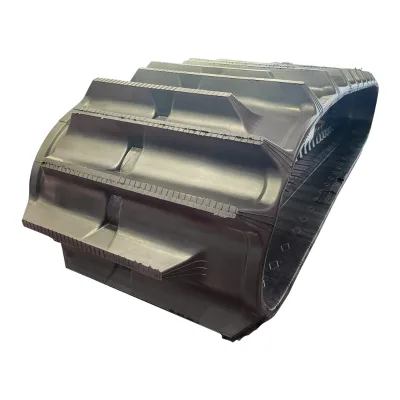


Agricultural Machinery Rubber Track 350*61.5*60 for Rice Harvester Use
$155.00 - $890.00
MOQ: 1 Pieces

High-Performance Rubber Tracks for Agricultural Tractors and Harvesters
$100.00 - $120.00
MOQ: 1 pieces

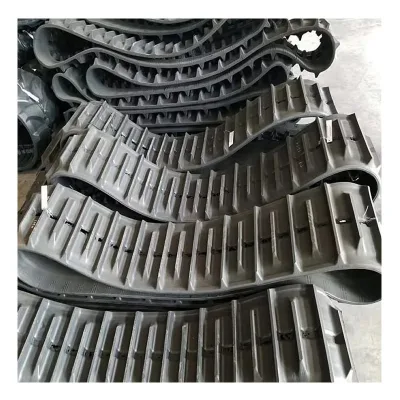


High Quality Rubber Track of Combined Harvester for Agricultural Machinery
$2.70 - $3.50
MOQ: 1 Pieces
Comprehensive Sourcing Guide
Strategic Sourcing Guide for Agriculture Harvester Rubber Tracks
Understanding Technical Specifications and Dimensions
When sourcing rubber tracks for agricultural harvesters, the primary focus must be on precise dimensional compatibility and material composition. The market offers a variety of configurations, but successful procurement relies on matching the specific track geometry to the machinery model. Based on available product data, dimensions vary significantly across listings, with model numbers indicating specific width and length combinations. Common observed specifications include dimensions such as 500x90x53, 550x100x52, and 450x90x51. These figures likely represent the track width, thickness, and length in millimeters, though buyers must verify the exact unit definition with the supplier.
The classification of these products is critical. While some listings refer to the product as a "Tire" with a diagonal design and a diameter of 22 inches or greater, the core keyword specifically targets "Rubber Track" systems. These tracks are distinct from pneumatic tires and are designed for continuous ground contact, offering superior traction in soft or uneven terrain. The product type is explicitly categorized as "Rubber Track for Agricultural Machinery," with a specific application for harvesters, tractors, and general agricultural processing equipment.
Material properties are equally vital. The tracks are typically black in color and engineered with features such as wear-resistance, heat-resistance, and tear-resistance. These attributes ensure longevity under the abrasive conditions of wheat fields, rice fields, and corn fields. The power source for the machinery these tracks serve can vary, ranging from diesel engines to manpower-operated units, which influences the torque and load requirements the track must withstand. Buyers should not assume a single standard dimension applies to all harvesters; instead, they must cross-reference the specific machine model with the supplier's available catalog, which may include standard specifications or fully customizable options.
Compliance, Certification, and Regulatory Standards
Navigating the regulatory landscape is a fundamental step in international procurement. The agricultural machinery sector is subject to various international and domestic standards to ensure safety and operational reliability. In the observed product listings, several certification bodies and standards are frequently mentioned. These include ISO, ECE, CCC, DOT, and CE. The presence of these certifications suggests that the products may meet specific safety and quality benchmarks required for export and domestic use.
Specific standards referenced in the data include ISO, DOT, and DC70. Additionally, some listings mention compliance with "As customer required" standards, indicating a flexibility in manufacturing that allows for adaptation to local regulations. For buyers, this means that while a supplier may hold general certifications like ISO9001:2000, the specific track must also adhere to the regulations of the destination country. The "CCC" certification is particularly relevant for products entering the Chinese market, while "ECE" and "DOT" are often associated with vehicle safety standards in Europe and the United States, respectively.
It is important to distinguish between product certifications and machinery standards. Some listings reference standards like "for Kubota lovol World," which implies compatibility with specific brand machinery rather than a universal safety standard. Buyers must verify that the track's certification status is current and valid for the intended region of operation. Furthermore, the "machinery test report" is noted as "Provided" in some contexts, which serves as a crucial document for validating performance claims. This report should be requested during the initial inquiry phase to ensure the track has undergone rigorous testing for durability and load-bearing capacity.
Cost Drivers and Pricing Variables
The pricing of agricultural rubber tracks is influenced by a complex interplay of factors, including material costs, manufacturing complexity, and order volume. The observed price range in the market spans from $2.7 to $3,000 USD. This wide variance reflects the difference between individual track components, complete sets, or specialized custom-engineered solutions. A unit priced at the lower end of the spectrum may represent a single track or a basic model, whereas the higher end likely corresponds to a full set for a large-scale harvester or a highly customized specification.
Minimum Order Quantity (MOQ) is another significant cost driver. The observed MOQ ranges from 1 to 90 units. Suppliers offering an MOQ of 1 are ideal for small-scale farms or for buyers seeking to test a specific model before committing to a larger purchase. Conversely, an MOQ of 90 suggests a bulk manufacturing setup, which may offer lower per-unit costs but requires significant capital investment and storage capacity. Buyers must balance their immediate needs with the potential for economies of scale.
Additional cost factors include the mode of transport and packaging. The data indicates options for "Shipping" and "Air Transport," with air transport typically incurring higher costs but offering faster delivery. Packaging requirements also impact the final price; options range from "Bare Package" to "Export Packing," "Pallets," or "Standard Wooden Pallet with PE Film." Enhanced packaging, such as wooden pallets with protective film, adds to the cost but is essential for preventing damage during long-distance shipping. Buyers should request a detailed breakdown of costs, including packaging and logistics, to understand the total landed cost of the product.
Typical Applications and Operational Scenarios
The primary application of these rubber tracks is in the harvesting and processing of agricultural products. The data explicitly lists usage scenarios including "Harvester," "Agricultural Products Processing," "Grain Threshing," and "Cleaning and Drying." The tracks are designed to operate in diverse field conditions, specifically mentioned as "Wheat Fields," "Rice Fields," and "Corn Fields." The ability to navigate these environments without causing excessive soil compaction or getting stuck in mud is a key advantage over traditional wheeled systems.
The versatility of the product extends to different types of machinery. While the core focus is on harvesters, the tracks are also compatible with "Tractors" and units used for "Farmland Infrastructure." This suggests that the tracks can be adapted for various tasks, from primary tillage to harvesting and post-harvest processing. The "Application Scenario" data highlights the need for tracks that can handle the specific demands of different crops. For instance, rice fields often require tracks with superior flotation capabilities to prevent sinking in wet soil, while corn fields may demand tracks with higher tear resistance to handle rough terrain.
The "Feature" list further clarifies the operational requirements. Tracks must be "Wear-Resistant" to withstand the abrasive nature of soil and crop residue, "Heat-Resistant" to endure the friction generated during high-speed operation, and "Tear-Resistant" to prevent damage from sharp objects like stones or crop stalks. These features are not merely marketing terms but essential engineering requirements for maintaining operational efficiency in the field. Buyers should ensure that the tracks they select are specifically rated for the type of crop and soil conditions they will encounter.
Supplier Evaluation and Sourcing Strategy
Evaluating suppliers for agricultural rubber tracks requires a thorough assessment of their capabilities, location, and production standards. The observed product origins are primarily in China, with specific mentions of "Jiangsu" and "Zhejiang" provinces. These regions are known for their manufacturing clusters, but buyers should verify the specific factory location to ensure it aligns with their logistics and quality expectations. The "Customization" attribute is marked as "Available," indicating that many suppliers are willing to tailor products to specific machine models or operational needs.
When evaluating a supplier, buyers should look for evidence of a robust quality management system. The presence of certifications like ISO and CE is a positive indicator, but it should be complemented by the availability of "machinery test reports." These reports provide objective data on the track's performance and durability. Additionally, the "warranty" period is a critical factor; a standard warranty of "1 Year" is observed, which serves as a baseline for supplier confidence in their product. Buyers should negotiate warranty terms that cover specific failure modes, such as premature wear or structural failure.
The "Selling Units" data indicates that products are often sold as "Single item," which offers flexibility for buyers who need to replace a single track or test a new model. However, for fleet operations, buyers should inquire about bulk pricing and the availability of "Export Packing" to ensure efficient shipping. The "Mode of Transport" options, including "Shipping" and "Air Transport," should be discussed to determine the most cost-effective and timely delivery method. Finally, buyers should verify the "prod_packing" details to ensure the tracks are protected against damage during transit, as improper packaging can lead to costly delays and product degradation.
Quality Control and Long-Term Procurement Considerations
Ensuring the long-term reliability of agricultural rubber tracks requires a proactive approach to quality control and maintenance planning. The "Feature" set, including wear-resistance and tear-resistance, must be validated through independent testing. Buyers should request detailed specifications on the rubber compound used and the manufacturing process to ensure it meets the demands of heavy-duty agricultural use. The "weight (kg)" of the track, observed at 200 kg for certain models, is another critical parameter that affects the overall weight of the machinery and its fuel efficiency.
Long-term procurement considerations extend beyond the initial purchase. Buyers should establish a relationship with suppliers who offer consistent quality and reliable after-sales support. The "warranty" period is a starting point, but buyers should also inquire about the availability of spare parts and the lead time for replacements. The "prod_model" variations, such as 5009053 or HB2023, suggest a wide range of options, and buyers should ensure that the supplier can provide consistent models over time to avoid compatibility issues.
Furthermore, the "Classification" of the product as a "Tire" or "Track" can sometimes lead to confusion. Buyers must clearly define their requirements to avoid receiving the wrong product type. The "prod_standard" of "Regular specifications or customization" indicates that buyers have the opportunity to specify exact requirements, but this also places the burden of verification on the buyer. Regular inspections of the tracks during operation are essential to detect early signs of wear or damage. By maintaining a proactive maintenance schedule and working with suppliers who provide comprehensive support, buyers can maximize the lifespan and performance of their agricultural rubber tracks.
Final Procurement Checklist and Verification Steps
To conclude the sourcing process, buyers should adhere to a strict verification checklist. This includes confirming the exact dimensions (e.g., 500x90x53), verifying the certification status (ISO, CE, ECE, etc.), and ensuring the product origin aligns with the supplier's claims. The "prod_packing" method must be agreed upon to prevent damage, and the "Mode of Transport" should be selected based on urgency and budget. Buyers should also review the "machinery test report" and "warranty" terms before finalizing the order.
| Verification Category | Key Data Points to Confirm |
|---|---|
| Dimensions | Model number (e.g., 500x90x53), Width, Thickness, Length |
| Certifications | ISO, CE, ECE, CCC, DOT, ISO9001:2000 |
| Compatibility | Specific harvester models (e.g., Kubota, Lovol), Field type |
| Quality | Wear-resistant, Heat-resistant, Tear-resistant features |
| Logistics | Packaging (Pallet, PE Film), Transport mode (Air, Sea) |
| Commercial | MOQ (1-90), Warranty (1 Year), Price Range ($2.7-$3000) |
By systematically addressing each of these categories, buyers can mitigate risks and ensure they procure high-quality rubber tracks that meet the demanding requirements of modern agricultural harvesting. The combination of precise technical specifications, rigorous certification checks, and a clear understanding of cost drivers will lead to a successful procurement outcome.
FAQs
What certifications do agriculture harvester rubber tracks typically have?
These tracks commonly hold ISO, ECE, CCC, DOT, and CE certifications. Some listings also reference ISO9001:2000 or specific standards like DC70. Buyers should verify that the certification is valid for their region of operation.
Which specifications define the dimensions of these rubber tracks?
Common model numbers indicate dimensions like 500x90x53, 550x100x52, and 450x90x51. These figures likely represent width, thickness, and length in millimeters. Customization is available to match specific machinery models.
Can I find tracks with a minimum order quantity of one?
Yes, some suppliers offer a minimum order quantity of one unit. This allows small-scale farms to test a specific model before committing to a larger purchase. Other suppliers may require up to 90 units for bulk pricing.
How are agriculture harvester rubber tracks packaged for shipping?
Packaging options include bare packages, pallets, or standard wooden pallets with PE film. Export packing is frequently used to protect the tracks during long-distance transit. Buyers should confirm packaging details to prevent damage.
What warranty periods are available for these rubber tracks?
A standard warranty period of one year is commonly observed for these products. This serves as a baseline for supplier confidence in product durability. Buyers should negotiate terms that cover specific failure modes like premature wear.
Which locations are the primary origins for these agricultural tracks?
Products primarily originate from China, with specific mentions of Jiangsu and Zhejiang provinces. These regions are known for their manufacturing clusters. Buyers should verify the specific factory location to align with logistics expectations.