Source Airline Approved Pet Carrier for Dogs, Cats, and Rabbits
Explore 30 listings for the Airline Approved Pet Carrier designed for dogs, cats, and small animals. Buyers can compare materials like plastic and polyester, size options, and customization features to find the right travel solution.
Key considerations
Products List
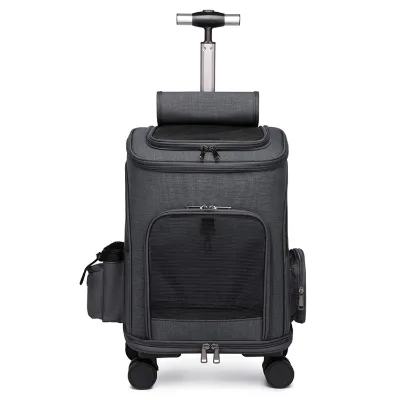


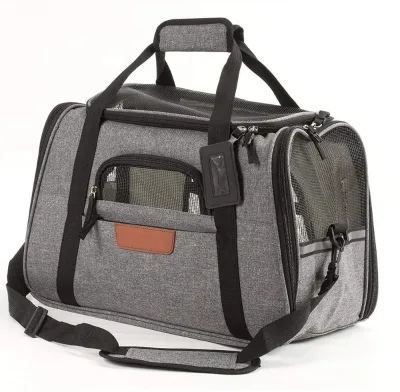

Airline Approved Pet Supply Expandable Backpack Carrier for Outdoor Travel
$10.50 - $11.50
MOQ: 100 Pieces


Pet Travel Suitcase Portable and Foldable Cat Carrier Breathable Pet Airline
$3.45 - $5.50
MOQ: 10 Pieces

Comprehensive Sourcing Guide
Strategic Sourcing Guide for Airline Approved Pet Carriers
Understanding Product Specifications and Variability
When sourcing airline approved pet carriers, buyers must first navigate a landscape of diverse technical specifications that vary significantly between manufacturers. The core keyword implies a product designed for air travel, yet the actual market data reveals a wide spectrum of materials, sizes, and structural designs. A critical observation from current market listings indicates that materials range from rigid plastics to flexible polyesters, each offering distinct advantages for different travel scenarios. For instance, specific product models are identified as being constructed from plastic, which typically provides the rigid structure required for cargo holds, while other listings highlight polyester as the primary material, suggesting a focus on soft-sided carriers intended for cabin use.
Size standardization is another area where buyers must exercise caution. The available data shows a fragmented approach to sizing, with some products explicitly listing sizes as M and L, while others are categorized as One Size or L. This inconsistency necessitates a rigorous verification process where the buyer must match the carrier dimensions against the specific airline's pet policy. The observed data includes specific dimensional standards such as 593637CM and 453533cm, which serve as concrete examples of the dimensions buyers should request from suppliers. However, relying solely on these figures without confirming the airline's current regulations is risky, as policies frequently change. Furthermore, the carrying type varies from hand bags to shoulder bags, indicating that the ergonomic design and portability features are not uniform across the category. Buyers should expect to encounter products with features like "Eco-Friendly" or "Outdoor" capabilities, but these attributes should be treated as observations of specific listings rather than universal standards for all airline-approved units.
Compliance Verification and Certification Standards
The term "airline approved" is often used as a marketing descriptor, but it does not inherently guarantee compliance with International Air Transport Association (IATA) regulations or specific airline mandates. In the B2B procurement context, buyers must treat this claim as a hypothesis that requires independent verification rather than a fact. The supplied product data mentions that OEM/ODM services are welcomed and that customization is available, which suggests that many suppliers offer the flexibility to modify products to meet specific client requirements, including potential certification needs. However, no specific certification bodies or standard numbers are explicitly confirmed in the provided context for all listed items.
Buyers must establish a verification protocol that includes requesting documentation of compliance with IATA Live Animals Regulations (LAR). This involves checking if the carrier meets the specific requirements for ventilation, structural integrity, and locking mechanisms. The data indicates that some products are described as "Waterproof" and "Stocked," which are valuable attributes for durability and immediate availability, but these do not equate to air travel certification. It is essential to understand that "Airline Approved" may refer to the manufacturer's internal testing or a specific airline's past acceptance, rather than a universal standard. Therefore, the procurement strategy must include a clause in the purchase agreement that requires the supplier to provide proof of compliance with the specific airline the buyer intends to use. Without explicit certification data in the product listing, the buyer assumes the risk of non-compliance unless they conduct their own due diligence or require the supplier to undergo third-party testing.
Cost Drivers and Pricing Dynamics
The pricing structure for airline approved pet carriers is influenced by several factors, including material composition, customization levels, and order volume. The observed price range in the market spans from 1 to 100 USD, a broad spectrum that reflects the diversity in product quality and complexity. Lower-priced items in this range likely correspond to basic plastic or polyester models with minimal customization, while higher-priced items may feature advanced ventilation systems, reinforced structures, or premium branding. The Minimum Order Quantity (MOQ) also plays a significant role in the unit cost, with observed MOQs ranging from 10 to 1000 pieces. Suppliers with lower MOQs, such as 10 or 20 pieces, may charge a premium per unit due to the overhead costs associated with smaller production runs.
Customization is a major cost driver in this category. The data confirms that customization is available and that OEM/ODM services are welcomed, including options for custom logos and specific dimensions. These value-added services inevitably increase the unit price and may extend lead times. Additionally, the material choice impacts cost; plastic carriers generally require different tooling and manufacturing processes compared to polyester soft-sided bags, which can affect the final price point. Buyers should be aware that "Small Orders" are accepted by some suppliers, which is beneficial for testing the market, but this flexibility often comes with a higher per-unit cost. When evaluating cost, buyers must look beyond the sticker price and consider the total cost of ownership, including shipping, potential return costs if the carrier is rejected by an airline, and the cost of rebranding or customization.
Typical Applications and Usage Scenarios
The application of airline approved pet carriers extends beyond simple transportation, encompassing various scenarios from domestic flights to international travel. The product data explicitly lists applications for dogs, small animals, and cats, indicating that the market serves a broad range of pet owners and professional pet transporters. Some listings specify suitability for specific breeds or sizes, such as "Dog Cat Travel Carrier" or "Puppy Travel Carry Bag," suggesting that buyers should verify the weight capacity of the carrier against the pet's size. The observed maximum weight capacity ranges from 3 to 10 kg, which is a critical specification for ensuring the safety and comfort of the animal during flight.
The carrying type also dictates the application scenario. Hand bags and shoulder bags are designed for cabin travel where the carrier must fit under the seat, whereas rigid plastic cages might be intended for cargo holds. The feature "Outdoor" suggests versatility for use in various environments, which is beneficial for pet owners who travel frequently. Additionally, the "All Seasons" attribute indicates that some carriers are designed to maintain a stable internal environment regardless of external weather conditions, a crucial factor for air travel where temperature control can be a concern. Buyers should match the carrier's application features with their specific use case, whether it is for a single pet owner traveling with a cat or a professional breeder shipping multiple puppies.
Supplier Evaluation and Selection Criteria
Selecting the right supplier for airline approved pet carriers requires a multi-faceted evaluation process that goes beyond the basic product listing. The data indicates that suppliers are located in China, which is a major manufacturing hub for pet products, but buyers must verify the specific factory capabilities and quality control measures. Key evaluation criteria include the supplier's ability to handle customization requests, their responsiveness to OEM/ODM inquiries, and their track record with airline compliance. The fact that "OEM/ODM" is welcomed by multiple suppliers suggests a competitive market where customization is a standard expectation.
Buyers should assess the supplier's inventory status, as some listings indicate products are "in Stock," which can significantly reduce lead times. However, for customized orders, the lead time will vary based on the complexity of the design and the production schedule. The observed MOQs range widely, from 10 to 1000 pieces, so buyers must align their order volume with the supplier's capacity. It is also important to evaluate the supplier's communication and support services, as the complexity of airline regulations requires a partner who can provide detailed technical support and documentation. Buyers should request samples to verify the build quality, material durability, and ventilation effectiveness before committing to a large order.
Quality Control and Long-Term Procurement Considerations
Ensuring consistent quality in airline approved pet carriers is paramount, as failures can lead to rejected shipments and potential harm to animals. Quality control should focus on the structural integrity of the carrier, the effectiveness of ventilation systems, and the durability of zippers and latches. The data mentions that products are "New" and "Condition: New," but buyers must implement their own inspection protocols to ensure that the received goods meet the specified standards. This includes checking for defects in the plastic or polyester material, verifying the accuracy of dimensions, and testing the locking mechanisms.
Long-term procurement considerations involve building a sustainable relationship with suppliers who can consistently deliver high-quality products. Buyers should establish clear quality assurance agreements that define acceptable defect rates and outline the process for handling non-compliant shipments. The availability of "Custom Logo" services suggests that branding is a long-term strategy for many buyers, so maintaining consistency in design and quality is essential. Additionally, buyers should monitor changes in airline regulations and ensure that their suppliers can adapt their products accordingly. The "Eco-Friendly" feature observed in some listings may also become a more significant differentiator in the future, so buyers should consider the environmental impact of their sourcing decisions. By focusing on these long-term factors, buyers can secure a reliable supply chain that supports their business growth and ensures the safety of the pets they transport.
Comparative Analysis of Product Attributes
To facilitate informed decision-making, the following table summarizes key attributes observed in the market for airline approved pet carriers. This comparison highlights the variability in specifications and helps buyers identify the most suitable options for their specific needs.
| Attribute | Observation 1 | Observation 2 | Observation 3 | Observation 4 |
|---|---|---|---|---|
| Material | Plastic | Polyester | Plastic | Polyester |
| Size Options | L, M, One Size | M, L | One Size | M, L |
| Dimensions | 593637CM | 453533cm | Not Specified | Not Specified |
| Color Options | Brown, Grey, Black | Green, Blue | Black, Gray | Black, Blue, Purple, Orange, Gray |
| Carrying Type | Hand Bag | Shoulder Bag | Hand Bag | Shoulder Bag |
| MOQ | 20 PCS | 10 PCS | 100 PCS | 50 PCS |
| Customization | Available | Custom Logo | Custom Logo | Custom Logo |
| Features | Eco-Friendly, Stocked | Outdoor | Waterproof | Airline Approved |
| Application | Dogs, Small Animals, Cats | Dog | Cat, Dog | Cat, Dog |
| Condition | New | New | New | New |
This table illustrates the diversity in the market, emphasizing that no single product fits all requirements. Buyers must carefully evaluate each attribute against their specific operational needs and airline regulations to make the best sourcing decision.
FAQs
Can I order small quantities of airline approved pet carriers?
Yes, small orders are accepted by some suppliers with minimums as low as 10 pieces. You can find vendors offering flexible MOQs ranging from 10 to 1000 units depending on the specific model and customization needs.
What materials are used for airline approved pet carriers?
Products are constructed from either rigid plastic or flexible polyester depending on the design. Plastic models often provide the structure for cargo holds while polyester versions are suitable for cabin travel under seats.
Which sizes are available for airline approved pet carriers?
Available sizes include M, L, and One Size options to fit various pet dimensions. Specific dimensions like 59 by 36 by 37 cm or 45 by 35 by 33 cm are observed in certain listings for verification.
How much do airline approved pet carriers cost per unit?
The observed price range spans from 1 to 100 USD based on material and features. Lower costs typically apply to basic models while customized or premium options with specific certifications may reach the higher end of this range.
Can I get custom logos on airline approved pet carriers?
Yes, customization is available including custom logo printing and specific design modifications. Suppliers welcome OEM and ODM requests, allowing you to tailor the carrier appearance and branding to your specific requirements.
What is the maximum weight capacity for these carriers?
The maximum weight capacity generally ranges from 3 to 10 kg for most listed models. Buyers must verify the specific weight limit against their pet's size to ensure safe transport during air travel.
Are airline approved pet carriers waterproof and eco-friendly?
Some listings feature waterproof and eco-friendly attributes to enhance durability and environmental safety. These features are specific to certain models and should be confirmed with the supplier before placing an order.