Source Aluminum Coated Convex Mirror Sheet for Safety, Traffic, and Decor
Find 30 Aluminum Coated Convex Mirror Sheet options from verified Chinese manufacturers. Buyers can compare specifications including thickness, size, and coating types for safety mirrors, traffic applications, and decorative installations.
Key considerations
Products List


Competitive Price for Reflective Polished Aluminium Mirror Sheet
$2.98 - $3.10
MOQ: 2000 Square Meters


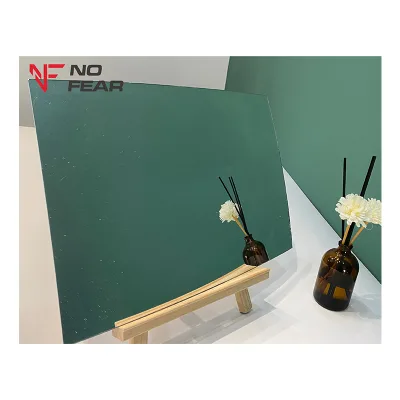




Color Polished Silver Mirror Aluminum Mirror Glass Sheets Custom Size
$1.30 - $6.50
MOQ: 500 Square Meters

Comprehensive Sourcing Guide
Strategic Sourcing Guide for Aluminum Coated Convex Mirror Sheets
Understanding Product Specifications and Material Variants
When sourcing aluminum coated convex mirror sheets, buyers must first distinguish between the base material properties and the specific optical geometry required for their application. The supplied data indicates a diverse range of available models, including 1050, 1060, 1070, 1085, 1100, 3003, 5005, 5052, 5083, 6061, and 6082. These designations typically refer to specific aluminum alloy series, ranging from the high-purity 1000 series (such as 1050 and 1060) to the more robust 5000 and 6000 series alloys. The 1000 series alloys are noted for their excellent corrosion resistance and formability, making them suitable for general decorative applications, while the 5000 and 6000 series offer enhanced strength, which may be critical for high-traffic or structural installations.
The physical form of the product is equally critical. The observed inventory includes sheet, coil, and strip configurations, alongside specific shape options such as square and general sheet forms. For convex mirrors, the curvature is a defining characteristic, though the provided text explicitly lists "Square" and "Sheet" shapes alongside "Aluminium Mirror Glass Sheets." Buyers must verify that the specific convex curvature is achievable within the requested alloy and temper. The temper range observed spans from O (annealed) to H112 (strain-hardened), which directly influences the material's ability to be formed into a convex shape without cracking or losing structural integrity. The surface treatment is consistently listed as polished, a necessary step to ensure the aluminum coating provides a high-quality reflective surface.
Thickness is a primary specification that dictates both the optical performance and the mechanical durability of the mirror. The available thickness range in the market data includes 1.3mm, 1.5mm, 1.8mm, 2mm, 2.5mm, and 3mm. Thinner gauges (1.3mm to 1.5mm) are often preferred for lightweight applications or where the mirror is mounted on a flexible substrate, whereas thicker options (2.5mm to 3mm) provide superior rigidity, essential for large-diameter convex mirrors used in traffic safety or industrial surveillance. The standard sizes observed include 600x900mm, 914x1220mm, 1000x700mm, 610x914mm, 1220x914mm, 1220x1830mm, and 2440x1830mm. While these are rectangular dimensions, they serve as the baseline for cutting or forming convex shapes. Buyers should confirm if the supplier can produce custom sizes, as the data indicates "Custom Size: Yes" is a standard offering.
Compliance, Certification, and Regulatory Standards
Navigating the regulatory landscape is a fundamental step in B2B procurement, particularly for products used in safety-critical applications like traffic monitoring or industrial safety. The sourcing data reveals a variety of certifications held by suppliers, including GB (Guobiao), ISO, CE, CCC, and SGS. The presence of ISO and CE certifications suggests compliance with international quality management systems and European safety directives, respectively. The CCC mark indicates compliance with Chinese Compulsory Certification, which is mandatory for certain products sold within the Chinese market and may be a prerequisite for importers dealing with specific regulatory bodies.
The standard specifications listed include "Width 1000 mm, 1250mm" and general references to ISO and CE standards. However, buyers must exercise caution and not assume that every listed product automatically satisfies every certification mentioned in a supplier's general profile. Instead, procurement teams should request specific test reports or certificates of conformity that validate the product against the relevant standard for the intended destination market. For instance, if the mirror is intended for use in the European Union, the CE marking must be supported by a Declaration of Conformity that specifically addresses the safety requirements for reflective devices. Similarly, for applications in North America, buyers should verify if the product meets ASTM or ANSI standards, even if these are not explicitly listed in the general product attributes.
The data also mentions "Aluminium coated mirror glass sheets" as a standard product type. This distinction is vital because it implies a composite structure where an aluminum coating is applied to a glass or metal substrate. The "Aluminium Mirror" classification further suggests that the reflective layer is the primary feature. Buyers should verify the adhesion and durability of this coating, as the "Special Function" attributes listed include "Fogless" and "Waterproof" capabilities. These functional claims require specific testing protocols to ensure the mirror performs reliably in humid or outdoor environments. The "Double Sided" and "Single Sided" attributes indicate that the coating or backing may vary, which impacts the installation method and the final optical quality.
Cost Drivers and Pricing Dynamics
The pricing structure for aluminum coated convex mirror sheets is influenced by a complex interplay of material costs, processing complexity, and order volume. The observed price range in the market data spans from $0.20 to $5,000 USD. This wide variance is not indicative of a single product type but rather reflects the spectrum from small, single-piece samples or low-thickness decorative sheets to large, custom-engineered industrial units. The lower end of the price range likely corresponds to standard sizes with minimal processing, while the upper end reflects custom dimensions, specialized alloys, or bulk industrial orders with significant value-added services.
Material composition is a primary cost driver. The 1000 series alloys (1050, 1060) are generally less expensive than the 5000 or 6000 series (5052, 6061) due to the lower cost of alloying elements like magnesium and silicon. However, the 5000 and 6000 series offer superior mechanical properties, which may justify a higher price point for applications requiring high impact resistance or structural stability. The temper of the material also affects cost; H112 temper involves strain hardening, which adds processing steps compared to the O temper, potentially increasing the unit price.
Order volume plays a decisive role in the final cost per unit. The Minimum Order Quantity (MOQ) data ranges from 1 to 20,000 units. Suppliers often offer tiered pricing structures where the unit cost decreases significantly as the order volume increases. For example, an order of 500 pieces may carry a higher per-unit cost compared to an order of 5,000 pieces. The data explicitly mentions a "Minimum Order: 500PCS" for certain items, suggesting that smaller orders may incur a premium or be subject to different logistical constraints. Additionally, the availability of free samples is noted, though clients are typically required to pay for courier fees. This is a common practice that allows buyers to verify quality without incurring the full cost of a trial batch, but it does not eliminate the logistical expense.
Typical Applications and Functional Requirements
The versatility of aluminum coated convex mirror sheets allows them to serve a wide array of applications, ranging from decorative interiors to critical safety systems. The primary application listed is "Decorations," which encompasses interior design elements, architectural features, and aesthetic enhancements. In this context, the "Modern" and "Simple" styles, along with the "Polished" surface treatment, are key selling points. The "Aluminium Mirror Glass Sheets" are particularly suited for creating visual depth and light reflection in commercial spaces, retail environments, and residential interiors.
Beyond decoration, the functional attributes point to significant use in safety and surveillance. The "Fogless" and "Waterproof" capabilities suggest suitability for bathroom environments, outdoor installations, or industrial settings where moisture and condensation are common. Convex mirrors are inherently designed to provide a wider field of view, making them indispensable for traffic safety, warehouse navigation, and blind-spot reduction in industrial facilities. The "360° View Angle" attribute highlights the potential for panoramic monitoring, which is crucial for security applications.
The "Double Sided" and "Single Sided" options further expand the application scope. Double-sided mirrors may be used in specific architectural designs where visibility is required from both sides, while single-sided mirrors are standard for privacy and directional viewing. The "Painting" options, including single and double coating with colors like white, grey, yellow, blue, and green, allow for customization to match specific branding or safety color-coding standards. For instance, yellow or blue coatings might be used to enhance visibility in low-light conditions or to denote specific zones in a facility. The "Wooden or Plywood Crates" packaging indicates that these products are often shipped as fragile items requiring robust protection, which is consistent with their use in high-value or safety-critical applications.
Supplier Evaluation and Geographic Considerations
Evaluating potential suppliers requires a thorough assessment of their geographic location, logistical capabilities, and production standards. The data identifies three primary origin locations: China (general), Qingdao, and Dezhou, Shandong Province. Qingdao is a major port city in Shandong, known for its strong export infrastructure and concentration of manufacturing industries. Dezhou is also located in Shandong Province, a region with a well-established industrial base for metal processing and glass manufacturing. Sourcing from these locations offers the advantage of established supply chains and experienced manufacturers familiar with international export requirements.
When evaluating suppliers, buyers should verify the consistency of their production capabilities with the specific product attributes required. The data shows that some suppliers offer "Export Standard" packing, while others specify "Strong Plywood Crates" or "Wooden Crates." This variation suggests that packaging quality may differ between suppliers, which is a critical factor in preventing damage during transit. Buyers should request photos or videos of the actual packaging process to ensure that the mirrors are adequately protected, especially given the fragile nature of glass-based mirrors and the potential for coating damage.
The "Customization" and "Customized" attributes indicate that many suppliers are willing to adapt their products to specific buyer requirements. This flexibility is a significant advantage for buyers with unique project needs. However, it also introduces complexity in the evaluation process. Buyers must ensure that the supplier has the technical capacity to handle custom orders without compromising quality. The "Free Samples" policy, where clients pay for courier fees, is a useful tool for vetting suppliers. By requesting samples, buyers can physically inspect the surface finish, verify the thickness, and test the optical quality before committing to a larger order.
Quality Control and Long-Term Procurement Strategy
Implementing a robust quality control (QC) strategy is essential for mitigating risks associated with sourcing aluminum coated convex mirror sheets. The observed certifications, such as ISO, SGS, and CE, provide a baseline for quality assurance, but buyers should not rely solely on these labels. Instead, they should establish a comprehensive QC protocol that includes pre-production sampling, in-process inspection, and final shipment verification. The "Polished" surface treatment and "Aluminium Coated" finish require specific visual and instrumental checks to ensure there are no scratches, bubbles, or uneven coating distribution.
For long-term procurement, buyers should focus on building a relationship with suppliers who demonstrate consistency in meeting specifications. The "Custom Size: Yes" and "Customization: Available" attributes suggest that many suppliers are capable of adapting to changing needs, but this requires clear communication and detailed technical drawings. Buyers should maintain a standardized specification sheet that outlines the required alloy, temper, thickness, size, and coating type to minimize ambiguity. The "Transportation" options listed as "by Sea, Train or Air" offer flexibility, but buyers must consider the trade-offs between cost, speed, and risk. Sea freight is generally the most cost-effective for large volumes but involves longer lead times, while air freight is faster but more expensive.
The "Minimum Order" and "MOQ" ranges highlight the importance of demand forecasting. Ordering in bulk can reduce unit costs, but it also increases inventory holding costs and the risk of obsolescence if project requirements change. Buyers should aim to balance these factors by negotiating flexible MOQ terms or establishing a rolling order schedule with their supplier. The "Lead time" is not explicitly provided in the data, so buyers must clarify this during the negotiation phase to ensure that production schedules align with project deadlines. Finally, the "Painting Color" options and "Special Function" attributes should be verified against the actual product performance to ensure that the mirror meets the functional requirements of the intended application over its entire lifecycle.
FAQs
What alloy models are available for aluminum coated convex mirror sheets?
Available models include 1050, 1060, 3003, 5005, 5052, 5083, 6061, and 6082. These range from high-purity 1000 series alloys to robust 5000 and 6000 series options for different strength requirements.
Can I order custom sizes for these aluminum coated convex mirror sheets?
Yes, custom sizes are available for these products. Buyers can request specific dimensions beyond standard options like 600x900mm or 1220x1830mm to fit unique project needs.
Which certifications do suppliers typically hold for these mirror sheets?
Suppliers commonly hold ISO, CE, CCC, GB, and SGS certifications. These marks indicate compliance with international quality management systems and regional safety directives for various export markets.
What thickness options exist for aluminum coated convex mirror sheets?
Thickness options range from 1.3mm to 3mm, including 1.5mm, 1.8mm, 2mm, and 2.5mm. Thinner gauges suit lightweight applications while thicker options provide rigidity for safety installations.
How are these aluminum coated convex mirror sheets packaged for shipping?
Products are packed in strong wooden or plywood crates with interlay paper. This robust packaging protects the mirrors during transit via sea, train, or air from origins like Qingdao or Dezhou.
What is the minimum order quantity for these aluminum coated convex mirror sheets?
The minimum order quantity ranges from 1 to 20,000 units depending on the supplier. Some specific items may require a minimum of 500 pieces for standard orders.
Can I get free samples of these aluminum coated convex mirror sheets?
Free samples are available, but clients must pay the courier fee. This allows buyers to verify quality and specifications before committing to a larger bulk purchase order.