Source Analog Type Draw Wire Sensor for Industrial Automation
Find and compare 30 Analog Type Draw Wire Sensor models with linear displacement capabilities. Evaluate specifications such as measurement stroke, linearity, and IP ratings to select the right potentiometer for your machinery.
Key considerations
Products List


Mps 2000mm String Potentiometer Analog Output Draw Wire Position Sensor
$140.00 - $150.00
MOQ: 1 Pieces


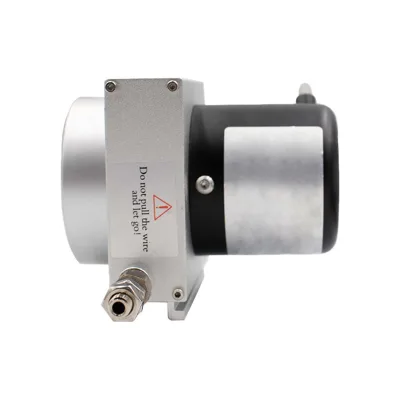


Length Measurement Draw Wire Potentiometer Sensor Rope Displacement Sensor for Machinery
$150.00 - $160.00
MOQ: 1 Pieces


Hot Sale 1000mm Pull Rope Encoder Wire Draw Sensor for Position Measuring
$65.00 - $75.00
MOQ: 1 Pieces


Industrial-Grade 10m Range 316L Stainless Steel Draw Displacement Sensor
$850.00 - $1120.00
MOQ: 1 Pieces

High-Precision 0.05%Fs 0-3000mm Range Waterproof Displacement Sensor
$1240.00 - $1570.00
MOQ: 1 Pieces


Comprehensive Sourcing Guide
Analog Type Draw Wire Sensor Sourcing Guide
Selecting the right Analog Type Draw Wire Sensor requires a clear understanding of how linear displacement is converted into a usable electrical signal for industrial automation and control systems. These devices, often referred to as potentiometric position sensors, rely on a wire wound around a spool that extends and retracts to measure distance, making them ideal for applications where robust, continuous position feedback is critical. Buyers must recognize that the core functionality hinges on the mechanical integrity of the wire and the precision of the internal potentiometer or hybrid sensor element, which directly influences the accuracy of the output signal.
When initiating a procurement process, the primary decision involves matching the sensor's stroke length and output signal type to the specific mechanical constraints of the target machinery. The observed market data indicates a wide range of stroke capabilities, from compact 100mm units to extensive 3500mm configurations, each serving different operational needs. Procurement teams must verify that the selected model supports the required analog output, such as 0-5V or other voltage ranges, to ensure seamless integration with existing PLCs, data acquisition systems, or control interfaces without requiring complex signal conditioning hardware.
Product Scope and Observed Listing Signals
The current market landscape for analog type draw wire sensors presents a diverse array of models, ranging from the compact MPS-XXS-A series to heavy-duty variants like the MPS-M-3500mm-mA. Listings indicate that customization is a standard offering, allowing buyers to tailor stroke lengths, cable lengths, and connector types to fit unique installation environments. This flexibility is particularly valuable for projects involving non-standard machinery or retrofitting scenarios where off-the-shelf dimensions do not align with the available mounting space or required travel distance.
Observations of product listings reveal significant variation in performance metrics, including linearity, repeatability, and operating speed, which serve as key differentiators between standard and high-precision units. For instance, some models boast linearity as tight as ±0.1%Fs, while others operate at speeds up to 600mm/Sec, catering to dynamic applications. Buyers should scrutinize these specific attributes rather than relying on general product descriptions, as the difference between a ±0.3%Fs and a ±0.05%Fs linearity rating can determine the viability of a sensor for high-accuracy positioning tasks.
Technical Specifications to Verify
Verifying the electrical and mechanical specifications is the most critical step in ensuring the sensor will perform reliably under actual operating conditions. Buyers must confirm the power supply requirements, which typically range from 3V to 36V depending on the model, and ensure compatibility with the system's voltage architecture. Additionally, the resistance value, often cited as 5kohm or 5K, must be matched to the input impedance of the receiving device to prevent signal degradation or loading effects that could compromise measurement accuracy.
Mechanical durability and environmental resilience are equally important, particularly for sensors deployed in harsh industrial settings. The operating temperature range varies significantly across models, with some rated for -40°C to +80°C and others capable of withstanding -60°C to +150°C, necessitating a careful review of the thermal environment where the sensor will be installed. Furthermore, the service life, often exceeding 100 million cycles for high-end units, and the maximum speed of 500mm/Sec or 10m/s for specific variants, must be validated against the expected duty cycle and movement velocity of the application to prevent premature wear or failure.
Compliance and Safety Documentation
Ensuring that the selected sensors meet relevant safety and quality certifications is essential for maintaining regulatory compliance and minimizing liability in industrial deployments. The available product data highlights certifications such as ISO and CE, which indicate adherence to international quality management standards and European safety directives, respectively. Procurement teams should request current certification documents from suppliers to verify that the specific batch of sensors being purchased has undergone the necessary testing and quality assurance processes required for the intended market.
Beyond formal certifications, buyers must evaluate the physical construction standards and packaging methods to ensure the product arrives in optimal condition and meets industry safety norms. The use of aluminum cases for housing provides robust protection against physical impact and electromagnetic interference, while specific packing methods, such as individual PVC tubes with foam, help prevent damage during transit. It is also prudent to verify that the production processes, whether injection molding or semiconductor integration, align with the durability requirements of the application, ensuring that the sensor can withstand the mechanical stresses of continuous operation.
Cost Drivers and Commercial Terms
The pricing of analog type draw wire sensors is influenced by a complex interplay of factors, including stroke length, precision ratings, and the level of customization required. The observed price range of 50 to 1570 USD reflects the significant variance between basic models and high-performance units with extended strokes or specialized features. Buyers should anticipate that models with longer measurement strokes, such as those reaching 3500mm, or those with superior linearity and repeatability specifications, will command a premium price due to the increased material and manufacturing complexity involved.
Commercial terms, including Minimum Order Quantity (MOQ) and lead times, play a crucial role in the total cost of ownership and project scheduling. The market data suggests an MOQ range of 1 to 10 units, offering flexibility for both prototyping and small-batch production runs. However, procurement teams must clarify lead times and production capacity with the supplier, as custom configurations or high-volume orders may require extended manufacturing schedules. Understanding these terms early in the negotiation process helps in budgeting accurately and aligning the procurement timeline with project milestones.
Supplier Qualification and Quality Control
Evaluating the supplier's production capabilities and quality control protocols is vital for securing a consistent supply of high-performance sensors. The presence of advanced production processes, such as semiconductor integration and injection molding, suggests a supplier with the technical capacity to manufacture complex components with high precision. Buyers should inquire about the supplier's internal quality assurance measures, including in-process testing and final inspection routines, to ensure that every unit meets the specified linearity, repeatability, and resistance standards before shipment.
Supplier qualification also involves assessing their ability to provide technical support and handle post-sales issues, which is critical for maintaining operational continuity. Given the specialized nature of analog sensors, a supplier with a strong track record in the industry is better positioned to assist with troubleshooting, calibration, and replacement if a unit fails to meet expectations. Buyers should verify the supplier's origin, typically China for this category, and ensure they have the logistical infrastructure to support international shipping and provide timely delivery without compromising product integrity.
Long-Term Procurement Checks
Establishing a framework for long-term procurement checks ensures that the sensors continue to meet performance standards throughout their service life. Buyers should implement a schedule for periodic performance audits, comparing the actual output of installed sensors against their initial calibration data to detect any drift or degradation over time. This proactive approach helps identify potential issues before they lead to system failures, allowing for timely maintenance or replacement of components that may be approaching the end of their specified service life.
Continuous monitoring of supplier performance and product consistency is also essential for maintaining a reliable supply chain. Procurement teams should track key metrics such as defect rates, delivery timeliness, and responsiveness to technical inquiries to ensure the supplier remains a viable partner. By maintaining open communication channels and regularly reviewing the supplier's adherence to quality standards and certification requirements, buyers can mitigate risks associated with supply chain disruptions and ensure the long-term reliability of their Analog Type Draw Wire Sensor installations.
FAQs
What is the linearity accuracy of the MPS-XXS-A model?
The MPS-XXS-A model offers a linearity of plus or minus 0.3% Fs as a normal standard, with an optional precision of plus or minus 0.1% Fs. This Analog Type Draw Wire Sensor ensures reliable displacement measurements across its operational range, making it suitable for applications requiring consistent and accurate linear data output.
Can the sensor operate in extreme temperature environments?
Yes, specific models support a wide temperature range from -60 degrees Celsius to +150 degrees Celsius. This capability allows the Analog Type Draw Wire Sensor to function reliably in harsh industrial conditions where standard sensors might fail, ensuring stable performance despite significant thermal fluctuations during continuous operation.
What is the maximum operating speed for these sensors?
The maximum operating speed varies by model, with some units supporting up to 10 meters per second. Other models may have lower limits, such as 600mm per second. Buyers should verify the specific speed rating for their required application to ensure the Analog Type Draw Wire Sensor meets dynamic movement demands.
Is customization available for the measurement stroke length?
Customization is available for the measurement stroke, with options ranging from 100mm up to 3500mm depending on the specific model series. This flexibility allows engineers to tailor the Analog Type Draw Wire Sensor to precise spatial requirements, ensuring optimal fit and performance for unique mechanical setups and industrial machinery designs.
What certifications do these analog type draw wire sensors hold?
These sensors hold ISO and CE certifications, indicating compliance with international quality and safety standards. The ISO certification ensures consistent manufacturing quality, while the CE mark confirms adherence to European health, safety, and environmental protection standards, providing buyers with confidence in the regulatory compliance of the sourced industrial components.
How is the sensor packaged for shipping protection?
Each piece is packed in a PVC tube with foam to prevent damage during transit. This protective packaging ensures that the delicate internal components of the Analog Type Draw Wire Sensor remain intact upon arrival. Proper packaging is critical for maintaining the precision and functionality of the sensor before installation in final equipment.