Source Animal Pattern Crystal Glass Beads for jewelry, crafts, and decoration
Find 30 listings of Animal Pattern Crystal Glass Beads suitable for jewelry making, craft projects, and garment accessories. Buyers can compare specifications like size, color, and shape to select the right options for their needs.
Key considerations
Products List


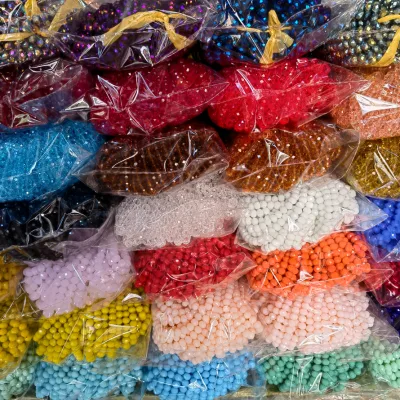



Comprehensive Sourcing Guide
Strategic Sourcing Guide for Animal Pattern Crystal Glass Beads
Understanding Product Attributes and Material Composition
When sourcing Animal Pattern Crystal Glass Beads, buyers must first distinguish between the aesthetic design and the underlying material science. The core keyword implies a specific visual motif, yet the physical properties of the bead are determined by its composition. Based on available market data, the primary material for these items is often glass stone or synthetic glass. It is critical to verify that the "crystal" designation in marketing materials aligns with the actual chemical composition, which is frequently listed as synthetic or lab-created glass rather than lead crystal. The quality of the glass directly influences the clarity, refractive index, and durability of the final product.
In the context of animal patterns, the design is typically achieved through surface treatments such as polishing or specific cutting techniques. While some listings indicate a "Trapezoid Cut" or "Faceted" finish, the pattern itself is often a result of the cutting geometry or a surface application. Buyers should note that the gemstone shape can vary significantly, ranging from round beads to pear, oval, or trapezoid forms. The color palette is equally diverse, with observed options including green, black, red, aquamarine, and emerald, or the ability to choose custom colors. The "2A" or "AA" quality ratings often seen in supplier catalogs refer to the clarity and absence of bubbles or inclusions within the glass, a standard metric for synthetic gemstones.
Technical Specifications and Dimensional Consistency
Precision in dimensions is a non-negotiable factor for manufacturers using these beads in assembly lines, particularly for jewelry or garment accessories. The size specifications observed in the market vary from small 2mm and 3mm beads to larger 5mm and 6*8mm units. The length of the strand or string is another critical variable; standard configurations often include lengths of 36cm, though custom requests are frequently accommodated.
For buyers requiring animal patterns, the consistency of the cut is paramount. A "Trapezoid Cut" or "Faceted" surface treatment affects how light interacts with the bead, which is essential for the visibility of the pattern. The roundness of the beads is another technical specification that impacts the final look of a finished product. Industry standards often suggest verifying that the roundness is greater than or equal to 80%, ensuring that the beads sit uniformly in settings or stringing. Density is also a measurable attribute, with typical ranges falling between 2.3 and 2.5 g/cm³ for glass-based materials. This density range helps distinguish high-quality glass from lower-grade plastics or inferior glass compositions.
Compliance, Certification, and Safety Standards
Procurement of glass beads for commercial use, especially those intended for children's jewelry or items in close contact with skin, requires rigorous compliance checks. While specific certification names are not universally standardized across all suppliers, buyers must verify adherence to international safety standards regarding heavy metals and lead content. The "AA" or "2A" quality grades mentioned in product descriptions are internal quality classifications and do not automatically equate to external regulatory compliance.
Buyers should explicitly request documentation regarding the safety of the materials used. For instance, if the beads are intended for the European market, compliance with REACH regulations is mandatory. In the United States, compliance with CPSIA (Consumer Product Safety Improvement Act) is essential for products targeting children. The "Synthetic (Lab Created)" nature of the material generally implies a controlled manufacturing process, which can be an advantage in ensuring consistency, but it does not exempt the product from safety testing. Suppliers should provide test reports confirming that the glass and any surface treatments (such as the polishing or cutting processes) do not release harmful substances.
Cost Drivers and Pricing Variables
The pricing of Animal Pattern Crystal Glass Beads is influenced by several interconnected factors. The primary driver is the complexity of the pattern and the precision of the cutting. Beads with intricate animal motifs or specific cuts like "Trapezoid" or "Faceted" require more sophisticated machinery and longer processing times, which increases the unit cost. The size of the bead also plays a significant role; smaller beads (2mm-3mm) often command a higher price per unit due to the difficulty in handling and sorting them during production.
The Minimum Order Quantity (MOQ) is another critical cost determinant. Market observations show MOQs ranging from 50 pieces to 3000 pieces. A lower MOQ of 50 pieces may result in a higher per-unit price, while larger orders of 100 pieces or more often benefit from economies of scale. The origin of the product, specifically from manufacturing hubs like Wuzhou, China, influences the base cost due to local labor and material availability. Additionally, the level of customization required, such as specific color requests or unique packing solutions (e.g., Carton + Polybag), can add to the final cost. Buyers should expect a price range that reflects these variables, with observed market listings spanning from low-cost bulk items to premium, highly customized units.
Supplier Evaluation and Verification Protocols
Selecting a reliable supplier for Animal Pattern Crystal Glass Beads requires a due diligence process that goes beyond surface-level product descriptions. Buyers should prioritize suppliers who demonstrate transparency in their production capabilities. The presence of a specific product model number, such as "starsgem-gl1002351," indicates a structured inventory system, which is a positive indicator of supplier organization. However, buyers must verify that the supplier can consistently reproduce the animal pattern across large batches.
Key evaluation criteria include the supplier's ability to provide samples. The availability of samples is a standard practice that allows buyers to physically inspect the quality of the glass, the sharpness of the cuts, and the accuracy of the animal pattern. Suppliers who offer "Samples Available" are generally more confident in their quality control processes. Furthermore, buyers should assess the supplier's responsiveness to customization requests. The ability to tailor the product to specific needs, such as custom packing or specific color combinations, is a strong indicator of a flexible and customer-focused partner.
Quality Control and Inspection Procedures
Implementing a robust quality control (QC) protocol is essential to mitigate the risks associated with glass bead procurement. The first step is a visual inspection to verify the "Gemstone Shape" and "Surface Treatment." For animal pattern beads, the pattern must be clear and consistent across the batch. Any blurring or misalignment of the pattern indicates a defect in the cutting or printing process.
Dimensional accuracy is the next critical check. Buyers should use calipers to verify that the bead sizes (e.g., 5mm, 6*8mm) fall within the specified tolerance. The roundness of the beads should also be measured to ensure it meets the required threshold, typically aiming for the observed standard of ≥80%. Additionally, the surface finish must be smooth and free of sharp edges that could cause injury or snagging during assembly. For glass beads used in road marking or other industrial applications, the refractive index (1.5-1.64) and density (2.3-2.5 g/cm³) must be verified through laboratory testing to ensure they meet performance specifications.
Long-Term Procurement and Supply Chain Stability
Sourcing Animal Pattern Crystal Glass Beads is not merely a transactional event but a strategic relationship that requires long-term planning. Buyers should consider the lead times associated with production and delivery. Typical delivery windows observed in the market range from 5 to 7 days after the receipt of deposits, but this can vary based on order volume and customization requirements. Establishing a clear agreement on lead times is crucial for maintaining production schedules.
The stability of the supply chain is also influenced by the supplier's ability to handle fluctuations in demand. Suppliers with a high production capacity and a flexible MOQ structure are better equipped to handle sudden increases in orders. Buyers should also consider the environmental impact of their procurement choices. Glass is a recyclable material, and sourcing from suppliers who emphasize sustainable practices can align with corporate social responsibility goals. Finally, maintaining open communication channels with the supplier ensures that any changes in product specifications or market conditions can be addressed promptly, minimizing disruptions to the supply chain.
Application Scope and Market Versatility
The versatility of Animal Pattern Crystal Glass Beads makes them suitable for a wide range of applications. In the jewelry sector, these beads are used for necklaces, bracelets, and earrings, where the animal pattern adds a unique aesthetic appeal. The "European and American" style classification suggests that these beads are particularly popular in Western markets, where animal motifs are a common design element.
Beyond jewelry, these beads find applications in garment accessories, handbag decoration, and general craft projects. The "Suitable for: Unisex" attribute indicates that the designs are broad enough to appeal to a diverse customer base. In industrial applications, glass beads with specific reflective properties are used for road signs and road marking, where their high refractive index and density are critical for visibility. The ability to customize the color and shape allows manufacturers to tailor the beads to specific design requirements, enhancing the overall value of the final product.
Comparative Analysis of Product Variants
To assist buyers in making informed decisions, the following table compares key attributes of common glass bead variants found in the market:
| Attribute | Variant A: Standard Round | Variant B: Faceted/Patterned | Variant C: Industrial Grade |
|---|---|---|---|
| Shape | Round | Pear, Oval, Trapezoid | Round |
| Surface Treatment | Polished | Trapezoid Cut, Faceted | Polished |
| Material | Glass Stone | Synthetic Glass | Glassbead |
| Typical Size | 2mm - 5mm | 5mm - 6*8mm | 2mm - 3mm |
| Primary Use | General Decoration | Jewelry, Craft | Road Marking |
| Quality Grade | AA | 2A / AA | High |
| MOQ | 50 PCS | 100 PCS | 1-3000 PCS |
This comparison highlights the trade-offs between aesthetic appeal and functional performance. Variant B, with its faceted and patterned design, is ideal for decorative purposes but may have a higher MOQ. Variant C, while less visually complex, offers superior performance for industrial applications due to its specific density and refractive index.
Conclusion
Sourcing Animal Pattern Crystal Glass Beads requires a balanced approach that considers material quality, technical specifications, and supplier reliability. By focusing on the verified attributes of glass composition, dimensional consistency, and safety compliance, buyers can secure high-quality products that meet their specific needs. The market offers a wide range of options, from standard round beads to intricate patterned variants, each with its own cost drivers and application scope. Through rigorous quality control and strategic supplier evaluation, buyers can build a resilient supply chain that supports their long-term business objectives.
FAQs
What material is used for Animal Pattern Crystal Glass Beads?
The beads are made from synthetic glass stone rather than natural crystal. This lab-created material ensures consistent clarity and allows for various colors like green, black, or red to be produced efficiently for jewelry applications.
Which shapes are available for these synthetic glass beads?
Available shapes include round, pear, oval, and trapezoid forms with faceted or polished surfaces. Buyers can select specific dimensions such as 5mm, 6*8mm, or 2mm to 3mm depending on their jewelry or craft project requirements.
Can suppliers customize the color and packaging for orders?
Yes, customization is available for both color selection and packaging solutions. Suppliers can accommodate requests for specific colors like aquamarine or emerald and offer packing options such as carton plus polybag to meet client needs.
What is the typical minimum order quantity for these beads?
Minimum order quantities range from 50 pieces to 3000 pieces depending on the specific product variant. Lower MOQs of 50 pieces are available for standard items, while larger orders often benefit from economies of scale.
How long does delivery take after receiving the deposit?
Delivery typically occurs within 5 to 7 days after the supplier receives the deposit. This lead time applies to standard orders, though complex customizations may require additional processing time before shipment.
Which quality grades are assigned to these glass beads?
Products are classified with quality grades such as 2A or AA, indicating high clarity and few inclusions. These ratings reflect the internal quality of the synthetic glass, ensuring durability and aesthetic appeal for finished jewelry.