Source Antibacterial Round Serving Board for Catering Events Parties
Compare 30 listings for Antibacterial Round Serving Board options from Chinese manufacturers. Buyers can evaluate specifications like size, material, and customization features to find suitable products for food service applications.
Key considerations
Products List
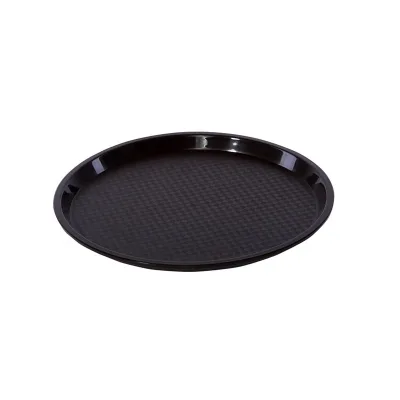


Elegant Black and White Marble Round Tray Serving Tray with Metal Handles
$80.00 - $149.00
MOQ: 50 Pieces


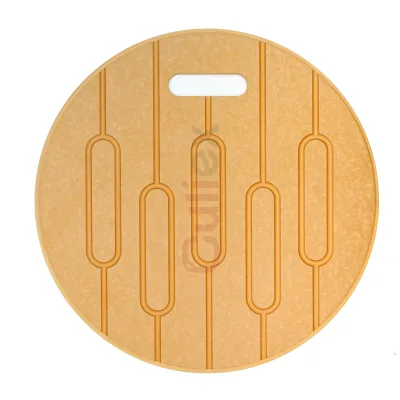
Custom Eco Friendly Solid Wooden Bread Cutting Serving Board for Kitchen
$1.86 - $3.12
MOQ: 100 Pieces


Comprehensive Sourcing Guide
Strategic Sourcing Guide for Antibacterial Round Serving Boards
Understanding Product Definitions and Material Composition
When sourcing antibacterial round serving boards, buyers must first distinguish between the functional claims of "antibacterial" and the physical attributes observed in the market. The core keyword implies a surface treatment or material composition designed to inhibit microbial growth, yet the available product data reveals a diverse range of materials including wood, recycled paper, and sustainably-sourced wood pulp. It is critical to note that the term "antibacterial" is not a universal attribute across all listed inventory; some products are categorized simply as "Eco-Friendly" or "Natural," while others explicitly mention "Recycled Paper" or "Wood."
The material composition is a primary driver of both the antibacterial potential and the durability of the board. Wooden boards, often sourced from regions like Jiangxi or Fujian, are noted for their natural grain and "Grade a" quality. These items frequently come in "Natural" colors and may be treated to enhance longevity. Conversely, paper-based options, such as those with model numbers like TM-WPP1135, utilize recycled paper or wood pulp. These are often designed for single-use or limited-use scenarios in high-volume events. The "Round" shape is a consistent geometric standard across the supply base, with sizes ranging from 10 inches to 135mm, 140mm, and 145mm diameters. Buyers must verify if the "antibacterial" claim is inherent to the material (e.g., treated wood) or a surface coating, as this dictates the cleaning protocol and lifespan.
Technical Specifications and Customization Capabilities
Technical specifications for round serving boards vary significantly based on the intended usage, whether for permanent food service or temporary event catering. The market offers a wide spectrum of customization options, including "Custom Size Accepted," "Accept Customized Logo," and design features such as "Straight Pattern" or "Raised Edges." These features are not merely aesthetic; raised edges can prevent spillage during transport, while custom logos allow for brand integration in corporate events.
The standardization of dimensions is a key consideration. While some products adhere to specific inch-based standards like 10" or 12", others operate on metric standards such as 135mm, 140mm, and 145mm. The unit weight also varies, with specific models weighing between 2.2g and 2.4g, indicating a lightweight design suitable for disposable or semi-disposable applications. For reusable boards, the "Condition" is typically listed as "New," and the "Style" may range from "American" to "Rustic."
Buyers should pay close attention to the "Customization" parameters. Many suppliers accept requests for specific designs, initial names, event details, and color patterns. However, the "Customized" status often implies a minimum order quantity (MOQ) that can range from as low as 1 unit to as high as 57,400 units. This wide range suggests that small-batch customization is possible but may carry a higher per-unit cost, whereas large-scale orders benefit from economies of scale. The "Design" attribute often includes assistance in developing designs, which is a valuable service for buyers looking to create proprietary product lines.
Compliance, Certification, and Safety Standards
In the realm of food contact materials, compliance and certification are non-negotiable. The observed product data highlights specific certifications such as "CE/EU," which indicates conformity with European health, safety, and environmental protection standards. This is a critical verification point for buyers targeting markets in Europe or those requiring international compliance. Additionally, the presence of "ASTM D6400" in background knowledge suggests a potential standard for compostable plastics, though buyers must verify if this specific standard applies to the wooden or paper boards in question, as it is not explicitly listed as a primary attribute for all items.
Safety for food usage is paramount. The "Usage" field consistently lists "Food" and "Egg," confirming that these boards are intended for direct or indirect food contact. However, the "antibacterial" claim requires rigorous verification. Buyers should not assume that all "Eco-Friendly" or "Natural" boards possess antimicrobial properties without specific documentation. The "Quality" is often rated as "Grade a," but this is a subjective observation unless backed by third-party testing results.
Buyers must request specific test reports for antibacterial efficacy, such as JIS Z 2801 or ISO 22196, which measure the reduction of bacteria on surfaces. While the provided data mentions "CE/EU" certification, it does not explicitly confirm antibacterial test results for every listed product. Therefore, the procurement strategy must include a step where the buyer requests the specific antibacterial test data for the chosen model number, such as STS-MC-250226-02-R or 164BBR12, to ensure the claim is substantiated.
Cost Drivers and Pricing Dynamics
The pricing for round serving boards is influenced by a complex interplay of material costs, customization levels, and order volume. The observed price range spans from $0.44 to $149, reflecting the vast difference between disposable paper boards and premium, custom-made wooden crates. The lower end of the spectrum typically corresponds to high-volume, standardized, disposable items made from recycled paper or basic wood pulp. These items often have a "Single item" selling unit but are packaged in bulk, such as 100 pieces per shrink pack.
Conversely, the higher price points are associated with custom-sized, high-quality wooden boards, often packed in "Wooden Crates" for protection during long-distance shipping. The "Payment" terms, such as a "30% TT Deposit," indicate that larger orders require significant upfront capital, which can affect cash flow planning. The "MOQ" range of 1 to 57,400 units further illustrates the cost dynamics; ordering near the lower limit of 1 unit usually incurs a premium due to setup costs, while orders approaching 57,400 units likely benefit from optimized production runs.
Material sourcing is another cost driver. Boards originating from "Jiangxi, China" or "Fujian, China" may have different logistics costs compared to those from "Qingdao, China." The "Origin" of the material, whether "Natural Stone Crafts" or "Sustainably-Sourced Wood Pulp," also impacts the final price. Buyers should analyze the total cost of ownership, including packaging (e.g., "Carton Box" vs. "Wooden Crates") and potential import duties, rather than focusing solely on the unit price.
Supplier Evaluation and Operational Reliability
Evaluating suppliers requires a focus on their ability to meet specific customization and quality requirements. The data indicates that many suppliers offer "Design" assistance and accept "Customized Logo" requests, suggesting a collaborative approach to procurement. However, the "Sinotopstone" label appears as a specific supplier identifier in the data, acting as a "Natural Stone Crafts Supplier," which may imply a specialization in stone rather than wood or paper. Buyers should be cautious not to conflate suppliers based on partial data and should verify the full scope of a supplier's capabilities.
Reliability is often gauged by the "Sample" availability. The fact that samples are "Acceptable" allows buyers to physically inspect the antibacterial coating, the roundness of the board, and the quality of the finish before committing to a large order. The "Condition" being "New" is a standard expectation, but the "Quality" rating of "Grade a" should be validated against the buyer's internal standards.
Logistics and lead times are critical operational factors. While specific lead times are not provided in the data, the "prod_packing" methods, such as "100PCS/Shrink Pack" or "24PCS/Carton," suggest different shipping efficiencies. Buyers should inquire about the "Lead Time" for custom orders, especially given the "Customized" nature of many items. The "OEM" (Original Equipment Manufacturer) acceptance indicates that suppliers are willing to produce under the buyer's brand, which is essential for private label strategies.
Quality Control and Inspection Protocols
Implementing a robust quality control (QC) protocol is essential for ensuring that the "antibacterial" claim holds true and that the physical product meets specifications. The "Quality" attribute of "Grade a" serves as a baseline, but buyers must define what constitutes "Grade a" in their specific context. This includes checking for surface defects, consistency in the round shape, and the integrity of the antibacterial treatment.
Inspection should cover the "Design Features" such as "Straight Pattern" and "Raised Edges" to ensure they are uniform across the batch. For paper-based products, the "Unit Weight" variance (2.2g to 2.4g) should be monitored to ensure consistency in material density. For wooden boards, the "Natural" color and grain pattern should be consistent unless a specific variation is requested.
The "Standard" of the product, whether "Customized" or a specific dimension like "12" or "10"", must be verified against the purchase order. Buyers should conduct pre-shipment inspections to ensure that the "Packing" (e.g., "Carton" or "Wooden Crates") is sufficient to prevent damage during transit. Additionally, verifying the "Certification" documents, such as CE/EU, is a mandatory step to ensure compliance with food safety regulations.
Long-Term Procurement and Sustainability Considerations
Long-term procurement strategies for round serving boards should prioritize sustainability and supply chain resilience. The "Feature" of "Eco-Friendly" is a recurring attribute, suggesting a market trend toward environmentally responsible products. Materials like "Recycled Paper" and "Sustainably-Sourced Wood Pulp" align with global sustainability goals and can enhance a buyer's corporate social responsibility profile.
The "Usage Scenarios" listed, including "Weddings, Parties, Corporate Events, Catering," indicate that these products are often used in high-traffic, temporary settings. For these applications, the "Disposable" vs. "Non-Disposable" distinction is crucial. While some boards are designed for single use, others are "Non-Disposable" and intended for repeated cleaning and sanitization. Buyers must ensure that the antibacterial treatment is durable enough to withstand repeated cleaning cycles if the product is marketed as reusable.
Sustainability also involves the end-of-life management of the product. If the boards are compostable or biodegradable, this should be clearly communicated to the end-user. The "Customized" nature of the product allows for branding that can educate consumers on proper disposal methods. Furthermore, the "Design" assistance offered by suppliers can be leveraged to create products that are easier to recycle or compost, reducing the environmental footprint of the procurement.
Comparative Analysis of Product Attributes
To facilitate decision-making, the following table summarizes key attributes observed across the product range, highlighting the differences between material types and customization levels.
| Attribute | Wooden Boards | Paper/Recycled Boards | Customized Options |
|---|---|---|---|
| Primary Material | Wood (Natural) | Recycled Paper / Wood Pulp | Varies by Material |
| Typical Size | 10", 12", Custom | 135mm, 140mm, 145mm | Custom Size Accepted |
| Durability | Non-Disposable | Disposable / Limited Use | Depends on Material |
| Certification | CE/EU (Variable) | CE/EU (Variable) | CE/EU (Variable) |
| Packing | Wooden Crates | Shrink Pack / Carton | Custom Packing |
| MOQ Range | 1 - 57,400 | 1 - 57,400 | 1 - 57,400 |
| Key Feature | Eco-Friendly, Grade A | Eco-Friendly, Stocked | Logo, Design, Colors |
| Origin | Jiangxi, Fujian, Qingdao | China | China |
This comparison underscores the need for buyers to align their specific requirements with the appropriate product category. Wooden boards offer durability and a premium feel, suitable for high-end events, while paper boards provide a cost-effective, eco-friendly solution for large-scale disposable needs. The "Customized" column emphasizes that regardless of the base material, the ability to tailor the product to specific branding and functional needs is a universal capability in this market.
Final Procurement Recommendations
Sourcing antibacterial round serving boards requires a meticulous approach that balances technical specifications, compliance, and cost. Buyers should begin by clearly defining the intended usage scenario, whether it is for a one-time event or a recurring service. This definition will guide the selection between disposable and non-disposable options. Verification of the "antibacterial" claim through third-party testing is essential, as the term is not universally applied across all listed products.
Collaboration with suppliers who offer "Design" assistance and "OEM" capabilities can lead to unique, branded products that stand out in the market. However, buyers must remain vigilant about the "MOQ" and "Lead Time" implications of customization. Establishing a clear quality control protocol, including sample approval and pre-shipment inspection, will mitigate the risks associated with variable quality and ensure that the final product meets the "Grade a" standard.
Finally, considering the "Eco-Friendly" and "Sustainably-Sourced" attributes, buyers should prioritize suppliers who can provide transparent information about their material sourcing and environmental impact. By integrating these factors into the procurement strategy, buyers can secure a reliable supply of high-quality, antibacterial round serving boards that meet both functional and ethical standards.
FAQs
What certifications do antibacterial round serving boards have?
Many listed products carry CE/EU certification for safety and environmental compliance. Buyers should verify specific test reports for antibacterial efficacy like JIS Z 2801 before assuming all eco-friendly boards meet this standard.
Can I customize the size and logo on these boards?
Customization is available for size, logo, and design patterns on many models. Minimum order quantities vary widely from one unit to over fifty thousand, affecting the per-unit cost significantly.
Which materials are used for round serving boards?
Materials include natural wood, recycled paper, and sustainably-sourced wood pulp. Wooden options often feature a natural color and grade a quality, while paper versions are designed for disposable or limited-use scenarios.
How much do antibacterial round serving boards cost?
Prices range from 0.44 to 149 USD depending on material and customization. Lower costs typically apply to high-volume disposable paper boards, while custom wooden crates command higher prices.
Where are these serving boards manufactured?
Products originate from Jiangxi, Fujian, and Qingdao in China. The specific location can influence logistics costs and lead times for both standard and custom-sized orders.
Are these boards suitable for food and egg service?
Yes, the usage field explicitly lists food and egg for direct contact. Ensure the antibacterial claim is backed by specific test data if the board is intended for reusable applications.