Source Articulated Cherry Picker Lift for Building, Warehouse, and Shipboard Use
Find 30 Articulated Cherry Picker Lift options from Jinan and Xuzhou suppliers. Compare models like CTA-12A and ETB29EJ with AC or DC power, hydraulic lift mechanisms, and explosion-proof features for construction and workshop applications; compare the available evidence and request quotations based on your requirements.
Updated
Key considerations
Products List

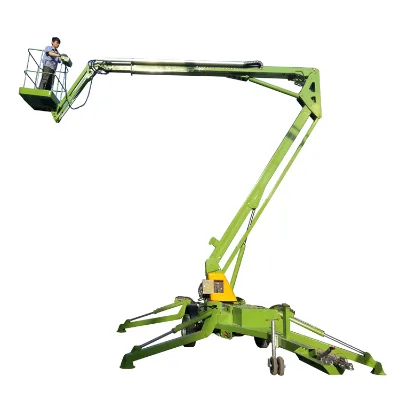
Aerial Boom Lift Cherry Picker Towable Articulated Manlift Boom Lift
$8500.00 - $9000.00
MOQ: 1 Pieces

Cherry Picker Machine Portable Cherry Picker Lift with Trailer Mounted Boom
$8500.00 - $9000.00
MOQ: 1 Pieces


Trailer Mounted Telescopic Articulated Cherry Picker Spider Lift Towable Boom Lift
$8500.00 - $9000.00
MOQ: 1 Pieces

Aerial Work Platform Telescopic Articulated Cherry Picker Spider Lift Towable Boom Lift
$8500.00 - $9000.00
MOQ: 1 Pieces

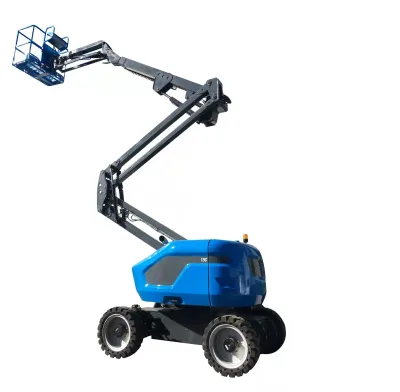


Factory Outlet Mobile Towable Boom Lift Cherry Picker Boom Spider Lift
$6000.00 - $20000.00
MOQ: 1 Pieces


200kg Load Capacity 14m Cherry Picker Articulating Boom Lift for Sale
$22999.00 - $30000.00
MOQ: 1 Pieces


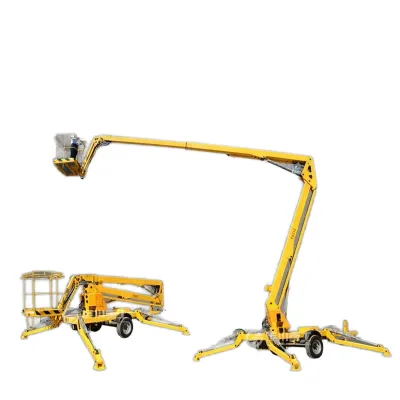
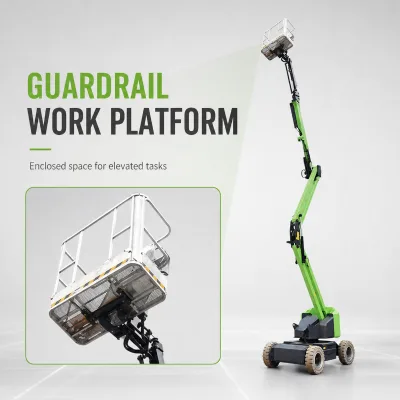


10m-22m Lifting Mechanism Hydrolic Lift with 200kg Load Capacity Cherry Picker
$3200.00 - $7800.00
MOQ: 1 Pieces
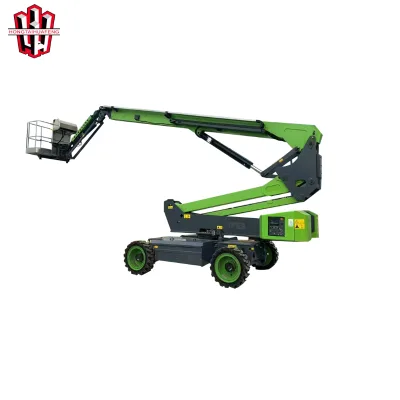
$18532.0876 - $33975.4939
MOQ: 1 Minimum


Comprehensive Sourcing Guide
Articulated Cherry Picker Lift Sourcing Guide
Procuring an Articulated Cherry Picker Lift requires careful alignment of technical capabilities with specific operational environments. These machines are primarily designed for tasks involving elevated work in complex spaces, such as building construction, warehouse management, shipboard operations, and general workshop maintenance. The articulated design allows the boom to extend over obstacles, providing access to areas that straight-boom lifts cannot reach. Buyers must evaluate whether the vehicle’s mobility and reach match the physical constraints of their job sites, ensuring that the equipment can navigate tight spaces while maintaining stability during operation.
The market offers a variety of configurations, including models with different power sources such as AC, DC, gasoline, diesel, or hybrid options. This diversity allows procurement teams to select units that comply with local emission regulations or indoor air quality standards. For instance, battery-powered or electric models are suitable for enclosed spaces, while diesel engines may be preferred for heavy-duty outdoor construction. Understanding these power options is critical for ensuring that the selected lift integrates seamlessly with existing site infrastructure and operational workflows, minimizing downtime and maximizing productivity across diverse industrial applications.
Product Scope and Observed Listing Signals
Current market listings indicate a wide range of product models, including designations such as CTA-12A, CTA-14T, CTA-16T, CTA-18T, CTA-20T, and CTA-22T, alongside other identifiers like ETB29EJ and ETB40J. These models often feature working heights ranging from 12 meters to 24 meters, with working radii extending between 5.5 and 11 meters. The platform sizes vary, with some units offering dimensions around 1.2 by 0.8 meters or 1.53 by 0.76 meters. Buyers should verify these specific dimensions against their personnel and tool requirements to ensure adequate workspace and safety margins during elevated tasks.
Observed specifications also highlight significant variations in load capacity and net weight, with capacities ranging from 227 kilograms to specialized heavy levels, and net weights spanning from 1,750 kilograms to 5,000 kilograms. Some listings mention payload capacities up to 20 tons, which may refer to the lifting mechanism’s structural limits rather than platform load. It is essential to distinguish between the machine’s total weight and its safe working load. Procurement teams must cross-reference these figures with the intended use case to prevent overloading, which can compromise stability and safety during operation.
Technical Specifications to Verify
The lift mechanism is a critical component, with options including articulated and telescoping lifts, often driven by hydraulic systems. Buyers should confirm the actuation type and ensure it matches the required precision and speed for their tasks. Additionally, the driven type, whether AC or DC, impacts the machine’s responsiveness and control. For mobile units, the drive wheel configuration, such as four-wheel drive, and transmission type, whether manual or automatic, influence maneuverability on uneven terrain. Verifying these mechanical details ensures the equipment can handle the specific demands of the job site without mechanical failure.
Power source flexibility is another key technical consideration, with options including battery, AC, DC, gasoline, diesel, or hybrid combinations. Horsepower ratings may range from 130 HP to 250 HP, depending on the model and intended duty cycle. Buyers must assess whether the available power options align with site energy infrastructure and environmental regulations. For example, diesel engines may require specific exhaust management, while electric models need charging facilities. Confirming these specifications prevents compatibility issues and ensures the lift operates efficiently throughout its lifecycle.
Compliance and Safety Documentation
Certification is a vital aspect of procurement, with observed listings mentioning standards such as ISO, RoHS, CE, GS, ISOCCC, TSEPA, and EEC. Buyers must verify that the specific model they intend to purchase holds the necessary certifications for their region and industry. Compliance with these standards ensures that the equipment meets international safety and environmental requirements. Procurement teams should request valid certification documents from suppliers and validate them with relevant authorities to avoid legal liabilities and ensure operational safety.
Safety features such as explosion-proof and insulating capabilities are available in some models, making them suitable for hazardous environments. Buyers operating in industries with flammable materials or electrical hazards must prioritize these features. Additionally, the condition of the equipment, whether new or used, affects its safety profile and maintenance needs. New units typically come with full warranty coverage and up-to-date safety protocols. Verifying these safety attributes and documentation ensures that the lift can be deployed safely, protecting workers and complying with regulatory standards.
Cost Drivers and Commercial Terms
Pricing for articulated cherry picker lifts varies significantly, with observed ranges from 299 USD to 35,000 USD, reflecting differences in capacity, height, and features. The minimum order quantity (MOQ) is often set at one unit, allowing for flexible procurement. Buyers should consider the total cost of ownership, including maintenance, parts, and energy consumption, rather than just the initial purchase price. Higher-capacity models or those with specialized power sources may command higher prices but offer greater versatility and longevity.
Shipping and packaging also impact overall costs, with options including small cabinets, boxes, or nude packages. Container loading capacities vary, with some units fitting one set in a 20-foot container or three sets in a 40-foot container. Buyers should calculate logistics costs based on the chosen packaging and shipping method. Additionally, lead times and supplier location, such as Jinan Shandong or Xuzhou, can affect delivery schedules. Understanding these commercial terms helps in budgeting accurately and planning project timelines effectively.
Supplier Qualification and Quality Control
Supplier origin and reputation are key factors in ensuring product quality. Many suppliers are located in regions like Jinan Shandong and Xuzhou in China, which are known for manufacturing industrial equipment. Buyers should assess the supplier’s production capabilities, quality control processes, and after-sales support. Requesting references or case studies from previous clients can provide insights into the supplier’s reliability and product performance. Verifying the supplier’s ability to meet specific customization needs is also crucial for tailored procurement solutions.
Quality control extends to the manufacturing process, with attention to details such as material strength, weld quality, and component durability. Buyers should inquire about the testing procedures used to validate the lift’s performance under load. Ensuring that the supplier adheres to strict manufacturing standards reduces the risk of defects and enhances the equipment’s lifespan. Establishing a clear communication channel with the supplier for technical support and troubleshooting is essential for maintaining operational continuity and addressing any issues that may arise during use.
Long-Term Procurement Checks
Regular maintenance and part availability are critical for the long-term viability of articulated cherry picker lifts. Buyers should verify the supplier’s inventory of spare parts and their ability to provide timely replacements. A robust supply chain for components like hydraulic pumps, motors, and control systems ensures minimal downtime during repairs. Additionally, understanding the recommended maintenance schedule and procedures helps in planning preventive maintenance activities, extending the equipment’s service life and preserving its value.
Training and operator certification are also important for long-term success. Ensuring that operators are properly trained on the specific model’s controls and safety protocols reduces the risk of accidents and misuse. Buyers should consider offering ongoing training programs to keep operators updated on best practices and new features. Furthermore, monitoring the equipment’s performance over time and conducting periodic inspections can identify potential issues early, allowing for proactive maintenance and ensuring consistent, safe operation throughout the asset’s lifecycle.
FAQs
What certifications do articulated cherry picker lifts have?
These lifts typically hold ISO, RoHS, CE, and GS certifications. Such documentation ensures compliance with international safety and quality standards for industrial use. Buyers should verify specific certificates for their region to guarantee regulatory adherence and operational safety during installation and daily maintenance.
What is the working height range for these lifts?
The working height generally ranges from 12 meters to 24 meters. This span accommodates various building and warehouse applications. The telescoping or articulated boom allows operators to reach elevated work zones safely while maintaining stability across different terrain conditions.
Can the power source be customized for specific needs?
Yes, power options include AC, DC, gasoline, diesel, or hybrid configurations. Battery-powered models are also available for indoor use. Customization allows operators to select the optimal energy source based on site constraints, emission requirements, and continuous operation demands.
What is the typical load capacity of these machines?
Load capacities vary, with some models supporting up to 20 tons. Smaller platforms may carry around 227 kilograms. Buyers must match the payload requirement to the specific model, such as the CTA-20T, to ensure safe lifting operations and structural integrity.
Where are these articulated lifts typically manufactured?
Manufacturing often occurs in regions like Jinan, Shandong, and Xuzhou in China. These locations host specialized factories producing heavy machinery. Sourcing from these hubs provides access to established supply chains and competitive pricing for international buyers seeking reliable industrial equipment.
What features make these lifts suitable for hazardous environments?
Many models feature explosion-proof and insulating capabilities. These attributes ensure safe operation in workshops, shipyards, or chemical plants. The robust design protects against electrical hazards and flammable atmospheres, making them ideal for specialized industrial maintenance and construction tasks.