Source Trailer Mounted Articulated Boom Lift for Building, Warehouse, Shipboard
Find 30 Trailer Mounted Articulated Boom Lift options with hydraulic driven types and lifting heights up to 24m. Compare specifications including platform size, wind resistance, and customization availability for workshop and shipboard applications; compare the available evidence and request quotations based on your requirements.
Updated
Key considerations
Products List

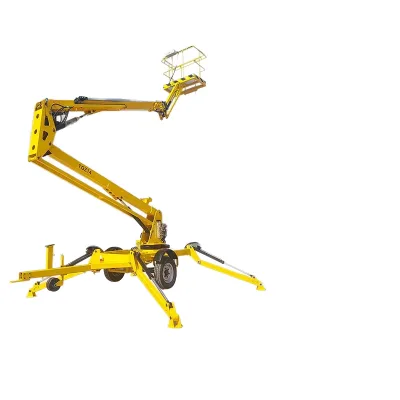
Lift Articulated Boom Mobile Hydraulic Lifter Trailer Mounted Boom Lifter
$5000.00 - $20000.00
MOQ: 1 Pieces


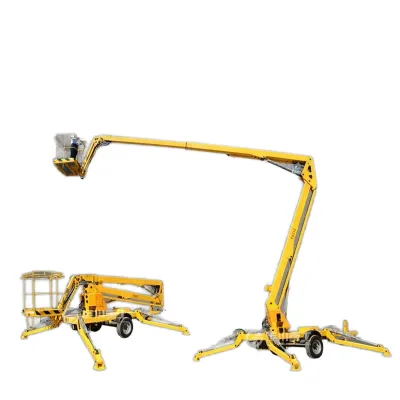
Tow Behind Boom Lift with Stable Trailer Mounted Structure Towable Boom Lift
$8500.00 - $9000.00
MOQ: 1 Pieces

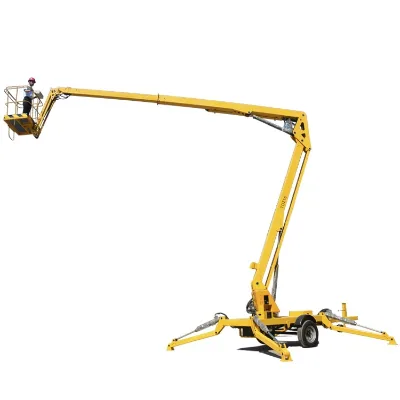
Mobile Towable Boom Lift Trailer Articulated Aerial Work Lift Platform
$8500.00 - $9000.00
MOQ: 1 Pieces

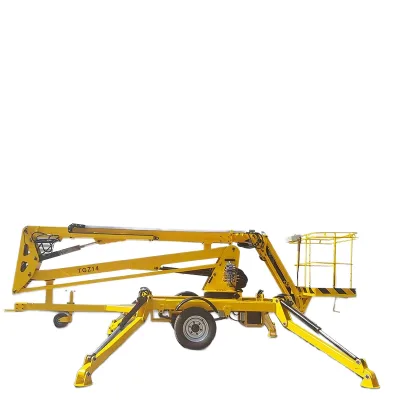
Manufacture 14m 16m Working Articulated Aerial Trailer Mounted Boom Lift
$8000.00 - $9000.00
MOQ: 1 Pieces

Trailer Towable Electric Articulated Boom Lift for Outdoor Tree Building
$8800.00 - $9800.00
MOQ: 1 Pieces
Comprehensive Sourcing Guide
Trailer Mounted Articulated Boom Lift Sourcing Guide
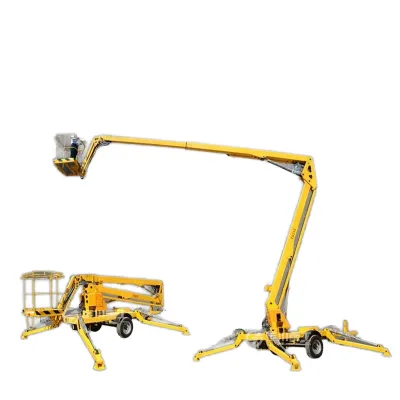
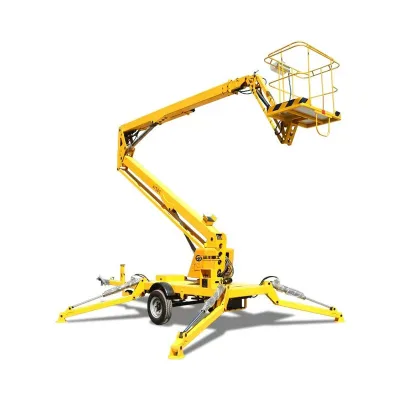
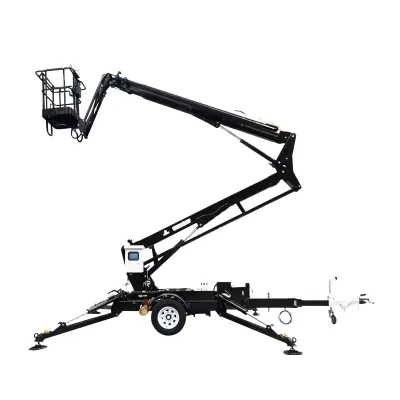
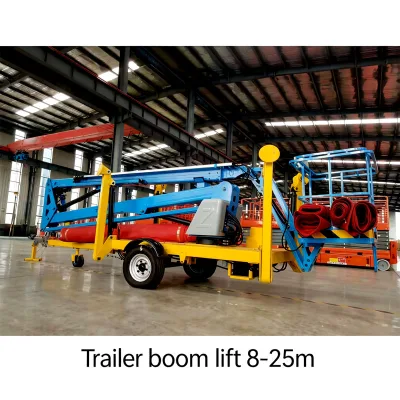
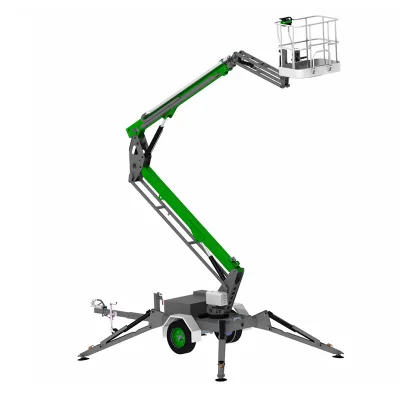
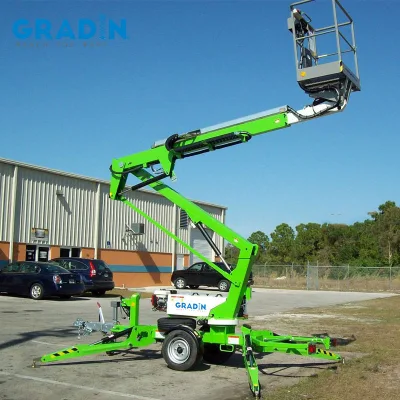
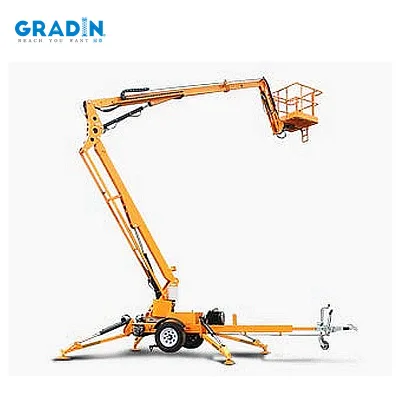
Procuring a trailer-mounted articulated boom lift requires careful alignment of technical capabilities with specific operational environments. These machines are designed for high-reach tasks in diverse settings, including building cranes, warehouse operations, shipboard installations, and general workshop maintenance. The articulated design allows the boom to extend over obstacles, providing access to complex work areas that straight-boom lifts cannot reach. Buyers must evaluate whether the self-propelled or towable configuration best suits their site logistics and mobility requirements.
The market offers variations in lifting height, platform size, and load capacity, necessitating a clear definition of project needs before engaging suppliers. Observed listings indicate a wide range of specifications, from light-level carrying capacities to middle-level heavy-duty options. Understanding the distinction between telescoping and articulated lift mechanisms is crucial, as each offers different advantages in terms of reach and maneuverability. Buyers should prioritize machines that match their specific height and radius requirements to avoid costly inefficiencies or safety compromises during operation.
Product Scope and Observed Listing Signals
Current market listings reveal a diverse array of trailer-mounted articulated boom lifts with varying core attributes. Products are often described with specific models such as BL-07 or TBL, featuring hydraulic driven types and moving running modes. The platform size is frequently standardized around dimensions like 1200*800mm, providing adequate workspace for personnel and tools. Buyers should note that customization is available for many units, allowing for tailored solutions that fit unique site constraints or branding requirements.
Observed price ranges span from approximately 450 to 25,000 USD, reflecting significant differences in build quality, brand, and technical specifications. Minimum order quantities are typically set at one unit, facilitating direct procurement for individual projects. The lifting height varies considerably, with some units offering 10-24m ranges while others are specified at fixed heights like 14m or 18m. This variance underscores the importance of verifying the exact working height and radius against the intended application to ensure adequate coverage.
Technical Specifications to Verify
Key technical parameters must be rigorously verified to ensure the equipment meets operational demands. The lifting mechanism type, whether articulated or telescoping, dictates the machine's reach and flexibility. Buyers should confirm the maximum working height and radius, as these figures directly impact the machine's utility on site. For instance, some units offer a horizontal span of 7.5m with a working radius of 3.4m, while others allow for customization to exceed these baseline metrics.
Power and control systems are equally critical for reliable performance. Specifications often include a 2.2kw power rating and 24V/DC control voltage, ensuring stable operation in various conditions. The travel speed, ranging from 15-30km/h for towable models, affects site mobility and setup time. Additionally, the presence of full-automatic hydraulic outriggers, such as four-leg systems, is essential for stability during lifting operations. Verifying the platform material, often non-skid diamond steel, ensures worker safety and durability under heavy use.
Compliance and Safety Documentation
Safety and regulatory compliance are non-negotiable aspects of sourcing heavy machinery. Buyers must ensure that all equipment carries recognized certifications, with CE and ISO standards frequently cited in product listings. These certifications indicate adherence to European and international safety and quality benchmarks, which is crucial for legal operation in many jurisdictions. The presence of an emergency decline system is a vital safety feature that must be verified to ensure personnel can be safely lowered in case of power failure.
Wind resistance levels and structural integrity are also key safety considerations. Units are often rated for specific wind grades, such as 6 Grade, which defines the operational limits in adverse weather conditions. The turning degree of 360 degrees automatic rotation enhances versatility but requires robust structural support. Buyers should request detailed documentation on the lifting speed, typically 3-5m/min, and the working pressure, often around 10 MPa, to assess the machine's responsiveness and control precision during critical lifts.
Cost Drivers and Commercial Terms
Several factors influence the final cost of a trailer-mounted articulated boom lift, including material quality and manufacturing origin. Products originating from regions like Henan or Shandong in China often offer competitive pricing due to localized supply chains. The use of structural steel for the main frame contributes to durability but also impacts weight and shipping costs. Buyers should consider the total cost of ownership, including transportation, installation, and potential customization fees, rather than just the base unit price.
Packaging and logistics also play a significant role in commercial terms. Units are typically shipped in wooden packaging or plywood packages to protect against transit damage, with some suppliers offering standard export packaging. The weight and dimensions of the machine, such as 950019502200mm, affect freight costs and handling requirements. Buyers should negotiate clear terms regarding delivery timelines and warranty coverage, as these can vary significantly between suppliers and impact the overall project budget and timeline.
Supplier Qualification and Quality Control
Evaluating supplier credibility is essential to mitigate procurement risks. Buyers should verify the supplier's production capabilities and quality control processes, looking for evidence of standardized manufacturing practices. The presence of certifications like ISO, CE, and SGS suggests a commitment to quality management systems. However, buyers must independently confirm the validity of these certifications through official databases or third-party audits to ensure they are current and applicable to the specific product model.
Quality control should extend to the inspection of critical components such as hydraulic systems, electrical controls, and structural welds. Suppliers using reputable brands for controls parts, such as Delixi, may offer higher reliability. Buyers should request detailed inspection reports or video evidence of pre-shipment testing. Establishing clear communication channels for technical support and after-sales service is also crucial, as it ensures timely resolution of any operational issues that may arise during the machine's lifecycle.
Long-Term Procurement Checks
Sustainable procurement requires ongoing evaluation of equipment performance and supplier reliability. Buyers should monitor the machine's lifting speed, turning degree, and overall stability over time to identify any degradation in performance. Regular maintenance checks, including hydraulic fluid levels and outrigger functionality, are necessary to extend the equipment's lifespan. Documenting any issues or deviations from expected performance helps in making informed decisions for future purchases or replacements.
Supplier relationship management is also a long-term consideration. Buyers should assess the supplier's responsiveness to inquiries, accuracy of documentation, and willingness to provide spare parts. A supplier that offers customized colors or specific technical adjustments demonstrates flexibility and customer focus. Building a strong partnership with a reliable supplier can lead to better pricing, priority service, and access to new product innovations, ultimately enhancing the efficiency and safety of future lifting operations.
FAQs
What is the maximum lifting height for this Trailer Mounted Articulated Boom Lift?
The maximum lifting height ranges from 10 to 24 meters depending on the specific model configuration. Some units offer a customized height of up to 18 meters or 16 meters. This vertical reach allows operators to access elevated work areas safely while maintaining stability through hydraulic outriggers and a robust structural steel frame.
Can the platform size be customized for specific workshop or warehouse applications?
Yes, customization is available for the platform dimensions and color to suit various operational needs. The standard platform size is 1200 by 800 millimeters, providing ample space for tools and personnel. Buyers can request specific color options and potentially adjusted dimensions to fit unique loading or workspace constraints effectively.
Which certifications ensure the safety and quality of these hydraulic lifts?
These lifts typically hold CE and ISO certifications to ensure compliance with international safety and quality standards. Some models also meet SGS requirements. These certifications verify that the hydraulic systems, electrical components, and structural integrity meet rigorous manufacturing benchmarks, providing confidence for use in building, shipboard, or workshop crane applications.
What is the load capacity and power source for the working platform?
The load capacity varies, with some models supporting 150 kilograms and others rated for 200 kilograms. The system is driven by a 2.2kw power source, often utilizing hydraulic mechanisms for smooth operation. This combination ensures reliable lifting performance for light to medium-duty tasks while maintaining energy efficiency during extended use periods.
How does the turning degree and travel speed affect operational efficiency?
The platform offers a 360-degree automatic turning degree, allowing precise positioning without repositioning the trailer. Travel speeds range from 15 to 30 kilometers per hour, enabling quick site mobility. This combination of full rotation and efficient travel enhances workflow continuity, particularly in confined spaces like warehouses or construction sites requiring frequent repositioning.
What packaging and origin details should buyers consider for international shipping?
Products originate from China, specifically regions like Henan or Shandong, and are packed in wooden or plywood packages for protection. Standard export packaging is also available to ensure safe transit. Buyers should account for these origin locations and packaging types when calculating logistics costs and ensuring the equipment arrives undamaged at the destination port.