Source Automatic Mobile Asphalt Sprayer Truck for Road Repair
Compare 30 Automatic Mobile Asphalt Sprayer Truck models with varying tank volumes and spraying widths. Buyers can evaluate features like independent electric control and hydraulic systems for highway construction, road maintenance, and airport pavement projects.
Key considerations
Products List

Intelligent Asphalt Spraying Truck Bitumen Sprayer Truck for Highway Maintenance
$15000.00 - $28000.00
MOQ: 1 Pieces

Asphalt Spraying Bitumen Sprayer Truck with Customizable Tank and Width
$15000.00 - $28000.00
MOQ: 1 Pieces

Versatile Bitumen Sprayer Truck for Precision Asphalt Spraying Applications
$15000.00 - $28000.00
MOQ: 1 Pieces

Efficient Bitumen Sprayer Truck for High-Volume Asphalt Spraying Tasks
$15000.00 - $28000.00
MOQ: 1 Pieces

Durable Bitumen Sprayer Truck for Optimal Asphalt Spraying Efficiency
$15000.00 - $28000.00
MOQ: 1 Pieces
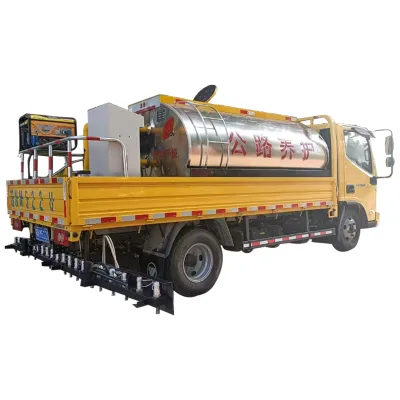


Asphalt Tank Vehicle Bitumen Sprayer Truck for Efficient Construction Projects
$14700.00 - $53200.00
MOQ: 1 Pieces


Bitumen Emulsion Sprayer Truck Asphalt Distributor Truck for Road Paving & Maintenance
$19900.00 - $86500.00
MOQ: 1 Pieces

4000L Bitumen Sprayer Asphalt Distribution Truck for Road Maintenance
$22800.00 - $62500.00
MOQ: 1 Pieces

Professional Asphalt Sprayer Truck 6cbm for Road Maintenance Applications
$18900.00 - $39900.00
MOQ: 1 Pieces

Advanced Asphalt Sprayer Truck for Effective Road Maintenance Solutions
$18900.00 - $39900.00
MOQ: 1 Pieces


Asphalt Emulsion Sprayer Truck with Adjustable Spray Width and Flow Rate Control
$21000.00 - $23000.00
MOQ: 1 Pieces


4X2 6000liter 6wheel Bitumen Spraying Machine Asphalt Sprayer Truck
$35000.00 - $68000.00
MOQ: 1 Pieces

Reliable 4700L Bitumen Sprayer Truck by Dongfeng for Road Construction
$27888.00 - $31222.00
MOQ: 1 Pieces

4X2 3000L Small Bitumen Sprayer Truck Automatic Asphalt Distributor
$28888.00 - $32222.00
MOQ: 1 Pieces


Comprehensive Sourcing Guide
Strategic Sourcing Guide for Automatic Mobile Asphalt Sprayer Trucks
Understanding the Core Technology and Operational Scope
The Automatic Mobile Asphalt Sprayer Truck represents a critical asset in modern road construction and maintenance, designed to deliver precise applications of bitumen, emulsified asphalt, and modified asphalt. Unlike manual or semi-automatic systems, these units leverage advanced hydraulic and electric control mechanisms to ensure uniform coverage across varying pavement widths. The core functionality relies on a high-precision spraying system capable of adjusting the application rate between 0.3 and 3.0 liters per square meter. This range allows operators to adapt to different project requirements, from thin tack coats to heavy-duty binder layers.
The mobility of these units is a defining characteristic, facilitating rapid deployment across large construction sites. The "Mobile" classification indicates that the equipment is typically mounted on a chassis capable of independent movement, often integrated with a hydraulic drive system for seamless operation of the spraying pump and tank agitation. The system is engineered to handle hot asphalt, emulsified asphalt, and modified asphalt, requiring robust thermal management to maintain material viscosity during transit and application. The heating method typically utilizes a diesel burner, ensuring the material remains at the optimal temperature for spraying. A full set circulation system for heat conduction oil further enhances thermal efficiency, while the heat preservation capability allows the tank to maintain a constant temperature for up to 24 hours. This feature is crucial for long-distance transport or projects with intermittent spraying schedules, preventing material solidification and ensuring consistent flow rates.
Technical Specifications and Performance Metrics
When evaluating an Automatic Mobile Asphalt Sprayer Truck, buyers must scrutinize specific technical parameters that dictate performance and versatility. The tank volume is a primary consideration, with observed ranges spanning from 1,500 liters to 5,000 liters, and some customized models extending up to 15,000 liters. This variability allows procurement teams to select units that match the scale of their operations, balancing fuel efficiency with the need for reduced refilling frequency. The spraying width is equally critical, with adjustable capabilities ranging from 2 to 6 meters. This adjustability is often achieved through the configuration of the nozzle array, which can include 20, 30, 39, or 48 nozzles depending on the specific model and desired coverage.
The precision of the spraying system is a key differentiator in high-quality units. Advanced models boast a spraying precision of ±1%, ensuring that the application rate remains consistent regardless of vehicle speed or terrain. This level of accuracy is managed through independent electric control of the nozzles, allowing for dynamic adjustments without manual intervention. The hydraulic system drives the entire operation, providing the necessary power for the asphalt pump, which typically operates at a flow rate of 950 liters per minute. The cleaning system is another vital component, utilizing a combination of pressure air and diesel to clear the tank and lines, preventing blockages and ensuring the equipment is ready for the next job.
| Feature | Typical Specification Range | Operational Significance |
|---|---|---|
| Tank Volume | 1,500L - 5,000L (Customizable up to 15,000L) | Determines capacity per load and refilling frequency. |
| Spraying Width | 2m - 6m (Adjustable) | Defines the lane coverage and project efficiency. |
| Spraying Amount | 0.3 - 3.0 L/M² | Controls the thickness and quality of the asphalt layer. |
| Nozzle Quantity | 20 / 30 / 39 / 48 | Influences spray pattern uniformity and width. |
| Spraying Precision | ±1% | Ensures material consistency and cost control. |
| Heating Method | Diesel Burner | Maintains asphalt viscosity during transport and application. |
| Heat Preservation | 24h Constant Temperature | Enables long-haul transport without material cooling. |
| Spraying Width | 4m (Specific Model Example) | Indicates standard coverage for common road widths. |
Compliance, Certification, and Regulatory Standards
In the international B2B market, compliance with international standards is non-negotiable for heavy machinery. Buyers must verify that the equipment meets specific certification requirements to ensure safety and operational legality in their target markets. The observed product data indicates that compliant units typically carry CE and ISO9001 certifications. The CE mark signifies conformity with health, safety, and environmental protection standards for products sold within the European Economic Area, while ISO9001 certifies that the manufacturer adheres to a quality management system that ensures consistent product quality.
It is essential to note that certifications are not universal across all listed models. Buyers should request valid certification documents for the specific unit being purchased, as these are often tied to the manufacturing batch and the specific configuration of the vehicle. The standard production model often references a capacity range of 5000L to 1500L, which serves as a baseline for regulatory classification in certain jurisdictions. Furthermore, the origin of the equipment, frequently listed as China or specifically Suizhou, Hubei Province, implies that the manufacturing facility must adhere to Chinese national standards as well as any export-specific requirements.
When evaluating compliance, procurement teams should look for evidence of the "Condition: New" status, ensuring that the machinery has not been previously modified in a way that voids certifications. The core components, such as the engine and motor, should also be sourced from reputable manufacturers to maintain the integrity of the overall system certification. Verification of these documents should be a prerequisite before finalizing any purchase agreement, as non-compliant equipment can lead to significant legal and operational hurdles upon arrival in the destination country.
Cost Drivers and Procurement Economics
The pricing of automatic mobile asphalt sprayer trucks is influenced by a complex interplay of factors, including tank capacity, customization level, and the sophistication of the control systems. The observed market price range spans from approximately $1,399 to $86,500, reflecting the diversity of models available. The lower end of this spectrum likely corresponds to smaller capacity units or basic configurations, while the higher end represents fully customized, high-capacity models with advanced hydraulic and electric control systems.
Customization is a significant cost driver, with options available for tank volume, nozzle configuration, and specific hydraulic setups. The "Factory Direct Wholesale" sales model suggests that buyers may achieve cost savings by purchasing directly from the manufacturer, bypassing intermediaries. However, this model requires a higher level of due diligence regarding logistics and after-sales support. The supply ability of manufacturers, often cited as 200 sets per month, indicates a robust production capacity that can accommodate large orders without significant delays.
Transportation costs also play a substantial role in the total cost of ownership. The equipment is typically shipped via container or bulk ship, with the packing method standardized to fit within a standard container. The weight of the unit, often around 9,990 kg, necessitates careful consideration of shipping logistics and potential customs duties. Buyers should factor in the cost of "Land/Sea Transport" and ensure that the chosen shipping method aligns with the port of dispatch, which is typically a Chinese Main Port. Understanding these cost drivers allows procurement teams to budget accurately and negotiate effectively with suppliers.
Supplier Evaluation and Quality Assurance
Selecting the right supplier is paramount to ensuring the reliability and longevity of the asphalt sprayer truck. Buyers should prioritize suppliers who demonstrate a commitment to quality control through rigorous testing and inspection processes. The availability of "Video outgoing-inspection" is a valuable feature, allowing buyers to visually verify the condition and assembly of the equipment before it leaves the factory. This transparency helps mitigate the risk of receiving substandard or damaged goods.
When evaluating suppliers, procurement teams should assess their supply chain stability and production capacity. A supply ability of 200 sets per month suggests a mature manufacturing operation capable of handling large orders. However, buyers must also verify the lead times and the specific conditions under which these units are produced. The "Condition: New" status should be explicitly confirmed in the contract to ensure that the equipment is not refurbished or reconditioned without disclosure.
Quality assurance extends beyond the initial inspection. Buyers should inquire about the warranty terms, the availability of spare parts, and the technical support provided by the supplier. The core components, such as the engine and motor, are critical to the performance of the unit, and their quality directly impacts the lifespan of the equipment. Suppliers who source high-quality components and provide comprehensive documentation regarding these parts are generally more reliable. Additionally, the "Energy Saving / High Efficiency / Easy Operation" features highlighted in product descriptions should be validated through performance data or user testimonials to ensure they are not merely marketing claims.
Typical Applications and Long-Term Procurement Strategy
Automatic mobile asphalt sprayer trucks are versatile tools used in a wide range of road construction and maintenance applications. Their primary function is to apply bitumen, emulsified asphalt, and modified asphalt to asphalt concrete pavement, ensuring a strong bond between layers and enhancing the durability of the road surface. The adjustable spraying width and precise application rate make these units suitable for various project scales, from small urban road repairs to large highway construction projects.
For long-term procurement, buyers should consider the lifecycle costs of the equipment, including maintenance, fuel consumption, and potential downtime. The "High operating efficiency" selling point suggests that these units are designed to minimize operational costs and maximize productivity. However, buyers must also plan for the eventual replacement of wear-and-tear components, such as nozzles and seals, which are subject to regular use.
The continuous drum mixing method and intermittent compulsory mixing method observed in related equipment indicate that the sprayer truck may be part of a larger system involving asphalt mixing and paving. Buyers should ensure compatibility with their existing fleet and infrastructure. The "Single item" selling unit suggests that the equipment is often purchased individually, but buyers should consider the potential for bulk purchasing if they have multiple projects or a large fleet.
In conclusion, sourcing an Automatic Mobile Asphalt Sprayer Truck requires a comprehensive understanding of technical specifications, compliance requirements, and cost drivers. By carefully evaluating suppliers and focusing on quality assurance, buyers can secure equipment that meets their operational needs and delivers long-term value. The observed data provides a solid foundation for making informed decisions, but buyers must always verify specific details with the supplier to ensure the equipment aligns with their unique project requirements.
FAQs
What certifications do automatic mobile asphalt sprayer trucks have?
These trucks typically carry CE and ISO9001 certifications to ensure safety and quality management. Buyers should verify that the specific unit is in new condition and matches the certification documents provided by the manufacturer before purchase.
How is the spraying precision controlled on these trucks?
The system achieves high precision of ±1% through independent electric control of the nozzles. This allows operators to adjust the application rate dynamically without manual intervention, ensuring consistent coverage across the pavement.
Can the tank volume be customized for specific projects?
Yes, the tank volume is customizable and ranges from 1500 liters to 5000 liters, with some models extending up to 15000 liters. This flexibility allows buyers to select a capacity that matches their operational scale and refilling needs.
What heating methods are used to maintain asphalt temperature?
Units utilize a diesel burner heating method combined with a full set circulation system for heat conduction oil. This setup ensures the tank can maintain a constant temperature for up to 24 hours during transport and application.
Where are these trucks manufactured and what is the origin?
The products originate from China, with specific manufacturing locations noted in Suizhou, Hubei Province. Buyers should expect the port of dispatch to be a Chinese Main Port when arranging international shipping logistics.
What is the typical supply ability for these trucks?
Manufacturers typically have a supply ability of 200 sets per month to accommodate large orders. This robust production capacity helps ensure that buyers can receive their equipment within reasonable lead times for urgent construction projects.