Source Automatic WiFi Pet Feeder with LCD for Cats, Dogs, and Puppies
Compare 30 Automatic WiFi Pet Feeder with LCD models from verified Chinese manufacturers. These smart feeders support fixed-time feeding, Wi-Fi connectivity, and various kibble sizes for cats and dogs.
Key considerations
Products List


WiFi Automatic Pet Feeder with Timed Portion Control and Voice Recording
$23.50 - $35.50
MOQ: 500 Pieces


Smart WiFi Pet Feeder with Automatic Microchip Control for Dogs and Cats
$43.08 - $45.77
MOQ: 2 Pieces


WiFi HD Video Audio Intelligent Pet Feeder with Remote Interaction and Scheduled
$19.00 - $23.00
MOQ: 50 Pieces

2L Timed Pet Feeder for Indoor with Dual-Band WiFi Automatic Pet Feeder
$13.50 - $22.80
MOQ: 50 Pieces

Interactive Smart Pet Feeder with WiFi Two Way Audio and Video Communication
$19.00 - $23.00
MOQ: 50 Pieces
Comprehensive Sourcing Guide
Strategic Sourcing Guide for Automatic Wi-Fi Pet Feeders with LCD
The global demand for automated pet care solutions has surged, driven by the increasing integration of smart home ecosystems and the growing desire among pet owners to maintain consistent feeding schedules regardless of their location. For procurement professionals and B2B buyers, the specific segment of automatic Wi-Fi pet feeders equipped with Liquid Crystal Display (LCD) interfaces represents a high-value category. These devices combine mechanical reliability with digital connectivity, offering features such as remote portion control, real-time feeding logs, and interactive scheduling. This guide outlines the critical factors for sourcing these products, focusing on technical specifications, compliance verification, cost structures, and quality assurance protocols based on current market realities.
Technical Specifications and Functional Architecture
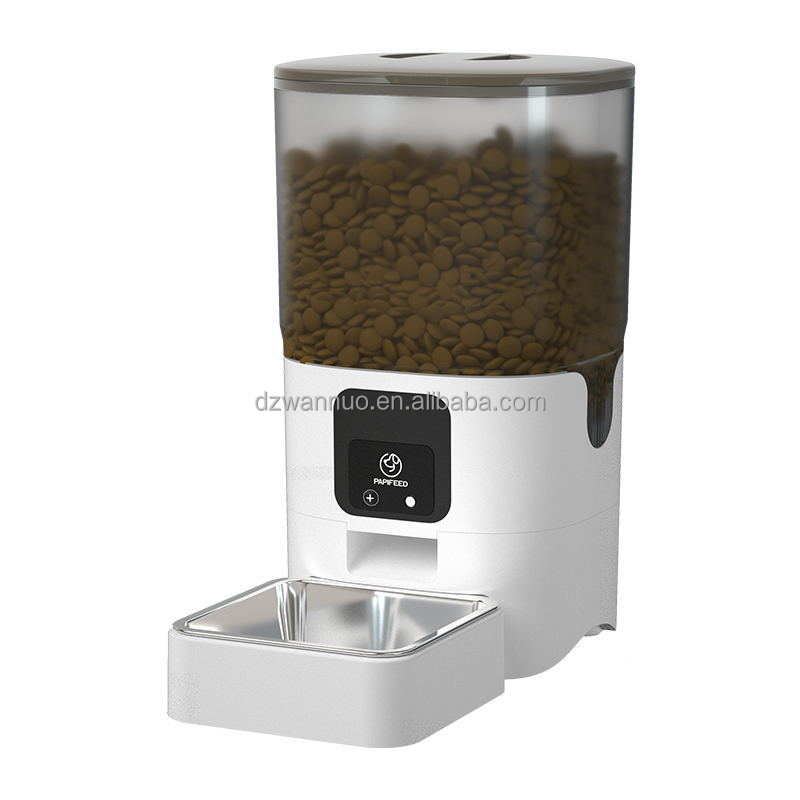
When evaluating automatic Wi-Fi pet feeders with LCD screens, the primary focus must be on the integration of hardware and software. The core functionality relies on a microcontroller that manages the dispensing mechanism, a Wi-Fi module for cloud connectivity, and an LCD interface for local user interaction. The LCD screen is not merely decorative; it serves as the primary command center for setting meal times, portion sizes, and monitoring battery status. Buyers should verify that the display supports clear visibility in varying lighting conditions and offers intuitive navigation for end-users.
The dispensing mechanism is another critical technical component. In the observed market data, kibble sizes typically range from 5mm to 15mm, which dictates the design of the auger or rotating drum inside the feeder. A mismatch between the mechanical design and the kibble size can lead to jamming or inconsistent portioning. Furthermore, the power architecture is a decisive factor for reliability. Products in this category often utilize dual power systems to ensure continuity during outages. The observed specifications indicate support for Type C charge cables alongside traditional three D-size batteries. This redundancy is essential for maintaining the Wi-Fi connection and LCD functionality during power failures.
Connectivity standards also require rigorous verification. While the term "Wi-Fi" is ubiquitous, the specific protocol (e.g., 2.4GHz vs. 5GHz) and the compatibility with mobile applications vary by manufacturer. The LCD interface should sync seamlessly with the mobile app, allowing for remote adjustments. Buyers must ensure that the firmware supports over-the-air (OTA) updates, which are necessary for fixing bugs and adding new features without requiring hardware replacement. The physical construction often involves ABS plastic for the main housing due to its durability and resistance to impact, while the bowl components may be made of Polypropylene (PP) for food safety and ease of cleaning.
Compliance and Certification Verification
In the pet food and feeding equipment sector, regulatory compliance is non-negotiable. Materials that come into direct contact with pet food must meet strict safety standards to prevent chemical leaching. The market data highlights several key certifications that buyers should request and verify: FDA (Food and Drug Administration), ISO (International Organization for Standardization), and BRC (British Retail Consortium). These certifications indicate that the manufacturing processes and material sourcing adhere to international food safety guidelines.
Specifically, the FDA certification ensures that the materials used, such as the ABS housing and PP bowls, are safe for contact with dry food. The ISO certification, often referring to quality management systems like ISO 9001, suggests a consistent manufacturing process, though buyers should confirm the specific version (e.g., ISO 9001:2015) if required by their internal compliance protocols. The BRC certification is particularly relevant for suppliers targeting the European market, as it addresses food safety and product integrity.
It is crucial to note that not every listed product in a general catalog will possess all certifications. Buyers must treat certification claims as specific attributes of individual SKUs rather than universal guarantees. When evaluating a supplier, request valid certificates for the specific model numbers, such as the YW28C or ST-Pet Feeder series, to ensure the claims are current and applicable to the batch being ordered. Additionally, the origin of the product, often cited as China, requires verification of the factory's audit history to ensure that the stated certifications are not merely marketing claims but are backed by third-party testing.
Cost Drivers and Pricing Dynamics
The pricing of automatic Wi-Fi pet feeders with LCD screens is influenced by a complex interplay of factors, including material costs, electronic component prices, and the level of customization. The observed price range in the market spans from $1.50 to $89.99 USD, a wide variance that reflects differences in feature sets, build quality, and brand positioning. Lower-priced units may lack advanced Wi-Fi capabilities or use simpler LCD interfaces, while higher-priced models likely include premium materials, enhanced connectivity, and more robust power systems.
Material costs play a significant role in the final price. The use of high-grade ABS for the feeder body and PP for the food bowl adds to the cost but ensures durability and safety. Customization is a major cost driver; the market data indicates that customization is available, allowing buyers to modify colors, logos, and packaging. Custom molds and branding can significantly increase the unit cost and the Minimum Order Quantity (MOQ). The observed MOQ range of 1 to 500 units suggests flexibility, but buyers should be aware that lower MOQs often come with a higher per-unit price due to setup costs.
Logistics and packaging also impact the total landed cost. The standard packaging is often carton-based, with specific dimensions like 50x42x29 cm and a gross weight of 8.4 kg. These dimensions affect shipping efficiency and freight costs. Buyers should consider the "Fob" (Free on Board) terms, often cited as Ningbo Port, which determines who bears the risk and cost during transit. Payment terms, such as T/T (Telegraphic Transfer), are standard, but buyers should negotiate terms that align with their cash flow, especially for large orders involving customizations.
Typical Applications and Usage Scenarios
Automatic Wi-Fi pet feeders with LCD interfaces are designed for a variety of applications, catering to both domestic and commercial needs. The primary use case is feeding, where the device dispenses dry food at scheduled intervals. The "Fixed Time Feeding" feature is a standard attribute, allowing owners to program multiple meals throughout the day. This is particularly beneficial for pets with specific dietary requirements or for owners who travel frequently.
The versatility of these feeders extends to storage as well. Many models are designed with airtight lids and desiccant bags to keep dry food fresh and prevent pest infestation. The "Food Type" specification often limits these devices to dry food only, as wet food requires different handling to prevent spoilage and clogging. The "Suitable for" attribute confirms that these devices are generally designed for both dogs and cats, making them a versatile choice for multi-pet households.
In a commercial context, such as pet hotels or veterinary clinics, the reliability and remote monitoring capabilities are paramount. The LCD screen allows staff to quickly check feeding logs and ensure that each animal has been fed according to the prescribed schedule. The "Smart Automatic Pet Feeder" branding suggests a focus on user convenience, enabling pet owners to monitor their pets' eating habits via a smartphone app. This data can be valuable for veterinarians to track changes in appetite that might indicate health issues.
Supplier Evaluation and Selection Criteria
Selecting the right supplier for automatic Wi-Fi pet feeders requires a thorough evaluation of their capabilities, reliability, and transparency. Buyers should prioritize suppliers who provide clear documentation regarding their product models, such as the YW-24L, YW-28C, or SZ-7 series. The presence of specific model numbers indicates a mature product line with established production processes.
Lead time is a critical factor in supplier evaluation. The observed delivery times range from about one week to 5-7 days, but these figures can vary based on order volume and customization requirements. Buyers must clarify whether these lead times refer to production time or shipping time. Additionally, the shipping methods offered, including DHL, FedEx, and sea freight, should align with the buyer's urgency and budget.
Quality control is another essential criterion. Buyers should inquire about the supplier's quality assurance processes, including in-line inspections and final product testing. The availability of certifications like FDA and ISO is a strong indicator of a supplier's commitment to quality. However, buyers should not rely solely on these claims; requesting samples for independent testing is a prudent step. The supplier's ability to handle custom orders, including color variations and branding, should also be assessed to ensure they can meet specific market needs.
Quality Control and Long-Term Procurement Considerations
Ensuring consistent quality in automatic Wi-Fi pet feeders requires a robust quality control (QC) framework. Buyers should implement a multi-stage QC process that includes pre-production sample approval, in-process inspections, and pre-shipment inspections. The focus should be on the functionality of the LCD screen, the accuracy of the dispensing mechanism, and the reliability of the Wi-Fi connection. Testing the device with various kibble sizes (5-15mm) is essential to prevent jams and ensure consistent portioning.
Long-term procurement considerations involve building a sustainable relationship with the supplier. This includes negotiating favorable payment terms, securing consistent supply chains, and establishing clear communication channels for issue resolution. The "All Season" standard suggests that the products should perform reliably in different environmental conditions, which is crucial for global distribution. Buyers should also consider the end-of-life management of the products, ensuring that the materials used are recyclable, as indicated by the "Recyclable" attribute.
Finally, buyers must remain vigilant about the evolving regulatory landscape. As smart home devices become more prevalent, data privacy and cybersecurity standards may become more stringent. Suppliers should be prepared to demonstrate compliance with relevant data protection regulations, ensuring that the Wi-Fi connectivity features do not compromise user privacy. By maintaining a proactive approach to quality control and supplier management, buyers can secure a reliable supply of high-quality automatic Wi-Fi pet feeders with LCD interfaces.
Comparative Analysis of Key Product Attributes
To assist buyers in making informed decisions, the following table summarizes the key attributes observed in the market for automatic Wi-Fi pet feeders with LCD screens. This comparison highlights the variability in specifications and helps identify the features that are most critical for specific procurement needs.
| Attribute | Common Observation | Procurement Consideration |
|---|---|---|
| Material | ABS (Feeder Body), PP (Bowl) | Verify food-grade certification for direct contact parts. |
| Power Source | Type C Cable + D-Size Batteries | Ensure dual power redundancy for reliability during outages. |
| Connectivity | Wi-Fi with App Control | Test app compatibility and latency before bulk ordering. |
| LCD Interface | Standard Display for Settings | Check visibility and touch responsiveness in different lighting. |
| Kibble Size | 5mm - 15mm | Match dispenser design to the specific kibble size of the target market. |
| Certifications | FDA, ISO, BRC | Request valid certificates for specific model numbers. |
| Customization | Available (Color, Logo, Packaging) | Confirm MOQ and cost implications for custom orders. |
| Origin | China | Verify factory audit status and export compliance. |
| Lead Time | 1 Week to 5-7 Days | Clarify if this includes production or just shipping. |
| Packing | Carton (50x42x29 cm) | Calculate shipping efficiency and volume costs. |
This comparative analysis underscores the importance of detailed verification. While the table provides a snapshot of common attributes, buyers must treat each specification as a variable that requires confirmation for every specific order. By adhering to these rigorous evaluation standards, procurement professionals can mitigate risks and secure a supply chain that delivers high-quality, reliable automatic Wi-Fi pet feeders with LCD interfaces.
FAQs
What certifications do automatic wifi pet feeders with lcd have?
These feeders typically hold FDA, ISO, and BRC certifications to ensure food safety. Buyers must verify that specific models like YW28C possess valid certificates for the batch ordered rather than assuming universal compliance across all units.
How does the power system work for these automatic wifi pet feeders with lcd?
The devices support dual power systems using Type C charge cables or three D-size batteries. This redundancy ensures the Wi-Fi connection and LCD functionality remain active during power outages to maintain scheduled feeding.
Which kibble sizes are compatible with automatic wifi pet feeders with lcd?
The dispensing mechanism is designed for kibble sizes ranging from 5mm to 15mm. Using kibble outside this range may cause jams or inconsistent portioning, so buyers should confirm compatibility before ordering.
Can I customize the color and packaging for automatic wifi pet feeders with lcd?
Customization is available for colors like white, black, or red, as well as packaging options. However, custom molds and branding often increase the unit cost and may require a higher minimum order quantity.
What is the typical lead time for sourcing automatic wifi pet feeders with lcd?
Delivery times generally range from about one week to 5-7 days depending on order volume. Buyers should clarify if these figures refer to production time or shipping time to manage expectations accurately.
Which materials are used for the housing and bowl of automatic wifi pet feeders with lcd?
The main housing is typically made of durable ABS plastic while the bowl components use Polypropylene. These materials ensure impact resistance and food safety for contact with dry pet food.
How do I verify the origin and shipping terms for automatic wifi pet feeders with lcd?
Products often originate from China with FOB terms at Ningbo Port. Shipping methods include DHL, FedEx, and sea freight, so buyers should select the method that aligns with their urgency and budget.