Source Baby Silicone Tableware for Baby Feeding, Kids Mealtime, and Baby Independence
Find 30 listings for Baby Silicone Tableware featuring FDA and ISO certifications. Buyers can compare customization options, material safety, and packing details for eating and drinking needs.
Key considerations
Products List


New Arrival Baby Eating Silicone Bowls Children Anti-Fall Scalding Tableware
$4.00 - $5.00
MOQ: 100 Pieces

Best Seller Silicone Divided Plate Food Bowl Water Cup Baby Feeding Children Tableware
$3.73 - $4.14
MOQ: 250 Pieces


High Quality Convenient Food Grade Silicone Safe Feeding Tableware Set for Baby
$7.00 - $14.00
MOQ: 3000 Pieces
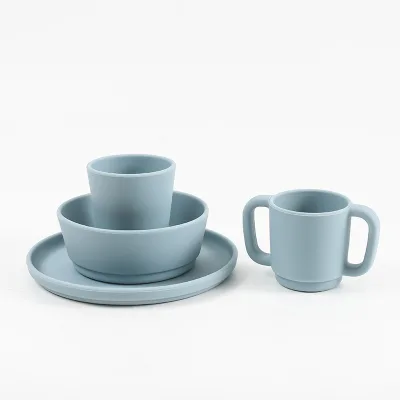


Top Selling Baby Tableware Set Food Grade Silicone Customize Baby Feeding Set
$8.50 - $10.50
MOQ: 500 Pieces


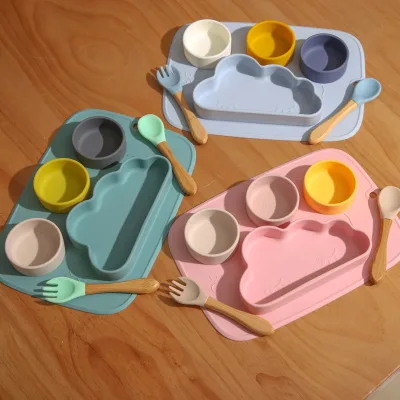


Tableware Baby Food Grade Child Dinnerware Plate Set Water Drink Bowls Kid
$0.47 - $5.65
MOQ: 1 Pieces

Eco-Friendly Silicone Baby Tableware Set for Safe Feeding China Silicone Material
$5.88 - $8.28
MOQ: 1000 Pieces
Comprehensive Sourcing Guide
Strategic Sourcing Guide for Baby Silicone Tableware
Understanding Product Specifications and Material Integrity
When sourcing Baby Silicone Tableware, the primary focus must be on the material composition and specific product attributes that ensure safety and functionality. The core material for this category is silicone, a choice driven by its flexibility, heat resistance, and non-toxic nature. In the current market, buyers will encounter products explicitly labeled as "BPA Free," a critical attribute for any item intended for infant and child use. The material must be durable enough to withstand repeated use, as the products are classified as "Non-Disposable," indicating a design for longevity rather than single-use scenarios.
The physical specifications of these items vary significantly depending on the intended application. Buyers should expect to find models with dimensions such as 18040mm for plates, while other components like cups or bowls may have different standard dimensions, such as 20166 or 6040*50cm for packaging or specific set configurations. The "Style Type" often leans towards "Fresh and Cute" designs to appeal to children, with "Solid" pattern types being a common aesthetic choice. Customization is a prevalent feature, allowing buyers to request "Customized Color" options to align with brand identity or specific market preferences.
The product models available in the supply chain are diverse, ranging from specific identifiers like DN0091, NT, NTSI-001, CL098, and various XY and TLT series codes. These models often dictate the specific configuration of the set, whether it is a standalone plate or a comprehensive "Plate+bowl+cup+spoon" standard. The "Size" is frequently categorized as "Middle," suggesting a versatile fit for toddlers and young children, though specific age ranges provided in listings vary from "4-36 months" to "4-7 years old." Understanding these granular specifications is essential before initiating any procurement conversation, as the "Usage" extends beyond simple eating to include "Suckle, Drinking, Nursing Bottle Sterilizer," and promoting "Baby Independence" during mealtime.
Compliance, Certification, and Safety Standards
Safety compliance is the most critical filter in the baby tableware sector. Buyers must verify that suppliers possess valid certifications that align with international safety standards. The supplied data indicates the presence of "FDA" and "ISO" certifications, which are fundamental indicators of quality management and food safety compliance. Furthermore, specific testing results such as "LFGB Test: Yes" are observed, suggesting adherence to rigorous German food safety standards which are often considered a benchmark for high-quality silicone products.
The "Material Feature" of being "BPA Free" is a baseline requirement, but buyers should not assume this applies to every listed product without verification. Instead, procurement teams must treat this as an observation to be confirmed for each specific batch or model. The "Recyclable" attribute adds an environmental dimension to the product, which is increasingly important for modern B2B buyers targeting eco-conscious markets. However, the presence of a "Recyclable" label does not automatically imply compliance with all local recycling regulations; this requires separate verification based on the destination market.
Buyers must also scrutinize the "Certification" field for any gaps. While FDA and ISO are prominent, the absence of other specific regional certifications (such as CE for Europe or specific ASTM standards for the US) should trigger a request for documentation. The "LFGB Test" confirmation is a strong positive signal, but it is an observation from specific listings and not a universal guarantee for all products in the category. Therefore, the procurement strategy must include a mandatory request for third-party laboratory test reports for every new supplier engagement to ensure that the "BPA Free" claim and other safety assertions are backed by current, verifiable data.
Cost Drivers and Pricing Dynamics
The pricing structure for Baby Silicone Tableware is influenced by several variable factors, with the observed market range spanning from $0.47 to $14.00 USD. This wide disparity is not indicative of quality differences alone but is heavily driven by the complexity of the product, the level of customization, and the order volume. The "MOQ" (Minimum Order Quantity) ranges from 1 to 3000 pieces, creating a significant impact on the unit cost. A buyer ordering 3000 pieces, as seen in specific listings, will likely secure a lower unit price compared to a buyer ordering a small sample batch of 1 to 100 units.
Customization is a primary cost driver. Products with "Customized Color" or "Customized Packing" will invariably carry a higher price point than standard "Standard Export Carton" or "Carton Box" configurations. The "Standard Export Carton" is a common baseline, but moving to "Customized Packing" involves additional tooling and labor costs. Additionally, the "Product Name" and specific model complexity play a role; a comprehensive "Silicone Baby Feeding Set Tableware" with multiple components (plate, bowl, cup, spoon) will cost more per unit than a single item, even if the material cost is similar.
Buyers should also consider the "Place of Origin" as a factor in logistics and cost. Products originating from "Guangzhou" or "Zhejiang" may have different shipping profiles and tariff implications depending on the destination country. While the specific lead times are not provided in the data, the "MOQ" of 3000 PCS suggests a longer production cycle for bulk orders compared to low-volume requests. The "Disposable" attribute is marked as "Non-Disposable," which implies a higher initial investment but a lower long-term cost of ownership for the end-user, a value proposition that should be highlighted in B2B negotiations.
Typical Applications and Usage Scenarios
The application of Baby Silicone Tableware extends beyond basic feeding to encompass developmental milestones and hygiene management. The "When to Use" category highlights "Baby Feeding," "Baby Independence," and "Kids Mealtime," indicating that these products are designed to assist children in learning self-feeding skills. The "Applicable Age" ranges from "More Than 6 Months" up to "Children" and "4-7 years Old," suggesting a product lifecycle that grows with the child. This versatility is a key selling point for retailers targeting a broad demographic.
Specific usage scenarios include "Suckle," "Drinking," "Eating," and "Nursing Bottle Sterilizer." This indicates that the silicone material must be heat-resistant enough to withstand sterilization processes without degrading, a critical functional requirement. The "Design" feature of "Customization" allows brands to create sets that appeal to specific developmental stages or cultural preferences. The "Feature" of being "Recyclable" also aligns with modern parenting trends focused on sustainability, making these products suitable for eco-friendly product lines.
The "Application" is strictly defined as "Kids," ensuring that the design, size, and safety features are appropriate for this demographic. The "Style Type" of "Fresh and Cute" is not merely aesthetic; it serves a psychological purpose in encouraging children to engage with their food. The "Pattern Type" being "Solid" suggests a preference for clean, easy-to-clean surfaces that minimize the risk of food trapping in complex designs, which is a practical consideration for parents and caregivers.
Supplier Evaluation and Origin Verification
Evaluating suppliers requires a meticulous approach to verifying the "Place of Origin" and production capabilities. The data indicates origins in "Guangzhou" and "Zhejiang," two major manufacturing hubs in China known for their expertise in silicone and plastic goods. However, the presence of these locations in the data does not guarantee that a specific supplier is located there; it is an observation of the product's origin. Buyers must independently verify the factory address and audit the production facilities to ensure they match the claimed origin.
Supplier evaluation should also focus on the "prod_packing" capabilities. The market shows a mix of "Standard Export Carton," "Carton Box," "Standard Carton," and "Customized Packing." A reliable supplier must demonstrate the flexibility to handle both standard and customized packaging requirements without compromising the integrity of the product during transit. The "Standard Export Carton" is a baseline, but the ability to provide "Customized Packing" is a sign of a more mature and flexible manufacturing partner.
Furthermore, the "prod_model" diversity, with codes ranging from DN0091 to TLT0473A, suggests a supplier with a broad product portfolio. Buyers should assess whether the supplier can consistently maintain quality across this wide range of models. The "Certification" status, including FDA and ISO, must be verified through current documentation, not just assumed based on past listings. The "MOQ" flexibility, ranging from 1 to 3000, is another indicator of supplier capability; a supplier willing to accept low MOQs may be less experienced with large-scale production, while one requiring 3000 PCS may be more specialized in bulk manufacturing.
Quality Control and Long-Term Procurement Strategy
Implementing a robust quality control (QC) strategy is essential for mitigating risks in the baby tableware sector. Given the "Non-Disposable" nature of the products, durability and safety are paramount. Buyers should establish clear acceptance criteria for "BPA Free" status, "LFGB Test" results, and "FDA" compliance. The "Material" must be tested for tensile strength and heat resistance to ensure it can withstand the "Nursing Bottle Sterilizer" usage without deforming or releasing harmful substances.
Long-term procurement considerations involve building a relationship with suppliers who can offer consistent "Customization" capabilities. The ability to provide "Customized Color" and "Customized Packing" allows buyers to differentiate their brands in a competitive market. However, this requires a stable supply chain to ensure that color consistency and packaging quality remain high over multiple production runs. The "Standard" of "Plate+bowl+cup+spoon" suggests that buyers should also evaluate the compatibility and coordination of the set components to ensure a cohesive product offering.
Buyers should also consider the "Age" appropriateness of the products. As children grow, their needs change, and a supplier that can adapt the "Size" and "Design" accordingly will be more valuable. The "Feature" of being "Recyclable" should be verified against the specific recycling infrastructure of the target market to ensure the claim is meaningful. Finally, the "Usage" of promoting "Baby Independence" requires that the product design is intuitive and safe, a quality that can only be assured through rigorous pre-shipment inspections and ongoing supplier audits. By focusing on these technical and strategic elements, buyers can secure a reliable supply of high-quality Baby Silicone Tableware that meets the rigorous demands of the modern market.
FAQs
What certifications do Baby Silicone Tableware products have?
Products typically hold FDA and ISO certifications to ensure safety. Some listings also confirm LFGB test results, indicating compliance with strict food safety standards. Buyers should verify specific test reports for each batch.
Can I request customized colors for silicone feeding sets?
Yes, customization is available for colors and packing methods. Suppliers offer customized color options and can adjust packaging from standard export cartons to branded boxes. This allows alignment with specific brand identities.
What is the minimum order quantity for silicone tableware?
Minimum order quantities range from 1 to 3000 pieces depending on the supplier. Higher volumes like 3000 PCS often secure lower unit prices. Small sample orders are possible but may cost more per unit.
Which materials are used for baby feeding tableware?
The primary material is silicone, which is durable and heat resistant. Products are explicitly labeled as BPA Free and non-disposable for long-term use. This material ensures safety during sterilization and daily feeding.
Where are these baby silicone products manufactured?
Products originate from manufacturing hubs in Guangzhou and Zhejiang, China. These locations are known for producing silicone goods with standard export packaging. Buyers should verify factory addresses to confirm the specific place of origin.
What age groups are suitable for these silicone sets?
Applicable ages range from more than 6 months up to 7 years old. Specific models target toddlers aged 4-36 months or children aged 4-7 years. The design supports baby independence and kids mealtime activities.