Source Biodegradable Clamshell Sugarcane Cutlery for catering, events, and food service
Compare 30 listings for Biodegradable Clamshell Sugarcane Cutlery from verified Chinese manufacturers. Buyers can evaluate specifications like size, material, and MOQ to find suitable options for food containers and tableware applications.
Key considerations
Products List


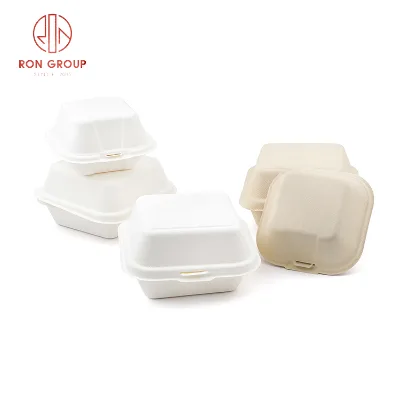
Disposable Tablewares/Sugarcane/ Clamshell Food Box/Biodegradable Tablewares
$0.06 - $0.06
MOQ: 50000 Pieces


Any Color Customized Eco Cutlery PLA Compostable Biodegradable Disposable Cutlery
$0.01 - $0.02
MOQ: 20000 Pieces




Comprehensive Sourcing Guide
Biodegradable Clamshell Sugarcane Cutlery Sourcing Guide
Sourcing Biodegradable Clamshell Sugarcane Cutlery requires a nuanced understanding of material science, supply chain logistics, and regulatory compliance. Buyers must distinguish between products marketed as "sugarcane" and those made from Polylactic Acid (PLA), as the supplied data indicates a mix of materials including PLA and sugarcane fiber containers. The term "clamshell" typically refers to hinged packaging or containers, yet the observed listings also include cutlery items and food containers with varying specifications. This guide synthesizes observed market signals to help procurement professionals navigate the complexities of sourcing eco-friendly tableware and packaging solutions that meet both functional and sustainability goals.
The procurement landscape for these items is characterized by significant variability in minimum order quantities (MOQs), pricing structures, and certification requirements. Observed data reveals MOQs ranging from 50,000 to 500,000 pieces, indicating that this market is primarily oriented toward bulk industrial buyers rather than small-scale retailers. Furthermore, the presence of both "Disposable" and "Eco-Friendly" attributes alongside specific certifications like FDA and CE/EU suggests that buyers must rigorously verify the end-of-life claims and safety standards for their specific target markets. Understanding these baseline signals is crucial for aligning supplier capabilities with corporate sustainability mandates and operational needs.
Product Scope and Observed Listing Signals
The product scope for biodegradable tableware and packaging is broad, encompassing items such as cutlery, food containers, and clamshell-style packaging. Observed listings highlight products made from PLA, a bioplastic derived from renewable resources, as well as sugarcane fiber containers. The "Cutlery" model and "Sugarcane Food Container" items suggest a diverse inventory where material composition varies significantly. Buyers should note that while some items are explicitly labeled as "Eco-Friendly" and "Disposable," others may be designed for specific thermal applications, such as the "Heatable" food container feature observed in the data. This diversity necessitates careful selection based on the intended use case, whether it is for hot foods, cold items, or general dining purposes.
Listing signals also reveal important details about customization and packaging. Many suppliers offer "Customized" options, allowing buyers to tailor product sizes, colors, and branding. The observed sizes for cutlery include 156mm, 163mm, and 170mm, while food containers come in various capacities, such as 850ml and 1000ml. Packaging methods vary from individual poly bags to carton packing, with some suppliers offering "Paper Box" or "Plastic Bag+ Carton" options. These variations impact storage efficiency and shipping costs, making it essential for buyers to evaluate the total landed cost rather than just the unit price. Additionally, the availability of free samples and short sample delivery times (3-7 days) provides an opportunity for quality verification before committing to large orders.
Technical Specifications to Verify
Technical verification begins with material composition and physical dimensions. Buyers must confirm whether the product is made from PLA or sugarcane bagasse, as these materials have different thermal properties and degradation rates. The observed data lists specific weights, such as 17.2g for certain items, which can indicate material density and durability. For cutlery, length specifications like 156mm, 163mm, and 170mm are critical for ergonomic fit and user experience. For containers, volume capacities such as 850ml and 1000ml, along with dimensional standards like 310229.850.6mm, must be verified to ensure compatibility with existing packaging lines or consumer expectations. Misalignment in these specifications can lead to operational inefficiencies and customer dissatisfaction.
Thermal performance and structural integrity are also key technical factors. Some products are explicitly described as "Heatable," suggesting they can withstand microwave or hot food temperatures without deforming. However, not all biodegradable materials share this property, and PLA may have lower heat resistance compared to sugarcane fiber. Buyers should request technical data sheets that specify heat resistance limits and moisture barrier properties. Additionally, the "Embossing" printing handling mentioned in the data indicates that branding can be integrated into the product surface, but this process may affect the material's structural integrity or biodegradability. Verifying these technical details ensures that the selected products meet the functional requirements of the end-use environment.
Compliance and Safety Documentation
Compliance with food safety standards is non-negotiable for biodegradable tableware and packaging. The observed listings frequently mention FDA and CE/EU certifications, which are critical for selling in the United States and European markets, respectively. Buyers must verify that these certifications are current and applicable to the specific product type, as certifications may cover only certain material compositions or manufacturing processes. For instance, a product labeled as "FDA" compliant must meet the specific migration limits for food contact materials. Similarly, CE/EU certification ensures compliance with European regulations on biodegradability and compostability. Relying on generic claims without verifying the scope of these certifications can expose buyers to regulatory risks and product recalls.
Beyond food safety, buyers should investigate compliance with biodegradability and compostability standards. While the data mentions "Eco-Friendly" attributes, it does not specify which international standards, such as ASTM D6400 or EN 13432, are met. These standards define the conditions under which a product must break down within a specific timeframe. Buyers should request test reports from accredited laboratories to confirm that the products meet the required standards for industrial or home composting. Additionally, verifying the origin of the materials, such as "Shandong" or "Anhui, China," can provide insights into the supply chain's transparency and sustainability practices. Ensuring robust compliance documentation protects brand reputation and ensures market access.
Cost Drivers and Commercial Terms
Cost structures for biodegradable products are influenced by material costs, customization levels, and order volumes. The observed price range of 0-31.3 USD likely reflects variations in product type, size, and quantity. High MOQs, ranging from 50,000 to 500,000 pieces, suggest that economies of scale play a significant role in pricing. Buyers placing larger orders may negotiate better unit prices, but they must also consider inventory holding costs and storage constraints. The availability of "Competitive Price with Good Quality" as a product advantage indicates that market competition is driving prices down, but buyers should remain cautious of prices that seem too good to be true, as they may compromise on material quality or certification validity.
Commercial terms also include payment structures and shipping logistics. The data mentions a "30% T/T Deposit" payment term, which is common in international trade but requires careful financial planning. Shipping methods, such as "by Sea," impact lead times and freight costs. The observed delivery time of 25-30 days is a critical factor for supply chain planning, especially for seasonal products or just-in-time inventory systems. Buyers should also consider the packaging efficiency, as items packed in "Cartons" or "Paper Boxes" may have different volumetric weights, affecting shipping costs. Understanding these commercial terms helps in calculating the total landed cost and optimizing cash flow.
Supplier Qualification and Quality Control
Supplier qualification involves assessing manufacturing capabilities, quality management systems, and responsiveness. Buyers should verify the supplier's production capacity to ensure they can meet large MOQs without compromising quality. The observed data indicates that suppliers offer "Customized" products, which requires flexible manufacturing lines and robust quality control processes. Buyers should request information about the supplier's quality assurance protocols, including in-process inspections and final product testing. Additionally, the availability of "Free" samples allows buyers to evaluate product quality firsthand before committing to a large order. This step is crucial for identifying potential issues with material consistency, print quality, or structural integrity.
Quality control should also extend to post-production verification. Buyers should establish clear acceptance criteria for defects, such as cracks, discoloration, or improper embossing. The observed "Advantage: Competitive Price with Good Quality" suggests that suppliers aim for high standards, but buyers must define what "good quality" means for their specific application. Implementing a rigorous inspection process, such as pre-shipment inspections, can help mitigate risks. Furthermore, maintaining open communication with suppliers regarding any changes in materials or processes is essential for ensuring consistent product performance. Building a strong relationship with qualified suppliers fosters trust and facilitates smoother transactions.
Long-Term Procurement Checks
Long-term procurement success depends on continuous monitoring of supplier performance and market trends. Buyers should regularly review supplier delivery times, product quality, and responsiveness to issues. The observed lead time of 25-30 days should be tracked to identify any delays or inconsistencies. Additionally, buyers should stay informed about changes in regulatory requirements for biodegradable products, as standards may evolve over time. Regular audits of supplier certifications and test reports ensure ongoing compliance. By maintaining a proactive approach to supplier management, buyers can mitigate risks and ensure a stable supply of high-quality biodegradable tableware and packaging.
Market dynamics also require ongoing assessment. The availability of "Customized" options and "Eco-Friendly" products suggests a growing demand for sustainable solutions. Buyers should evaluate whether their current suppliers can adapt to changing consumer preferences and regulatory landscapes. Exploring new materials or technologies, such as improved sugarcane fiber blends or advanced PLA formulations, may offer competitive advantages. Additionally, monitoring price trends and MOQ requirements helps in negotiating favorable terms. By staying agile and informed, buyers can optimize their procurement strategies and support their organization's sustainability goals effectively.
FAQs
What certifications do Biodegradable Clamshell Sugarcane Cutlery products have?
These products typically hold FDA and CE/EU certifications to ensure safety and regulatory compliance for food contact. Buyers should verify specific documentation with suppliers to confirm that the materials meet international standards for biodegradability and food safety before placing large orders.
Can I customize the size and packaging of sugarcane cutlery?
Yes, customization is available for both product dimensions and packaging methods. Suppliers offer various sizes such as 156mm, 163mm, and 170mm, along with packaging options like poly bags or cartons. This flexibility allows buyers to tailor the product to specific brand or logistical requirements.
What is the typical MOQ for ordering biodegradable cutlery?
The minimum order quantity varies significantly, ranging from 50,000 to 500,000 pieces depending on the supplier and customization level. Some vendors may require a standard MOQ of 200,000 pieces, while others might accept lower volumes for standard items, so buyers must confirm this early.
How long does delivery take for sugarcane food containers?
Delivery times generally range from 25 to 30 days after deposit payment. This lead time applies to manufacturing and shipping processes, often involving sea freight. Buyers should plan their inventory accordingly and confirm the exact timeline with the supplier before finalizing the purchase agreement.
Are these products suitable for heating food?
Certain sugarcane food containers are designed to be heatable, making them suitable for hot meals. However, cutlery items are primarily intended for eating. Buyers should check specific product features to ensure the selected items meet their heating requirements and maintain structural integrity during use.
What payment terms are commonly used for these orders?
A common payment structure involves a 30% T/T deposit before production begins. The remaining balance is typically settled before shipment. This standard term helps secure manufacturing slots while protecting both buyer and supplier interests throughout the production and logistics phases of the order.