Source Biodegradable Compostable Garbage Bags for Outdoor, Indoor, and Pet Cage Use
Compare 30 listings for Biodegradable Compostable Garbage Bags suitable for outdoor, indoor, and pet cage applications. Buyers can review features like heat sealing, varying capacities from 1L to 65L, and customizable options from suppliers in China.
Key considerations
Products List


Eco Friendly Compostable Degradable Plastic Garbage Bags Biodegradable Trash Bags
$0.01 - $0.01
MOQ: 100000 Pieces

Disposable 100% Biodegradable Plastic Trash Food Compostable Garbage Bags
$0.12 - $0.20
MOQ: 1000 Pieces


Disposable Decomposable Plastic Trash Garbage Bag Suppliers Biodegradable
$0.80 - $1.00
MOQ: 1000 Pieces


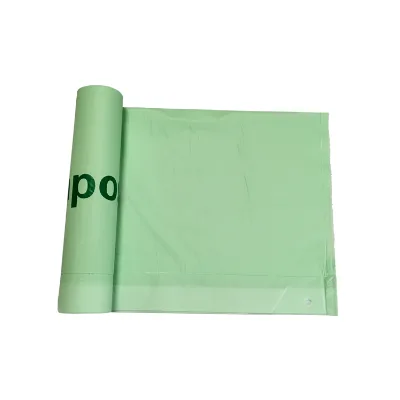


Comprehensive Sourcing Guide
Strategic Sourcing Guide for Biodegradable Compostable Garbage Bags
The global shift toward sustainable waste management has elevated the demand for biodegradable and compostable garbage bags. For B2B procurement professionals, navigating this market requires a rigorous understanding of technical specifications, supply chain logistics, and material science. The following guide synthesizes verified product attributes and industry standards to assist buyers in selecting the right solutions for their operational needs. This analysis focuses on the intersection of performance, environmental compliance, and cost-efficiency, ensuring that procurement decisions are grounded in observable data rather than marketing claims.
Technical Specifications and Material Composition
When evaluating biodegradable garbage bags, the primary focus must be on the material composition and physical dimensions. The supplied data indicates that these products are frequently constructed from plant-based materials, including specific blends of PBAT (Polybutylene Adipate Terephthalate), PLA (Polylactic Acid), and cornstarch. These materials are distinct from traditional polyethylene (PE) bags, which are noted in the dataset as a separate category, though some suppliers may offer mixed or alternative formulations. The core requirement for these bags is that they must be biodegradable, with specific product attributes confirming "Yes" for biodegradability and "Natural" or "Plant Based" characteristics.
Physical specifications vary significantly based on the intended application. The observed thickness range for these products spans from 0.01mm to 0.15mm. This variance allows buyers to select bags that balance durability with material usage; thicker bags (approaching 0.15mm) are generally preferred for heavy-duty applications such as construction waste or industrial garbage, while thinner variants (0.01mm) may suffice for light household use. Width specifications are equally critical, with observed ranges extending from 100mm to 1300mm. This wide spectrum accommodates everything from small kitchen waste bins to large commercial dumpsters.
Capacity is another defining technical parameter. The market data reveals a capacity range from 1L to 65L, with specific product models highlighting narrower ranges like 2L-3L for compact indoor use and larger volumes for outdoor or commercial settings. The sealing method is predominantly heat seal, which ensures a robust closure that prevents leakage. Additionally, the product type is often categorized as "Straight Bags," though some variations feature "Shoulder Length Handles" or "Flat" handles to facilitate carrying. The hardness of the material is generally described as "Soft," and transparency levels can range from translucent to fully opaque, depending on the specific customization requested by the buyer.
Compliance, Certification, and Environmental Standards
A critical component of sourcing biodegradable products is verifying compliance with international environmental standards. While the dataset explicitly lists "ISO" as a certificate held by some suppliers, it does not confirm specific compliance with ASTM D6400 or EN 13432, despite these being common industry benchmarks for compostability. Buyers must exercise caution and verify that any supplier claiming compliance with these standards provides valid, third-party test reports. The absence of explicit confirmation in the provided data means that assertions regarding ASTM D6400 or EN 13432 compliance should be treated as claims requiring verification rather than established facts.
The term "compostable" implies that the product will break down under specific conditions, often requiring industrial composting facilities. The observed features include "Compostable," "Biodegradable," and "Toxin Free," which are essential for buyers targeting green certification programs for their own facilities. However, the distinction between "biodegradable" and "compostable" is technical; biodegradable means the material breaks down, while compostable means it breaks down into non-toxic organic matter within a specific timeframe. Buyers should request detailed breakdown timelines and conditions from suppliers.
Furthermore, the dataset mentions "FSC" and "ISO 9001" in the low-confidence background section. These should not be assumed as standard certifications for all listed products. Instead, procurement teams should treat them as potential value-adds that require confirmation on a per-supplier basis. The "Customized" standard attribute suggests that many manufacturers are willing to tailor their products to meet specific regional or corporate sustainability mandates, but this customization must be explicitly defined in the purchase order to ensure the final product meets the buyer's regulatory requirements.
Cost Drivers and Pricing Dynamics
Understanding the cost structure of biodegradable garbage bags is essential for budgeting and long-term planning. The observed price range in the market is extensive, spanning from $0.01 to $4,000 USD. This wide disparity is not indicative of a single product type but rather reflects the diversity of order volumes, customization levels, and material compositions. The lower end of the spectrum likely corresponds to high-volume orders of standard, non-customized bags, while the higher end may reflect specialized, small-batch, or heavily customized solutions.
The Minimum Order Quantity (MOQ) is a significant factor influencing unit cost. The data shows an MOQ range from 1 to 100,000 units, with a specific high-confidence observation of 1,000 pieces. This variability allows buyers to test the market with small orders or commit to large-scale procurement for cost efficiency. However, the relationship between MOQ and price is inverse; higher volumes typically yield lower per-unit costs. Buyers should also consider the "Stocked" advantage mentioned in the data, which may reduce lead times and potentially lower costs for standard SKUs compared to custom-manufactured items.
Additional cost drivers include the complexity of the printing process. The dataset notes a "Pink" printing process, which may indicate specific color requirements or a broader range of custom printing options. Customization is explicitly listed as "Available," and this service invariably adds to the overall cost. The origin of the product, primarily "China Qingdao" and "Henan," suggests that logistics and shipping costs will be a major component of the total landed cost. Buyers must factor in freight charges, import duties, and potential currency fluctuations when calculating the true cost of ownership.
Typical Applications and Usage Scenarios
The versatility of biodegradable garbage bags is evident in the diverse usage scenarios identified in the product data. These bags are designed for a wide array of applications, including "Garbage," "Household," "Grocery," "Shopping," and "Food" waste. Specific product attributes also highlight usage in "Home Appliance," "Cement," and "Electronic" waste disposal, indicating that some models are engineered for heavy-duty industrial or construction environments. The "Outdoor Use" and "Inside Pet Cage" attributes further expand the potential use cases to include landscaping, pet waste management, and outdoor events.
The capacity and size specifications directly correlate with these applications. Smaller capacities (1L-3L) are ideal for kitchen counters, pet cages, and office waste bins. Larger capacities (up to 65L) are necessary for commercial kitchens, construction sites, and municipal waste collection. The "Heavy Duty" feature is particularly relevant for applications involving sharp or heavy waste, such as construction debris or electronic waste, where bag integrity is paramount. The "Disposable" nature of these products aligns with single-use requirements in hospitality and retail sectors, while the "Recyclable" and "Compostable" features support sustainability initiatives in municipalities and eco-conscious businesses.
Supplier Evaluation and Sourcing Strategy
Selecting the right supplier requires a systematic evaluation of their capabilities, location, and reliability. The primary sourcing hubs identified are "China Qingdao" and "Henan." Buyers should verify the specific factory location and production capacity of their potential partners. The "Customized" attribute suggests that many suppliers offer flexible manufacturing, but this requires clear communication of specifications. Buyers should request samples to verify the "Soft" hardness, "Translucent" transparency, and "Heat Seal" integrity before placing large orders.
The "Delivery Time" of 20 days is a standard lead time observed in the data, but this can vary based on order volume and customization. For urgent needs, the "Stocked" advantage of certain suppliers may be a decisive factor. Buyers should also evaluate the packaging standards, which range from "Carton" and "Carton Case" to "Rolled with Label" or "Outerbags." Proper packaging is crucial to prevent damage during transit, especially for bags that may be sensitive to moisture or crushing.
When evaluating suppliers, it is vital to avoid those who make unverified claims about certifications or performance. The dataset highlights that "ISO" is a verified certificate for some, but other standards like "ASTM D6400" are not confirmed. Therefore, a robust supplier evaluation process must include a request for valid test reports and a clear definition of the product's end-of-life conditions. Suppliers should be able to demonstrate their ability to meet the specific "prod_standard" requirements, whether that is a fixed dimension like "22.5cm*50cm" or a fully "Customized" size.
Quality Control and Long-Term Procurement Considerations
Quality control in the biodegradable sector is multifaceted, involving both physical integrity and environmental performance. Buyers should implement a rigorous inspection protocol that checks for consistent thickness (0.01mm-0.15mm), uniform sealing, and accurate dimensions. The "Single Package Size" of 10x10x10 cm and "Single Gross Weight" of 1.000 Kg provide baseline metrics for logistics planning, but these can vary based on the specific model. Consistency in these metrics is essential for automated filling and disposal systems.
Long-term procurement considerations extend beyond the initial purchase. The "Customized" nature of the product means that buyers should establish a long-term relationship with a supplier who can maintain consistency in material composition and manufacturing processes. As regulations regarding biodegradability and compostability evolve, suppliers must be adaptable to new standards. Buyers should also consider the total cost of waste management, including the potential for reduced landfill fees or eligibility for green incentives when using certified compostable bags.
The following table summarizes key technical and logistical parameters observed in the market to assist in supplier comparison:
| Parameter | Observed Range/Value | Relevance to Procurement |
|---|---|---|
| Material | PBAT+PLA+Cornstarch, PE | Determines biodegradability and strength |
| Thickness | 0.01mm - 0.15mm | Affects durability and cost |
| Width | 100mm - 1300mm | Matches bin and dumpster sizes |
| Capacity | 1L - 65L | Defines application suitability |
| Sealing | Heat Seal | Ensures leak prevention |
| Origin | China (Qingdao, Henan) | Impacts logistics and lead time |
| MOQ | 1 - 100,000 PCS | Influences unit cost and inventory |
| Lead Time | ~20 Days | Critical for supply chain planning |
| Certifications | ISO (Verified), others (Verify) | Essential for compliance and marketing |
In conclusion, sourcing biodegradable and compostable garbage bags requires a balanced approach that prioritizes technical specifications, verified compliance, and supplier reliability. By focusing on the observable data regarding material composition, dimensions, and production capabilities, buyers can make informed decisions that align with their sustainability goals and operational requirements. The market offers a wide range of options, from small household bags to heavy-duty industrial solutions, but success depends on rigorous due diligence and clear communication with suppliers.
FAQs
What materials are used for Biodegradable Compostable Garbage Bags?
These bags are typically made from plant-based materials like PBAT, PLA, and cornstarch. Some products may also use PE, but the core requirement is biodegradability. Buyers should verify the specific blend to ensure it meets their sustainability goals.
How thick are the Biodegradable Compostable Garbage Bags available?
The thickness ranges from 0.01mm to 0.15mm depending on the intended application. Thicker bags near 0.15mm are suitable for heavy-duty use, while thinner variants work for light household waste. This variance allows for balancing durability with material usage.
Can I customize the size and capacity of these garbage bags?
Yes, customization is available for size, capacity, and other features. Capacity ranges from 1L to 65L, and widths can vary from 100mm to 1300mm. Buyers must explicitly define these requirements in the purchase order to ensure the final product meets their needs.
What certifications do biodegradable compostable garbage bag suppliers hold?
Some suppliers hold ISO certificates, but specific standards like ASTM D6400 or EN13432 are not confirmed in the data. Buyers must request valid third-party test reports to verify compliance with international compostability standards before placing large orders.
What is the typical lead time for ordering these bags?
The observed delivery time is 20 days for standard orders. However, this can vary based on order volume and the level of customization required. Some suppliers offer stocked items which may reduce lead times for urgent needs.
Where are the main manufacturing locations for these products?
Primary sourcing hubs are located in China, specifically in Qingdao and Henan. Buyers should verify the specific factory location and production capacity of their potential partners to ensure reliable logistics and consistent quality control during the manufacturing process.
What is the minimum order quantity for Biodegradable Compostable Garbage Bags?
The MOQ ranges from 1 to 100,000 units, with a common observation of 1,000 pieces. Higher volumes typically yield lower per-unit costs, allowing buyers to test the market with small orders or commit to large-scale procurement for efficiency.