Source Biodegradable Recyclable Trash Bag for Garbage, Household, and Food
Find 30 options for Biodegradable Recyclable Trash Bag designed for garbage, household, and food applications. Compare specifications like capacity, material, and customization to select the right supplier for your needs.
Key considerations
Products List


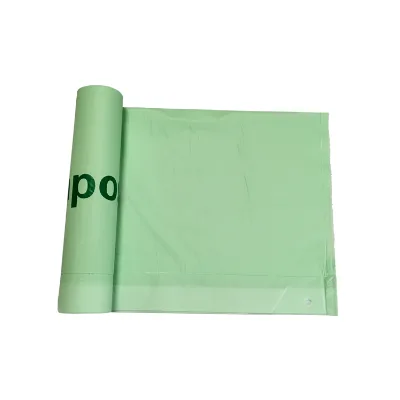

Eco Friendly Compostable Degradable Plastic Garbage Bags Biodegradable Trash Bags
$0.01 - $0.01
MOQ: 100000 Pieces


Hot Sale Custom Eco Friendly Garbage Bag Compostable Trash Bags Wholesale
$0.20 - $0.25
MOQ: 10000 Rolls
Comprehensive Sourcing Guide
Strategic Sourcing Guide for Biodegradable Recyclable Trash Bags
Understanding Material Composition and Environmental Claims
The core keyword "Biodegradable Recyclable Trash Bag" represents a complex intersection of material science and environmental compliance. When sourcing these products, buyers must first distinguish between the material composition that enables biodegradability and the structural integrity required for waste management. Based on observed market data, the primary material drivers for these products include PLA (Polylactic Acid), PBAT (Polybutylene Adipate Terephthalate), and cornstarch blends. These materials are often cited in conjunction with specific product models such as "Pbat+PLA+Cornstarch," indicating a formulation designed to break down under specific conditions.
It is critical to note that "biodegradable" and "recyclable" are distinct properties that do not always coexist in a single product without specific processing. The observed product attributes list features such as "Plant Based," "Natural," and "Compostable" alongside "Recyclable." However, the presence of these features in a listing does not guarantee that every unit in a batch possesses identical performance. Buyers must verify if the specific order utilizes a pure biodegradable polymer or a hybrid blend. The hardness of the observed products ranges from "Medium Soft," which suggests a balance between flexibility and strength, while the transparency is consistently noted as "Opaque." This opacity is a common trait in biodegradable films, which often lack the crystal clarity of traditional petroleum-based plastics.
When evaluating the material, the buyer should request a Material Safety Data Sheet (MSDS) and a specific breakdown of the polymer ratio. The observed "Toxin Free" and "Scent Free" attributes are significant for household and food-related applications, but these claims must be backed by third-party laboratory results rather than supplier self-declaration. The distinction between "Heavy Duty" and standard usage is also vital; while some listings claim heavy-duty capabilities, the weight limit observed in the data ranges from 5 to 10 kg. This suggests that for high-volume industrial waste, the standard biodegradable bags may require specific reinforcement or a different thickness profile than what is typically available for light household use.
Technical Specifications and Dimensional Standards
Technical specifications for biodegradable trash bags vary significantly based on the intended application, ranging from small 2L-3L capacities for kitchen counters to large 1L-65L capacities for outdoor or commercial use. The observed product standards highlight specific dimensional requirements, such as 45cm50cm, 65cm70cm, and 38cm40cm. These dimensions are not arbitrary; they correspond to specific waste bin sizes and usage scenarios. For instance, the 45cm50cm standard is often associated with general household garbage, while larger dimensions like 65cm*70cm are necessary for heavier waste streams or larger commercial bins.
The product models observed, including "drawstring garbage bag," "TCLJ," "TC1," and "ECOPOLY3," indicate that the market offers a variety of closure mechanisms and shapes. The "drawstring" feature is a critical technical specification for hygiene and ease of use, preventing the bag from slipping off the bin rim. Additionally, the "Shaped Bag" attribute suggests that some products are pre-formed to fit specific bin geometries, which can improve loading efficiency. The handle types observed range from "Shoulder Length Handle" to "Flat" handles, offering different ergonomic options for users.
Capacity is another pivotal technical factor. The data indicates a wide capacity range from 1L to 60L, and in some cases up to 65L. Buyers must align the selected capacity with their waste volume projections. A mismatch in capacity can lead to bag overflow or excessive material usage. Furthermore, the "Weight Limit" of 5-10 kg observed in the data serves as a baseline for load-bearing capacity. For applications involving wet waste or dense materials, buyers should verify if the bag's tensile strength exceeds this baseline. The "Opaque" nature of the bags also impacts visibility, which can be a safety or aesthetic requirement depending on the end-user's preference.
Compliance, Certification, and Regulatory Verification
Navigating the compliance landscape for biodegradable products requires rigorous verification, as the market is prone to greenwashing. The observed attributes include "Biodegradable," "Compostable," and "Recyclable," but these terms have specific legal and scientific definitions that vary by jurisdiction. A product labeled as "Biodegradable" may simply degrade into microplastics over time, whereas "Compostable" implies the material breaks down into non-toxic organic matter within a specific timeframe under industrial or home composting conditions.
Buyers must demand evidence of certification from recognized bodies. While the supplied data does not list specific certification numbers, the presence of "Toxin Free" and "Scent Free" claims necessitates verification against standards such as ASTM D6400, EN 13432, or ISO 14855. The "Plant Based" and "Natural" attributes further require proof of origin and processing methods to ensure no synthetic additives compromise the biodegradation process. The "Heavy Duty" claim, if made, should be supported by tensile strength test results.
The "Logo Printing" and "Printing Process" of "Laminating" observed in the data introduce another layer of compliance. The inks and adhesives used in the printing and lamination processes must also be biodegradable and non-toxic to maintain the product's overall environmental profile. If the printing process involves non-biodegradable laminates, the entire bag may become uncompostable, negating the primary value proposition. Buyers should explicitly ask for the composition of the printing ink and the lamination film to ensure they align with the core biodegradable material.
Cost Drivers and Economic Considerations
The cost of biodegradable trash bags is influenced by several factors, including raw material prices, production complexity, and certification costs. The observed price range of 0.01 to 4000 USD reflects a vast spectrum of product types, from small sample packs to bulk industrial orders. The Minimum Order Quantity (MOQ) ranges from 2 to 100,000 units, with specific instances noting an MOQ of 500kg. This variability indicates that economies of scale play a significant role in pricing.
The use of PLA and PBAT materials is generally more expensive than traditional polyethylene due to the cost of feedstock and the complexity of the polymerization process. Additionally, the "Customization" and "Customized" attributes observed in the data suggest that bespoke designs, colors, and logos will incur higher unit costs. The "Box" and "Carton Case" packing methods also contribute to the final price, as specialized packaging is required to protect the biodegradable bags from moisture and premature degradation during shipping.
Buyers should also consider the total cost of ownership, which includes waste disposal fees. In regions with strict waste management regulations, using certified compostable bags may reduce tipping fees or qualify for tax incentives. However, the "Weight Limit" of 5-10 kg observed in the data suggests that these bags may require more frequent replacement for heavy loads compared to traditional plastic bags, potentially increasing the operational cost per ton of waste managed.
Typical Applications and Usage Scenarios
The versatility of biodegradable trash bags is evident in the diverse usage scenarios observed. The data lists applications ranging from "Garbage," "Household," and "Food" to "Shopping," "Promotion," "Packing," and "Gift." This indicates that these products are suitable for a wide array of environments, from residential kitchens to commercial retail spaces. The "Outdoor Use," "Inside Pet Cage," and "Indoor Use" attributes further expand the potential applications, suggesting durability in varied weather conditions and suitability for pet waste management.
The "Home Appliance" usage category is particularly interesting, implying that these bags can be used with specific household devices, such as food processors or waste compactors. The "Shopping" and "Grocery" applications highlight the potential for replacing single-use plastic carry bags with biodegradable alternatives. However, the "Heavy Duty" feature is essential for these applications, as grocery bags often carry significant weight and must resist tearing.
For food-related applications, the "Toxin Free" and "Scent Free" attributes are paramount. Buyers must ensure that the bags do not leach chemicals into food waste, which could contaminate the composting process. The "Multicolor" and "Unicolor" options allow for color-coding waste streams, which is a common practice in recycling and composting facilities to separate organic waste from recyclables.
Supplier Evaluation and Quality Control Protocols
Evaluating suppliers for biodegradable trash bags requires a multi-faceted approach that goes beyond price and lead time. The observed origins, including "Henan," "China," and "China Qingdao," indicate that the majority of production is concentrated in specific manufacturing hubs. Buyers should verify the supplier's production capacity and their ability to maintain consistent quality across large orders. The "Customization" availability suggests that suppliers should have the flexibility to adapt to specific buyer requirements, but this must be balanced with their ability to meet quality standards.
Quality control protocols should include regular testing for tensile strength, elongation, and biodegradation rates. The "Hardness" and "Transparency" attributes observed in the data should be consistent across batches. Buyers should request samples for in-house testing to verify the "Weight Limit" and "Capacity" claims. Additionally, the "Printing Process" and "Logo Printing" quality should be assessed to ensure that the branding does not compromise the bag's structural integrity or biodegradability.
The "prod_packing" methods, such as "Box," "Plastic," and "Carton," should be evaluated for their ability to protect the product during transit. Biodegradable materials are often sensitive to humidity and temperature, so proper packaging is essential to prevent premature degradation. Buyers should also inquire about the supplier's quality assurance certifications and their history of compliance with international standards.
Long-Term Procurement and Sustainability Strategy
Long-term procurement of biodegradable trash bags requires a strategic approach that aligns with the buyer's sustainability goals and regulatory landscape. The "Biodegradable," "Recyclable," and "Compostable" features observed in the data offer a pathway to reducing environmental impact, but the effectiveness of these bags depends on the end-of-life infrastructure available to the buyer. In regions with limited composting facilities, biodegradable bags may end up in landfills where they do not degrade as intended.
Buyers should consider the lifecycle of the product, from raw material sourcing to disposal. The "Plant Based" and "Natural" attributes suggest a lower carbon footprint compared to petroleum-based plastics, but the energy required for production and transportation must also be considered. The "Customization" and "Logo Printing" options allow buyers to align the product with their corporate sustainability messaging, but these features should not compromise the product's environmental performance.
Finally, buyers should establish a long-term relationship with suppliers who are committed to continuous improvement in material science and manufacturing processes. The observed "Feature" list, including "Toxin Free," "Scent Free," and "Heavy Duty," indicates a market that is evolving to meet higher standards. By staying informed about technological advancements and regulatory changes, buyers can ensure that their procurement strategy remains effective and compliant in the long term. The ability to adapt to new standards and material innovations will be crucial for maintaining a competitive edge in the sustainable packaging market.
FAQs
What materials are used for biodegradable recyclable trash bags?
These bags typically use PLA, PBAT, and cornstarch blends. The material composition ensures plant-based degradation while maintaining structural integrity for household and food waste applications.
Which dimensions are available for these biodegradable bags?
Available standards include 45cm*50cm, 65cm*70cm, and 38cm*40cm. These specific sizes correspond to various bin capacities ranging from 2L to 65L for different usage scenarios.
Can these bags handle heavy loads up to 10 kg?
Yes, the observed weight limit ranges from 5 to 10 kg. Buyers should verify tensile strength for wet waste or dense materials exceeding this baseline capacity.
How are these bags packed for shipping and storage?
Products are packed in boxes, plastic, or carton cases. Specialized packaging protects the biodegradable materials from moisture and humidity during transit to prevent premature degradation.
What customization options exist for logo printing?
Customization is available with logo printing using a laminating process. Buyers must ensure the inks and adhesives used are non-toxic to maintain the product's compostable profile.
Where are these biodegradable bags manufactured?
Products originate from locations such as Henan, China, and China Qingdao. Buyers should verify supplier capacity and quality control protocols in these specific manufacturing hubs.