Source Black Paper Hot Coffee Cup with Lid for Beverage, Coffee, Water
Compare 30 listings for Black Paper Hot Coffee Cup with Lid from suppliers in China. These single wall paper cups feature PE coating, custom printing, and come with lids for hot, cold, tea, and food packaging applications.
Key considerations
Products List


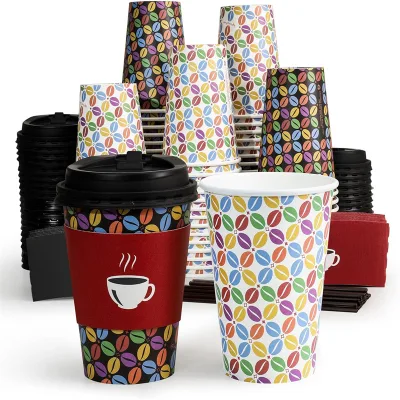
Customized Color Size Designs High Quality Disposable Packaging Hot Coffee Paper Cup
$2.00 - $2.30
MOQ: 1000 Pieces
Comprehensive Sourcing Guide
Strategic Sourcing Guide for Black Paper Hot Coffee Cups with Lids
The global demand for sustainable yet functional disposable beverage containers has driven a significant shift toward high-quality paper cups, particularly those designed for hot coffee applications. When sourcing a black paper hot coffee cup with a lid, buyers must navigate a complex landscape of material science, manufacturing capabilities, and supply chain logistics. The black aesthetic, often achieved through specific inks or coated paper, serves both branding and functional purposes by reducing glare and hiding potential stains, but it introduces specific technical requirements regarding heat resistance and print fidelity. This guide provides a structured approach to evaluating suppliers and products that meet the rigorous standards required for commercial food service operations.
Technical Specifications and Material Composition
The foundation of a reliable hot coffee cup lies in its material composition and structural integrity. The core product category identified in the market data is the "Single Wall Paper Cup," constructed primarily from "Paper" with a "PE Coated" interior. This polyethylene coating is critical for preventing liquid seepage and maintaining thermal insulation. For black cups, the base material is typically "Food Grade Base Paper," which ensures safety for direct food contact. The coating process, often utilizing "PE Coated" technology, must be applied uniformly to withstand temperatures associated with hot beverages without delaminating.
Size specifications vary widely across suppliers, ranging from 2.5oz to as large as 32oz, with common commercial sizes falling between 8oz and 16oz. Buyers should verify that the specific model selected, such as those labeled with models like "FBL" or "3-26oz," aligns with their operational volume needs. The physical dimensions of the cup, including the "Gross Weight of a Single Product," are essential for calculating shipping costs and storage density. Furthermore, the "Type" of cup, specifically "PE Coated Paper," dictates its compatibility with hot liquids; while some cups are designed for universal use, the black variant intended for hot coffee must demonstrate superior heat retention properties. The inclusion of a "Lid" is a standard feature for this category, ensuring spill prevention and temperature retention, though the specific material of the lid (often plastic or paper-based) requires separate verification to ensure it does not melt or deform under heat.
Compliance, Certification, and Safety Standards
Ensuring that the black paper cups meet international safety standards is paramount for any B2B procurement strategy. The primary concern is the "Food Grade Base Paper" used in the construction. Buyers must request documentation confirming that the paper and the PE coating comply with relevant food safety regulations, such as FDA standards in the United States or EU regulations for materials intended to come into contact with food. The "Printing" process, which often involves "Flexographic Printing" or "Offset Printing" to achieve the black color and custom logos, must use inks that are non-toxic and safe for food contact.
While the provided data lists "prod_standard" values like "45X36X51cm" or "customized," these often refer to packaging dimensions rather than product safety certifications. Buyers should not assume that a specific standard code implies a safety certification without explicit verification. Instead, procurement teams must demand certificates of analysis (CoA) or compliance statements from the supplier. The "Industrial Use" category, which includes "Beverage, Coffee, Water," implies that the product is intended for commercial food service, necessitating adherence to stricter hygiene and safety protocols than general packaging. Additionally, the "OEM/ODM" capabilities of the supplier must be vetted to ensure that any custom branding or color formulations do not introduce hazardous materials.
Cost Drivers and Pricing Dynamics
The pricing of black paper hot coffee cups is influenced by several variable factors, including raw material costs, printing complexity, and order volume. The observed market data indicates a price range of 0 to 2.3 USD, though this likely represents a broad spectrum of unit costs depending on the specific configuration. A significant cost driver is the "Customization" aspect; black ink coverage is more expensive than standard white or brown paper due to the higher opacity required to achieve a solid, vibrant black finish. The "Printing" method also impacts cost; "Flexo & Offset Printing" offers different price points based on the number of colors and the complexity of the design.
Order volume is another critical determinant of unit price. The "MOQ" (Minimum Order Quantity) varies significantly across the market, with observed ranges from 500 PCS to 200,000 PCS. Suppliers offering lower MOQs, such as 500 PCS, may charge a premium per unit due to the setup costs associated with smaller production runs. Conversely, larger orders can leverage economies of scale to reduce the per-unit cost. The "Packing" method, such as "25PCS*20bags/Carton" or "50PCS/Bag," also affects logistics costs. Bulkier packaging increases shipping volume, potentially raising freight expenses. Buyers must balance the desire for lower unit costs with the need to manage inventory levels and storage space efficiently.
Typical Applications and Usage Scenarios
Black paper hot coffee cups with lids are versatile and serve a wide array of applications beyond simple coffee service. The "Usage" attributes highlight their suitability for "Hot Cup," "Cold Cup," "Tea Cup," "Drinking Cup," and "Food Packaging." This versatility makes them ideal for cafes, coffee shops, and fast-food chains that require a unified aesthetic for both hot and cold beverages. The "Industrial Use" classification further expands their application to "Beverage, Coffee, Water," and even "Pharmaceutical Packaging" or "Gift Packaging" in specific contexts.
The black color offers distinct advantages in branding. It provides a premium, modern look that contrasts well with white or colored logos, making it a popular choice for high-end coffee brands. The "Style" is often described as "Simple," which allows the branding to take center stage. However, buyers must ensure that the cup's design aligns with the specific operational environment. For instance, in high-volume settings, the "Disposable" nature of the product is a key feature, reducing the need for dishwashing and labor costs. The inclusion of a "Lid" is essential for takeaway services, preventing spills during transport and maintaining the temperature of the beverage.
Supplier Evaluation and Selection Criteria
Selecting the right supplier requires a thorough evaluation of their capabilities, reliability, and production standards. The "prod_origin" is listed as "Anhui" or "China," indicating a concentration of manufacturing in these regions. Buyers should verify the specific factory location and assess their capacity to meet demand. The "Lead Time" of 25-30 days is a critical factor in supply chain planning; buyers must ensure this timeline aligns with their inventory requirements and production schedules.
Supplier evaluation should also focus on their customization capabilities. The "Customization" and "Logo" attributes indicate that most suppliers offer OEM services, allowing for personalized branding. However, the "Sample Time" of 7-10 days suggests that buyers should plan for a sampling phase before committing to large orders. The "Payment" terms, typically "30% Deposit, 70% Balance Payment," are standard but should be negotiated based on the order size and relationship history. Additionally, the "Seafreight Port" of "Ningbo.Shanghai" is a key logistical node; buyers should consider the proximity of these ports to their destination to optimize shipping costs and transit times.
Quality Control and Inspection Protocols
Maintaining consistent quality is essential for customer satisfaction and brand reputation. The "Product Name" "Single Wall Paper Cups" implies a specific construction that must be rigorously tested for leaks and heat resistance. Quality control protocols should include checks on the "Coating" uniformity to ensure no weak spots exist that could lead to leakage. The "Printing" quality, particularly for black cups, must be inspected for color consistency and ink adhesion. Any smudging or fading can detract from the brand image.
Buyers should implement a multi-stage inspection process. First, verify the "Sample" quality before mass production. The "Sample" is often provided freely, but the buyer must ensure it meets all specifications. Second, conduct random sampling during production to check for defects in the "Gross Weight" and dimensional accuracy. Finally, perform a pre-shipment inspection to ensure the "Packing" is secure and the "Carton" dimensions match the agreed specifications. The "Feature" of being "Disposable" also requires that the cups maintain structural integrity under stress, such as when held by a customer or stacked in a dispenser.
Long-Term Procurement Considerations
Sourcing black paper hot coffee cups with lids is not just a one-time transaction but a long-term partnership that requires strategic planning. The "OEM/ODM" capabilities of the supplier should be evaluated for their ability to adapt to changing market trends, such as new sustainability requirements or design updates. The "Keyword" "Peper Cup / Coffee Cup / Disposable Cup" highlights the competitive nature of the market; buyers must ensure their supplier can maintain competitive pricing while delivering high quality.
Sustainability is a growing concern in the industry. While the current data emphasizes "PE Coated" paper, buyers should inquire about the recyclability of the cups and the availability of alternative coatings that are more environmentally friendly. The "Standard" of "customized" suggests flexibility, but buyers should push for suppliers who are proactive in adopting green initiatives. Additionally, the "Lead Time" and "Sample Time" should be monitored to ensure the supply chain remains resilient against disruptions. Building a strong relationship with the supplier, including clear communication channels and agreed-upon quality standards, will facilitate smoother operations and better long-term outcomes. By focusing on these strategic elements, buyers can secure a reliable supply of high-quality black paper hot coffee cups that meet their operational and branding needs.
FAQs
What material is used for black paper hot coffee cups with lids?
These cups are constructed from paper with a PE coated interior to prevent leakage. The base material is food grade paper suitable for hot and cold beverages, ensuring safety during direct food contact.
Can I customize the logo and printing on these disposable cups?
Yes, custom printing and logo customization are available for these products. Suppliers accept flexographic and offset printing methods, allowing for 1 to 9 colors to match your specific branding requirements.
What is the minimum order quantity for black paper hot coffee cups?
The minimum order quantity varies by supplier, ranging from 500 pieces to 200,000 pieces. Buyers should verify specific MOQs as smaller orders may incur higher per-unit costs compared to bulk purchases.
How long does it take to receive samples and production orders?
Sample preparation typically takes 7 to 10 days, while mass production lead time is 25 to 30 days. Buyers should plan their inventory accordingly to ensure timely delivery for their business operations.
Which sizes are available for single wall paper hot coffee cups?
Available sizes range from 2.5 ounces up to 32 ounces depending on the specific model. Common commercial sizes include 8 to 16 ounces, suitable for various coffee and beverage serving needs.
Where are these paper cup manufacturers located and what are the shipping ports?
Manufacturers are primarily located in Anhui and other regions of China. Products are typically shipped via seafreight from major ports such as Ningbo and Shanghai to international destinations.
What payment terms are standard for ordering these paper cups?
Standard payment terms require a 30% deposit with the remaining 70% balance paid before shipment. This structure is common for B2B transactions involving customized packaging and printing services.