Source Boat Trailer Axle Hub for Semi-Trailer, Truck, and Trailer
Compare 30 verified Boat Trailer Axle Hub options from Fujian, China. Buyers can evaluate steel stub axles with payloads up to 8 tons, single or dual axle configurations, and OEM customization services for agricultural and small trailer applications.
Key considerations
Products List


Boat Trailer Rubber Spring Stub Axle and Hubs 3500lbs Spring Axle Without Brake
$80.00 - $130.00
MOQ: 50 Pieces

Boat Trailer Axle Square/ Round Shaft 3500lbs Rubber Spring Axle Without Brake
$80.00 - $130.00
MOQ: 50 Pieces

Customized Galvanized Spring Boat Trailer Axle Hub Assembly Without Brake
$80.00 - $130.00
MOQ: 50 Pieces

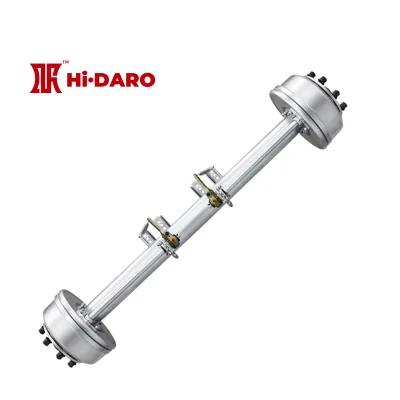
Trailer Hub Wheel Hub 10 Ton Axle with Tire Trailer Kit Boat Trailer Axles
$320.00 - $366.00
MOQ: 50 pieces
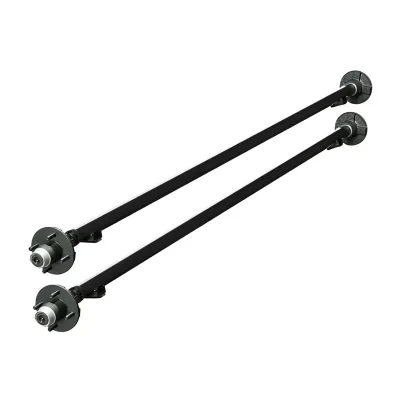


Forged Trailer Boat Trailer Spindle and 5 Bolt Galvanized Hub for 3500 Lb Axles
$5.00 - $8.00
MOQ: 500 Pieces


5 Bolts Round Square Spindle Boat Trailer Half Stub Axle Hub and Spindle Assembly
$5.00 - $8.00
MOQ: 500 Pieces


Good Price Heavy Duty Semi Trailer Spare Parts Trailer Axle Hub for Sale
$33.00 - $38.00
MOQ: 100 Pieces


Quality Trailer Axle 10 Bolt Wheel Hub for Boat Semi Trailer Truck Parts
$40.00 - $46.00
MOQ: 280 Pieces

Comprehensive Sourcing Guide
Strategic Sourcing Guide for Boat Trailer Axle Hubs
Navigating the global market for boat trailer axle hubs requires a disciplined approach that balances technical precision with supply chain reliability. The core component, often referred to as a stub axle or wheel hub assembly, serves as the critical interface between the trailer chassis and the vessel's weight. For procurement professionals, understanding the specific attributes of these components is essential to ensure safety, durability, and regulatory compliance. This guide synthesizes available market data to provide a structured framework for sourcing these essential trailer parts, focusing on material integrity, certification verification, and cost structures without relying on unverified supplier claims.
Technical Specifications and Material Integrity
The foundation of a reliable Boat Trailer Axle Hub lies in its material composition and dimensional specifications. Market data indicates that the primary material for these components is steel, a choice driven by the need for high tensile strength and resistance to the corrosive marine environment. When evaluating potential products, buyers must verify that the steel grade meets the demands of heavy loads, as the observed maximum payload capacities for these axles range significantly, from 2000kg up to 8 tons depending on the specific model configuration.
Dimensional consistency is equally critical. The axle beam structure is available in both square and round configurations, a factor that influences the mounting compatibility with existing trailer frames. The size specifications vary widely, with observed ranges extending from 1 to 8 tons in capacity, and specific physical dimensions noted as 770/14X70mm for certain models. Furthermore, the track width, a crucial measurement for wheel alignment, is observed in standard increments such as 200mm and 300mm. Buyers should note that the single gross weight of these units is typically around 2.000kg, though this can fluctuate based on the specific axle number and structural design.
The following table outlines the key technical variables observed in the current market for boat trailer axle hubs:
| Attribute Category | Observed Specifications | Relevance to Procurement |
|---|---|---|
| Material | Steel | Determines corrosion resistance and load-bearing capacity. |
| Max Payload | 2000kg to 8000kg (8t) | Must match the total weight of the boat and gear. |
| Axle Beam | Square or Round | Dictates frame compatibility and welding requirements. |
| Track Width | 200mm, 300mm | Critical for wheel spacing and stability. |
| Axle Number | Single Axle (Condition: New) | Defines the load distribution strategy. |
| Stud Configuration | 6 Studs (Agricultural/Trailer variants) | Ensures proper wheel bolt pattern alignment. |
Compliance and Certification Verification
In the B2B procurement of trailer parts, certification is not merely a formality but a prerequisite for liability management and safety assurance. The market data highlights specific certifications associated with these products, including ISO 9001 and ISO/TS 16949. These standards indicate that the manufacturing facility adheres to strict quality management systems and automotive industry-specific requirements. It is important to note that while these certifications are observed, they are often linked to specific applications, such as agricultural trailers or general semi-trailers, and buyers must confirm their applicability to boat trailers.
The certification status often appears alongside the condition of the product, which is listed as "New." This distinction is vital because it confirms that the components have not been refurbished or reconditioned, ensuring that the fatigue life of the steel is at its maximum. Additionally, the presence of certifications like ISO/Ts16949 suggests a supply chain capable of maintaining traceability and consistent quality control. Buyers should request current, valid certificates from suppliers rather than relying on general claims. The absence of ABS (Anti-lock Braking Systems) in many of these hub assemblies is a standard observation for this category, meaning the safety focus is on mechanical integrity rather than electronic braking integration.
Cost Drivers and Pricing Structures
Understanding the cost drivers for boat trailer axle hubs requires an analysis of the observed price ranges and minimum order quantities (MOQ). The market exhibits a wide price spectrum, with observed listed prices ranging from $0.10 to $366 USD. This variance is not indicative of quality differences alone but reflects the diversity in payload capacity, material thickness, and customization levels. A hub designed for a 2000kg payload will naturally differ in cost from one rated for 8 tons.
The MOQ is another significant factor influencing the total cost of ownership. The observed MOQ range spans from 1 to 500 units. This flexibility allows small-scale boat builders or repair shops to source single items, while larger manufacturers can leverage bulk purchasing power. The selling units are typically listed as "Single Item," which simplifies the procurement process for low-volume buyers. However, for larger orders, the supply ability of the manufacturer becomes a cost driver; a capacity of 5000 units per week suggests a robust production line capable of meeting high-volume demands without significant lead time delays.
Buyers should also consider the packaging details as a cost component. Products are observed to be packed in wooden cases, carton boxes, or on pallets. The choice of packaging affects shipping costs and the risk of damage during transit. For international procurement, the "by Wooden Case" option often provides superior protection for heavy steel components but may incur higher freight charges compared to standard carton packaging.
Typical Applications and Usage Scenarios
The versatility of boat trailer axle hubs is evident in their diverse application profiles. While the core keyword focuses on boat trailers, the market data reveals that these components are also widely used for agricultural trailers, semi-trailers, trucks, and tractor units. This cross-application capability suggests that the manufacturing standards are robust enough to handle varied stress conditions. The specific usage categories include "Trailer Parts" and "Trailer Suspension," indicating that these hubs are integral to the suspension system rather than just a simple connector.
The structural design is noted as "Non-dump Trailer," which is a standard configuration for boat trailers where the load is static and does not require the tilting mechanism found in dump trucks. However, the "Customization" attribute is available, allowing suppliers to adapt the hub for specific vessel requirements. For instance, the "Popular Type" designation suggests that certain configurations are industry standards, while others may require bespoke engineering. The "Oeno" (Original Equipment Number) references, such as 48210-60270-00, indicate that these parts are often designed to replace or match existing OEM specifications, ensuring compatibility with established trailer models.
Supplier Evaluation and Origin Analysis
When evaluating potential suppliers, the geographic origin of the product is a key data point. The supplied facts indicate that the production origin is Fujian, China. This region is known for a concentration of manufacturing facilities specializing in automotive and trailer components. Buyers should verify that the supplier's location aligns with their logistics strategy, as the distance from Fujian to the destination port will impact lead times and shipping costs.
The supplier's ability to provide OEM (Original Equipment Manufacturer) and ODM (Original Design Manufacturer) services is a strong indicator of their technical capability. The observation that "Customization" and "Accept: Customised" are available attributes suggests that suppliers are willing to adapt their products to specific buyer requirements. This is particularly relevant for boat manufacturers who may need unique stud configurations or specific track widths. Additionally, the "Provide: OEM, ODM" status implies that the supplier can handle both private labeling and design modifications, offering greater flexibility in the supply chain.
Buyers should also assess the supplier's response to the "Condition: New" requirement. While the data confirms that the products are new, the supplier's ability to guarantee this condition upon delivery is critical. The "Single Gross Weight" of 2.000kg and the "Single Package Size" of 25x25x25cm provide concrete data points for logistics planning. Suppliers who can consistently meet these dimensional and weight specifications are more likely to have stable production processes.
Quality Control and Long-Term Procurement Considerations
Ensuring long-term reliability requires a rigorous quality control (QC) framework. The presence of certifications like ISO 9001 and ISO/TS 16949 provides a baseline for QC, but buyers must go further by verifying the testing protocols for the steel material. The "Max Payload" ratings of 2000kg to 8t must be validated through independent testing or certified load reports. Since the "Axle Beam" can be square or round, the QC process should include dimensional checks to ensure the beam geometry matches the order specifications exactly.
For long-term procurement, the "Supply Ability" of 5000 units per week is a critical metric. This capacity suggests that the supplier can handle fluctuations in demand without compromising quality. However, buyers should also consider the "Packaging Details" as part of the QC process. Whether the product is packed by carton box or wooden case, the packaging must protect the steel from corrosion during transit, especially for international shipments. The "prod_packing" details, which include options for pallets or wooden cases, should be clearly defined in the purchase agreement to prevent damage.
Finally, the "Self-dumping" attribute, which is observed as "Not Self-dumping," reinforces the need for buyers to select the correct structural type for their specific application. Misidentifying the structure can lead to safety hazards or premature failure. By focusing on these technical and logistical details, buyers can build a resilient supply chain for boat trailer axle hubs that prioritizes safety, compliance, and operational efficiency. The combination of verified certifications, clear technical specifications, and robust supplier capabilities forms the basis of a successful procurement strategy in this specialized market.
FAQs
What material is used for boat trailer axle hubs?
The primary material used is steel, selected for its high tensile strength and resistance to corrosion in marine environments. This ensures the component can handle heavy loads ranging from 2000kg up to 8 tons depending on the specific model configuration.
Which certifications should I verify for these trailer parts?
You should verify ISO 9001 and ISO/TS 16949 certifications, which indicate adherence to strict quality management systems. These standards are often linked to agricultural and semi-trailer applications, ensuring traceability and consistent manufacturing quality for new components.
Can I customize the axle beam structure for my trailer?
Yes, customization is available for the axle beam structure, which comes in either square or round configurations. This flexibility allows buyers to match specific frame compatibility and welding requirements for their unique trailer chassis designs.
How does the maximum payload capacity vary across models?
The maximum payload capacity varies significantly, with observed ranges extending from 2000kg up to 8 tons. Buyers must select a model that matches the total weight of the boat and gear to ensure safety and structural integrity during transport.
What is the typical supply ability for these axle hubs?
The typical supply ability is 5000 units per week, indicating a robust production line capable of meeting high-volume demands. This capacity helps ensure that large orders can be fulfilled without significant lead time delays or quality compromises.
Where are these trailer axle hubs typically manufactured?
These products are typically manufactured in Fujian, China, a region known for automotive and trailer component production. Buyers should consider this origin when planning logistics, as the distance to the destination port impacts shipping costs and lead times.
How are these components packaged for international shipping?
Products are packed in wooden cases, carton boxes, or on pallets depending on the specific order requirements. The choice of packaging affects shipping costs and risk of damage, with wooden cases often providing superior protection for heavy steel components.