Source Bottom Extraction Facial Tissue for Office, Hotel, and Travel
Find and compare 30 Bottom Extraction Facial Tissue options from verified manufacturers. Evaluate specifications such as ply count, paper net content, and customization availability to select the ideal solution for office, hotel, and travel applications.
Key considerations
Products List


Business-Grade Soft and Smooth Facial Tissues Made of Absorbent Material
$0.10 - $0.30
MOQ: 20000 Bags


High Quality Soft Packed Bamboo Facial Tissue, Ideal for Sensitive Skin
$0.17 - $0.17
MOQ: 40000 Pieces


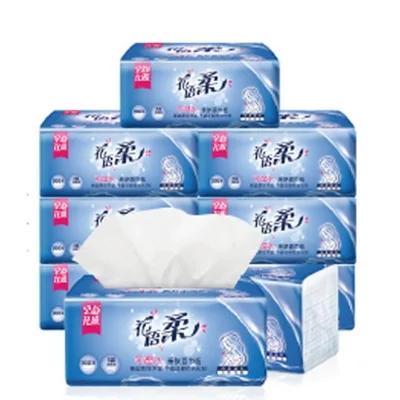

Comprehensive Sourcing Guide
Bottom Extraction Facial Tissue Sourcing Guide
Procuring Bottom Extraction Facial Tissue requires a precise understanding of the dispenser mechanics and the specific tissue architecture designed to function within them. Unlike traditional top-pull rolls, these products are engineered for wall-mounted dispensers where the sheet is drawn from the bottom, a configuration that significantly impacts hygiene, aesthetics, and operational efficiency in high-traffic environments. The supply chain for this category is dominated by manufacturers in China, where production capabilities range from standard wallet styles to specialized pocket tissues and rolls, all tailored to meet the mechanical demands of bottom-extraction systems.
Buyers must distinguish between the various form factors available, as the term "facial tissue" in this context often encompasses wallet tissues, pocket tissues, and specific roll configurations that fit the extraction mechanism. The observed market data indicates a diverse product range including styles like the WT2200 and C360, which feature specific dimensions and ply counts optimized for these dispensers. Understanding the distinction between a "wallet" style and a "roll" style is critical, as the former often relies on a coreless design while the latter may utilize a core, and both must align with the specific dispenser model installed in the target facility.
Product Scope and Observed Listing Signals
The product scope for Bottom Extraction Facial Tissue is defined by a combination of material composition, physical dimensions, and extraction mechanics. Available listings confirm that these tissues are typically made from virgin wood pulp, ensuring a high standard of softness and absorbency required for facial use. The observed data highlights a variety of ply options, ranging from 2-ply to 5-ply, allowing buyers to select the appropriate thickness based on the intended usage scenario, which includes offices, hotels, homes, travel, and sports venues.
Listing signals also reveal significant customization capabilities, particularly regarding size and packaging. Manufacturers offer standard sizes such as 155mm175mm or 128mm175mm, but also accept size customization requests to fit unique dispenser models. The packaging formats vary from individual bags to cartons and pallets, with some products featuring specific features like floral embossing or eco-friendly claims. Buyers should verify that the "bottom extraction" attribute is explicitly confirmed for the specific model, as not all facial tissues are compatible with bottom-draw dispensers.
Technical Specifications to Verify
When evaluating technical specifications, the paper net content and ply count are the primary indicators of product quality and cost-efficiency. The market data shows a wide range of net content, from 50g to over 200g per piece or roll, which directly correlates with the perceived value and durability of the tissue. A higher net content, such as the 150g-200g range observed in roll styles, typically indicates a more substantial product suitable for heavy-use environments, whereas lower content options may be better suited for travel or compact dispensers.
Dimensional accuracy and core configuration are equally critical for ensuring the tissue functions correctly within the dispenser. Specifications indicate that some models are coreless, while others include a core, and the standard dimensions must match the dispenser's internal cavity to prevent jamming or misalignment. Buyers should verify the exact standard size, such as 180mm128mm or 192mm156mm, against their existing hardware. Additionally, the extraction mode must be confirmed as "bottom extraction" to ensure the tissue feeds correctly, and the embossing pattern should be checked to ensure it does not interfere with the mechanical feeding mechanism.
Compliance and Safety Documentation
Compliance and safety documentation are non-negotiable for sourcing facial tissues intended for direct human contact, particularly in hospitality and healthcare settings. The observed product listings frequently cite certifications such as ISO9001, ISO14001, and ISO 45001, which demonstrate a manufacturer's commitment to quality management, environmental responsibility, and occupational health and safety. These certifications provide a baseline assurance that the production processes adhere to international standards, reducing the risk of supply chain disruptions due to regulatory non-compliance.
Safety claims regarding the material composition must be substantiated by relevant documentation, especially when products are marketed as eco-friendly or plastic-free. Some listings mention FDA compliance and FSC certification, which are vital for buyers targeting markets with strict environmental or food-contact regulations. While FSC is noted in the background data, buyers should request specific certificates for the batch being ordered to verify that the virgin wood pulp source is sustainably managed. Ensuring the product is free from harmful chemicals and is labeled as healthy and environmentally friendly is essential for maintaining brand reputation and meeting corporate sustainability goals.
Cost Drivers and Commercial Terms
Cost drivers in the Bottom Extraction Facial Tissue market are heavily influenced by the paper net content, ply count, and the level of customization required. Products with higher net content, such as those exceeding 200g per piece, or those with higher ply counts like 4-ply or 5-ply, will naturally command a higher price point due to the increased material usage. Additionally, the inclusion of specific features like floral embossing or custom sizing can add to the manufacturing complexity and cost, which buyers must factor into their total cost of ownership calculations.
Commercial terms, particularly the Minimum Order Quantity (MOQ), vary significantly across suppliers and product types. The observed data indicates an MOQ range from as low as 1 unit to as high as 60,000 units, with a specific high-confidence fact noting an MOQ of 5,000 bags for certain standard configurations. Buyers should be prepared to negotiate these terms based on their volume requirements, as larger orders often unlock better pricing tiers. It is also important to clarify the packaging specifications, such as whether the product comes in bags, cartons, or on pallets, as this affects shipping costs and storage logistics.
Supplier Qualification and Quality Control
Supplier qualification should begin with a rigorous review of their manufacturing capabilities and certification status. Given that the majority of observed products originate from China, buyers should verify the supplier's ability to maintain consistent quality across large production runs. The presence of multiple ISO certifications suggests a mature quality management system, but buyers should also request recent audit reports or third-party verification to ensure these standards are actively maintained. The ability to offer OEM services and accept customization requests is a strong indicator of a supplier's flexibility and technical competence.
Quality control measures must be established before production begins, focusing on the consistency of the paper net content and the integrity of the bottom extraction mechanism. Buyers should implement a sampling protocol to test the tissue's softness, absorbency, and ease of extraction from the dispenser. Since the product is disposable and intended for direct use, any defects in the embossing or packaging could lead to customer dissatisfaction. Establishing clear acceptance criteria for the "Without Core" or "With Core" variants and ensuring the color remains consistently white is essential for maintaining product standards.
Long-Term Procurement Checks
Long-term procurement success depends on the supplier's ability to maintain consistent supply and adapt to changing market demands. Buyers should establish a relationship that includes regular quality audits and performance reviews to ensure the product continues to meet the specified standards over time. The ability to scale production up or down based on seasonal fluctuations in demand, such as increased usage in hotels during peak travel seasons, is a critical factor in selecting a reliable partner.
Sustainability and regulatory compliance must be monitored continuously, as environmental regulations and consumer expectations evolve. Buyers should verify that the supplier remains compliant with certifications like FSC and ISO standards, and that they can provide updated documentation for each shipment. Additionally, the supplier should demonstrate a commitment to innovation, such as developing new eco-friendly materials or improving the extraction mechanism, to ensure the product remains competitive in the long term. Regular communication and joint planning sessions can help align procurement strategies with broader organizational goals.
FAQs
What is the standard size for Bottom Extraction Facial Tissue?
The standard size for Bottom Extraction Facial Tissue is 155mm by 175mm. This dimension ensures compatibility with most wall-mounted dispensers. Custom sizes are also acceptable for specific dispenser requirements. The product is designed for office, hotel, and home use. It features a wallet tissue style for easy access.
Can I customize the number of plies for this tissue?
Yes, the number of plies can be customized. Options include 2-ply, 3-ply, 4-ply, and 5-ply configurations. This allows you to select the desired thickness and softness. The material is virgin wood pulp for quality. Customization is available to meet specific comfort or durability needs.
What certifications does the manufacturer hold?
The manufacturer holds ISO9001, ISO14001, ISO 45001, and FDA certifications. These ensure quality management, environmental responsibility, and safety standards. Some products also carry FSC certification. These credentials verify the reliability of the production process. They are essential for B2B sourcing in regulated industries.
What is the minimum order quantity for bulk purchase?
The minimum order quantity is 5000 bags. This MOQ applies to standard bulk orders. The observed range for MOQs is 1 to 60000 units. This flexibility supports both small trials and large-scale procurement. Buyers should confirm specific MOQs with suppliers for custom requirements.
Is the tissue suitable for travel and outdoor use?
Yes, the tissue is suitable for travel and outdoor use. It features a pocket tissue style for portability. The product is disposable and without flavor. It is designed for office, hotel, travel, and sport scenarios. The compact size makes it ideal for on-the-go applications.
What packaging options are available for this product?
Packaging options include bag, carton, and pallet configurations. The product is individually wrapped for hygiene. This ensures protection during storage and transport. The packaging supports efficient distribution and inventory management. Buyers can choose packaging that fits their logistical needs.