Source Breathable Cotton Baby Clothing Set for newborns, toddlers, and infants
Explore 30 listings of Breathable Cotton Baby Clothing Set options featuring long and short sleeves, various neck shapes, and seasonal designs. Buyers can compare customization, materials, and packaging details to find suitable suppliers for their needs.
Key considerations
Products List


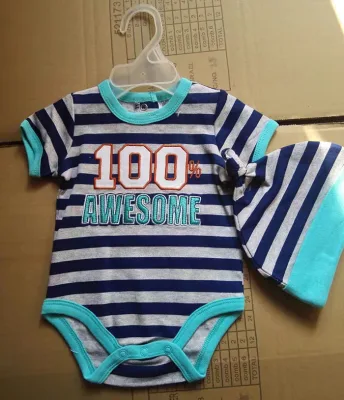
Summer Age 3 Months up to 12 Months Baby Clothes Clothing Romper Set Cotton 2017
$3.06 - $4.08
MOQ: 500 Minimum
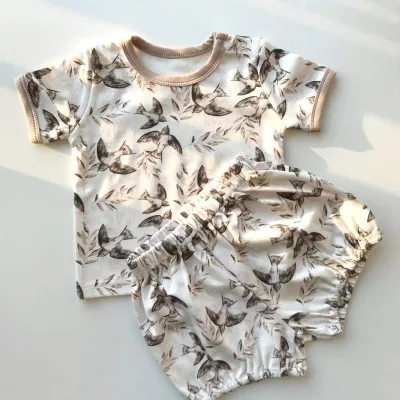
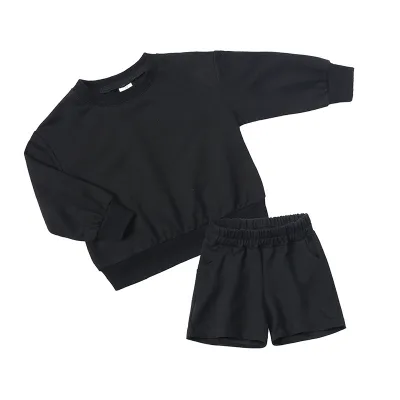
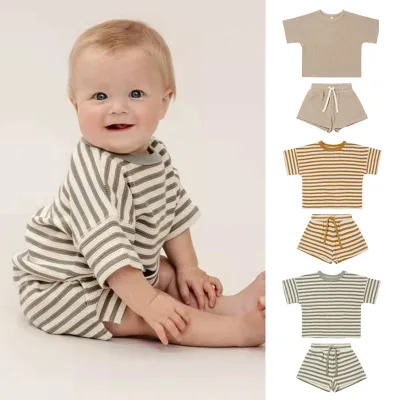
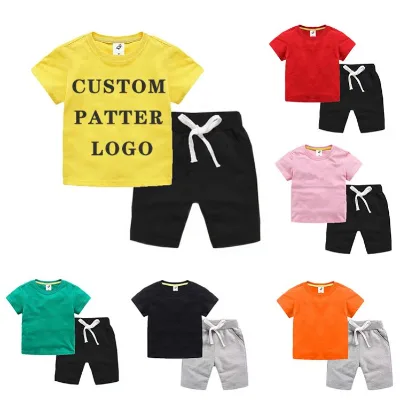
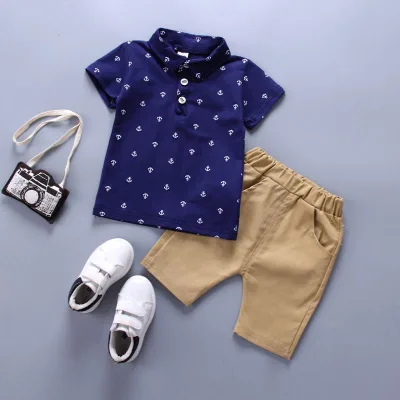
Comprehensive Sourcing Guide
Strategic Sourcing Guide for Breathable Cotton Baby Clothing Sets
Navigating the global market for breathable cotton baby clothing sets requires a meticulous approach to balancing material integrity, safety compliance, and cost efficiency. For procurement professionals, the core objective is to secure supply chains that deliver garments capable of regulating infant body temperature while maintaining the highest standards of fabric safety. The following guide synthesizes available market data and technical requirements to assist buyers in evaluating potential suppliers and defining precise product specifications.
Defining Technical Specifications for Breathability and Comfort
The foundation of any successful procurement strategy for baby clothing lies in the technical definition of the product. When sourcing breathable cotton sets, the primary material attribute must be verified as 100% Cotton or 100% Cotton Interlock. Interlock fabric, specifically noted in current market listings, offers a double-knit structure that provides superior durability and a soft hand feel compared to single jersey, which is critical for sensitive infant skin. The weight of the fabric is a decisive factor in breathability; a standard specification observed in high-quality offerings is 175GSM (grams per square meter). This weight range suggests a fabric that is substantial enough to provide warmth without being overly heavy, ensuring adequate airflow for the baby.
Beyond the base material, the construction techniques play a vital role in the garment's performance. Buyers should prioritize suppliers who utilize "Knitted" technics for the base fabric to ensure elasticity and comfort, while "Printed" techniques may be applied for aesthetic designs. The breathability of the set is further enhanced by specific design features. For instance, the inclusion of "Ventilation" as a stated feature indicates that the garment is engineered to allow heat dissipation. Additionally, the choice of sleeve style—ranging from "Long Sleeves" to "Short Sleeves"—must align with the intended season. While "Winter" and "Spring / Autumn" collections are common, "Summer" specific sets often feature short sleeves and lighter weaves to maximize cooling. The "Moisture Absorption" capability is another non-negotiable attribute, ensuring that sweat is wicked away from the skin, preventing irritation and rashes.
Compliance and Certification Verification Protocols
In the infant apparel sector, regulatory compliance is not merely a formality but a critical risk management strategy. While specific certification claims vary by supplier, buyers must rigorously verify that their chosen products meet recognized safety standards. The supply chain data indicates that some manufacturers hold "BSCI" (Business Social Compliance Initiative) certification, which validates ethical labor practices. However, for the physical safety of the product, buyers should not rely on unverified claims. Instead, they must request documentation for "OEKO-TEX" or "GOTS" (Global Organic Textile Standard) certifications, which are the industry benchmarks for chemical safety and organic integrity.
It is essential to distinguish between observed supplier attributes and universal guarantees. For example, while one listing mentions a standard of "as per buyer's request," another cites a specific age standard of "0-24month." Buyers must ensure that the supplier's internal quality control aligns with these standards. The "Certificiate" field in supplier profiles often lists BSCI, but this primarily addresses social compliance rather than chemical safety. Therefore, procurement teams must explicitly request third-party lab test results for harmful substances, such as formaldehyde, azo dyes, and heavy metals, regardless of whether the supplier advertises a specific certification. The absence of a specific certification label in a product listing does not imply non-compliance, but it necessitates a higher level of due diligence from the buyer to verify that the fabric meets international safety thresholds for children's wear.
Cost Drivers and Pricing Structure Analysis
Understanding the cost structure of breathable cotton baby clothing sets is essential for budgeting and negotiation. The observed market price range for these products spans from $1.50 to $11.19 USD. This significant variance is driven by several key factors, including the complexity of the design, the quality of the cotton, and the extent of customization. Sets featuring "All-Over Printed" designs, such as those with "Envelope Neck" and "All-Over Printed" pant designs, often command a higher price point due to the additional printing costs and the complexity of the pattern matching. Conversely, simpler designs with basic "Round Neck" or "V-Neck" shapes may fall toward the lower end of the price spectrum.
The Minimum Order Quantity (MOQ) is another critical cost driver. The market data reveals an MOQ range from 1 to 3,000 units. Suppliers offering low MOQs, such as 1 or 10 units, typically charge a premium per unit to cover setup costs for smaller batches. In contrast, suppliers with higher MOQs, such as 3,000 units, offer more competitive unit pricing, making them suitable for large-scale retail distribution. Buyers must also consider the impact of customization services. The availability of "OEM Service" allows for brand-specific labeling and packaging, which can increase costs but adds value for private label retailers. Packaging methods, such as "Mesh Bag" versus "Header Card & PVC Bag with a Hanger," also influence the final landed cost, as more elaborate packaging requires additional materials and labor.
Supplier Evaluation and Operational Capabilities
Evaluating potential suppliers requires a holistic view of their operational capabilities, including origin, production methods, and logistical readiness. The majority of suppliers in this sector are located in China, with specific manufacturing hubs in "Zhejiang" and "Hebei." These regions are known for their robust textile infrastructure, but buyers should verify the specific factory location to ensure it aligns with their logistics strategy. The "prod_origin" field is a critical data point for assessing lead times and shipping costs.
When assessing a supplier's capability, buyers should look for evidence of "Customization" availability. This includes the ability to modify "Sleeve Style," "Neck Shape," and "Buttons" (e.g., "With Buttons" or "Without Buttons"). A supplier that offers flexible options for "Bodysuit, Romper, Overall, Kimono etc." demonstrates a versatile production line capable of handling diverse product lines. Furthermore, the "prod_packing" specifications, such as "Seaworthy Carton" for bulk shipping or "Header Card & PVC Bag with a Hanger" for retail-ready units, indicate the supplier's experience in handling different distribution channels. Buyers should also verify the "Stature" range of the garments, ensuring the supplier can produce sizes appropriate for the target demographic, such as "0-9 Months" or specific height ranges like "45-55cm."
Quality Control and Material Integrity Checks
Maintaining quality control throughout the production process is paramount to ensuring the final product meets safety and performance expectations. The "Technics" used, such as "Knitted" or "Printed," must be consistently applied to avoid defects. For printed garments, buyers should inspect for color fastness and print durability, ensuring that the "All-Over Printed" designs do not crack or fade after washing. The "Fabric" composition must be strictly verified as "100% Cotton Interlock" to prevent the use of cheaper synthetic blends that compromise breathability.
Quality checks should also focus on the construction details. The "Neck Shape," whether "Envelope Neck" or "Round Neck," must be finished smoothly to prevent irritation to the baby's neck. The presence of "Buttons" should be secure and non-toxic, adhering to safety standards for small parts. Additionally, the "Weight" of the fabric should be consistent across the batch to ensure uniform warmth and drape. Buyers should implement a pre-shipment inspection protocol that includes random sampling to verify the "GSM" weight, the integrity of the stitching, and the accuracy of the size labels. Any deviation from the specified "175GSM" or "100% Cotton" should trigger a rejection or a request for rework.
Long-Term Procurement and Market Adaptability
For a sustainable procurement strategy, buyers must consider the long-term adaptability of their product lines. The "Season" attribute is a key indicator of market demand, with products available for "Winter," "Spring / Autumn," and "Summer." A diversified portfolio that includes sets for different seasons can mitigate the risk of seasonal inventory gluts. Furthermore, the "Gender" specifications, ranging from "Boy," "Girl," to "Unisex," allow buyers to tailor their offerings to specific market segments or create gender-neutral collections that appeal to a broader audience.
The "Feature" set, including "Moisture Absorption" and "Ventilation," should be continuously monitored against consumer trends. As parents become more conscious of fabric comfort and safety, the demand for high-performance cotton blends is likely to increase. Buyers should maintain open communication with suppliers regarding "Standard" compliance, ensuring that the "0-24month" age standards and other specifications remain up to date with evolving regulations. Finally, the availability of "OEM Service" and "Customization" options ensures that the supply chain can adapt to changing brand requirements, allowing for the introduction of new designs, packaging, or labeling without disrupting the production flow. By focusing on these long-term considerations, buyers can build resilient supply chains that deliver value and safety to their customers.
FAQs
What fabric composition is standard for breathable baby sets?
The standard fabric composition is 100% Cotton or 100% Cotton Interlock. This material ensures softness and breathability suitable for sensitive infant skin, with a common weight of 175GSM for balanced warmth and airflow.
Which certifications should I verify for supplier safety compliance?
Buyers should verify BSCI certification for social compliance and request OEKO-TEX or GOTS for chemical safety. While BSCI is observed in listings, third-party lab tests for harmful substances remain essential for infant wear safety.
How does the Minimum Order Quantity affect unit pricing?
MOQ ranges from 1 to 3000 units, directly influencing unit cost. Lower MOQs like 1 or 10 units typically carry a premium, while higher volumes around 3000 units offer more competitive pricing for large-scale distribution.
Can suppliers customize sleeve styles and neck shapes?
Yes, customization is available for sleeve styles like Long or Short Sleeves and neck shapes including Envelope or Round Necks. Suppliers also offer options for buttons and various garment types such as bodysuits, rompers, and kimonos.
What are the typical production locations for these items?
Most suppliers are located in China, specifically in Zhejiang and Hebei provinces. These regions possess robust textile infrastructure, though buyers should verify specific factory locations to align with their logistics and shipping strategies.
Which age groups are covered by the standard size ranges?
Standard size ranges cover ages from 0-9 Months up to 0-24 months. Buyers should verify stature specifications, such as 45-55cm, to ensure the garments fit the intended demographic for their specific product line.