Source Breathable Cotton Balaclava Hoodie for winter sports, outdoor work, and cold weather protection
Explore 30 listings for Breathable Cotton Balaclava Hoodie options featuring hooded pullover styles, embroidered logos, and various fabric weights. Buyers can compare specifications like material composition, printing methods, and seasonal suitability from suppliers in Guangdong, China.
Key considerations
Products List
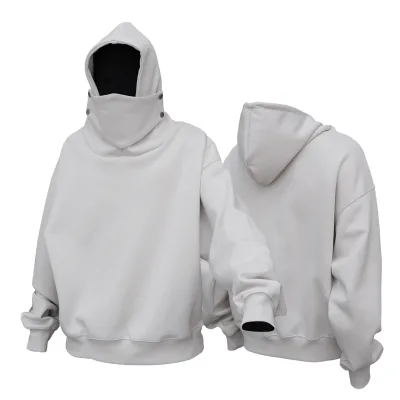

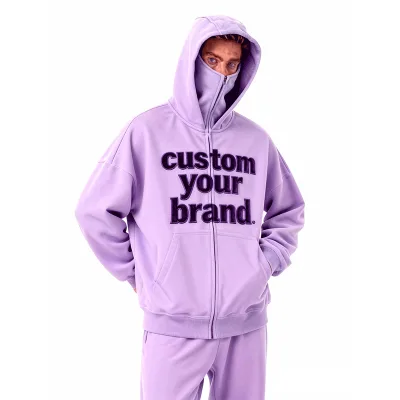
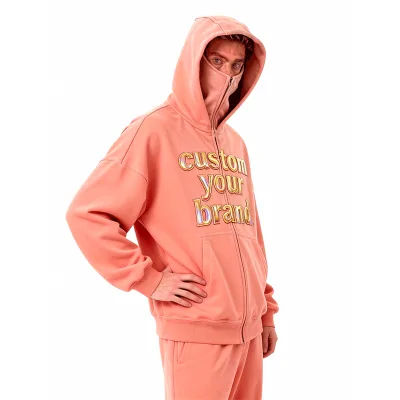
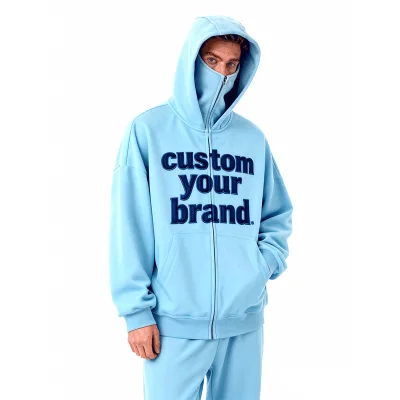


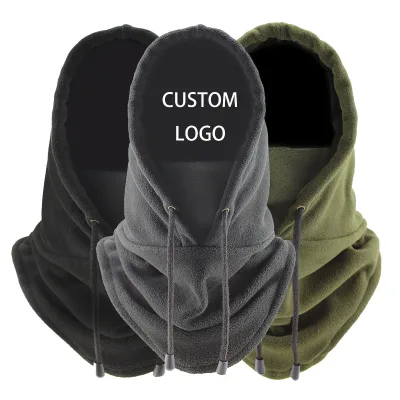


Custom Men's Acid Washed Hoodie with Balaclava Thermal Double Hood Pocket
$23.90 - $25.90
MOQ: 50 Pieces

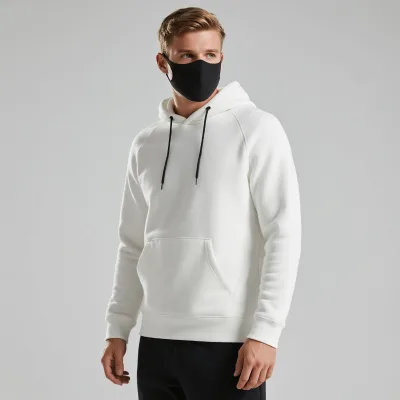
Custom Unisex Hoodie with Balaclava Ninja Mask Double Hat Heavyweight Zip
$27.90 - $29.90
MOQ: 50 Pieces




Comprehensive Sourcing Guide
Strategic Sourcing Guide for Breathable Cotton Balaclava Hoodies
Understanding Product Attributes and Material Composition
When sourcing a Breathable Cotton Balaclava Hoodie, buyers must first navigate the specific material definitions provided in the supply chain data. The term "cotton" in this context often appears alongside "polyester" or "polyester/cotton" blends, indicating that a pure 100% cotton variant exists but is not the sole offering. The supply data explicitly lists "100% Cotton" as a material option, which aligns with the core keyword requirement. However, other entries in the same dataset indicate "Polyester" and "Polyester / Cotton" compositions. This variation suggests that while the buyer seeks cotton, the market offers blends that may enhance durability or cost-efficiency.
The fabric weight is a critical technical specification for breathability and warmth. The observed data points to fabric weights of 300 grams and 360 grams for certain cotton-based items, while other entries list a significantly heavier 500 grams for fleece variants. For a "breathable" application, the 300-360 gram range is likely more appropriate for moderate climates, whereas the 500-gram fleece option serves colder conditions. The fabric type is described as "Knitted" or "Fleece," which directly influences the airflow properties. Knitted cotton structures generally offer better breathability compared to dense fleece, making the knitted specification a primary filter for buyers prioritizing ventilation.
Furthermore, the design and construction details must be scrutinized. The product data specifies a "Hooded" style with a "Fixed" hood type, which is essential for the balaclava functionality. The closure type is noted as a "Zipper," allowing for adjustable ventilation around the neck and face. The fit type is listed as "Oversized," which can impact the breathability factor by allowing more air circulation between the garment and the skin. Buyers should verify if the specific supplier's oversized fit aligns with the intended use case, as an excessively loose fit might compromise the thermal seal required for winter protection.
Technical Specifications and Functional Features
The technical specifications of the Breathable Cotton Balaclava Hoodie extend beyond simple material composition to include specific functional attributes. The supply data highlights several key features: "Anti-Wrinkle," "Anti-Pilling," "Anti-Shrink," and "Breathable." These features are particularly relevant for bulk procurement where garment longevity and maintenance are concerns. The "Anti-Pilling" and "Anti-Shrink" claims are critical for cotton products, as natural fibers are prone to these issues during repeated washing. Buyers must treat these as observed attributes of specific listings rather than universal guarantees for all cotton balaclava hoodies in the market.
Construction techniques also play a vital role in the product's performance. The data indicates "Embroidered" and "Patchwork" as the primary technics. Embroidery, specifically "plain embroidery" on the front, adds a decorative element but also reinforces the fabric structure. However, buyers should be aware that heavy embroidery can sometimes reduce breathability in localized areas. The "Patchwork" technique suggests a more complex construction, which may involve joining different fabric types or patterns, potentially affecting the uniformity of the breathability across the garment.
Additional technical details include the "Sleeve Style" and "Sleeve Length," both listed as "Regular" and "Long Sleeve" respectively. This confirms the garment covers the arms fully, which is standard for hoodies but must be balanced with the need for breathability. The "Pocket Type" is identified as "Side" pockets, which are standard for utility but can add weight and reduce airflow if lined with heavy fleece. The "Pattern Type" varies between "Solid" and "Print," with specific mentions of "Floral" and "Puff Printing," "Digital Printing," and "Silk Screen Printing." The choice of printing method can impact the fabric's breathability; for instance, heavy puff printing may create a barrier to air movement compared to digital printing.
| Feature Category | Observed Specification | Sourcing Implication |
|---|---|---|
| Material Composition | 100% Cotton, Polyester, Polyester/Cotton | Verify blend ratio for breathability vs. durability. |
| Fabric Weight | 300g, 360g, 500g | Select 300-360g for optimal breathability; 500g for warmth. |
| Fabric Type | Knitted, Fleece | Knitted preferred for airflow; Fleece for insulation. |
| Closure Type | Zipper | Essential for adjustable ventilation control. |
| Fit Type | Oversized | Ensures air gap but verify sizing charts for fit. |
| Technics | Embroidered, Patchwork | Check embroidery density to avoid blocking breathability. |
| Printing Methods | Puff, Digital, Silk Screen | Digital/Silk screen generally less obstructive than Puff. |
Compliance, Certification, and Quality Verification
In the realm of B2B procurement, compliance and quality verification are non-negotiable, especially for garments intended for close contact with the skin. The supply data explicitly mentions "Needle detection: Yes," which is a critical safety standard for textile manufacturing. This indicates that the supplier employs metal detection processes to ensure no broken needles remain in the finished product, a standard requirement for many retail markets. Buyers should request proof of this needle detection process and inquire about the frequency of these checks during production.
While the provided data does not list specific international certifications (such as GOTS, OEKO-TEX, or ISO standards), the presence of "Eco-Friendly" as a feature suggests that some suppliers may adhere to environmental standards. However, buyers must not assume certification status based solely on the term "Eco-Friendly." Instead, procurement teams should request valid certification documents from the supplier to verify claims regarding sustainable materials or ethical manufacturing practices. The "Care Instructions" listed as "Machine Washable" and "Hand Washing at Low or Normal Temperature" imply a certain level of fabric stability, but buyers should verify if the "Anti-Shrink" claim holds true after multiple wash cycles.
Quality control should also extend to the "Single package size" and "Single gross weight." The data indicates a package size of 35x30x6 cm and a gross weight of 1.500 kg. These metrics are essential for logistics planning and cost estimation. Discrepancies between the stated weight and the actual weight upon arrival can indicate quality issues, such as the inclusion of excessive packaging materials or incorrect fabric density. Furthermore, the "Place of Origin" is consistently listed as "Guangdong, China" or generally "China." Buyers should verify if the specific factory location aligns with their compliance requirements regarding labor standards and environmental regulations, as regional variations in enforcement can exist.
Cost Drivers and Pricing Dynamics
The pricing structure for breathable cotton balaclava hoodies is influenced by several factors, including material composition, customization levels, and order volume. The observed price range in the market data spans from $0.50 to $35.00 USD. This wide variance reflects the difference between basic, unbranded items and highly customized, premium products. The lower end of the spectrum likely corresponds to simple polyester or cotton-polyester blends with minimal customization, while the higher end may represent 100% cotton items with complex embroidery, patchwork designs, or specialized printing methods like puff printing.
Customization is a significant cost driver. The data confirms that "Customization: Available" and "Oem Service" are standard offerings. This includes options for logo placement on the "Front," "Back," "Left Sleeve," and "Right Sleeve," as well as the ability to choose specific colors like "White," "Black," and "Gray." The "Brand Name" Fabsub is mentioned, suggesting that some suppliers offer white-label or private-label services. Buyers should note that the "Logo/graphic design" is described as "plain embroidery," which may be a cost-effective option compared to complex digital prints or patchwork.
Order volume also impacts pricing. The "MOQ" (Minimum Order Quantity) ranges from 1 to 200 units. This flexibility allows small businesses to test the market with low-risk orders, while larger buyers can negotiate better rates for bulk purchases. The "Selling Units" are listed as "Single item," which is standard for B2B transactions where the unit price is calculated per piece. Buyers should be aware that the "7 days sample order lead time" is supported, which is a relatively short turnaround for custom samples. This can be advantageous for rapid prototyping but may incur higher per-unit costs for the sample phase compared to mass production.
Supplier Evaluation and Operational Capabilities
Evaluating a supplier for breathable cotton balaclava hoodies requires a focus on their operational capabilities and reliability. The "Supply Type" is listed as "Oem Service," indicating that the supplier is equipped to handle custom orders. However, buyers should verify the supplier's capacity to handle the specific "Technics" required, such as "Embroidered" or "Patchwork" work, as these processes require specialized machinery and skilled labor. The "Model Number" WY912 and "prod_model" 25CARA133 suggest that suppliers have established product lines, which can be a sign of stability and experience.
Lead times are another critical factor in supplier evaluation. The data supports a "7 days sample order lead time," which is a strong indicator of a responsive supply chain. However, buyers must distinguish between sample lead times and mass production lead times, which are not explicitly provided in the data. It is prudent to assume that production lead times will be longer and to negotiate specific delivery schedules based on order volume. The "Place of Origin" being Guangdong, China, places the supplier in a major manufacturing hub, which typically offers a robust ecosystem of raw material suppliers and logistics providers.
Communication and transparency are essential for a successful partnership. Buyers should assess the supplier's ability to provide detailed specifications, such as the exact fabric weight (300g vs. 360g) and the specific printing methods used. The "Design" is noted as "Lined," which adds an extra layer of complexity to the production process. Suppliers who can clearly articulate how they manage the lining process and ensure it does not compromise the breathability of the outer cotton layer are preferable. Additionally, the "Pattern" options, including "Floral" or "Solid," should be reviewed to ensure the supplier has the design capabilities to meet the buyer's aesthetic requirements.
Typical Applications and Market Segmentation
The Breathable Cotton Balaclava Hoodie is versatile and serves multiple market segments. The "Season" is listed as "Winter," indicating its primary use in colder climates. However, the "Breathable" feature suggests it is also suitable for transitional seasons or for active use where body temperature regulation is crucial. The "Gender" is specified as "Men," but the "Oversized" fit and "Hooded" style often make these garments unisex or adaptable for women's markets depending on the specific cut and sizing.
Typical applications include outdoor activities, sports, and casual wear. The "Anti-Wrinkle" and "Anti-Pilling" features make these hoodies suitable for frequent wear and travel, where maintenance is a concern. The "Zipper" closure allows for easy adjustment, making the garment practical for layering or for use in varying temperatures. The "Side" pockets provide utility for carrying small items, which is beneficial for outdoor enthusiasts or commuters.
The "Customization" aspect opens up opportunities for corporate branding, team uniforms, and promotional merchandise. The ability to place logos on the "Front," "Back," and "Sleeves" allows for high visibility branding. The "Plain embroidery" option offers a professional and durable branding method that withstands washing and wear. Buyers targeting the corporate or team market should leverage these customization options to create cohesive and branded apparel.
Long-Term Procurement Considerations
For long-term procurement, buyers must consider the sustainability and scalability of their supply chain. The "Eco-Friendly" feature mentioned in the data suggests a potential alignment with sustainability goals, but buyers should verify the specific practices of the supplier. Long-term contracts may require consistent quality control measures, such as the "Needle detection" process, to be maintained throughout the production cycle.
Scalability is another key consideration. The "MOQ" range of 1-200 allows for flexibility, but buyers planning for significant growth should ensure the supplier can scale production without compromising quality. The "7 days sample order lead time" is a positive indicator, but buyers should establish clear communication channels for larger orders to avoid delays. The "Single gross weight" and "Single package size" should be factored into long-term logistics planning to optimize shipping costs and storage space.
Finally, buyers should monitor the market for changes in material availability and pricing. The variation in "Material" options (100% Cotton vs. Polyester blends) indicates a dynamic market where suppliers may adjust their offerings based on raw material costs. Maintaining a relationship with a supplier who can offer flexibility in material composition while maintaining the core "Breathable" and "Cotton" attributes will be essential for adapting to market changes and ensuring a steady supply of high-quality breathable cotton balaclava hoodies.
FAQs
What materials are available for breathable cotton balaclava hoodies?
The product data lists 100% Cotton, Polyester, and Polyester/Cotton blends as available materials. Buyers should verify the specific blend ratio to ensure the desired balance between breathability and durability for their winter application.
How does the fabric weight affect breathability in these hoodies?
Fabric weights of 300 grams and 360 grams are observed for knitted cotton variants, which generally offer better airflow. Heavier 500-gram fleece options provide more warmth but may reduce ventilation compared to the lighter knitted structures.
Can I customize the logo placement on these hoodies?
Customization is available with logo options for the front, back, left sleeve, and right sleeve. The design can feature plain embroidery or various printing methods like puff, digital, or silk screen printing depending on the supplier.
What is the minimum order quantity for these garments?
The observed minimum order quantity ranges from 1 to 200 units depending on the supplier. This flexibility allows small businesses to test the market with low-risk orders while larger buyers can negotiate bulk rates.
How long does it take to receive a sample order?
A sample order lead time of 7 days is supported by the suppliers. This short turnaround facilitates rapid prototyping, though mass production lead times will likely be longer and require specific negotiation.
Which features ensure the quality and safety of the hoodies?
The products include needle detection to ensure no metal fragments remain in the finished garment. Additional features like anti-wrinkle, anti-pilling, and anti-shrink properties are listed to enhance longevity and maintenance for the buyer.