Find Car Side Door Mirror Assembly for Cars, Trucks, and Motorcycles
Source 30 verified listings for the Car Side Door Mirror Assembly, comparing manual and customizable options with glass or steel materials. Buyers can evaluate specifications like view angles, curvature radii, and certifications including CE, ISO, and DOT across various models.
Key considerations
Products List


Aftermarket Car Mirrors, Side View Mirrors, Truck Mirrors and Car Mirrors.
$2.00 - $5.00
MOQ: 50 Pieces


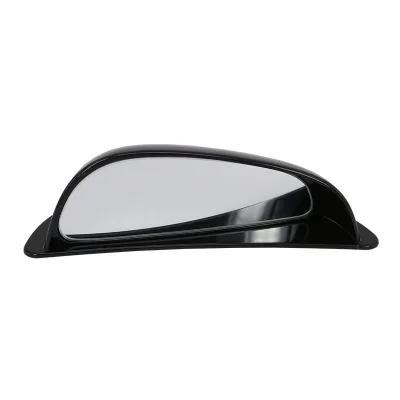
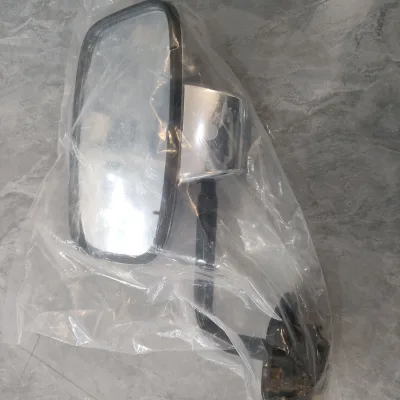


China Factory Auto Parts/Auto Mirror/Car Mirror/ Rearview Mirror/Side Mirror
$1.98 - $10.00
MOQ: 100 Square Meters

1.8mm, 2.0mm Rearview Mirror/Wing Mirror/ Auto Parts/Auto Mirror/Car Mirror/Side Mirror
$2.60 - $8.00
MOQ: 100 Square Meters
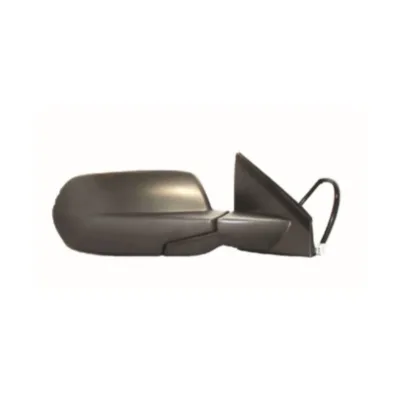
Comprehensive Sourcing Guide
Strategic Sourcing Guide for Car Side Door Mirror Assemblies
Navigating the global market for car side door mirror assemblies requires a disciplined approach that balances technical precision with supply chain reliability. For procurement professionals, the core keyword "Car Side Door Mirror Assembly" encompasses a diverse range of components, from manual spherical mirrors to complex double-curvature units designed for various vehicle classes. The following guide synthesizes observed market data and technical attributes to provide a structured framework for evaluating potential suppliers and ensuring product compliance.
Technical Specifications and Component Variability
The technical landscape of car side door mirrors is defined by a wide array of specifications that directly impact vehicle safety and driver visibility. When sourcing these assemblies, buyers must first establish the precise functional requirements for their target vehicle segments, which include cars, trucks, motorcycles, and general motor vehicles. A critical observation in the current market is the variability in mirror geometry. While some suppliers offer standard spherical mirrors with a consistent 120° view angle, others provide advanced double curvature mirrors. These advanced units often feature specific radii of curvature, such as R1800, R1200, R450, and R125, which are engineered to reduce blind spots while maintaining a clear reflection of the immediate rear environment.
Physical dimensions are equally critical. Market data indicates that mirror sizes typically range from 2.0 inches to 2.5 inches, though larger assemblies exist for heavy-duty applications. The glass thickness is a vital specification, with available options ranging from 1.8mm to 6mm. Thicker glass generally correlates with enhanced durability and resistance to vibration, a key factor for truck and motorcycle applications. The controlling type is another fundamental attribute; the majority of observed assemblies utilize manual control mechanisms, though the market also supports customization for electric or automated variants.
The material composition of the assembly further dictates performance. The mirror housing and structural components are frequently constructed from steel, ensuring robustness against impact and environmental stress. The mirror glass itself is typically glass-based, often treated with specific back coatings. Available coating options include blue, clear, brown, and smoked finishes. These coatings are not merely aesthetic; they serve functional purposes such as reducing glare and enhancing contrast in varying light conditions. Additionally, the metal film backing, often aluminum or silver, plays a role in the reflectivity and longevity of the mirror surface.
Compliance and Certification Verification
In the automotive aftermarket and OEM sectors, regulatory compliance is non-negotiable. Buyers must verify that any supplier of car side door mirror assemblies can provide valid documentation for the relevant safety certifications. The observed market data highlights a cluster of common certifications, including CE, ISO, FCC, ECE, and DOT. These standards represent different regulatory bodies and geographic requirements. For instance, DOT certification is essential for the North American market, while ECE marks are mandatory for European Union compliance. The presence of ISO certification indicates adherence to international quality management standards, which is a strong indicator of a supplier's operational maturity.
However, procurement teams must exercise caution. The mere listing of certifications does not guarantee that every specific product model within a supplier's catalog is certified. Buyers should request specific test reports or certificates of conformity that match the exact product model number, such as SETO-MW-584, DZ13241770913, or 576. It is also important to note that some suppliers may list certifications broadly without specifying the scope. Therefore, verification should involve direct communication with the supplier to confirm that the specific batch or model intended for purchase meets the regulatory requirements of the destination country.
Cost Drivers and Pricing Structures
Understanding the cost drivers for car side door mirror assemblies is essential for budgeting and negotiation. The observed price range in the market spans from $0.30 to $65.00 USD. This significant variance is driven by several factors, including the complexity of the mirror type, the quality of materials, and the level of customization required. A basic manual spherical mirror with a standard glass thickness will likely fall at the lower end of this spectrum. Conversely, assemblies featuring double curvature technology, specialized back coatings, or custom branding will command higher prices.
Minimum Order Quantity (MOQ) is another critical cost factor. The market data shows an MOQ range from 1 unit to 2,000 units. Suppliers offering low MOQs, such as 1 unit, are often catering to prototyping or small-scale repair needs, which may result in a higher per-unit cost. High-volume buyers can leverage economies of scale by ordering closer to the 2,000-unit threshold, potentially securing better pricing. Additionally, the "Small Order" offering mentioned in supplier attributes suggests flexibility for buyers who cannot commit to large volumes immediately, though this flexibility may come with a premium.
Typical Applications and Customization Options
The application scope for car side door mirrors is broad, extending across multiple vehicle categories. The primary applications identified include cars, trucks, motorcycles, and general motor vehicles. Each of these sectors has distinct requirements. For example, motorcycle mirrors often require compact designs with high vibration resistance, while truck mirrors prioritize a wide field of view and durability against harsh road conditions. The "Type" attribute, specifically identified as "Side Mirror," confirms the primary function, but the "Application" field clarifies the versatility of the product line.
Customization is a significant value driver in this sector. The market data explicitly states that customization is available, with options for logos, colors, and packing. Buyers can request specific colors, such as white or grey, to match vehicle aesthetics. The "Logo" attribute indicates that branding can be customized, which is crucial for private label strategies. Furthermore, the "Standard" attribute reveals that dimensions and specifications can be tailored to customer needs, with standard sizes like 230450, 305407, and 203*305 serving as baseline references. This flexibility allows buyers to source mirrors that fit unique vehicle models or aftermarket modifications without requiring extensive tooling changes.
Supplier Evaluation and Geographic Considerations
When evaluating potential suppliers, geographic origin and logistical capabilities are key indicators of reliability. The observed data points to China, specifically Weifang, Shandong, as a primary production hub. This region is known for its manufacturing infrastructure, which supports the production of automotive components. However, buyers should not rely solely on the general origin; they must verify the specific factory capabilities and quality control measures in place.
Supplier evaluation should also consider the "Advantage" attributes listed, such as "High Quality" and "Factory Direct Supply." While these are common marketing terms, they suggest a direct relationship between the manufacturer and the buyer, which can reduce lead times and improve communication. The "Product Name" and "Brand Name" fields, such as "Seto," provide additional context for brand recognition, though buyers should verify if the brand is proprietary or a generic label used by the manufacturer.
Logistical factors, such as "Ocean Freight" and "Safety Packaging," are critical for international procurement. The "Product Packing" attribute, described as "Saeworthy" or "Safety Packaging," indicates that the supplier prioritizes protecting the glass components during transit. Given the fragility of mirror glass, the integrity of the packaging is a primary concern. Buyers should request details on the specific packaging materials and testing protocols used to ensure that the mirrors arrive without damage.
Quality Control and Long-Term Procurement
Ensuring long-term quality requires a focus on durability and performance metrics. The "Durable Time" attribute suggests a lifespan of up to 10 years, which is a significant benchmark for procurement planning. However, this claim should be validated through independent testing or third-party verification. The "Feature" attributes, including "HD Vision" and "Wide Vision Field," are performance claims that buyers should test against actual samples. The "Pixel" attribute, ranging from 100 million to 300 million, appears to be a marketing metric for image clarity, likely relevant to camera-integrated mirrors or digital displays, though its application to traditional glass mirrors requires clarification.
For long-term procurement, consistency in the "Standard" and "Specification" attributes is vital. Buyers should establish a clear specification sheet that includes the exact model number, material composition, coating type, and dimensions. The "Thickness" range of 1.8mm to 6mm and the "Radius of Curvature" values should be locked in the contract to prevent substitution with inferior components. Additionally, the "Controlling Type" and "Mirror Type" must be strictly defined to avoid receiving products that do not meet the functional requirements of the vehicle.
Comparative Analysis of Mirror Specifications
To facilitate decision-making, the following table summarizes the key technical attributes observed in the market for car side door mirror assemblies. This comparison highlights the variability in specifications that buyers must navigate.
| Attribute | Standard/Basic Option | Advanced/Custom Option |
|---|---|---|
| Mirror Type | Spherical Mirror | Double Curvature Mirror |
| View Angle | 120° | Variable (R1800, R1200, etc.) |
| Size | 2.0 inch | 2.5 inch |
| Glass Thickness | 1.8mm | Up to 6mm |
| Back Coating | Clear | Blue, Brown, Smoked |
| Material | Steel | Steel with Aluminum/Silver Film |
| Control Type | Manual | Customizable |
| Certification | CE, ISO | CE, ISO, DOT, ECE, FCC |
| Origin | China (Weifang) | China (Weifang) |
| Packaging | Safety Packaging | Ocean Freight / Custom |
This table underscores the importance of defining precise requirements before engaging with suppliers. The "Advanced" column represents the higher-end market segment where buyers can find enhanced visibility and durability, while the "Standard" column reflects the baseline offerings suitable for general replacement needs.
Conclusion
Sourcing car side door mirror assemblies is a complex process that demands a thorough understanding of technical specifications, regulatory requirements, and supply chain dynamics. By focusing on the observed data points—such as the range of certifications, the variability in mirror types, and the specific material properties—buyers can make informed decisions that align with their operational needs. The availability of customization, from logos to dimensions, offers significant flexibility, but it also requires rigorous quality control to ensure that the final product meets safety and performance standards. Ultimately, successful procurement in this sector relies on a partnership with suppliers who can demonstrate consistent quality, transparent compliance, and reliable logistics, ensuring that the car side door mirror assemblies delivered are fit for purpose and compliant with global regulations.
FAQs
What certifications are available for car side door mirror assemblies?
Available certifications include CE, ISO, FCC, ECE, and DOT depending on the specific model. Buyers must verify that the exact product model matches the required regional standards before purchasing.
Can I customize the logo and color of the mirror assembly?
Yes, customization is available for logos and colors such as white or grey. Suppliers offer tailored options to match vehicle aesthetics and branding requirements.
What is the minimum order quantity for these mirror assemblies?
The minimum order quantity ranges from 1 to 2000 units depending on the supplier. Small order offerings exist for prototyping, while bulk buyers can access lower per-unit costs.
Which mirror types are offered for different vehicle applications?
Options include spherical mirrors and double curvature mirrors suitable for cars, trucks, and motorcycles. Specific radii like R1800 or R125 are available to reduce blind spots.
How thick is the glass used in these mirror assemblies?
Glass thickness is available from 1.8mm to 6mm to ensure durability. Thicker glass is recommended for heavy-duty applications like trucks and motorcycles to resist vibration.
Where are these car side door mirror assemblies manufactured?
Products originate from Weifang, Shandong, China. Buyers should confirm specific factory details as the general origin may vary by supplier batch.
What packaging methods are used to protect the mirrors during shipping?
Packaging includes safety packaging and ocean freight options to prevent damage. Suppliers prioritize protecting the glass components to ensure they arrive without defects.