Source Car Tire Foam Cleaner for Engines, Tyres, and Interiors
Compare 30 Car Tire Foam Cleaner options with varying capacities, pH levels, and packaging from China. Buyers can evaluate models like YIQUN-061 and CC-124 to find suitable industrial or automotive solutions.
Key considerations
Products List


Excellent Factory Foam Cleaning Car Tire and Polish Foaming Tire Cleaner
$0.90 - $1.20
MOQ: 7500 Pieces


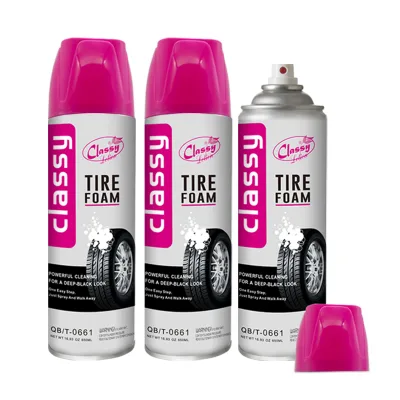


Environmentally Rich Foam Long-Term Maintenance Anti-Dust Tire Foam Cleaner
$0.65 - $0.74
MOQ: 3000 Pieces


Quick Foaming Wide Coverage Interior Cleaner Car Cleaning Product Foam Cleaner
$1.11 - $1.34
MOQ: 3000 Pieces


Comprehensive Sourcing Guide
Strategic Sourcing Guide for Car Tire Foam Cleaners
Understanding Product Variants and Technical Specifications
When sourcing car tire foam cleaners, buyers must first navigate the diverse technical landscape presented in the market. The core keyword often masks significant variations in chemical composition, physical form, and intended application. Based on available product data, the market offers distinct formulations ranging from strong detergents specifically engineered for tires to neutral pH cleaners that prioritize surface safety. The physical state of the product is equally critical; while some listings describe the product as a liquid or solvent-based inorganic material, others specify an aerosol format or a cylinder shape, which dictates the dispensing mechanism and user experience.
Capacity and volume are primary differentiators that influence logistics and shelf life. Observed specifications indicate a wide range of container sizes, with standard capacities frequently cited between 300ml and 500ml, while other variants extend up to 1000ml. Specific model numbers such as YIQUN-061, CC-124, and BSJ-0661 correspond to these varying volumes, with some products standardized at 650ml or 600ml. The weight of the finished goods also fluctuates, with observed net weights around 420g and gross weights reaching 545g, suggesting differences in packaging density and propellant usage. Buyers should verify that the selected model number aligns precisely with the required volume for their distribution channels, as a mismatch can lead to inventory discrepancies or regulatory non-compliance in specific markets.
Chemical Composition and Performance Attributes
The chemical profile of a tire foam cleaner is the most critical factor in determining its efficacy and safety. The market data reveals a dichotomy in pH levels, with products categorized as either having a base (alkaline) pH or a neutral pH. This distinction is vital for buyers targeting different segments of the automotive market. A base pH cleaner typically offers strong ablution capabilities, often described as an "enrichment" type, which is effective for removing heavy grime and road tar. Conversely, neutral pH formulations are generally preferred for vehicles with sensitive finishes or for users who prioritize surface preservation over aggressive cleaning power.
Furthermore, the specific function of the cleaner varies. Some products are explicitly labeled as "without dewaxing," indicating a formulation designed to clean without stripping existing protective waxes, while others function as strong detergents specifically for tires. The source material also plays a role; some listings identify the composition as liquid mineral lubricants or protective lubricants, which may imply a dual function of cleaning and conditioning. The morphology of the product, whether described as a solvent or a liquid, affects its interaction with rubber compounds. Buyers must ensure that the chemical composition matches the intended application, whether it is for industrial lubricant cleaning, automotive detailing, or general tire maintenance. The presence of bonding functions, such as cryogenic adhesive properties in some listings, suggests specialized industrial applications that differ significantly from standard consumer tire cleaning needs.
Compliance, Certification, and Regulatory Standards
Navigating the regulatory landscape is essential for importing and distributing car tire foam cleaners. While specific certification statuses vary by manufacturer, the supply chain data indicates that compliant products often adhere to recognized international standards. Buyers should look for products that explicitly list certifications such as CE, RoHS, SGS, and GMP. These standards serve as indicators of quality management, environmental safety, and product reliability. For instance, RoHS compliance ensures that the product does not contain restricted hazardous substances, which is crucial for markets in the European Union and other regions with strict environmental regulations.
The validity period of the product is another compliance-related attribute that requires attention. Standard shelf life observations suggest a validity of three years, which impacts inventory management and supply chain planning. Products with a shorter validity period may require faster turnover to prevent degradation of the chemical formula. Additionally, the origin of the product, frequently cited as Guangdong, China, or generally China, influences the regulatory framework under which the goods are produced. Buyers must verify that the manufacturing facility adheres to local and international safety standards, particularly regarding the handling of aerosols and solvents. The absence of specific certification claims in a product listing should not be assumed to indicate non-compliance, but rather a need for direct verification with the supplier before finalizing a procurement order.
Cost Drivers and Procurement Economics
The economics of sourcing car tire foam cleaners are influenced by several variables, including packaging, volume, and order quantity. The observed price range in the market spans from 0.3 to 2 USD per unit, a significant variance that reflects differences in formulation complexity, packaging quality, and brand positioning. The packaging type is a major cost driver; options include brown boxes, color boxes, display boxes, and cartons. Products packaged in display boxes or color boxes often command a higher price point due to the added marketing value and retail readiness, whereas bulk cartons are typically more economical for wholesale distribution.
Minimum Order Quantity (MOQ) is another critical economic factor. The market data shows a broad MOQ range, from 100 units to as high as 50,000 units. Specific listings indicate MOQs such as 7,500 pieces, which suggests that smaller buyers may need to consolidate orders or seek suppliers with more flexible terms. The packaging configuration, such as 12 pieces per carton or 650ml x 12 units, directly impacts the total order volume and shipping costs. Buyers should calculate the cost per unit based on the total landed cost, including shipping and duties, rather than focusing solely on the unit price. High-volume orders may offer better per-unit economics, but they also tie up more capital and require robust storage solutions.
Supplier Evaluation and Quality Assurance
Evaluating suppliers for car tire foam cleaners requires a rigorous approach to quality assurance and reliability. The customization options available in the market are a significant advantage for buyers looking to create private label products. Suppliers that offer customization allow for branding on the aerosol cans, cylinders, or boxes, which is essential for establishing a unique market presence. However, the availability of customization does not guarantee quality; buyers must assess the supplier's track record in maintaining consistent product standards.
Quality control should be a central part of the supplier selection process. Buyers should verify that the supplier has a documented quality management system, potentially aligned with GMP standards. The observation of "High" quality attributes in product listings is a positive signal, but it must be substantiated through third-party testing or on-site audits. The consistency of the product's physical attributes, such as the shape (cylinder or aerosol) and the volume (300ml to 1000ml), is also a key indicator of manufacturing precision. Inconsistent filling or packaging defects can lead to customer complaints and brand damage. Additionally, the source of the raw materials, such as liquid mineral lubricants or inorganic materials, should be traceable to ensure the integrity of the final product.
Logistics, Lead Times, and Long-Term Procurement
Logistics planning is critical for the successful procurement of car tire foam cleaners, particularly given the nature of the product as an aerosol or liquid chemical. The observed lead time for delivery is approximately 30 days, which is a standard timeframe for manufacturing and shipping from China. Buyers must factor this lead time into their inventory planning to avoid stockouts, especially during peak seasons. The packaging format, such as 12 pieces per carton, influences the efficiency of loading and shipping, as it determines the number of units that can be packed into a standard container.
Long-term procurement considerations involve building a sustainable relationship with suppliers who can guarantee consistent supply and quality. The validity period of three years for the product suggests that buyers can plan for medium-term inventory strategies without immediate concerns about product expiration. However, the specific model numbers and standards (e.g., 500ml, 650ml) should be locked in to ensure supply chain stability. Buyers should also consider the environmental impact of the packaging and the chemical composition, as regulations regarding aerosols and solvents are becoming increasingly stringent. Establishing a clear communication channel with the supplier regarding changes in standards or formulations is essential for maintaining compliance and product performance over time.
Application Scenarios and Market Segmentation
The versatility of car tire foam cleaners allows them to serve a wide range of applications, from consumer automotive detailing to industrial maintenance. The specific type of cleaner, such as a strong detergent for tires or a neutral pH cleaner, dictates its primary market segment. Strong detergents are ideal for heavy-duty applications where road grime and brake dust are prevalent, while neutral formulations are better suited for regular maintenance of luxury vehicles or daily drivers. The function of the product, whether it is a cleaner, a protective lubricant, or a solvent, further defines its use case.
In the industrial sector, products with properties like cryogenic adhesive bonding or inorganic composition may find niche applications in specialized cleaning or maintenance tasks. For the general automotive market, the focus is typically on ease of use, effectiveness, and safety. The aerosol format offers convenience for end-users, while the liquid or solvent-based options may be preferred for bulk application in professional detailing shops. Understanding these application scenarios helps buyers tailor their product selection to the specific needs of their target customers, ensuring that the sourced products meet the functional requirements of the end-user market.
Final Procurement Recommendations
To conclude, sourcing car tire foam cleaners requires a balanced approach that considers technical specifications, chemical composition, compliance, and logistics. Buyers should prioritize products that offer clear certification standards, such as CE, RoHS, and SGS, to ensure market acceptance and safety. The wide range of capacities and packaging options allows for flexibility in product positioning, but consistency in quality and volume is paramount. By carefully evaluating suppliers based on their ability to meet MOQ requirements, provide customization, and maintain a reliable lead time, buyers can build a robust supply chain. Ultimately, the success of the procurement strategy depends on aligning the product attributes with the specific needs of the target market, ensuring that the car tire foam cleaners delivered are effective, compliant, and profitable.
FAQs
What capacity options are available for Car Tire Foam Cleaner?
Standard capacities range from 300ml to 1000ml, with specific models offering 500ml, 650ml, or 600ml volumes. Buyers should verify the exact model number to ensure the selected container size matches their distribution requirements and logistical needs.
Can I customize the packaging for Car Tire Foam Cleaner orders?
Yes, customization is available for packaging formats including brown boxes, color boxes, and display boxes. Suppliers also offer carton configurations such as 12 pieces per carton or specific volume packs like 650ml x 12 units for bulk distribution.
What certifications do Car Tire Foam Cleaner products typically hold?
Compliant products often adhere to international standards including CE, RoHS, SGS, and GMP. These certifications indicate quality management and environmental safety, ensuring the product meets regulatory requirements for various global markets and distribution channels.
How long is the delivery lead time for Car Tire Foam Cleaner?
The standard delivery lead time is approximately 30 days from the time of order confirmation. Buyers must factor this duration into their inventory planning to ensure timely stock availability and avoid potential supply chain disruptions.
What is the typical price range for Car Tire Foam Cleaner units?
The observed market price range spans from 0.3 to 2 USD per unit, varying by formulation and packaging quality. Bulk orders in cartons often offer better per-unit economics compared to smaller retail-ready display box configurations.
Which pH levels are available for Car Tire Foam Cleaner formulations?
Products are available in both base (alkaline) and neutral pH formulations. Base pH cleaners provide strong ablution for heavy grime, while neutral pH options are designed for surface safety and are suitable for vehicles with sensitive finishes.
What is the minimum order quantity for Car Tire Foam Cleaner?
MOQs vary significantly from 100 units up to 50,000 units depending on the supplier and product model. Specific listings may require orders of 7,500 pieces, so buyers should confirm flexible terms if their volume needs are lower.
How long is the validity period for Car Tire Foam Cleaner?
The standard validity period for these products is three years, allowing for medium-term inventory planning. This shelf life ensures product stability during storage and distribution, provided the items are kept in appropriate conditions.