Source Car Style USB Flash Drive for Storage, Booting, and Antivirus
Compare 30 Car Style USB Flash Drive options featuring storage, booting, and antivirus functions. Buyers can evaluate customization, materials, and branding areas across diverse models like the U101 and D172.
Key considerations
Products List




Comprehensive Sourcing Guide
Strategic Sourcing Guide for Car Style USB Flash Drives
Understanding the Product Category and Design Variants
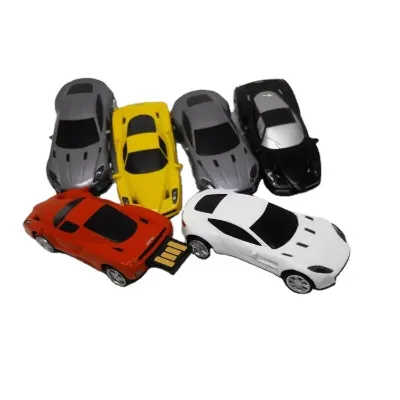
The Car Style USB Flash Drive represents a specialized segment within the broader promotional electronics market, distinguished by its unique form factor and functional versatility. Unlike standard stick-shaped drives, this category encompasses drives molded or printed to resemble automotive components, offering a distinct aesthetic appeal for corporate branding and automotive industry marketing. Based on observed product attributes, the "Car" shape is a specific design option available alongside other forms such as sticks, cards, and rectangles. The physical construction of these drives varies significantly; while some models utilize plastic or PVC materials to achieve specific contours, others employ metal construction for durability and a premium feel. The interface type generally supports both USB 2.0 and USB 3.0 standards, ensuring compatibility with a wide range of legacy and modern computing systems.
Buyers must recognize that the "car style" designation often refers to the external branding area rather than a single monolithic product. The branding area dimensions are critical for design integration. For instance, specific models feature branding zones on the "bonnet" measuring 20mm x 14mm and the "roof" measuring 14mm x 7mm, while other rectangular variants offer a 30mm x 12mm imprint area. The opening style also varies, with some models featuring a swivel or rotating mechanism to protect the connector, while others may utilize an unplug design. Understanding these physical distinctions is the first step in aligning the product with specific marketing objectives, whether the goal is a high-volume giveaway or a premium client gift.
Technical Specifications and Functional Capabilities
When evaluating car style USB drives, the technical specifications extend beyond simple storage capacity to include functional versatility and interface reliability. The observed product data indicates that these drives are not limited to basic data storage. Manufacturers offer models with specialized functions, including the capability to serve as a bootable USB disk, an antivirus utility drive, a thermometer, or a music player. This multifunctionality allows procurement teams to select drives that align with specific software deployment strategies or user experience goals. For example, a drive intended for IT security teams might require the "Antivirus USB Disk" function, while a hospitality or travel-related campaign might benefit from the "Music USB Disk" capability.
The interface type is a crucial technical consideration. While many entries list USB 2.0 as the standard, some specifications explicitly include USB 3.0 support, which offers significantly faster data transfer rates. Buyers should verify the specific interface version of the selected model to ensure it meets the performance requirements of their intended application. The physical dimensions also play a role in usability; standard specifications for similar compact drives often range from approximately 50mm to 65mm in length, with widths between 21mm and 39mm. The packing size for bulk shipments can be substantial, with observed dimensions reaching 130mm x 100mm x 10mm for certain configurations, which impacts logistics planning. Furthermore, the weight of individual units is typically light, with some models recorded at 11.2g gross weight, facilitating easy distribution and minimal shipping costs.
Compliance, Security, and Certification Verification
In the realm of B2B procurement, compliance and security are paramount, particularly when distributing hardware that may access corporate networks or sensitive data. A critical observation from the product data is the encryption status. Some listed models explicitly state "NO" for encryption, meaning they do not possess built-in hardware security features to protect data at rest. This is a vital distinction for buyers handling confidential information. If data security is a requirement, procurement teams must verify if the specific car style model supports external security software or if a different product line with encryption capabilities is necessary. The product data also notes that the drives "Support Security Check," which implies the hardware can be scanned by security protocols, but this does not equate to active encryption.
Regarding certifications and standards, the provided information does not list specific third-party certifications such as CE, FCC, or RoHS for the car style models. Instead, it references a product standard dimension of 41.1mm x 19.1mm x 7.7mm for one model and 65mm x 39mm x 27mm for another. Buyers should not assume that all car style drives meet international safety or environmental standards without explicit verification from the supplier. It is essential to request current test reports and certification documents before placing an order. The "Security Check" attribute suggests the drives are compatible with standard security scanning tools, but this should be confirmed against the specific IT security policies of the purchasing organization. Additionally, the product origin is listed as Guangdong, China, a major manufacturing hub, but buyers must ensure that the specific batch of goods adheres to the import regulations and safety standards of their destination country.
Cost Drivers and Pricing Structure Analysis
The cost of car style USB flash drives is influenced by several variable factors, primarily material composition, customization complexity, and order volume. The observed price range in the market spans from $0.10 to $98.00 USD, a wide spectrum that reflects the diversity of options available. The lower end of this range typically corresponds to basic plastic or PVC models with simple branding, while the higher end likely includes metal construction, advanced functionality (such as bootable or antivirus capabilities), or complex multi-color printing. Material choice is a primary cost driver; metal drives generally command a higher price point than PVC or plastic alternatives due to material costs and manufacturing complexity.
Order volume is another significant determinant of unit cost. The Minimum Order Quantity (MOQ) for these products is typically set at 50 units, though some listings indicate an MOQ of 100 units. Buyers should note that while the standard MOQ is 50, the specific model selected may have different requirements. For instance, the D172 model and others in the catalog show an MOQ of 50 units. Sample orders are generally accepted, allowing buyers to validate quality and design before committing to a large production run. However, sample costs and shipping fees should be factored into the initial budget. The packaging type also affects cost; options range from simple poly bags to more expensive gift boxes, tin boxes, or window boxes. Selecting premium packaging will increase the per-unit cost but may be necessary for high-end promotional campaigns.
Typical Applications and Branding Opportunities
The car style USB drive is uniquely suited for applications where automotive themes or vehicle-related branding are central. These drives are frequently utilized by automotive manufacturers, dealerships, and suppliers to promote new vehicle models, service packages, or brand loyalty programs. The specific branding areas, such as the "bonnet" and "roof" of the car-shaped drive, allow for creative logo placement that mimics the actual vehicle design, creating a strong visual association with the brand. For non-automotive industries, the car shape can serve as a novelty item for logistics companies, delivery services, or travel agencies, leveraging the association with mobility and transport.
Branding methods for these drives include screen printing, pad printing, laser engraving, and color printing. The choice of branding method depends on the material of the drive and the desired aesthetic. Metal drives often benefit from laser engraving for a permanent, high-contrast look, while plastic drives may be better suited for screen printing or pad printing. The branding area dimensions, such as 20mm x 13mm for front/back printing on certain models, dictate the complexity of the artwork. Buyers should work closely with their design team to ensure that logos and text fit within these constraints. The "Customization" attribute confirms that these drives can be tailored to specific brand requirements, making them a flexible tool for targeted marketing campaigns. Whether used for data distribution, software deployment, or as a premium gift, the car style drive offers a memorable physical medium for digital content.
Supplier Evaluation and Quality Control Protocols
Selecting a reliable supplier for car style USB drives requires a rigorous evaluation process focused on manufacturing capability and quality assurance. Buyers should verify the supplier's production capacity to ensure they can meet the required delivery timelines, which are observed to be as short as 5 days for certain models. However, lead times can vary based on customization complexity and order volume. It is essential to confirm the actual production schedule before finalizing the order. The warranty period is another critical factor; while some models offer a 1-year warranty, others may provide up to 10 years. Buyers must clarify the specific warranty terms for the selected model, as this impacts long-term risk management.
Quality control should be a priority throughout the procurement process. Buyers should request pre-production samples to verify the physical dimensions, material quality, and branding accuracy. The "Products Status" is listed as "New," but this should be validated to ensure the drives are not refurbished or overstocked. Additionally, the "After-Sales Service" availability, including call center and online technical support, is a valuable asset for resolving any issues that may arise post-distribution. Buyers should also verify the packing specifications to ensure the drives are protected during transit. The variety of packing options, from retail to bulk, suggests that suppliers can accommodate different distribution needs, but the integrity of the packaging must be confirmed to prevent damage. Finally, buyers should ensure that the supplier has a robust system for tracking production batches, which is essential for managing recalls or quality issues in the future.
Long-Term Procurement and Lifecycle Management
Sourcing car style USB drives is not merely a transactional activity but a strategic decision that impacts long-term brand perception and operational efficiency. The "Customization" availability allows for ongoing updates to branding materials, ensuring that the drives remain relevant as marketing campaigns evolve. However, buyers must consider the lifecycle of the product. With a warranty period ranging from 1 to 10 years, the durability of the drive is a key consideration. Metal models generally offer better longevity than PVC or plastic alternatives, making them suitable for long-term distribution. The "Security Check" support indicates that the drives can be integrated into security protocols, but the lack of built-in encryption in some models means that data security relies on external measures.
For organizations planning to distribute these drives over an extended period, establishing a relationship with a supplier that offers consistent quality and reliable lead times is crucial. The ability to accept sample orders facilitates a phased procurement approach, where initial small batches can be tested before scaling up. Buyers should also monitor the market for changes in interface standards; while USB 2.0 and 3.0 are currently standard, future compatibility with newer USB standards should be considered for long-term projects. Finally, the environmental impact of the materials used, such as PVC versus metal, should be evaluated against corporate sustainability goals. By carefully managing these factors, procurement teams can ensure that car style USB drives serve as effective, durable, and secure tools for their specific business needs.
FAQs
What functions do car style USB drives offer?
Car style USB drives support multiple functions beyond storage, including booting, antivirus protection, thermometer readings, and music playback. These specialized capabilities allow buyers to select drives tailored for specific software deployment or user experience goals.
Can I customize the branding on these drives?
Yes, customization is available for car style USB drives using methods like screen printing, pad printing, and laser engraving. Buyers can place logos on specific areas such as the bonnet or roof, with dimensions varying by model to fit design requirements.
What is the minimum order quantity for these drives?
The minimum order quantity is typically 50 units, though some listings indicate an MOQ of 100 units. Buyers should verify the specific MOQ for the selected model, as requirements may vary depending on the product configuration and customization level.
How long does delivery take for these products?
Delivery time is observed to be as short as 5 days for certain models. However, lead times can vary based on customization complexity and order volume, so confirming the actual production schedule is essential before finalizing the order.
Do these drives support encryption for security?
Some listed models explicitly state no encryption, meaning they lack built-in hardware security features. Buyers handling confidential information must verify if the specific model supports external security software or requires a different product line with encryption capabilities.
What materials are used for car style USB drives?
Car style USB drives are constructed from various materials including plastic, PVC, and metal. Metal models generally offer a premium feel and better durability, while plastic or PVC options are often used for specific contours and lower cost points.