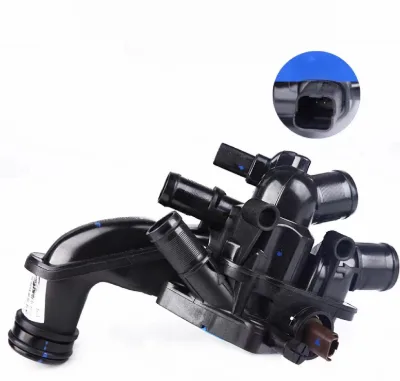
Source Car Thermostat for Automotive, Refrigerator, and Compressor Uses
Find 30 Car Thermostat options from verified suppliers. Compare specifications like certifications, materials, and MOQs to select the right component for automotive, refrigerator, or compressor applications.
Key considerations
Products List




Temperature Thermostat Controller Smart Thermostat Temperature Controller
$3.69 - $11.99
MOQ: 200 Pieces

Thermostat Temperature Control Digital Thermostat Temperature Controller
$3.69 - $11.99
MOQ: 200 Pieces


Car Air Conditioning Thermostat\Knob Type Adjustable Temperature Control with Sensor
$1.00 - $1.20
MOQ: 1000 Pieces
Comprehensive Sourcing Guide
Strategic Sourcing Guide for Automotive Thermostats
The automotive cooling system is a critical component in maintaining engine efficiency and longevity, with the thermostat serving as the primary regulator of coolant flow. For procurement professionals sourcing car thermostats, the landscape involves navigating a diverse array of product specifications, certification requirements, and supply chain variables. This guide synthesizes available market data to provide a disciplined framework for evaluating potential suppliers and selecting components that align with specific vehicle requirements. The focus remains on evidence-based attributes observed in current listings, ensuring that procurement decisions are grounded in verified product characteristics rather than speculative claims.
Technical Specifications and Component Variability
Understanding the technical diversity of automotive thermostats is the first step in effective sourcing. The market presents products with varying physical dimensions, materials, and functional designs. Observed data indicates that thermostat units can differ significantly in shape and size. For instance, specific listings describe a square-shaped unit with dimensions of 251515, while other entries note standard packaging dimensions of 14.00cm * 5.00cm * 15.00cm. These variations suggest that buyers must carefully match the physical footprint of the component to the engine bay constraints of their target vehicles.
Material composition is another critical technical factor. Sourcing records show the presence of thermostats constructed from copper, as well as others utilizing stainless steel. The choice of material often correlates with the intended application environment and the required resistance to corrosion or thermal stress. Furthermore, the electrical characteristics of electronic thermostats vary; some units are rated for a 12V system with a rated current of 2 A, designed specifically for automotive applications. In contrast, other components may be purely mechanical or designed for different voltage environments.
The functional role of the component also dictates its specification. While the core keyword is "Car Thermostat," listings reveal a bifurcation in product naming and application. Some units are explicitly labeled as "Auto Thermostat" or "Engine Coolant Thermostat" for general automotive use, while others are designated for "Refrigerator Compressor Control" or "Home Refrigerator & Freezer Parts." This distinction is vital; a component listed for a home refrigerator may not meet the thermal cycling demands of an internal combustion engine. Buyers must verify that the "Application" field explicitly states "Automotive" or "Car" to ensure compatibility. Additionally, specific model numbers such as WST-033, 80301018, and 8H serve as unique identifiers that should be cross-referenced with vehicle manufacturer part lists to avoid compatibility errors.
Compliance and Certification Verification
In the automotive sector, compliance is not merely a formality but a prerequisite for market entry and liability protection. The supply chain for thermostats includes products carrying various certification marks, which serve as indicators of adherence to safety and quality standards. Available data highlights certifications such as RoHS and CE, which are frequently observed across multiple listings. These certifications generally indicate compliance with restrictions on hazardous substances and conformity with European health, safety, and environmental protection standards, respectively.
For automotive-specific components, higher-tier certifications are often required to demonstrate robust quality management systems. Listings have been observed containing IATF16949 and ISO9001 certifications. IATF16949 is particularly significant as it is the global technical standard for quality management systems in the automotive industry, ensuring that suppliers have processes in place to prevent defects and reduce variability. ISO9001 provides a broader framework for quality management. The presence of these certifications suggests a supplier's commitment to rigorous production controls, which is essential for components that regulate engine temperature.
However, buyers must exercise caution when interpreting certification data. Some entries list "CE,ISORoHS" as a combined attribute, while others list them separately. It is imperative to verify the validity of these certificates with the issuing bodies rather than relying solely on the product description. Furthermore, the absence of a specific certification in a listing does not automatically disqualify a product, but it necessitates a deeper inquiry into the supplier's quality assurance protocols. Buyers should request copies of current certificates and verify their scope to ensure they cover the specific manufacturing location and product line being sourced.
Cost Drivers and Pricing Dynamics
The pricing of automotive thermostats is influenced by a complex interplay of factors, including material costs, certification status, customization levels, and order volume. The observed price range in the market spans from 0.39 USD to 30 USD, reflecting a wide disparity in product value. This broad range is likely driven by differences in material quality (e.g., copper vs. stainless steel), the inclusion of electronic components, and the level of brand premium associated with the manufacturer.
Order Volume is a primary driver of unit cost. Market data indicates that Minimum Order Quantities (MOQ) can range from as low as 1 unit to as high as 1000 units. Some suppliers explicitly state a standard of "MOQ 1000pcs" or "MOQ 500pcs," which suggests that unit prices will be significantly lower for bulk purchases compared to single-item orders. For buyers requiring small quantities for prototyping or low-volume production, the per-unit cost will be higher, potentially approaching the upper end of the observed price range. Conversely, high-volume procurement allows access to the lower price points, provided the buyer can meet the supplier's volume thresholds.
Customization also plays a role in cost structure. Listings indicate that "Customization" is available for some products, while others are marked as "Non-Customized." Customized components, which may require specific model numbers, unique packaging, or tailored specifications, typically incur higher tooling and setup costs. These costs are often passed on to the buyer, either through a higher unit price or a separate setup fee. Additionally, the origin of the product, with many listings citing China (specifically Ningbo or Henan), influences logistics costs and tariffs, which should be factored into the total landed cost calculation.
Typical Applications and Use Cases
While the core keyword focuses on "Car Thermostat," the market data reveals a nuanced landscape of applications that buyers must distinguish. The primary application for these components is clearly defined as "Automotive" or "Car," with specific mentions of "Engine Coolant Thermostat" and "Auto Thermostat." These components are designed to regulate the temperature of the engine coolant, ensuring the engine reaches operating temperature quickly and maintains it within an optimal range.
However, the data also includes products labeled for "Home Refrigerator & Freezer Parts" and "Refrigerator Compressor Control." Although these share the functional name of a thermostat, their engineering is tailored for different thermal environments. A refrigerator thermostat operates in a much lower temperature range and may not possess the durability or thermal response characteristics required for an automotive engine. Buyers must rigorously filter listings based on the "Application" attribute to ensure the component is intended for vehicular use.
Specific model numbers and attributes provide further clarity on application. For example, a product with the model number "BY2407-1" and a rated voltage of 12V is clearly intended for an automotive electrical system. Similarly, components described with "Car Make: All" suggest a universal fitment, though this claim should be validated against specific vehicle models. The "Parts" attribute listing "Compressor" in some entries further reinforces the need to distinguish between engine cooling thermostats and compressor control units, as the latter may be part of a different system entirely.
Supplier Evaluation and Operational Capabilities
Evaluating a supplier for automotive thermostat procurement requires a multi-faceted approach that goes beyond product specifications. Key operational capabilities include the supplier's ability to handle customization, their packaging standards, and their logistical reliability. The availability of "ODM OEM" services is a significant indicator of a supplier's flexibility, allowing buyers to source components that are branded or modified to meet specific requirements. This is particularly relevant for buyers looking to private label products or integrate specific features into the thermostat design.
Packaging standards vary across the market, with options ranging from "1PC in a Box" to "Carton Package." The choice of packaging can impact the efficiency of the supply chain and the protection of the product during transit. For high-volume orders, carton packaging is generally preferred for stacking and handling efficiency, whereas single-item boxes may be suitable for retail or direct-to-consumer channels. Buyers should assess whether the supplier's packaging aligns with their internal logistics and storage capabilities.
Geographic location is another critical factor in supplier evaluation. The majority of observed listings originate from China, with specific mentions of Ningbo and Henan. These regions are known for their manufacturing clusters, but buyers must consider the implications of distance on lead times and communication. The observed delivery time of 7-15 days provides a baseline for planning, but actual lead times can fluctuate based on order volume, production capacity, and shipping conditions. Verifying the supplier's ability to meet these timelines consistently is essential for maintaining production schedules.
Quality Control and Long-Term Procurement
Ensuring the long-term reliability of automotive thermostats requires a robust quality control strategy. The "Quality" attribute is frequently listed as "High" in product descriptions, but this is a self-reported claim that must be substantiated. Buyers should rely on the presence of recognized certifications like IATF16949 and ISO9001 as proxies for a supplier's quality management system. These certifications imply that the supplier adheres to standardized processes for inspection, testing, and continuous improvement.
Warranty terms are another indicator of supplier confidence in their product. A "1year" warranty is commonly observed in the market, offering a baseline level of protection for buyers. However, the specific terms of the warranty, including what is covered and the process for claims, should be clearly defined in the contract. Buyers should also inquire about the supplier's defect rate and their procedures for handling non-conforming products.
Long-term procurement considerations involve building a sustainable relationship with the supplier. This includes evaluating their capacity to scale production, their responsiveness to design changes, and their commitment to quality over time. The "Service" attribute, which includes ODM and OEM capabilities, suggests that suppliers are willing to engage in a collaborative relationship. Buyers should prioritize suppliers who demonstrate transparency in their manufacturing processes and are willing to share quality data. Additionally, the "Single gross weight" and "Single volume" attributes, even if listed as 0 in some cases, highlight the need for accurate logistical planning to avoid unexpected costs or delays.
Comparative Analysis of Product Attributes
To facilitate decision-making, it is helpful to compare key attributes across different product listings. The following table summarizes the observed variations in specifications, certifications, and logistics that buyers should consider when evaluating potential sources.
| Attribute Category | Observed Variation | Procurement Consideration |
|---|---|---|
| Material | Copper, Stainless Steel | Verify corrosion resistance and thermal conductivity requirements. |
| Certification | RoHS, CE, IATF16949, ISO9001 | Prioritize IATF16949 for automotive safety and quality assurance. |
| MOQ | 1 to 1000 units | Align order volume with budget and storage capacity; expect higher unit costs for low MOQ. |
| Application | Automotive, Home Refrigerator | Strictly filter for "Automotive" to avoid incompatible components. |
| Customization | Available, Non-Customized | Determine need for ODM/OEM services and associated costs. |
| Origin | China (Ningbo, Henan) | Factor in lead times, tariffs, and communication time zones. |
| Warranty | 1 Year | Confirm terms and claim procedures for defective units. |
| Dimensions | 251515, 14515 cm | Match physical dimensions to engine bay constraints. |
Conclusion
Sourcing automotive thermostats requires a disciplined approach that balances technical specifications, compliance requirements, and supply chain logistics. The market offers a wide range of options, from basic mechanical units to complex electronic controls, each with distinct material, dimensional, and certification profiles. Buyers must carefully verify that the product's application aligns with automotive needs, distinguishing them from residential or industrial equivalents. By prioritizing suppliers with recognized certifications like IATF16949 and ISO9001, and by understanding the cost drivers associated with MOQ and customization, procurement professionals can mitigate risk and ensure the acquisition of high-quality components. Ultimately, the success of the sourcing process depends on rigorous due diligence, clear communication, and a commitment to long-term quality assurance.
FAQs
What certifications do car thermostats typically have?
Car thermostats typically hold RoHS and CE certifications, with some also featuring IATF16949 and ISO9001 marks. These certifications indicate compliance with hazardous substance restrictions and quality management standards essential for automotive applications.
Which materials are used for Car Thermostat construction?
Car thermostats are constructed from materials such as copper and stainless steel. The choice of material depends on the specific application requirements, ensuring resistance to corrosion and thermal stress within the engine cooling system.
Can I find car thermostats with customization options?
Yes, some Car Thermostat listings offer available customization services, while others are non-customized. Buyers seeking specific model numbers or branding should verify if the supplier provides ODM or OEM services to meet unique requirements.
What is the minimum order quantity for car thermostats?
Minimum order quantities for car thermostats range from 1 to 1000 units depending on the supplier. Some listings explicitly state standards like 500 or 1000 pieces, which significantly impacts the per-unit cost for bulk purchases.
How long is the delivery time for car thermostats?
The standard delivery time for car thermostats is typically between 7 to 15 days. This timeline allows for production and shipping, though actual lead times may vary based on order volume and specific supplier capacity.
Which car makes are compatible with these thermostats?
Many Car Thermostat listings specify compatibility with all car makes, indicating a universal fitment design. However, buyers should cross-reference specific model numbers like WST-033 or 80301018 with their vehicle manufacturer part lists to ensure accuracy.