Source Christmas Santa Claus Cookie Maker for Home, Bakery, Events
Find 30 verified options for the Christmas Santa Claus Cookie Maker to compare materials like silicone and carbon steel, shapes, and customization. Buyers can evaluate specifications including dimensions, packaging, and temperature ranges for home, commercial, or industrial baking needs; compare the available evidence and request quotations based on your requirements.
Key considerations
Products List

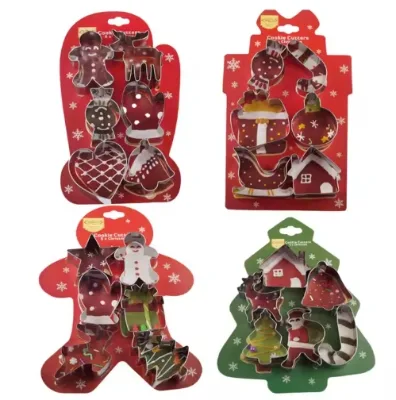
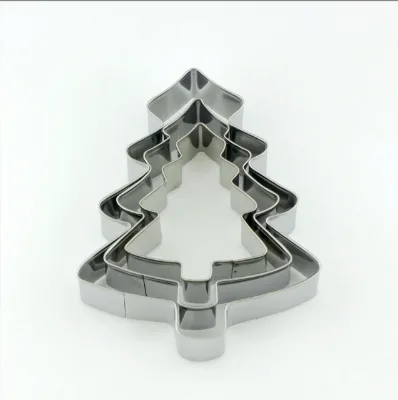
Holiday Cookies Molds Santa Candy Stainless Steel Christmas Cookie Cutter Set
$1.88 - $1.98
MOQ: 500 Sets


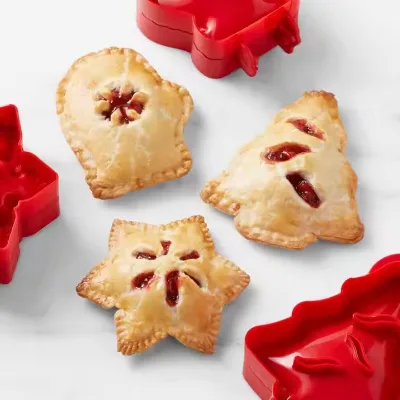
Seasonal Snowflake Snack Maker for Festive Gatherings and Celebrations
$200.00 - $245.00
MOQ: 10 Pieces


Gelgoog Making Waffle Krumkake Cookie Baking Machine Christmas Krumkake Maker
$4000.00 - $8000.00
MOQ: 1 Sets




Easy Operation Automatic Cookie Encrusting Making Machine Cookies Extruder Maker
$50000.00 - $100000.00
MOQ: 1 Sets


Comprehensive Sourcing Guide
Christmas Santa Claus Cookie Maker Sourcing Guide
Sourcing specialized holiday baking tools requires a clear understanding of the distinct product categories available in the current market. Buyers often encounter two primary types of items under this search term: rigid cookie cutters designed for shaping dough and flexible silicone molds intended for casting baked goods or desserts. The former typically utilizes carbon steel for durability and sharp edges, while the latter employs food-grade silicone to allow for easy release of intricate 3D designs. Understanding this fundamental distinction is critical before initiating supplier outreach, as the manufacturing processes, material costs, and quality control metrics differ significantly between stamped metal tools and molded silicone products.
Procurement teams must also navigate the wide variance in product specifications and customization options offered by manufacturers. Many suppliers provide customizable styles, including specific Christmas themes like Santa Claus, snowmen, and bells, often packaged in colorful boxes to enhance retail appeal. However, not all products share the same structural integrity or material composition. For instance, some listings indicate integral stainless steel structures for commercial use, while others focus on household-grade silicone with specific temperature ranges. Buyers need to carefully review the product model numbers and standard dimensions to ensure the selected item aligns with their specific operational needs, whether for small-batch home baking or large-scale industrial production.
Product Scope and Observed Listing Signals
The observed market signals indicate a diverse range of products, with prices spanning from low-cost individual items to high-value industrial equipment. This wide price range suggests that buyers are not limited to simple cookie cutters but may also encounter complex baking pans or specialized kitchen appliances. For example, some listings feature carbon steel cookie tools with specific model numbers like SZ-22-053, packaged in colorful boxes and originating from China. These items are typically designed for decorative purposes, featuring Christmas styles that appeal to seasonal consumers. Buyers should recognize that these lower-priced items are often intended for retail distribution, where packaging and aesthetic appeal play a significant role in the final product value.
Conversely, other listings point towards more robust industrial or commercial solutions, such as stainless steel structures with integral designs and specific cooling mechanisms. These items, often associated with models like RH602 or RH604, may include features like air-cooling systems and electric controls, indicating a scope that extends beyond simple baking tools. The presence of such diverse product types in search results highlights the importance of precise keyword filtering. Buyers must distinguish between simple decorative cutters and complex baking equipment to avoid misalignment between their procurement goals and the supplier’s offerings. This distinction is crucial for ensuring that the sourced products meet the intended application requirements, whether for household use or commercial food service.
Technical Specifications to Verify
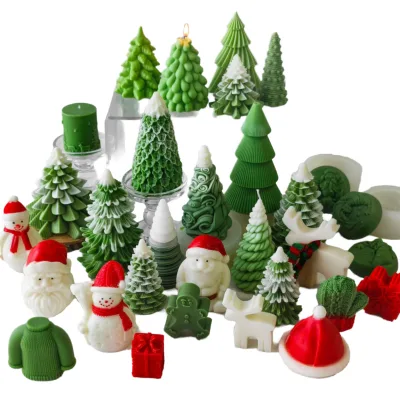
When evaluating silicone-based products, buyers must verify critical material properties and dimensional standards. Listings often specify models like SZ-22-055, which feature 3D raised designs and come in sets of eight items, including shapes like Santa Claus and Christmas trees. It is essential to confirm that the silicone used is food-grade and capable of withstanding the specified temperature ranges, typically from -40 to 230 degrees Celsius. Additionally, the product care instructions, such as hand-wash only, should be clearly communicated to end-users to maintain product integrity. Buyers should also check the standard dimensions, such as 25183 cm, to ensure the molds fit within their existing baking equipment and storage constraints.
For metal-based tools, structural integrity and material composition are paramount. Carbon steel cookie cutters, such as model SZ-22-053, should be inspected for edge sharpness and rust resistance. Buyers must verify the bare metal size and structural type, ensuring that the tools are durable enough for repeated use. In cases where stainless steel is specified, as seen in some commercial applications, the integral type structure should be confirmed to prevent contamination risks. Furthermore, specifications like the four-button touch interface or specific cooling modes in more complex appliances require careful verification to ensure they align with the buyer’s operational capabilities and safety standards.
Compliance and Safety Documentation
Food contact safety is the primary compliance concern for all baking tools and molds. Buyers must ensure that suppliers provide documentation confirming that materials, particularly silicone and stainless steel, meet relevant food safety standards. While specific certification names may vary by region, buyers should request evidence of compliance with international food contact regulations. For silicone products, verifying the absence of harmful additives like BPA is crucial. Similarly, for metal tools, ensuring that coatings or treatments do not leach into food during baking is essential. Buyers should ask for material safety data sheets (MSDS) or equivalent documentation to validate the safety of the products.
Packaging and labeling compliance is another critical area that requires attention. Products often come in colorful boxes or brown boxes, and buyers must ensure that these packages meet local labeling requirements, including ingredient lists, care instructions, and country of origin. For instance, products originating from China or Guangdong must comply with import regulations in the destination country. Buyers should also verify that the packaging materials themselves are safe and do not pose a risk of contamination. Additionally, for products with specific temperature ranges or usage instructions, clear labeling is necessary to prevent misuse and ensure consumer safety.
Cost Drivers and Commercial Terms
Several factors influence the final cost of sourcing Christmas-themed baking tools. Material selection is a primary driver, with food-grade silicone and stainless steel typically commanding higher prices than basic carbon steel. Customization options, such as specific Christmas designs or branded packaging, can also increase costs. Buyers should be aware that intricate 3D raised designs in silicone molds may require more complex manufacturing processes, leading to higher unit prices. Additionally, the number of items in a set, such as an eight-piece set, can affect the overall cost per unit. Buyers should request detailed quotations that break down these cost components to understand the value proposition.
Commercial terms, including minimum order quantities (MOQ) and lead times, significantly impact procurement planning. Listings indicate MOQs ranging from 1 to 1000 pieces, with mass production times typically around 10-15 days. Buyers should negotiate terms that align with their inventory needs and cash flow constraints. Shipping methods, such as sea, air, or express delivery, also affect the total landed cost. Express services like FedEx or DHL offer faster delivery but at a higher price, while sea freight is more cost-effective for larger volumes. Buyers should evaluate these options based on their urgency and budget, ensuring that the chosen shipping method does not compromise the timely arrival of goods for the holiday season.
Supplier Qualification and Quality Control
Evaluating supplier qualifications is essential to ensure consistent product quality and reliable delivery. Buyers should verify the supplier’s manufacturing capabilities, including their experience with silicone molding and metal stamping processes. For products with specific standards like SGS, buyers should request proof of certification and test reports. Additionally, suppliers with a history of exporting to the buyer’s target market may offer better compliance with local regulations. Buyers should also assess the supplier’s quality control processes, including in-line inspections and final product checks, to minimize the risk of defects.
Quality control measures should be clearly defined in the purchase agreement. Buyers should specify acceptance criteria for product dimensions, material properties, and packaging integrity. For silicone molds, checking for uniform thickness and clear 3D designs is crucial. For metal cutters, ensuring sharp edges and smooth finishes is important. Buyers should also consider implementing third-party inspections for large orders to verify that the products meet the agreed-upon specifications. Establishing a clear communication channel with the supplier for addressing any quality issues promptly is also vital for maintaining a successful procurement relationship.
Long-Term Procurement Checks
Building a sustainable supply chain for seasonal products requires ongoing monitoring and relationship management. Buyers should regularly review supplier performance metrics, such as on-time delivery rates and product quality consistency. For Christmas-themed items, timing is critical, and any delays can result in missed sales opportunities. Buyers should maintain open communication with suppliers to stay informed about production schedules and potential disruptions. Additionally, buyers should explore opportunities for product innovation, such as new designs or improved materials, to keep their offerings competitive in the market.
Long-term contracts can provide stability and cost advantages, but buyers must remain flexible to adapt to changing market conditions. Regularly reviewing and updating procurement strategies based on market trends and supplier performance is essential. Buyers should also consider diversifying their supplier base to mitigate risks associated with single-source dependencies. By maintaining a proactive approach to supplier management and quality control, buyers can ensure a reliable supply of high-quality Christmas baking tools, meeting the demands of their customers throughout the holiday season.
FAQs
What materials are used for this Christmas Santa Claus Cookie Maker?
The cookie maker is offered in carbon steel, with silicone cake mold options also available in the same Christmas range. Both materials are food-contact baking tools, and the silicone items tolerate temperatures from -40 to 230 degrees Celsius. Confirm the specific material for each model when requesting a quotation, since the collection includes multiple Christmas-themed shapes and tool types.
Can I order a Christmas Santa Claus Cookie Maker with custom packaging?
Yes, customization is available, and the listed products ship in colorful boxes or color boxes, with some models packed one piece per OPP bag. Customization applies to product attributes such as Pantone C colors and packaging details. Expect a mass production time of roughly 10 to 15 days after approval, depending on order quantity and the selected customization scope.
How should silicone Christmas cookie molds be cleaned and maintained?
The listed silicone items are hand wash only, so avoid dishwashers and abrasive scrubbers that could damage the 3D raised designs. Wash gently in warm soapy water, rinse, and dry fully before storing. Keeping the molds flat during storage helps preserve the Santa Claus, snowman, tree, bell, and gingerbread shapes over repeated holiday seasons.
What shapes and designs come in the Christmas baking set?
The set includes eight items shaped as Santa Claus, snowman, Christmas tree, bells, and gingerbread figures, with 3D raised designs for decorative results. The silicone mold measures 25 by 18 by 3 centimeters and carries model SZ-22-055. The carbon steel cookie tool model SZ-22-053 measures 22 by 24 by 5 centimeters and is packed in a colorful box.
What is the temperature range for these silicone baking products?
The silicone products withstand temperatures from -40 to 230 degrees Celsius, covering freezers, ovens, and most baking applications. This range makes them suitable for frozen holiday treats as well as baked cookies and cakes. Always verify the temperature rating printed on the specific product, because the collection also contains carbon steel cookie tools with different handling requirements.
How many pieces are included and what sizes are available?
One listed set contains eight silicone pieces with Christmas-themed 3D raised designs, measuring 25 by 18 by 3 centimeters. A carbon steel cookie tool model measures 22 by 24 by 5 centimeters. Additional models in the range list different dimensions, so review each product specification and request the model number SZ-22-053 or SZ-22-055 when ordering.
What is the minimum order quantity and production lead time?
The listed MOQ is 100 pieces, and mass production time runs 10 to 15 days depending on the order. Shipping can be arranged by sea, by air, or by express carriers including FedEx, DHL, TNT, and UPS. Confirm the final MOQ and lead time with the supplier, since both may vary by customization level, packaging choice, and seasonal demand peaks.
Which shipping options are available for Christmas cookie products?
Shipments can be sent by sea, by air, or by express services such as FedEx, DHL, TNT, and UPS. Express suits small trial orders or urgent holiday restocking, while sea freight is economical for bulk quantities like 100-piece MOQ runs. Products originate from Guangdong, China, so factor transit time into your seasonal buying schedule.