Source Coffee Body Scrub for Exfoliation, Detox, and Glowing Skin
Compare 30 Coffee Body Scrub options featuring herbal ingredients, OEM services, and certifications like GMPC and ISO22716. Buyers can evaluate models such as Body Scrub 05 and Coffee Scrub with varying weights and packaging for deep cleansing and skin brightening needs.
Key considerations
Products List


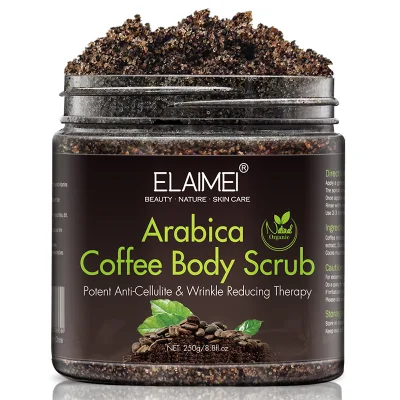
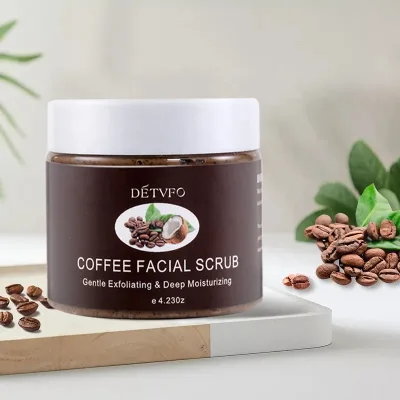


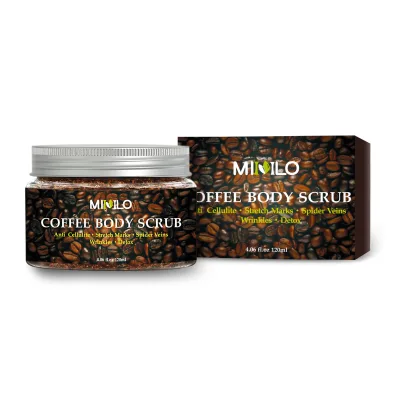
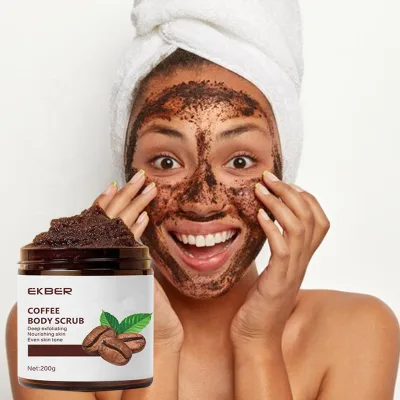


Exfoliating and Multifunctional Nourishing Facial & Skin Green Tea Body Scrub
$2.75 - $3.00
MOQ: 3000 Pieces

Natural Organic Cleansing Scrub Gel Sugar Coffee and Coconut Face Body Scrub
$1.28 - $1.75
MOQ: 3000 Pieces


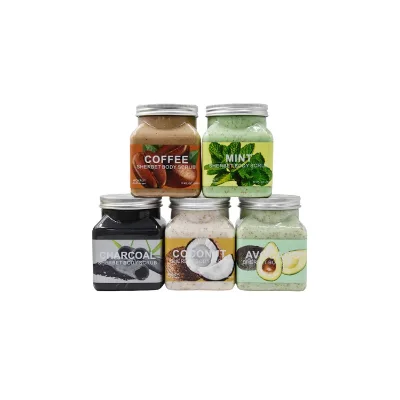
Avocado Shea Butter Dead Sea Salt Men Fruit Coffee Exfoliating Body Scrub
$1.63 - $1.88
MOQ: 3000 Pieces



Comprehensive Sourcing Guide
Strategic Sourcing Guide for Coffee Body Scrubs in the Global B2B Market
Understanding Product Variants and Technical Specifications
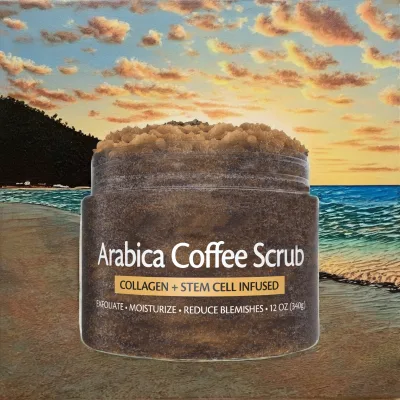
When sourcing coffee body scrubs, buyers must first navigate the diverse landscape of product formulations and physical specifications available in the market. The core keyword "Coffee Body Scrub" encompasses several distinct product models, each tailored to specific consumer needs and packaging requirements. Based on current market data, specific models such as "Body Scrub 01," "Body Scrub 02," "Body Scrub 04," "Body Scrub 05," and "Body Scrub 2" represent standardized offerings. Additionally, specialized variants include "Coffee Scrub," "Coffee Body Scrub," and "Arabica Coffee Scrub," indicating a focus on specific coffee bean origins or processing methods.
A critical technical differentiator is the standard weight and packaging format. Observations indicate that products often adhere to a standard of 283g per unit, packaged in bottles or cartons. However, the market also supports highly customized specifications, such as 250g per unit or fully customizable weights. The packaging materials vary significantly between "Cartons," "Paper Box," and "Bottles," with a standard quantity per carton (Qty/CTN) often listed as 48 units. This variability requires buyers to clearly define their logistical needs before engaging with suppliers.
The physical attributes of the scrub itself are equally important. The product is characterized by a "Black" or "Brown Sugar" color profile, reflecting the natural ingredients used. The fragrance is predominantly "Coffee," derived from natural product extraction processes. The texture and application method are designed for "Massage," facilitating deep cleansing and exfoliation. Buyers should verify that the specific model they select aligns with their target demographic's preference for either a standard 283g bottle or a custom 250g format, as this directly impacts shipping costs and shelf presentation.
Compliance, Certifications, and Regulatory Standards
In the personal care and cosmetics sector, regulatory compliance is not merely a formality but a prerequisite for market access. For coffee body scrubs intended for international trade, particularly in regions with stringent safety standards, specific certifications serve as a baseline for quality assurance. The supply chain for these products frequently references adherence to GMPC (Good Manufacturing Practice for Cosmetics), ISO22716, and Sedex standards. These certifications indicate that the manufacturing facility maintains high hygiene standards, sustainable sourcing practices, and ethical labor conditions.
Furthermore, specific product batches or models may carry additional documentation such as MSDS (Material Safety Data Sheet) and GMP (Good Manufacturing Practice) certifications. These documents are essential for verifying the safety of the ingredients, particularly when the product is marketed as containing "Herbal" or "Herbs" ingredients. The presence of these certifications suggests that the manufacturer has undergone third-party audits or internal validations to ensure the product meets international safety protocols.
Buyers must also consider the intended usage and efficacy claims. Products are often labeled for "External Use" only, with a specified shelf life of 3 years. The absence of reported side effects is a common attribute, but this must be validated against the specific formulation. When evaluating suppliers, procurement teams should request copies of current certificates to ensure they are not expired and cover the specific manufacturing site. The origin of the product, typically noted as "China" or specifically "Guangdong, China," also influences the regulatory framework under which the goods are produced, necessitating a review of local export regulations alongside the target market's import requirements.
Cost Drivers and Pricing Dynamics
The pricing structure for coffee body scrubs is influenced by a complex interplay of customization, volume, and specification. The observed price range in the market spans from $0.60 to $13.00 USD per unit. This wide variance is primarily driven by the level of customization and the specific model selected. Standard models like "Body Scrub 05" or generic "Coffee Scrub" units may fall at the lower end of the spectrum, while private label services with custom packaging and specific ingredient profiles command higher prices.
Minimum Order Quantity (MOQ) is another significant cost driver. The market exhibits an MOQ range from 2 units to 3,000 units. Lower MOQs, such as 2 units, are typically associated with sample orders or very small trial batches, often carrying a higher unit cost. Conversely, bulk orders approaching the 3,000-unit threshold usually benefit from economies of scale, reducing the per-unit price. Buyers must balance their inventory needs against the MOQ to optimize cash flow.
Additional cost factors include the packaging type and the complexity of the customization. While standard cartons with 48 units per box are common, custom paper boxes or specific bottle designs may incur tooling or setup fees. The "OEM ODM Private Label Service" option adds value but also increases the base cost compared to buying generic stock. Furthermore, the choice of shipping method—whether by DHL, UPS, air, or sea—will significantly impact the landed cost. Sea freight is generally more economical for large volumes, while air freight is reserved for urgent, smaller shipments.
Typical Applications and Market Positioning
Coffee body scrubs are versatile products designed for a broad range of applications, primarily focusing on skin care and exfoliation. The primary use cases include "Body" care, with some formulations extending to "Face" and "Body" applications. The product is marketed with specific efficacy claims such as "Acne Treatment," "Detox," "Brightens Skin," and "Improves Dullness." These claims position the product as a functional skincare item rather than a simple cosmetic.
The target audience is diverse, ranging from "Adults" to "All Ages," and the product is generally suitable for "Unisex" use. The application is straightforward, requiring a "Massage" technique to work the scrub into the skin for "Deep Cleansing" and "Face Body Exfoliating Skin Remove." The benefits are highlighted as "Blackhead" and "Dead Skin Removal," alongside "Smoothing Softening" and achieving "Glowing Skin."
The product is designed for "Home" application, suggesting it is intended for personal use rather than professional salon treatments, although the "Service" category of OEM/ODM indicates that brands can repackage these for retail or professional distribution. The "Herbal" and "Natural Product Extraction" aspects appeal to consumers seeking clean beauty solutions. Understanding these application nuances helps buyers position the product correctly in their respective markets, whether targeting health-conscious consumers, skincare enthusiasts, or those looking for natural exfoliation solutions.
Supplier Evaluation and Service Capabilities
Selecting the right supplier requires a thorough evaluation of their service capabilities and operational flexibility. A key differentiator in the Coffee Body Scrub market is the availability of "OEM ODM" and "Private Label Service." This allows buyers to create unique brand identities without needing to develop formulations from scratch. Suppliers offering these services typically provide customization options for the product model, packaging, and labeling.
The lead time for samples is a critical metric for supplier evaluation. The observed sample lead time is 3-5 days, which indicates a responsive supply chain capable of quick turnaround for product testing. This is essential for buyers who need to validate product quality before committing to large orders. Additionally, the supplier's ability to handle different shipping methods, including DHL, UPS, air, and sea, demonstrates logistical competence.
Buyers should also assess the supplier's origin and production capacity. With products originating from "Guangdong, China," buyers can expect access to a mature manufacturing ecosystem. However, it is crucial to verify the specific production capabilities of the supplier, such as their ability to handle the "Qty/CTN" of 48 units efficiently and their experience with various packaging types like "Cartons" and "Paper Box." The presence of certifications like GMPC, ISO22716, and Sedex further validates the supplier's commitment to quality and ethical standards.
Quality Control and Long-Term Procurement Strategy
Implementing a robust quality control (QC) strategy is vital for maintaining brand integrity in the Coffee Body Scrub market. Buyers should establish clear acceptance criteria based on the product's physical attributes, such as color (Black or Brown Sugar), fragrance (Coffee), and volume (250g or 283g). Regular inspections should verify that the "Shelf Life" of 3 years is accurately labeled and that the product remains stable under various storage conditions.
Long-term procurement considerations involve building a sustainable relationship with suppliers who can consistently meet quality standards. This includes verifying that the "Main Ingredient" remains "Herbal" and that the "Natural Product Extraction" process is maintained across production batches. Buyers should also monitor the "Side Effect" profile, ensuring that the product remains safe for "External Use" and does not cause adverse reactions.
To mitigate risks, buyers should diversify their supplier base and maintain open communication regarding production schedules and quality metrics. The ability to customize the product, such as adjusting the "prod_standard" or "prod_packing," offers flexibility to adapt to market trends. By focusing on suppliers with proven certifications and a track record of delivering high-quality coffee body scrubs, buyers can ensure a steady supply of products that meet consumer expectations and regulatory requirements.
Summary of Key Product Attributes
The following table summarizes the critical attributes observed in the Coffee Body Scrub market to assist buyers in their decision-making process.
| Attribute Category | Specific Details |
|---|---|
| Product Models | Body Scrub 01, 02, 04, 05, 2; Coffee Scrub; Arabica Coffee Scrub |
| Standard Weight | 283g (Standard); 250g (Customized) |
| Packaging | Cartons, Paper Box, Bottles (Qty/CTN: 48) |
| Ingredients | Herbal, Herbs, Natural Product Extraction |
| Certifications | GMPC, ISO22716, Sedex, MSDS, GMP |
| Origin | China (Guangdong) |
| Lead Time | Sample: 3-5 days |
| MOQ Range | 2 - 3,000 units |
| Price Range | $0.60 - $13.00 USD |
| Shelf Life | 3 Years |
| Usage | External Use, Home Application, Massage |
| Target Audience | Adults, All Ages, Unisex |
| Key Benefits | Acne Treatment, Detox, Brightens Skin, Smoothing, Softening |
FAQs
What certifications do Coffee Body Scrub manufacturers hold?
Manufacturers typically hold GMPC, ISO22716, and Sedex certifications to ensure quality and ethical standards. Some specific product batches may also include MSDS and GMP documentation to verify ingredient safety and manufacturing hygiene for international trade compliance.
How much does a Coffee Body Scrub cost per unit?
The unit price ranges from 0.60 to 13.00 USD depending on customization and order volume. Lower prices apply to standard models like Body Scrub 05, while higher costs reflect private label services or custom packaging specifications such as 250g bottles.
Can I get a sample before placing a bulk order?
Yes, samples are available with a lead time of 3 to 5 days. This quick turnaround allows buyers to validate product quality and specifications before committing to larger orders that may have Minimum Order Quantities starting from 2 units up to 3000.
Which packaging formats are available for Coffee Body Scrub?
Products come in various formats including cartons, paper boxes, and bottles. Standard cartons often contain 48 units per box, while custom options allow for specific bottle sizes like 283g or 250g to meet distinct logistical and branding requirements.
What are the main ingredients used in these scrubs?
The primary ingredients are herbal and derived from natural product extraction processes. Specific variants feature coffee scents and brown sugar textures, designed for external use to provide deep cleansing and exfoliation benefits without reported side effects.
Where are these Coffee Body Scrub products manufactured?
Products originate from China, with specific production hubs located in Guangdong. This region supports a mature manufacturing ecosystem capable of handling various certifications and offering OEM or ODM private label services for global distribution.
What is the shelf life of the Coffee Body Scrub?
The product maintains a shelf life of 3 years when stored correctly. This duration applies to formulations designed for home application, ensuring stability for the herbal ingredients and natural extraction processes used in the manufacturing.