Source Cosmetic Grade Nutmeg Essential Oil for Skincare, Food, and Mood
Find 30 listings for Cosmetic Grade Nutmeg Essential Oil sourced from seeds via distillation. Compare suppliers offering food, pharma, and chemical grades in various drum packings to meet your specific formulation needs; compare the available evidence and request quotations based on your requirements.
Key considerations
Products List






Cosmetic Grade Superior Quality White Oil White Mineral Oil for Wholesale
$600.00 - $1300.00
MOQ: 20 Tons


Comprehensive Sourcing Guide
Cosmetic Grade Nutmeg Essential Oil Sourcing Guide
Procurement of Cosmetic Grade Nutmeg Essential Oil requires careful verification of the extract source and processing method to ensure authenticity. The supplied data confirms that the raw material originates from seeds and is processed via distillation, yielding a volatile oil that ranges from colorless to light yellow. Buyers must distinguish between general natural flavor applications and specific cosmetic uses, as the same distillation process may produce oils intended for different market segments.
When evaluating listings, purchasers should note that the product is often categorized under natural flavors yet possesses attributes suitable for daily chemical materials. The observed supply chain indicates that customization is available, allowing for tailored specifications regarding packaging and grade separation. It is critical to verify that the specific batch intended for cosmetic use meets the purity standards of 100% pure nature, as the general listing may include variations in grade such as food or pharmaceutical standards.
Product Scope and Observed Listing Signals
The product scope for nutmeg essential oil in this dataset spans multiple industrial applications, including general usage, cosmetic raw materials, and hair care chemicals. Listings indicate that the oil is derived from plant resources and is often marketed with features targeting skin and hair health. Buyers must recognize that while the core ingredient is nutmeg, the observed data also includes references to other essential oils like ginger and peppermint, necessitating a strict filter to isolate the specific nutmeg product required for formulation.
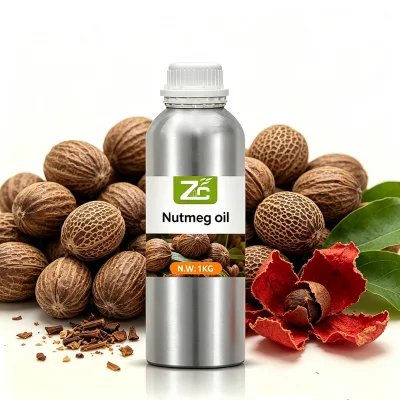
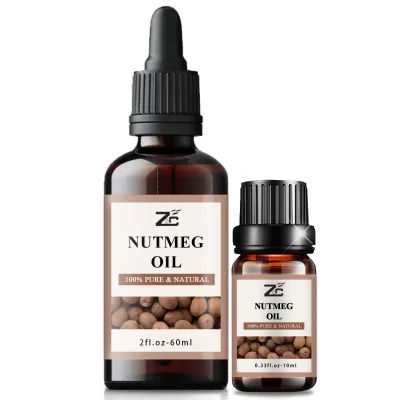
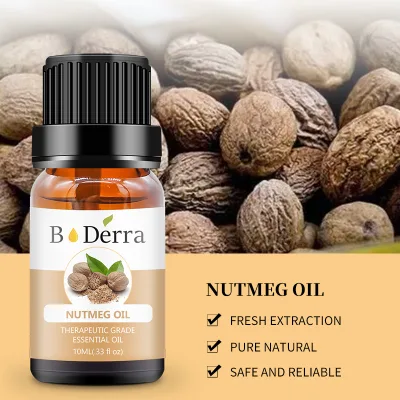
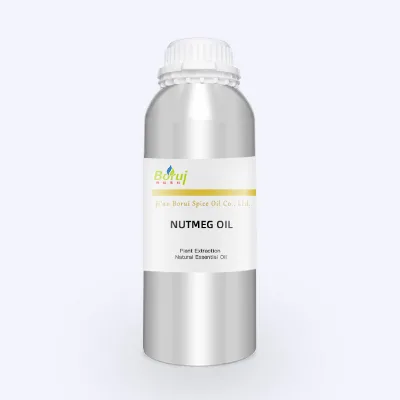
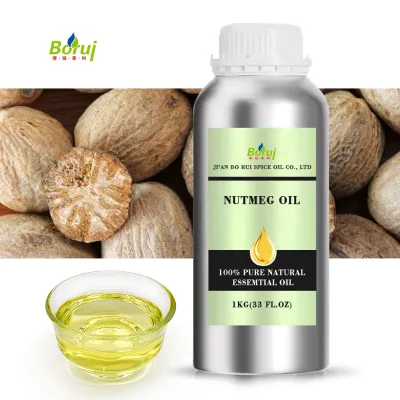
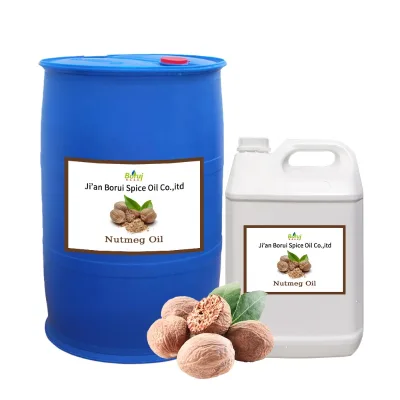
Observed listing signals reveal significant variability in packaging and model numbers, ranging from aluminum bottles to galvanized steel drums in capacities of 1kg to 200kg. The presence of multiple model identifiers such as SJY, Bhy, and FSGY suggests that different suppliers or production lines may use distinct internal coding for similar products. Procurement teams should prioritize listings that explicitly state the ingredient as nutmeg essential oil and confirm the CAS number 8008-45-5 to avoid confusion with other volatile oils or blended products found in the same search results.
Technical Specifications to Verify
Technical verification begins with the physical state and appearance of the oil, which should be a colorless to light yellow volatile fluid. The standard specification for the product indicates a specific odor profile described as herbal, which is characteristic of nutmeg but requires sensory confirmation against the buyer's quality benchmarks. It is essential to confirm that the observed appearance matches the expected light yellow to yellow volatile oil standard, as deviations may indicate oxidation or adulteration during storage or transport.
Buyers must also scrutinize the grade separation and purity claims, as the data lists Food Grade, Pharma Grade, and Chemical Grade options alongside a specific Pure Essential Oil Grade A designation. The storage requirements are critical, mandating low-temperature conditions, sealed environments, and protection from light to maintain stability. Verification of the extract source as seeds and the method as distillation ensures the product aligns with the natural flavor and cosmetic grade expectations, preventing the receipt of synthetic or improperly processed alternatives.
Compliance and Safety Documentation
Compliance documentation is a non-negotiable aspect of sourcing, with the observed data listing certifications such as GMP, MSDS, SGS, COA, and FDA. These documents provide the necessary assurance that the manufacturing facility adheres to Good Manufacturing Practices and that the product has undergone third-party safety testing. Procurement teams must request the most recent versions of these certificates to verify that the specific batch of nutmeg essential oil meets current regulatory standards for cosmetic ingredients in the target market.
Safety data sheets (MSDS) are particularly vital for handling and transportation, as the product is classified as a volatile oil with specific storage needs. The presence of an MSDS confirms that the supplier has assessed the hazards associated with the oil, including its flammability and potential skin sensitization. Buyers should cross-reference the certification details with the product model and origin, ensuring that the Jiangxi, China origin aligns with the declared certifications and that the transport method is suitable for ordinary goods truck logistics without compromising safety.
Cost Drivers and Commercial Terms
Cost drivers for nutmeg essential oil are influenced by the grade separation, packaging format, and the extent of customization requested. The observed MOQ range spans from 1kg to 5000 units, indicating flexibility for both small-scale cosmetic startups and large industrial buyers. Pricing is likely affected by the choice between bulk packaging in galvanized steel drums and smaller aluminum bottles, with larger volumes generally offering better unit economics but requiring higher initial capital outlay and storage capacity.
Commercial terms must be clearly defined regarding delivery times and supply types, as the data indicates a delivery time of 3 days for certain listings and an OEM/ODM supply type. Buyers should negotiate terms that account for the lead time required for customization and the specific packaging requirements, such as the 1kg, 5kg, 10kg, 25kg, or 180kg drum options. Understanding the relationship between the MOQ and the unit price is essential for budgeting, as the minimum order quantity directly impacts the total cost of goods sold for cosmetic formulations.
Supplier Qualification and Quality Control
Supplier qualification relies heavily on the verification of their supply type and the consistency of their quality control processes. The data highlights an OEM/ODM capability, suggesting that suppliers can adapt their production to specific client needs, but this requires rigorous vetting of their manufacturing capabilities. Buyers should assess the supplier's ability to maintain the specified grade separation and ensure that the distillation method remains consistent across batches to guarantee product uniformity.
Quality control measures must include regular testing against the stated standards, such as the colorless to light yellow volatile oil specification and the 100% pure nature claim. The presence of certifications like GMP and SGS indicates a structured approach to quality, but buyers should request sample testing results to validate these claims independently. It is also important to verify the supplier's logistics capabilities, ensuring they can handle the transport of volatile oils using ordinary goods trucks while maintaining the required low-temperature and sealed storage conditions throughout the supply chain.
Long-Term Procurement Checks
Long-term procurement success depends on establishing a reliable supply chain that can consistently meet the technical and compliance requirements of Cosmetic Grade Nutmeg Essential Oil. Buyers should implement a schedule for periodic re-verification of certifications and product specifications to ensure that the supplier maintains their quality standards over time. This proactive approach helps mitigate the risk of supply disruptions or quality degradation that could impact the final cosmetic product's safety and efficacy.
Continuous monitoring of market trends and supplier performance is essential for maintaining a competitive edge in the cosmetic industry. Buyers should track changes in the observed price range and MOQ values to anticipate cost fluctuations and adjust their procurement strategies accordingly. By maintaining open communication with suppliers regarding customization needs and storage requirements, buyers can foster a partnership that ensures the consistent availability of high-quality nutmeg essential oil for their ongoing production needs.
FAQs
What is the shelf life of Cosmetic Grade Nutmeg Essential Oil?
The shelf life is 24 months when stored correctly. Keep the oil in a sealed container at low temperature and away from light to maintain its volatile properties. This ensures the natural flavor and cosmetic grade quality remain stable for daily chemical material applications.
Can I customize the packaging for bulk orders?
Yes, customization is available for bulk orders. Options include 1kg, 5kg, 10kg, 25kg, or larger drums like 180kg or 200kg in galvanized steel. This flexibility supports various supply types, including OEM and ODM requirements for different industrial and cosmetic needs.
Which certifications are provided for this essential oil?
Common certifications include GMP, MSDS, SGS, COA, and FDA. These documents verify the product meets food grade, pharma grade, and chemical grade standards. Buyers should request specific certificates to ensure compliance with international safety and quality regulations for cosmetic raw materials.
What is the typical delivery time for orders?
The delivery time is typically 3 days for standard orders. This rapid dispatch supports urgent procurement needs for cosmetic and food applications. Buyers should confirm specific lead times with suppliers, as production schedules and shipping logistics may occasionally affect the exact arrival date.
How is the purity of the nutmeg oil verified?
The oil is verified as 100% pure nature with a CAS number of 8008-45-5. It appears as a colorless to light yellow volatile oil. High-grade separation ensures it meets strict cosmetic and food standards, providing a reliable herbal smell for mood and skin applications.
What are the available packaging sizes for this product?
Packaging sizes range from small bottles to large industrial drums. Options include aluminum bottles for retail and galvanized steel drums for bulk. Standard weights are 1kg, 5kg, 10kg, 25kg, and up to 200kg, accommodating diverse storage and distribution requirements for global buyers.