Source Coin Operated Kids Ride-on Motorbike for Amusement Parks, Shops, and Outdoor Rides
Compare 30 Coin Operated Kids Ride-on Motorbike listings from Guangzhou suppliers. Buyers can evaluate specifications like battery type, motor power, and dimensions for use in amusement parks, shops, and outdoor venues.
Key considerations
Products List


Hansel Amusement Ride on Motorbike for Kids Battery Motorbike Electric
$460.00 - $550.00
MOQ: 3 Pieces


Kids Playground Little Motor Type Coin Operated Kiddie Rides Arcade Machine
$450.00 - $500.00
MOQ: 5 Pieces


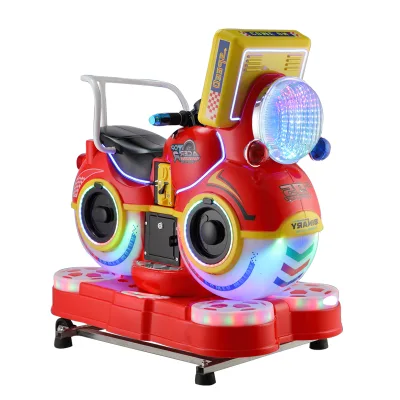


Comprehensive Sourcing Guide
Sourcing Guide for Coin-Operated Kids Ride-On Motorbikes
Understanding the Product Category and Core Specifications
The coin-operated kids ride-on motorbike represents a specific segment of amusement equipment designed for commercial deployment in high-traffic environments. These units are engineered to provide a controlled, engaging experience for children while generating revenue through coin mechanisms or remote control systems. Based on current market observations, the core product attributes center on durability, safety, and ease of operation. The primary material composition for these units typically involves high-grade Polypropylene (PP) or Acrylonitrile Butadiene Styrene (ABS), ensuring the exterior shell can withstand the rigors of public use without cracking or fading.
Technical specifications vary significantly across different models, yet several consistent patterns emerge in the supply chain. A standard motor configuration for these rides often utilizes a 24V-250W motor, providing sufficient torque for smooth acceleration while maintaining energy efficiency. Power is generally supplied by lead-acid batteries, commonly rated at 12V-20A. Some advanced configurations may utilize multiple battery units, such as two or four 12V-20A batteries, to extend operational time. The observed battery life for these units typically ranges between 10 to 12 hours of continuous use, a critical metric for operators managing daily uptime.
Speed control is another defining technical feature. Most units offer adjustable speed settings, categorized as "High" or "Low," allowing operators to tailor the ride intensity to the age group of the target audience. The starting method is equally versatile, with many models supporting both remote control operation for parental supervision and coin-operated mechanisms for unattended revenue generation. The physical dimensions of a single unit are substantial, with typical package sizes ranging from 138 cm to 148 cm in length, 48 cm to 60 cm in width, and 70 cm to 85 cm in height. The gross weight of a single item generally falls between 50 kg and 65 kg, necessitating careful logistics planning for shipping and on-site installation.
Compliance and Certification Verification
In the realm of commercial amusement rides, compliance is not merely a formality but a fundamental requirement for liability management and operational safety. When sourcing coin-operated motorbikes, buyers must rigorously verify that the equipment meets relevant safety standards. The most frequently observed certification in the current market for these products is the CE mark. This certification indicates that the product conforms to health, safety, and environmental protection standards for products sold within the European Economic Area. However, the presence of a CE label on a product listing does not automatically guarantee that every unit in a shipment meets the standard; it must be verified against the specific batch documentation provided by the manufacturer.
Beyond the CE mark, buyers should be aware of other potential standards that may apply depending on the destination market. While some background data suggests the existence of standards like UL 2849 or EN 15194, these are not universally confirmed for every listed model in the current supply pool. Therefore, procurement teams should not assume compliance with these specific standards without explicit, verifiable documentation from the supplier. The absence of a specific standard in the provided product data should prompt a direct inquiry to the manufacturer regarding their testing protocols.
Buyers must also scrutinize the "Allowable Passenger" and "Max Capacity" specifications. Data indicates that some models list a maximum capacity ranging from 100 kg to 500 kg, while others specify a bearing weight of 160 kg. These figures are critical for determining the appropriate age range and ensuring the ride does not exceed its structural limits. The "Suitable for" attribute often lists "Amusement Park" or "Shop," which implies different load-bearing and safety requirements. An amusement park setting typically demands higher durability and stricter safety checks compared to a retail shop environment. Consequently, the certification verification process must align with the intended application site's local regulations.
Cost Drivers and Pricing Structure Analysis
The pricing of coin-operated kids ride-on motorbikes is influenced by a complex interplay of factors, including material quality, battery configuration, and the complexity of the control system. The observed price range in the market spans from approximately 30 USD to 2000 USD. This wide variance is not indicative of a single product type but rather reflects differences in specifications, customization options, and order volumes.
Several key drivers contribute to the final cost. First, the battery system is a significant cost component. Models equipped with a single 12V-20A battery will generally be priced lower than those utilizing dual or quad battery setups, which offer extended runtime and higher power output. Second, the material composition plays a role; units constructed with high-impact ABS plastic often command a premium over those using standard PP due to superior durability and aesthetic finish. Third, the control mechanism adds to the cost. A simple coin-operated unit is typically less expensive than a model featuring a sophisticated remote control system or advanced safety interlocks.
The Minimum Order Quantity (MOQ) is another critical factor in the cost structure. The observed MOQ range for these products is between 1 and 100 units. Buyers purchasing a single unit for a small shop may face a higher per-unit cost, whereas bulk orders of 100 units can significantly reduce the average price. Additionally, customization options, such as specific color schemes or branding, can influence the final price. While customization is available, it often requires a higher MOQ or a setup fee, which should be factored into the total cost of ownership.
| Cost Factor | Low-Cost Configuration | High-Cost Configuration | Impact on Price |
|---|---|---|---|
| Battery System | 1x 12V-20A Lead Acid | 2x or 4x 12V-20A Lead Acid | Moderate to High |
| Material | Standard PP | High-Impact ABS | Moderate |
| Control Method | Coin Operated Only | Remote Control + Coin | Moderate |
| MOQ | Single Item (1 Unit) | Bulk Order (100 Units) | High |
| Customization | Standard Colors (Red, Blue, etc.) | Custom Branding/Colors | Variable |
Typical Applications and Operational Environments
The versatility of coin-operated motorbikes allows them to be deployed in a wide array of commercial settings. The primary application areas identified in the market include amusement parks, shopping malls, retail shops, and family entertainment centers. The "Suitable for" attribute explicitly mentions "Shop" and "Amusement Park," highlighting the adaptability of these units to both small-scale and large-scale environments.
In an amusement park setting, these rides serve as a high-volume revenue generator. The robust construction, with gross weights up to 65 kg and bearing capacities of 160 kg, ensures they can withstand heavy usage by children of various ages. The "High/Low Speed" feature is particularly valuable here, allowing operators to adjust the ride intensity based on the time of day or the specific demographic present. For instance, slower speeds can be set for younger children during peak hours, while faster speeds can be enabled for older kids during off-peak times.
In retail environments such as shopping malls or standalone shops, the focus shifts to customer engagement and dwell time. These units are often placed near entrances or in waiting areas to entertain children while parents shop. The "Remote Control" start method is advantageous in these settings, as it allows store staff to quickly activate or deactivate the ride without needing a coin, facilitating better crowd control. The compact packaging dimensions (approximately 140 cm x 50 cm x 70 cm) make these units relatively easy to transport and install in confined retail spaces.
The target age group for these rides is generally specified as 3 to 18 years, covering a broad spectrum of childhood development. This wide age range necessitates careful consideration of the speed settings and safety features. Operators must ensure that the ride is not too fast for younger children, which could lead to accidents or liability issues. The "Condition: New" status of the products ensures that buyers receive equipment that is free from wear and tear, which is essential for maintaining a positive brand image in any commercial setting.
Supplier Evaluation and Sourcing Strategy
When evaluating potential suppliers for coin-operated motorbikes, buyers must adopt a rigorous due diligence process. The supply chain for these products is global, with a significant concentration of manufacturers in Guangzhou, China, and surrounding regions in Guangdong. While the specific origin is a key data point, buyers should not rely solely on the location but rather on the supplier's track record and transparency.
A critical aspect of supplier evaluation is the verification of product attributes. Buyers should request detailed documentation that confirms the specifications listed in the product data, such as the motor power (24V-250W), battery capacity, and material composition. Discrepancies between the advertised specifications and the actual product can lead to operational failures and financial losses. Furthermore, the "Customization" attribute indicates that suppliers are willing to tailor products to specific needs, but buyers must clarify the scope of this customization, including lead times and additional costs.
The "Selling Units" attribute, which often lists "Single Item," suggests that suppliers are flexible with order sizes. However, buyers should be cautious of suppliers who offer extremely low prices for single units, as this may indicate a lack of quality control or the use of substandard components. Conversely, suppliers who require high MOQs without offering volume discounts may not be the best fit for small-scale operators.
Buyers should also assess the supplier's packaging and shipping capabilities. The "prod_packing" attribute lists options such as "Caton" (likely a typo for Carton) or "Wood," which impacts the safety of the product during transit. Wooden packaging is generally more robust for international shipping, while carton packaging may be sufficient for domestic or regional deliveries. The "Single Item Single Package Size" of 145x60x80 cm is a critical dimension for logistics planning, as it determines the number of units that can be shipped per container and the associated freight costs.
Quality Control and Long-Term Procurement Considerations
Ensuring the long-term reliability of coin-operated motorbikes requires a proactive approach to quality control. Buyers should implement a rigorous inspection protocol before accepting delivery. This includes verifying the structural integrity of the PP or ABS shell, checking the electrical connections for the motor and battery, and testing the coin mechanism or remote control functionality. The "Condition: New" status should be confirmed upon arrival, with no signs of manufacturing defects or damage incurred during shipping.
Maintenance is another crucial consideration for long-term procurement. The lead-acid batteries used in these units have a finite lifespan and require regular monitoring. Buyers should establish a maintenance schedule that includes checking battery voltage, cleaning terminals, and replacing batteries as needed to ensure consistent performance. The "Using Time" of 10-12 hours suggests that batteries may need recharging or replacement after a full day of operation, depending on the usage intensity.
The "Type: Kiddie Rides" classification implies that these units are subject to wear and tear from frequent use. Buyers should consider the availability of spare parts, such as replacement motors, batteries, and control boards, when selecting a supplier. A supplier with a robust after-sales support network can significantly reduce downtime and extend the operational life of the equipment.
Finally, buyers should consider the scalability of their procurement strategy. As the business grows, the ability to source additional units with consistent specifications and quality is essential. Establishing a long-term relationship with a reliable supplier can ensure a steady supply of high-quality motorbikes, reducing the risk of quality fluctuations and supply chain disruptions. By focusing on these long-term considerations, buyers can build a sustainable and profitable amusement ride operation.
FAQs
What certifications do coin operated kids ride on motorbikes have?
Most units carry the CE certification for safety compliance. Buyers should verify batch-specific documentation to ensure the product meets local regulatory standards before deployment.
How is the battery system configured for these rides?
Models typically use lead acid batteries rated at 12V-20A, with some units featuring dual or quad setups. This configuration supports an operating time of 10 to 12 hours for continuous commercial use.
Which materials are used to construct the ride-on shells?
The shells are primarily made from high-impact PP or ABS plastic to ensure durability. These materials withstand public use while maintaining structural integrity and aesthetic finish over time.
Can operators adjust the speed settings for different age groups?
Yes, units offer High and Low speed options to tailor the ride intensity. This feature allows operators to safely accommodate children ranging from 3 to 18 years old in various settings.
What are the typical package dimensions and weight for shipping?
Single items generally measure between 138 and 148 cm in length with a gross weight of 50 to 65 kg. Packaging options include cartons or wood crates depending on the supplier and shipping requirements.
How does the minimum order quantity affect the unit price?
MOQs range from 1 to 100 units, influencing the final cost per item. Bulk orders often reduce the average price, while single unit purchases may carry a higher per-unit rate.
Where are these motorbikes typically manufactured and shipped from?
Production originates mainly from Guangzhou and Guangdong, China. Buyers should confirm the specific origin and lead times with the supplier to plan logistics effectively.