Source Command Center Operating Console for Control Rooms
Find and compare 27 Command Center Operating Console options from verified manufacturers. Evaluate features like adjustable storage, shock resistance, and customizable dimensions to select the ideal solution for your facility.
Key considerations
Products List


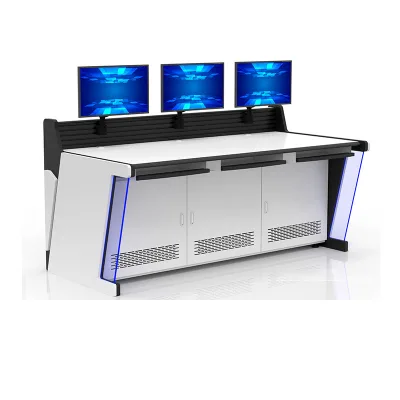
Factory Intelligent Control Room Command Center Consoles
$460.00 - $650.00
MOQ: 1 Meters
Beijing Jingcheng Chuangxin Intelligent Technology Co., Ltd.

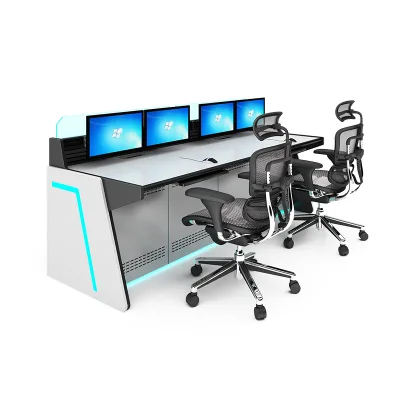
New Style Control Center Control Console
$460.00 - $650.00
MOQ: 1 Meters
Beijing Jingcheng Chuangxin Intelligent Technology Co., Ltd.


Security Command Center Control Room Console
$460.00 - $650.00
MOQ: 1 Meters
Beijing Jingcheng Chuangxin Intelligent Technology Co., Ltd.

Operational Command Center Control Room Consoles
$460.00 - $650.00
MOQ: 1 Meters
Beijing Jingcheng Chuangxin Intelligent Technology Co., Ltd.



Comprehensive Sourcing Guide
Command Center Operating Console Sourcing Guide
Procuring command center operating consoles requires a disciplined approach that balances ergonomic design, structural integrity, and technical compatibility. These specialized workstations serve as the physical interface for critical operations in control rooms, security hubs, and industrial monitoring facilities. Buyers must prioritize consoles that support long-duration human-machine interaction while accommodating complex wiring and equipment layouts. The selection process involves evaluating material composition, customization capabilities, and compliance with industry-specific safety standards to ensure operational continuity and personnel well-being.
This guide synthesizes observed market data and trusted category knowledge to help procurement professionals navigate the complexities of sourcing these high-value assets. By focusing on verifiable specifications, commercial terms, and supplier qualifications, buyers can mitigate risks associated with non-compliant or poorly engineered furniture. The following sections provide a structured framework for evaluating potential suppliers, understanding cost drivers, and establishing quality control measures that align with the rigorous demands of command center environments.
Product Scope and Observed Listing Signals
The current market for command center operating consoles exhibits a diverse range of configurations, primarily driven by the need for customizable solutions. Observed listings indicate a price range from approximately $157.76 to $2,500 USD, reflecting variations in material quality, size, and feature sets. Most suppliers offer a minimum order quantity (MOQ) of one unit, suggesting flexibility for both pilot deployments and large-scale installations. The products are predominantly categorized as commercial furniture, with specific sub-categories including control room consoles and workbench tables, indicating a broad applicability across different operational scales.
Key product attributes observed in the market include modern styling, panel wood styles, and a focus on durability and eco-friendliness. Common features highlighted by suppliers include storage capabilities, adjustability, and shock resistance, which are critical for maintaining equipment stability and operator comfort. Materials frequently cited include metal legs, manmade board desktops, and high-quality power-coated steel racks, with some premium options utilizing aluminum alloy main frames. Colors typically range from standard black and white to specialized finishes with blue LED strips, allowing for aesthetic integration into various control room designs.
Technical Specifications to Verify
Verifying technical specifications is paramount to ensuring the console meets the physical and functional requirements of the command center. Buyers should closely examine dimensions, such as the observed standard size of 1280915750 mm or customizable options, to ensure proper fit within the designated workspace. Rack width specifications, such as 19"*2, are crucial for accommodating standard IT and communication equipment. Additionally, side panel thickness, observed at 50mm in some listings, indicates structural robustness and noise dampening capabilities, which are essential for maintaining a focused operational environment.
Material composition and construction quality directly impact the longevity and performance of the console. Suppliers often specify leg materials as metal or customizable options, while desktop materials may include manmade board or aluminum alloy frames. It is essential to verify the type of coating on steel components, such as power-coated finishes, to ensure resistance to corrosion and wear. Furthermore, buyers should confirm the presence of lockable doors and integrated storage solutions, which are vital for securing sensitive equipment and maintaining a clutter-free workspace. The inclusion of LED strips and specific color options should also be validated against the facility’s lighting and branding requirements.
Compliance and Safety Documentation
Compliance with international standards and safety certifications is a non-negotiable aspect of sourcing command center consoles. Buyers must request and verify certificates such as ISO, CE, and ISO9001, which indicate adherence to quality management and product safety regulations. These certifications provide assurance that the manufacturing processes and final products meet recognized benchmarks for reliability and safety. Additionally, specific installation standards, such as vertical installation requirements, should be confirmed to ensure proper setup and structural integrity.
Safety features, including shock resistance and ergonomic design, are critical for protecting both personnel and equipment. Buyers should inquire about the testing protocols used to validate shock resistance and other durability claims. While specific test results may not always be publicly listed, suppliers should be able to provide documentation or third-party verification of these performance attributes. Furthermore, compliance with environmental standards, such as eco-friendly material usage, should be verified to align with corporate sustainability goals and regulatory requirements.
Cost Drivers and Commercial Terms
Understanding the cost drivers and commercial terms is essential for effective budgeting and negotiation. The observed price range of $157.76 to $2,500 USD is influenced by factors such as material quality, customization level, and order volume. Buyers should consider the total cost of ownership, including shipping, installation, and potential maintenance costs, rather than focusing solely on the unit price. Customization options, such as specific dimensions, colors, or integrated features, may incur additional charges, which should be clearly outlined in the quotation.
Commercial terms, including delivery times and warranty periods, vary among suppliers. Observed delivery times range from 15 days for samples to 30 days for mass production, with some suppliers offering a 25-day shipping term. Buyers should negotiate clear delivery schedules and penalties for delays to mitigate project risks. Warranty periods, typically ranging from one to three years, provide protection against manufacturing defects. It is advisable to clarify the scope of the warranty, including coverage for parts and labor, and to establish a clear process for claiming warranty services.
Supplier Qualification and Quality Control
Supplier qualification is a critical step in ensuring the reliability and consistency of the procured consoles. Buyers should assess suppliers based on their production capacity, quality control processes, and track record in the industry. Verification of certifications such as ISO9001 and CE provides a baseline for evaluating the supplier’s commitment to quality and safety. Additionally, buyers should request references or case studies from previous clients to gauge the supplier’s performance and customer satisfaction levels.
Quality control measures should be established throughout the procurement process, from initial sampling to final delivery. Buyers should conduct pre-shipment inspections to verify that the products meet the agreed-upon specifications and quality standards. This includes checking for material defects, structural integrity, and functional performance of features such as lockable doors and storage compartments. Establishing a clear communication channel with the supplier for addressing any issues during production and delivery is essential for maintaining quality and resolving disputes efficiently.
Long-Term Procurement Checks
Long-term procurement checks focus on ensuring the sustained performance and support of the command center consoles. Buyers should establish a maintenance plan that includes regular inspections and servicing to identify and address potential issues before they impact operations. This plan should cover both the physical structure of the console and the integrated equipment, ensuring optimal performance and longevity. Suppliers should be evaluated on their ability to provide ongoing support, including spare parts availability and technical assistance.
Furthermore, buyers should monitor market trends and technological advancements to ensure that the procured consoles remain relevant and effective. This includes staying informed about new materials, ergonomic designs, and integration capabilities that may enhance operational efficiency. Regular reviews of supplier performance and product quality should be conducted to identify areas for improvement and to maintain a high standard of procurement practices. By adopting a proactive approach to long-term procurement, buyers can maximize the value and reliability of their command center operating consoles.
FAQs
What materials are used for the console legs and desktop?
The console legs are made of metal or customizable options, while the desktop uses manmade board. Some models feature high-quality power-coated steel racks and aluminum alloy main frames for enhanced durability and stability in commercial settings.
Can the product be customized for specific needs?
Yes, customization is available for leg materials, wood styles, colors, and dimensions. The product standard is also customizable, allowing buyers to tailor specifications like size and features to fit unique control room or workspace requirements effectively.
What certifications do these consoles hold?
The products hold ISO, CE, and ISO9001 certifications. These standards ensure quality and safety compliance, with some models also meeting specific installation standards like vertical installation requirements for secure and reliable operation in professional environments.
How long is the delivery time for samples and mass production?
Delivery takes 15 days for samples and 30 days for mass production. Some listings indicate a general shipping term of 25 days, ensuring timely availability for urgent commercial furniture projects requiring quick turnaround times for setup.
What is the warranty period for the command center consoles?
Warranty periods vary between 1 year and 3 years depending on the specific model. This coverage protects against defects, ensuring long-term reliability for commercial furniture applications such as control rooms and workbenches used in demanding operational settings.
Are the consoles available in stock immediately?
Yes, the product status is listed as in stock for immediate availability. This allows buyers to proceed with procurement without waiting for manufacturing, facilitating faster deployment of control room solutions and commercial furniture setups.
What packaging methods are used for shipping?
Packaging includes wooden cases, wooden boxes, and cartons depending on the model. These robust methods ensure shock resistance during transit, protecting the consoles from damage while maintaining their structural integrity and finish upon arrival at the destination.