Source Commercial 1800ML Magic Blender for smoothies, shakes, and soups
Compare 30 Commercial 1800ML Magic Blender options from verified Chinese manufacturers. Buyers can evaluate stainless steel and plastic housing models with varying power ratings and control types for professional food processing needs.
Key considerations
Products List


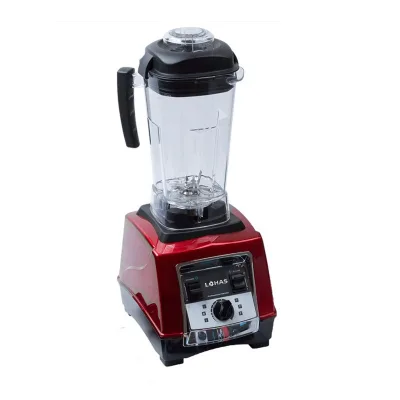


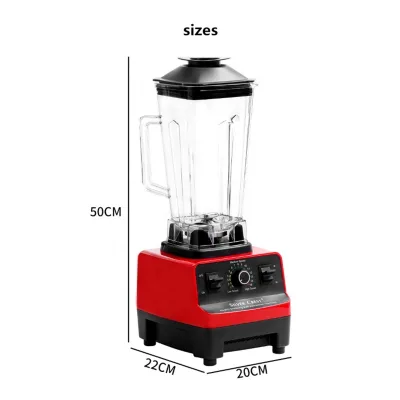
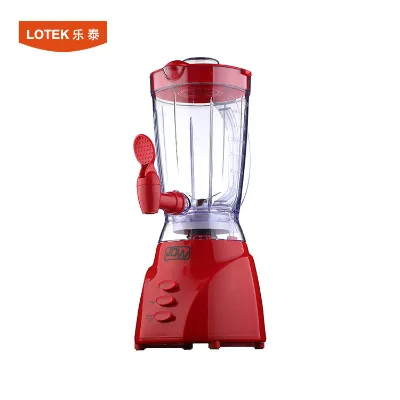
Comprehensive Sourcing Guide
Strategic Sourcing Guide for Commercial 1800ml Magic Blenders
Understanding Technical Specifications and Performance Variables
When sourcing a Commercial 1800ML Magic Blender, the primary objective is to align the machine's physical and operational capabilities with high-volume usage requirements. The term "magic blender" in a commercial context often refers to high-performance units capable of handling tough ingredients, yet the specific technical parameters vary significantly between manufacturers. Buyers must first verify the actual capacity, as "1800ml" is a target specification that may differ from the rated capacity listed in product datasheets. In the current market data, observed capacities range from 1.6L to 4L, with specific models noting a 1.8L capacity alongside a 4L variant. This discrepancy highlights the necessity of confirming the exact net volume against the manufacturer's stated rated capacity to ensure the unit meets the 1800ml requirement without over-ordering or under-specifying.
Power consumption is another critical technical variable. Commercial blenders typically operate within a wide power spectrum to achieve the necessary torque for crushing ice and blending thick mixtures. The available data indicates power ratings ranging from 500W to 2200W, with specific models cited at 1800W and 2200W. A 1800W rating is a common benchmark for heavy-duty commercial units, suggesting a motor capable of sustained high-speed operation. However, buyers must distinguish between peak power and continuous duty power. The presence of variable speed controls, as noted in specific product attributes, allows for precise texture management, which is essential for commercial applications ranging from smoothies to purees. The control interface is equally important; observed configurations include touchpad controls, button-based systems with 1-9 speed control, and pulse functions. The choice between a touchpad and a mechanical button interface often depends on the hygiene requirements and durability needs of the specific commercial environment.
Material Composition and Housing Durability
The longevity of a commercial blender is directly tied to its material composition, particularly the housing and the jar. In a high-volume setting, the equipment must withstand frequent cleaning cycles, exposure to acidic ingredients, and potential physical impacts. The market data reveals a divergence in housing materials, with options including stainless steel and plastic. Stainless steel housing is generally preferred for commercial kitchens due to its resistance to corrosion, ease of cleaning, and professional aesthetic. Conversely, plastic housings may offer cost advantages but require verification regarding their resistance to heat and chemical degradation from cleaning agents.
The jar material is perhaps the most critical component for food safety and blending efficiency. The observed data specifies glass as a jar material option, which is highly desirable for its non-porous surface, resistance to scratching, and ability to maintain the purity of flavors without absorbing odors. However, glass jars are heavier and more fragile than alternatives. Some models utilize a combination of materials, such as a stainless steel base with a PC (polycarbonate) container or ABS plastic base. When evaluating a 1800ml unit, buyers must confirm the jar material explicitly. If the requirement is for a glass jar, the supplier must provide evidence of tempered glass specifications to ensure safety. For PC containers, the buyer should verify that the material is BPA-free and rated for high-temperature sterilization, as commercial blenders are often subjected to hot water cleaning. The stirring type, identified in the data as "Spiral," suggests a specific blade geometry designed to create a vortex for efficient ingredient circulation, which is a key performance indicator for the blending quality.
Compliance, Certification, and Safety Standards
In the commercial food service sector, compliance with international safety and quality standards is non-negotiable. The procurement process must prioritize suppliers who can provide valid certification documentation. The available data points to CE certification as a specific attribute for certain models. CE marking indicates conformity with health, safety, and environmental protection standards for products sold within the European Economic Area. For buyers targeting other markets, such as North America or Asia, equivalent certifications like UL (Underwriters Laboratories) or CCC (China Compulsory Certification) may be required. It is imperative to request the specific certificate number and verify its validity with the issuing body, rather than relying solely on the supplier's claim.
Beyond electrical safety, the product must adhere to relevant food contact material standards. While the data does not explicitly list food-grade certifications, the use of materials like stainless steel and glass implies a baseline of safety. However, for plastic components, compliance with FDA (Food and Drug Administration) regulations or EU Regulation No 10/2011 regarding plastic materials intended to come into contact with food is essential. Buyers should also verify the electrical standards of the motor and power cord, ensuring they match the voltage and frequency of the destination country. The product origin, noted as China with specific hubs in Shunde, Foshan, and Zhongshan City, indicates a concentration of manufacturing expertise in the Guangdong province. While this region is a major production hub, it necessitates rigorous supplier vetting to ensure that the local manufacturing standards align with the buyer's specific regulatory requirements.
Cost Drivers and Pricing Structure Analysis
The pricing of commercial blenders is influenced by a complex matrix of factors, including material costs, motor quality, and packaging standards. The observed price range in the market is extensive, spanning from $0.53 to $20,000. This wide variance suggests that the "magic blender" category encompasses everything from small countertop units to large industrial mixers. For a 1800ml commercial unit, the price will likely fall in the mid-to-high range, driven by the inclusion of a high-wattage motor (e.g., 1800W or 2200W), durable housing materials, and specialized packaging.
Packaging is a significant cost driver that is often overlooked. The data indicates various packaging methods, ranging from simple plastic bags with foam protection to export-standard cartons, plywood cases, and gift boxes. For commercial procurement, the packaging must be robust enough to prevent damage during international shipping. The "Export Standard Package" or "Export Carton" options are preferable for bulk orders to ensure the product arrives in pristine condition. Additionally, the Minimum Order Quantity (MOQ) is a critical financial consideration. The observed MOQ range is 1 to 2000 units. Buyers seeking to test the market may find suppliers with an MOQ of 1, but those looking to establish a long-term supply chain should negotiate MOQs that balance inventory costs with volume discounts. The unit price will inevitably decrease as the order volume increases, but the buyer must calculate the total landed cost, including shipping, duties, and insurance, to determine the true cost per unit.
Typical Applications and Operational Versatility
Commercial blenders are designed for a wide array of applications, and the specific model selected should match the intended use case. The data highlights applications such as powder and liquid processing, indicating versatility in handling dry and wet ingredients. The "Smoothie Blender" designation suggests a primary use in beverage preparation, but the high power ratings and variable speed controls imply suitability for more demanding tasks like crushing ice, making nut butters, or processing hot soups. The "Animal Feed Mixer Machine" attribute found in the data suggests that some manufacturers produce similar mechanical designs for industrial feed processing, which underscores the robustness of the motor and stirring mechanisms.
For a commercial kitchen or beverage shop, the blender must handle high throughput. The 1800ml capacity is ideal for single-serve portions or small-batch preparation, allowing for quick turnover during peak hours. The presence of features like "Push Button, 1-9 Speed Control Button" allows operators to adjust the blending speed precisely, which is crucial for achieving the desired texture without over-processing ingredients. The "New" condition of the products listed indicates that buyers should expect brand-new units with full warranties, rather than refurbished equipment. The working speed, described as "High Speed Mixer," confirms that these units are engineered for efficiency, reducing the time required to complete blending tasks.
Supplier Evaluation and Quality Control Protocols
Selecting the right supplier is as important as selecting the right product. Given that the product origin is primarily in China, specifically in the Guangdong province, buyers should conduct thorough due diligence on potential suppliers. The evaluation process should include verifying the supplier's business license, production capacity, and export history. Since the data lists multiple product models (e.g., SY-BL1107, CB-606, E5, YT-B20), buyers should ensure the supplier has a consistent track record of quality across their product line.
Quality control measures must be established before production begins. Buyers should request a pre-production sample to verify the 1800ml capacity, motor performance, and material quality. During production, a third-party inspection service can be employed to check for defects in the housing, jar, and motor assembly. The inspection should also verify the packaging integrity, ensuring that the "Export Carton" or "Plywood Cases" meet the required standards for international shipping. Post-production, a final random inspection should be conducted to ensure that the finished goods match the approved sample. It is also advisable to include a clause in the purchase agreement that mandates the supplier to provide test reports for electrical safety and material compliance.
Long-Term Procurement and Maintenance Considerations
Long-term procurement success depends on the availability of spare parts and the durability of the equipment. A commercial blender is an investment that should last for several years of heavy use. Buyers should inquire about the warranty period and the availability of replacement parts such as blades, jars, and motors. The "Customization: Available" attribute suggests that suppliers may offer tailored solutions, such as branding or specific color options (White, Red, Black), which can be valuable for brand consistency.
Maintenance is another critical factor. The spiral stirring type and high-speed motor design require regular cleaning and occasional lubrication to maintain peak performance. Buyers should request detailed maintenance manuals and training materials from the supplier. The packaging instructions, such as "4 PCS/ Carton," should be considered when planning storage and logistics. Finally, buyers should monitor the market for updates on standards and certifications, as regulations regarding food safety and electrical equipment are subject to change. By maintaining a proactive approach to supplier relationships and quality assurance, buyers can ensure a reliable supply of high-performance 1800ml magic blenders for their commercial operations.
Comparative Analysis of Key Product Attributes
To facilitate decision-making, the following table summarizes the key attributes observed in the market data for commercial blenders, highlighting the variations buyers must navigate.
| Attribute Category | Observed Options | Critical Verification Point |
|---|---|---|
| Capacity | 1.6L, 1.8L, 4L, 80kg/8min | Confirm exact rated capacity vs. target 1800ml. |
| Power Rating | 500W, 1800W, 2200W, 4kw | Verify continuous duty power for high-volume use. |
| Housing Material | Stainless Steel, Plastic | Check for corrosion resistance and heat tolerance. |
| Jar Material | Glass, PC Container, ABS | Ensure food-grade certification and BPA-free status. |
| Control Type | Touchpad, Button (1-9 Speed), Pulse | Assess ease of use and hygiene compliance. |
| Certification | CE | Verify validity and check for other regional standards (UL, CCC). |
| Origin | China (Shunde, Foshan, Zhongshan) | Validate supplier location and export capabilities. |
| Packaging | Export Carton, Plywood, Gift Box | Ensure robustness for international shipping. |
This comparative view underscores the importance of detailed specification checks. A buyer seeking a 1800ml unit must carefully cross-reference the listed capacity with the actual product datasheet, as the market data shows significant variation. Similarly, the choice between glass and plastic jars, or stainless steel and plastic housing, will significantly impact the long-term cost of ownership and operational efficiency. By adhering to the verification protocols outlined in this guide, buyers can mitigate risks and secure a reliable supply of commercial blenders that meet their specific operational needs.
FAQs
What capacity options are available for commercial blenders?
Available capacities range from 1.6L to 4L, with specific models offering 1.8L and 2.0L options. Buyers must verify the exact rated capacity against the 1800ml requirement to ensure the unit meets volume needs without over-ordering.
Which power ratings are typical for heavy-duty commercial units?
Power ratings vary from 500W to 2200W, with 1800W and 2200W models common for heavy-duty tasks. A 1800W rating suggests a motor capable of sustained high-speed operation suitable for crushing ice and blending thick mixtures.
Can I find blenders with stainless steel housing and glass jars?
Yes, some models feature stainless steel housing and glass jars, while others use plastic or PC containers. Stainless steel offers corrosion resistance, and glass jars ensure non-porous surfaces for food safety and flavor purity.
What control types are available for speed management?
Control interfaces include touchpads, button systems with 1-9 speed control, and pulse functions. Variable speed controls allow precise texture management, which is essential for commercial applications ranging from smoothies to purees.
Are CE certified models available for export?
Yes, CE certification is available for certain models, indicating conformity with European safety standards. Buyers should verify the certificate number and check for equivalent certifications like UL or CCC for other target markets.
What packaging standards are used for export shipments?
Packaging options include export standard cartons, plywood cases, and plastic bags with foam protection. Robust packaging like export cartons is preferable for bulk orders to prevent damage during international shipping.
Where are these commercial blenders manufactured?
Products originate primarily from China, with hubs in Shunde, Foshan, and Zhongshan City in Guangdong Province. Buyers should conduct due diligence on suppliers in this region to ensure manufacturing standards align with regulatory requirements.