Source Cosmetic Raw Materials Borax for glass, ceramic, and reagent uses
Find 30 listings for Cosmetic Raw Materials Borax from verified Chinese suppliers. Compare specifications, prices, and packaging options for industrial, agricultural, and cosmetic applications to meet your sourcing needs.
Key considerations
Products List

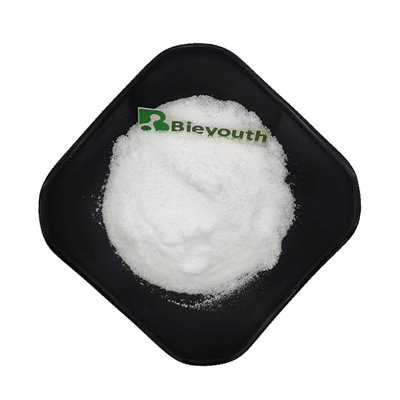


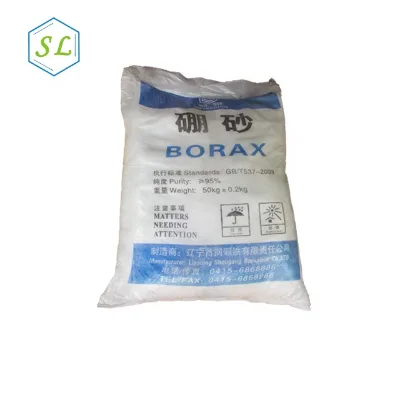
95% Industrial Grade Borax Decahydrate, Raw Material for Glass Industry
$461.20 - $491.95
MOQ: 20 tons


Comprehensive Sourcing Guide
Strategic Sourcing Guide for Cosmetic Raw Materials Borax
The global market for cosmetic raw materials is characterized by a complex supply chain where the distinction between industrial-grade and cosmetic-grade inputs is critical. For procurement professionals researching borax, specifically sodium tetraborate decahydrate, understanding the nuanced variations in product attributes is essential. The available data indicates a diverse range of offerings, from industrial intermediates to specialized cosmetic ingredients, each governed by distinct specifications, certifications, and packaging requirements. This guide synthesizes observed market facts to provide a disciplined framework for evaluating suppliers and ensuring product integrity without relying on unverified claims.
Technical Specifications and Grade Differentiation
The primary challenge in sourcing borax lies in the variation of grade standards and physical attributes. The market data reveals a clear bifurcation between products designated for industrial applications and those intended for cosmetic use. One observed specification lists the grade as "Cosmetic Garde" (Cosmetic Grade) with a purity of 99.5% minimum, while other entries in the same dataset describe the product as "Industrial" grade or "All Grade" with purity ranging from 10% to 98%. This discrepancy highlights the necessity for buyers to verify the specific grade standard before placing an order.
Physical appearance is another critical technical differentiator. While the core chemical identity remains consistent, the physical form varies significantly in the observed listings. Some products are described as a "White fine powder" or "White Prowder" (White Powder), which aligns with standard expectations for solid cosmetic raw materials. Conversely, other entries in the dataset describe the product as a "Colorless" powder or even a "Light yellow liquid." These variations suggest that the keyword "borax" may be associated with different chemical forms or derivatives in the marketplace, such as liquid catalysts or specific extraction types like "Solvent Extraction." Buyers must scrutinize the "Appearance" and "Status" fields to ensure the physical form matches their manufacturing process requirements.
Furthermore, the molecular formula (MF) and chemical identifiers provide the baseline for verification. The standard formula observed is B4H20Na2O17, corresponding to Sodium tetraborate decahydrate. The CAS No. 1303-96-4 is a definitive identifier for this compound. However, the presence of other product models, such as "ST-Octanohydroxamic Acid" or "BRD-SLES70-#9091," within the same search context suggests that buyers must be vigilant to ensure they are purchasing the correct chemical entity and not a related intermediate or a different product entirely.
Compliance and Certification Verification
In the cosmetic industry, regulatory compliance is non-negotiable. The supply chain for borax requires rigorous verification of documentation to ensure safety and legality. The dataset confirms that suppliers typically provide a Certificate of Analysis (COA) and Material Safety Data Sheet (MSDS). These documents are the primary evidence of product quality and safety. A buyer should not accept a shipment without these documents, as they contain critical data on impurities, heavy metals, and handling instructions.
The "Certificate" attribute in the market data explicitly lists "COA/MSDS" as a standard offering. However, the presence of different grade standards—such as "Agriculture Grade," "Industrial Grade," and "Reagent Grade"—implies that the quality control thresholds vary. A product certified for agricultural use may not meet the stringent purity and safety requirements for cosmetic applications. Therefore, the "Grade Standard" must be explicitly cross-referenced with the intended application. For cosmetic raw materials, the "Cosmetic Garde" designation is the most relevant, but the buyer must verify that the COA specifically supports this grade claim.
Additionally, the EINECS No. 603-411-9 is a key regulatory identifier for European markets. Ensuring that the product has this registration is vital for compliance with REACH regulations. While the dataset lists this number, buyers must confirm that the specific batch they are purchasing is covered under this registration. The "Brand Name" and "Model Number" (e.g., BYH1255213757) also serve as traceability markers. In a B2B context, these identifiers are essential for maintaining an audit trail and ensuring that the product originates from a verified source.
Cost Drivers and Pricing Dynamics
The pricing landscape for Cosmetic Raw Materials Borax is influenced by a complex interplay of factors, including grade, packaging, and supply chain logistics. The observed price range in the market is vast, spanning from $2 to $4,600 USD. This extreme variance is not indicative of a single product's price fluctuation but rather reflects the diversity of product types, quantities, and packaging configurations available. A low price point likely corresponds to a small sample or a basic industrial grade in bulk, while the higher end of the spectrum may represent specialized cosmetic grades, custom packaging, or larger volume contracts.
The Minimum Order Quantity (MOQ) is a significant cost driver. The data shows an MOQ range from 1 kg to 10,000 units. For small-scale cosmetic manufacturers or R&D departments, an MOQ of 1 kg is accessible, but the unit cost may be higher. Conversely, large-scale producers can leverage the "Supply Ability" of 1,000 Kilograms per month to negotiate better rates, though the data does not specify a direct correlation between volume and price reduction. Buyers should calculate the total cost of ownership, including shipping and handling, rather than focusing solely on the unit price.
Packaging details also impact cost. The dataset lists various packaging options, including "Drum," "Aluminum Foil Bag," and "Double Plastic Bag Insid." The "Single Package Size" varies from 10x10x10 cm to 23x12x13 cm, and the "Single Gross Weight" is consistently noted around 1.500 kg. These variations affect shipping costs and storage requirements. For instance, "Octanohydroxamic Acid" is listed as a packaging detail in one entry, which may indicate a specific product name or a misclassification in the dataset. Buyers must clarify the exact packaging configuration to avoid unexpected logistics costs.
Typical Applications and Usage Scenarios
The versatility of borax in the cosmetic industry is evident from the listed applications. The primary usage identified is "Cosmetic Raw Materials," which encompasses a wide range of end products. The specific applications mentioned include "Reagent," "Glass Industry," and "Ceramic Galze" (Glaze). While the latter two are industrial, the "Reagent" classification suggests high-purity uses in laboratory settings or specialized cosmetic formulations.
The "Usage" field explicitly states "Cosmetic Raw Materials," confirming the product's relevance to the beauty and personal care sector. However, the presence of "Industrial" and "Agriculture" grades in the same dataset indicates that the same chemical compound may be marketed for multiple sectors. Buyers must ensure that the product they select is specifically formulated and certified for cosmetic use. The "Appearance" of a "White fine powder" is ideal for incorporation into powders, creams, and lotions, whereas a "Light yellow liquid" might be suitable for different formulation types, such as liquid soaps or shampoos.
The "Response Type" of "Esterification" suggests that borax may play a role in chemical reactions during the manufacturing process, potentially acting as a catalyst or buffer. This technical detail is crucial for formulators who need to understand how the ingredient interacts with other components. The "Shelf life" of 24 months provides a window for inventory management, ensuring that the product remains stable and effective throughout the production cycle.
Supplier Evaluation and Origin Analysis
Evaluating suppliers requires a careful analysis of their origin, capabilities, and reliability. The dataset indicates that products originate from "China," with specific locations mentioned as "Shaanxi" and "Shandong." These regions are known for their chemical manufacturing capabilities, but buyers should verify the specific factory's reputation and compliance history. The "Brand Name" Bieyouth is associated with some of the listings, serving as a potential point of reference for brand consistency.
The "Supply Ability" of 1,000 Kilograms per month is a key metric for assessing a supplier's capacity to meet demand. For large-scale procurement, this volume may be insufficient, requiring the buyer to identify suppliers with higher throughput. The "Customization" attribute being "Available" is a significant advantage, allowing buyers to request specific packaging, labeling, or purity levels. However, customization often comes with higher costs and longer lead times, which must be factored into the procurement timeline.
The "Sample" availability is another critical factor in supplier evaluation. The ability to request a sample allows buyers to verify the product's physical properties, purity, and compliance with their internal quality standards before committing to a large order. The "Sample" attribute is listed as "Availabe" (Available), indicating that most suppliers are willing to provide test units. Buyers should use this opportunity to conduct independent testing to validate the supplier's claims regarding purity and grade.
Quality Control and Long-Term Procurement
Maintaining consistent quality is paramount in the cosmetic industry. The "Quality" attribute is listed as "Industrial" in some entries and "Cosmetic Garde" in others, underscoring the need for rigorous quality control. Buyers should implement a strict incoming inspection protocol that includes verifying the COA, checking the physical appearance, and conducting spot tests for purity. The "Purity" levels of 99% and 99.5% Min are common benchmarks, but the buyer must ensure that the specific batch meets these standards.
Long-term procurement considerations involve building a sustainable relationship with suppliers. The "Storage" requirement of "Cool Dried Storage" is a critical operational detail that affects both the supplier's logistics and the buyer's warehouse management. Failure to adhere to these storage conditions can degrade the product, leading to quality issues. The "Shelf life" of 24 months provides a reasonable window for inventory rotation, but buyers should monitor stock levels to prevent expiration.
The "Standard" of 10%-98% or 25KG/50KG packaging indicates that the market offers flexible options, but buyers should standardize their specifications to streamline the procurement process. Consistency in packaging, such as "Aluminium Bag Outside and Double Plastic Bag Insid," helps in maintaining product integrity during transit. By establishing clear specifications and maintaining open communication with suppliers, buyers can mitigate risks and ensure a steady supply of high-quality cosmetic raw materials.
Conclusion
Sourcing Cosmetic Raw Materials Borax requires a meticulous approach that balances technical specifications, regulatory compliance, and supplier reliability. The market data reveals a complex landscape with varying grades, packaging options, and origins. By focusing on the specific attributes of "Cosmetic Garde," verifying COA and MSDS documentation, and understanding the cost drivers associated with MOQ and packaging, buyers can make informed decisions. The availability of samples and customization options further empowers buyers to tailor their procurement strategy to their unique needs. Ultimately, a disciplined, evidence-based approach to sourcing ensures the delivery of safe, high-quality ingredients that meet the rigorous standards of the cosmetic industry.
FAQs
What grade standards are available for Cosmetic Raw Materials Borax?
The product is available in Cosmetic Grade, Industrial Grade, Agriculture Grade, and Reagent Grade. Buyers must verify the specific grade standard matches their application, as purity and safety thresholds vary significantly between these categories.
Can I obtain samples of Cosmetic Raw Materials Borax before ordering?
Samples are available for testing and verification purposes. This allows buyers to confirm physical properties and purity levels before committing to larger orders, ensuring the product meets specific manufacturing requirements.
Which certifications are provided for Cosmetic Raw Materials Borax?
Suppliers typically provide a Certificate of Analysis (COA) and Material Safety Data Sheet (MSDS). These documents are essential for verifying product safety, impurity levels, and handling instructions required for regulatory compliance.
How is Cosmetic Raw Materials Borax packaged for shipment?
Packaging options include drums, aluminum foil bags, and double plastic bags inside. Specific configurations vary by supplier, with single package sizes ranging from 10x10x10 cm to 23x12x13 cm depending on the order.
What is the minimum order quantity for Cosmetic Raw Materials Borax?
The minimum order quantity ranges from 1 kg to 10,000 units depending on the supplier. Small-scale manufacturers can access lower MOQs, while larger producers may negotiate based on the monthly supply ability of 1,000 kilograms.
Where are Cosmetic Raw Materials Borax products typically sourced from?
Products originate from China, with specific locations including Shaanxi and Shandong. Buyers should verify the specific factory location to ensure compliance with their sourcing policies and logistics requirements.