Source Cutting and Welding Fiber Laser Source for Metal Fabrication
Find and compare 30 Cutting and Welding Fiber Laser Source options from Chinese manufacturers. Evaluate models ranging from 1000W to 6000W with water or air cooling, RS232 control, and various output connectors to match your industrial metal processing needs.
Key considerations
Products List

Fiber Laser Cutting Welding Cleaning Machine Power Generator Laser Source
$2100.00 - $9250.00
MOQ: 1 Pieces


Max Laser Source Fiber Laser Source for Laser Welding Cleaning Cutting Machine
$2132.00 - $12000.00
MOQ: 1 Pieces


Max Fiber Laser Source Mfsc-1500X Single Mode of Cutting and Welding
$1590.00 - $1680.00
MOQ: 1 Pieces

Raycus Fiber Laser Cutting Source Rfl-C4000s Single Mode, Welding&Cutting
$10150.00 - $10750.00
MOQ: 1 Pieces
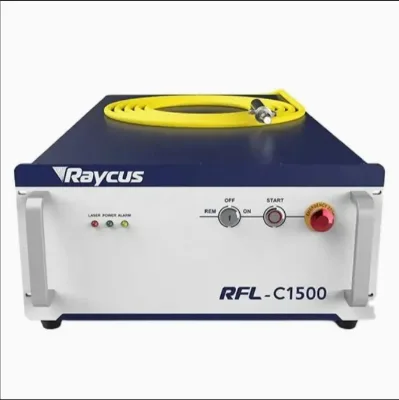


Laser Cutting Source Rfl-C3000s Laser Cutting Welding Raycus Laser Source
$9150.00 - $9200.00
MOQ: 1 Pieces

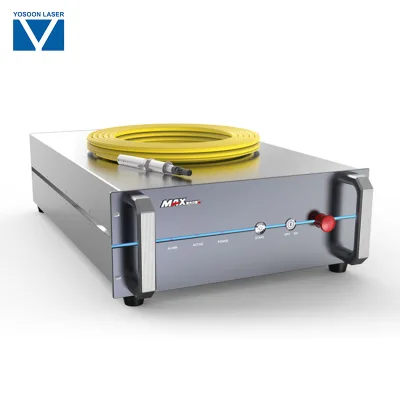


Portable Fiber Laser Source for Laser Welding Cutting Raycus Rfl-C3000
$1500.00 - $1719.00
MOQ: 1 Pieces

Portable Fiber Laser Source for Laser Welding Cutting Raycus Rfl-C1000
$1500.00 - $1719.00
MOQ: 1 Pieces

Portable Fiber Laser Source for Laser Welding Cutting Raycus Rfl-C2000
$1500.00 - $1719.00
MOQ: 1 Pieces
Comprehensive Sourcing Guide
Cutting and Welding Fiber Laser Source Sourcing Guide
The global market for cutting and welding fiber laser sources is defined by a diverse range of power outputs and structural configurations designed to meet specific industrial demands. Buyers must navigate a landscape where standard components coexist with highly customized solutions, as evidenced by the availability of models ranging from 1000W to 6000W. The core of the procurement decision lies in matching the laser's operating mode—whether continuous wave or pulsed—to the intended material thickness and processing speed. Understanding that these sources are often categorized as standard components yet offer customization options allows buyers to balance off-the-shelf reliability with tailored performance requirements.
Procurement strategies must account for the physical and logistical realities of sourcing these high-power devices, which are frequently manufactured in industrial hubs like Wuhan, China. The physical footprint of the equipment varies significantly, with dimensions ranging from compact desktop units to large gantry-type systems, directly impacting facility layout and installation planning. Furthermore, the cooling method selected, whether water cooling or air cooling, dictates the auxiliary infrastructure required on the shop floor. Buyers should verify that the chosen model's dimensions and cooling requirements align with their existing plant capabilities before finalizing any purchase order.
Product Scope and Observed Listing Signals
The observed product listings reveal a clear segmentation based on power output and application specificity, with models explicitly labeled for 1500W, 2000W, 3000W, and up to 6000W capabilities. This range supports a wide spectrum of industrial needs, from general metal processing to heavy-duty manufacturing in sectors like aerospace and petroleum machinery. The presence of specific model identifiers, such as the RFL-C series and MD-1000W variants, indicates that suppliers offer distinct product lines tailored to different performance tiers. Buyers should scrutinize these model numbers to ensure the specific power rating matches their production volume and material thickness requirements.
Packaging and structural design are critical signals of product maturity and intended transport safety, with listings showing options ranging from non-fumigation wooden boxes to export-specific packaging. The structural type of the laser source, whether desktop or gantry, serves as a primary indicator of its integration complexity and mobility within a production line. Additionally, the inclusion of fiber optic cable lengths, observed at 10m, 15m, and 20m, suggests that connectivity is a key variable in the product scope. Procurement teams must verify that the included cable length is sufficient for their specific machine setup to avoid costly retrofits or extension purchases.
Technical Specifications to Verify
Technical verification begins with the output connector type, as the market presents both Iqb and Qbh options that are not universally interchangeable. Selecting the wrong connector can render the laser source incompatible with existing cutting heads or welding torches, leading to significant downtime. Buyers must cross-reference the connector specification against their current equipment inventory before placing an order. The polarization direction, observed as random in some listings, is another critical parameter that affects beam quality and processing consistency, particularly in precision cutting applications where polarization stability is paramount.
The control interface and operating mode are equally vital for ensuring seamless integration into automated workflows. Specifications indicate support for RS232 communication and various control modes, which must be compatible with the buyer's existing PLC or CNC systems. The distinction between continuous wave and pulsed operation modes dictates the thermal dynamics of the cutting or welding process, influencing the final quality of the weld or cut edge. Additionally, the cooling system type, whether water or air, must be validated against the facility's utility capacity, as high-power sources like the 6000W models typically require robust water cooling systems to maintain operational stability.
Compliance and Safety Documentation
Safety documentation for high-power laser sources must address the inherent risks associated with Class 4 lasers, even if specific classification labels vary in the provided data. Buyers should request detailed safety manuals that outline the specific laser classification and required personal protective equipment (PPE) for operators. While some listings mention CE certification, this should be treated as a background signal rather than a guaranteed status for every unit, requiring direct verification from the supplier. The absence of explicit certification data in general listings necessitates a rigorous request for valid compliance certificates before shipment to ensure adherence to local safety regulations.
Quality assurance documentation should include video outgoing-inspection records, which provide visual proof of the product's condition prior to packaging. This step is crucial for verifying that the laser source has undergone functional testing and is free from visible defects before leaving the manufacturing facility. The inclusion of such inspection services indicates a supplier's commitment to transparency and quality control. Buyers should ensure that these inspection reports are detailed enough to confirm the operational status of the laser source, including the integrity of the optical cables and the stability of the cooling system.
Cost Drivers and Commercial Terms
The price range observed in the market, spanning from 900 to 45,000 USD, reflects the significant variance in power output, customization level, and included accessories. Higher power models, such as the 6000W units, naturally command a premium due to the increased complexity of the laser generation technology and the associated cooling requirements. Buyers must analyze the total cost of ownership, which includes not only the unit price but also the cost of necessary auxiliary equipment like chillers and fiber optic cables. The MOQ range of 1 to 100 units suggests flexibility for both single-unit procurement and bulk industrial orders, allowing buyers to negotiate based on their specific volume needs.
Commercial terms regarding packaging and shipping are influenced by the physical dimensions and weight of the laser source, which can vary from 20KG to over 950mm in length. The choice between standard wooden boxes and specialized export packaging impacts the final landed cost and the risk of damage during transit. Buyers should clarify whether the quoted price includes the specific packing requirements, such as the non-fumigation wooden box or the welding-specific version, to avoid unexpected fees. Additionally, the origin of the product, primarily from China, should be factored into logistics planning, including lead times and customs clearance procedures.
Supplier Qualification and Quality Control
Supplier qualification should focus on the ability to provide consistent technical support and verified quality control processes, as evidenced by the availability of video outgoing-inspection services. A qualified supplier must demonstrate a clear understanding of the specific technical requirements, such as the correct output connector and cooling method, to prevent integration errors. The presence of customization options indicates that the supplier has the engineering capacity to adapt standard components to unique buyer needs, a critical factor for specialized industrial applications. Buyers should assess the supplier's track record in delivering customized solutions to ensure they can meet specific project timelines and performance criteria.
Quality control extends beyond the initial inspection to include the verification of material specifications and structural integrity. The use of steel in certain structural components and the adherence to specific dimension standards, such as 410467124mm, are indicators of manufacturing precision. Buyers should request detailed material certificates and dimensional inspection reports to confirm that the product meets the stated standards. The distinction between ordinary products and those with specific marketing types, such as the welding-specific version, highlights the need for suppliers to provide clear documentation on the intended application and performance capabilities of each unit.
Long-Term Procurement Checks
Long-term procurement success depends on establishing a reliable supply chain for spare parts and maintenance services, particularly for high-power laser sources that require regular upkeep. Buyers should verify the availability of replacement components, such as fiber optic cables and cooling system parts, to minimize downtime during the product lifecycle. The standard component nature of many laser sources suggests that replacement parts should be readily available, but the specific model number must be matched to ensure compatibility. Establishing a relationship with a supplier who can provide timely technical support and spare parts is essential for maintaining operational efficiency over the long term.
Performance monitoring and periodic re-verification of technical specifications are necessary to ensure the laser source continues to meet production requirements. Buyers should implement a schedule for regular inspections of the cooling system, optical cables, and control interfaces to detect early signs of wear or degradation. The operating mode, whether continuous or pulsed, should be periodically tested to confirm that the laser output remains stable and within the specified power range. By maintaining a proactive approach to maintenance and performance verification, buyers can extend the lifespan of their laser sources and ensure consistent quality in their cutting and welding operations.
FAQs
What output power options are available for these laser sources?
Available output power ranges from 1000 to 3000 watts, with specific models offering 1500W, 2000W, 3000W, and up to 6000W. These units support both continuous and pulse operating modes for versatile industrial applications.
Which cooling methods are used for the fiber laser sources?
The products utilize either water cooling or air cooling systems depending on the specific model configuration. This ensures optimal thermal management for sustained operation in demanding manufacturing environments like aerospace or petroleum machinery.
Can I find customized versions of these laser sources?
Yes, customization is available for specific requirements, though some standard components remain non-customized. Buyers can select from various models including the MD series or RFL series to match their production needs.
What are the standard dimensions for these laser source units?
Standard dimensions vary by model, with common sizes including 410 by 467 by 124 millimeters or larger units measuring 900 by 447 by 237 millimeters. Some specialized versions may exceed these standard footprint measurements.
How long are the fiber optic cables included with the units?
Fiber optic cable lengths are available in 10 meters, 15 meters, or 20 meters depending on the specific product configuration. This flexibility allows for easier integration into different machine setups without additional cabling.
What is the origin location for these laser source products?
The products originate from Wuhan, China, or generally from China as a manufacturing hub. This location supports the production of various models ranging from 1500W to 6000W for global industrial markets.
Which materials are suitable for processing with these laser sources?
These laser sources are designed to process metal materials effectively for cutting and welding applications. They are widely used in industries such as advertising, aerospace, and petroleum machinery manufacturing for high-precision tasks.