Source Custom Design Square Adhesive Labels for Food, Shipping, and Medicine
Compare 30 verified listings for Custom Design Square Adhesive Labels suitable for food packaging, shipping labels, and medicine. Buyers can review material options like paper, printing methods, and customization features from suppliers in China.
Key considerations
Products List
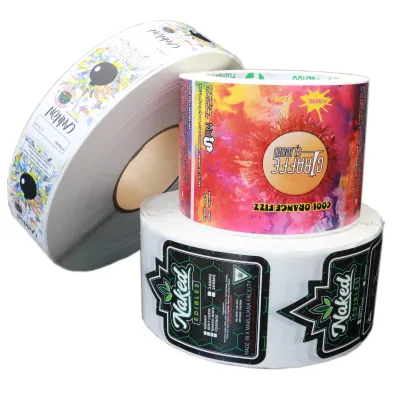


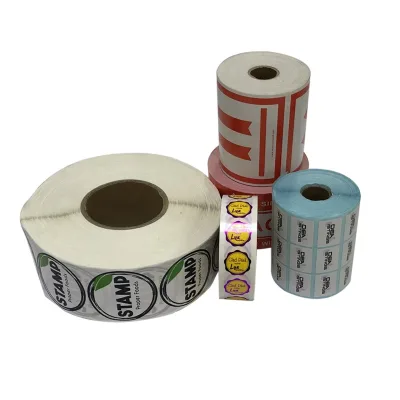


Comprehensive Sourcing Guide
Strategic Sourcing Guide for Custom Design Square Adhesive Labels
Understanding Technical Specifications and Material Composition
When sourcing Custom Design Square Adhesive Labels, the primary focus must be on the precise alignment of material properties with the intended application environment. The market offers a diverse array of facestocks, including thermal paper, semi-gloss paper, and cast coated paper, each serving distinct functional requirements. Thermal paper is often selected for applications requiring immediate printing without ink, such as shipping labels or price tags, while semi-gloss and cast coated variants provide superior print fidelity for high-resolution branding on bottled beverages or food packaging. The structural integrity of the label is determined by its layer composition, with a standard three-layer construction being a common configuration in high-grade offerings. This typically comprises the facestock, the adhesive layer, and the liner, which acts as the backing during storage and application.
The adhesive system is a critical technical variable that dictates performance under stress. Buyers should verify the specific glue type, which may range from water-based adhesives to hot-melt formulations, with grammage specifications often falling between 13 and 22 GSM. The choice of liner material, such as glassine or silicone paper, influences the ease of die-cutting and the smoothness of the dispensing process. Furthermore, the physical dimensions of the label are rarely static; "customized size" and "custom shape" are standard capabilities, allowing for precise square configurations or other geometric variations to fit specific machinery. The printing process itself is equally complex, with options spanning offset printing, UV digital printing, thermal transfer, and specialized techniques like embossing, debossing, or gold stamping. These processes determine the final aesthetic and durability, particularly when considering features like waterproofing, anti-counterfeiting capabilities, or barcode readability.
Compliance Verification and Certification Standards
In the realm of B2B procurement, verifying compliance is not merely a formality but a prerequisite for market access, particularly when labels are intended for food, medicine, or industrial use. While specific certification statuses such as ISO 9001 are often cited in general industry knowledge, buyers must treat these as variables to be confirmed rather than inherent attributes of every listed product. The supplied data indicates that products are available for industrial use in the food sector, which necessitates rigorous checks regarding food-grade adhesives and non-toxic inks. Buyers should explicitly request documentation proving that the materials meet local regulatory standards for food contact, such as FDA compliance in the United States or EU Framework Regulation (EC) No 1935/2004 in Europe.
Certification checks should extend beyond the final product to include the manufacturing facility's quality management systems. Although a specific standard like ISO 9001 is mentioned in background contexts, the absence of a guaranteed certification in the product listing means the buyer must conduct a supplier audit or request a valid certificate of conformity before placing a large order. Additionally, for labels with specialized features like anti-counterfeiting or barcode functionality, verification of the print quality against industry standards is essential. The "High Grade" quality designation found in some listings is a qualitative claim that requires validation through sample testing. Buyers should ensure that the supplier can provide test reports for adhesion strength, solvent resistance, and print durability to confirm that the label will not fail under the specific conditions of the supply chain, such as exposure to moisture, temperature fluctuations, or friction during shipping.
Cost Drivers and Pricing Structure Analysis
The pricing of Custom Design Square Adhesive Labels is influenced by a complex interplay of factors, including material selection, order volume, and the complexity of the printing process. The observed market data indicates a significant price variance, with ranges extending from nominal costs up to $4,300 for specific configurations, though this likely reflects the total value of a large batch rather than a unit price. The Minimum Order Quantity (MOQ) is a primary cost driver, with observed ranges spanning from 1 piece to 10,000 pieces. Smaller MOQs, such as 100 pieces, are typical for custom runs but often carry a higher unit cost due to the setup time required for offset printing or die-cutting. Conversely, larger volumes can leverage economies of scale, significantly reducing the cost per unit.
Material costs also play a substantial role in the final price. Premium facestocks like cast coated paper or specialized thermal papers will inherently cost more than standard semi-gloss options. Similarly, the choice of adhesive and liner affects the price; high-performance hot-melt glues or specialized silicone liners command a premium over standard water-based alternatives. The printing method selected is another critical variable. While offset printing is cost-effective for high-volume runs, specialized techniques such as UV digital printing, laser printing, or gold stamping involve higher equipment and material costs. Buyers should also consider the "customized designs" aspect, which may incur additional charges for graphic design services or the creation of custom dies for die-cutting. The packaging method, whether shrink film or carton boxes, adds a marginal cost but is essential for protecting the labels during transit. Understanding these variables allows buyers to negotiate more effectively and optimize their budget without compromising on essential quality parameters.
Typical Applications and Usage Scenarios
Custom Design Square Adhesive Labels serve a wide spectrum of industries, with their utility defined by the specific combination of material properties and printing features. In the food and beverage sector, these labels are frequently used for product identification, nutritional information, and branding on bottled beverages. The requirement for waterproof and grease-resistant properties is paramount in this sector to ensure legibility and adhesion in cold, wet, or oily environments. The "Industrial Use: Food" designation in product listings highlights this specific application, necessitating materials that do not contaminate the product.
Beyond food and beverage, these labels are extensively utilized in logistics and shipping. The "Shipping Label" and "Barcode" features indicate their role in inventory management and supply chain tracking. In this context, durability is key; the labels must withstand handling, exposure to weather, and friction without peeling or fading. The "Anti-Counterfeit" feature is particularly valuable for pharmaceuticals and high-value goods, where the "Medicine" usage category suggests a need for tamper-evident or traceable labeling solutions. Additionally, the "Price Tags" usage points to retail applications where clear, legible printing is essential for point-of-sale transactions. The versatility of the "Custom Shape" and "Customized Size" options allows manufacturers to create labels that fit unique packaging geometries, from small cosmetic bottles to large industrial drums. The ability to print mixed colors and utilize various finishing techniques like glossy or matte coatings further enhances the brand's visual identity across these diverse applications.
Supplier Evaluation and Geographic Considerations
Evaluating suppliers for custom adhesive labels requires a careful assessment of their geographic location, production capabilities, and customization flexibility. The supplied data reveals that manufacturers are located in key industrial hubs in China, specifically Shanghai and Jiangsu Lianyungang. These regions are known for their robust manufacturing ecosystems and access to raw materials, which can facilitate efficient production and logistics. However, the presence of multiple origin points suggests that buyers should verify the specific factory location to ensure it aligns with their logistical needs and to assess the potential for supply chain disruptions.
Supplier evaluation should also focus on their ability to handle "Custom Order" requests. The acceptance of custom orders is a critical indicator of a supplier's flexibility and technical capability. Buyers should inquire about the supplier's design support services, their capacity for rapid prototyping, and their experience with complex printing techniques like offset silkscreen or UV digital printing. The "Brand Name" associated with the product, such as Brightpac or Zhehan, may indicate established manufacturers, but buyers should not rely solely on brand recognition. Instead, they should request samples to evaluate the actual quality of the print, the consistency of the adhesive, and the precision of the die-cutting. Additionally, the "Customized Logo Printed" feature suggests that the supplier has the necessary equipment for personalized branding, which is essential for companies seeking unique market differentiation.
Quality Control and Long-Term Procurement Strategies
Implementing a robust quality control (QC) strategy is essential for maintaining the integrity of custom label orders. Given the variability in materials and processes, buyers should establish clear acceptance criteria before production begins. This includes defining acceptable tolerances for size, color consistency, and adhesion strength. The "High Grade" quality claim found in some listings should be validated through pre-production samples and random sampling during the manufacturing process. Buyers should also verify the "Single gross weight" and "Single package size" to ensure that the packaging meets their storage and shipping requirements, preventing damage during transit.
For long-term procurement, building a strategic relationship with a reliable supplier is more beneficial than transactional buying. This involves negotiating favorable terms for recurring orders, such as reduced MOQs or priority scheduling. Buyers should also consider the "Lead Time" implications of custom designs; complex orders may require longer production windows, and planning ahead is crucial to avoid supply chain bottlenecks. The "Customization: Available" attribute suggests that suppliers are willing to adapt to changing needs, which is valuable for businesses with evolving packaging requirements. By maintaining open communication and setting clear expectations regarding quality and delivery, buyers can ensure a steady supply of high-quality Custom Design Square Adhesive Labels that meet their operational and branding needs over the long term.
Final Procurement Considerations and Risk Mitigation
The final stage of procurement involves a comprehensive review of all terms to mitigate risks associated with custom manufacturing. Buyers must ensure that the "Cutting Method," whether sheet or roll, aligns with their application machinery to prevent operational disruptions. The "Adhesivity" type, such as sided tape, must be compatible with the surface materials of the products being labeled. Additionally, the "Printing Handling" options, including die-cutting and various printing technologies, should be matched to the specific design requirements to avoid unnecessary costs or quality issues.
Risk mitigation also extends to the contractual agreement. Clear specifications regarding the "Standard" dimensions, such as 30mm×40mm or 58mm×40mm, should be documented to prevent disputes over product dimensions. Buyers should also verify the "Packing" details, ensuring that the carton boxes or shrink film used are sufficient to protect the labels. Finally, maintaining a buffer stock of critical labels can help mitigate the impact of potential supply chain delays. By addressing these technical, logistical, and contractual aspects, buyers can secure a reliable supply of Custom Design Square Adhesive Labels that enhance their product presentation and operational efficiency.
FAQs
What printing methods are available for these labels?
Available methods include offset, UV digital, thermal transfer, and laser printing. The specific technique depends on your design complexity and order volume, with options like gold stamping or embossing also supported for custom branding needs.
Can I order a small quantity of custom adhesive labels?
Yes, suppliers accept custom orders with a minimum quantity of 100 pieces. While some listings show an MOQ of 1, the standard requirement for custom runs is typically 100 pieces to cover setup costs for printing and die-cutting.
Which materials are used for the facestock of these labels?
Common facestocks include thermal paper, semi-gloss paper, and cast coated paper. These materials are selected based on whether you need immediate printing capabilities or high-resolution print fidelity for food and beverage packaging applications.
How are these labels packaged for shipping?
Labels are typically packed in carton boxes or shrink film to ensure protection during transit. The single package size is approximately 5x5x0.05 cm, and the gross weight is 0.005 kg per unit, ensuring efficient logistics handling.
What is the origin location for these adhesive label manufacturers?
Manufacturers are located in Shanghai and Lianyungang, China. These industrial hubs provide access to raw materials and robust production ecosystems, facilitating efficient manufacturing and logistics for international buyers seeking custom solutions.
Are waterproof and anti-counterfeit features available for these labels?
Yes, features like waterproofing and anti-counterfeiting are available for specific applications. These attributes are crucial for food, medicine, and shipping sectors where durability and security are required to prevent tampering and ensure legibility.
Can the label shape and size be customized to fit my product?
Yes, both size and shape are fully customizable to match your specific packaging geometry. You can request standard dimensions or unique shapes, with options for roll or sheet cutting to suit rotary printing machines or manual application.