Source Custom Embroidered Travel Duffle Bag for Gym, Sports, and Business
Compare 30 listings for Custom Embroidered Travel Duffle Bag options featuring waterproof materials, various sizes, and zipper closures. Buyers can evaluate specifications like capacity, weight, and customization availability from suppliers in Quanzhou, China; compare the available evidence and request quotations based on your requirements.
Key considerations
Products List


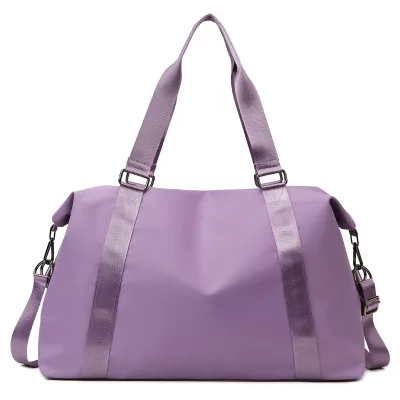
Custom 24in Duffel Bag Portable Travel Bag for Outdoor Sports and Travel
$3.00 - $4.00
MOQ: 1000 Pieces


Shoulder Outdoor Sports Leisure Travel Luggage Fitness Duffle Duffle Backpack Bag
$10.00 - $12.00
MOQ: 500 Pieces




Comprehensive Sourcing Guide
Custom Embroidered Travel Duffle Bag Sourcing Guide
Sourcing custom embroidered travel duffle bags requires a strategic approach to balancing aesthetic personalization with functional durability. Buyers must recognize that embroidery adds significant weight and potential points of failure to the fabric structure, necessitating careful material selection. The observed market features polyester constructions, which offer a reliable balance of water resistance and cost-efficiency for high-volume orders. Understanding the interplay between customization depth and structural integrity is the first step in defining a viable product specification.
Procurement teams should also evaluate the operational impact of embroidery on production timelines and minimum order quantities. Customization is available across the observed product range, but it often influences sample times and initial batch sizes. With observed minimum order quantities ranging from 500 to 1000 pieces, buyers must align their inventory forecasts with these thresholds. Early engagement with suppliers regarding design complexity ensures that the embroidered elements do not compromise the bag’s primary function as a travel or gym accessory.
Product Scope and Observed Listing Signals
The current market landscape for travel duffle bags includes diverse configurations, from simple gym sacks to wheeled trolley variants. Observed listings highlight products like the EC210 and ZDUB-02, which emphasize large capacity and waterproof features suitable for swim or gym use. These items typically feature zipper closures and soft polyester materials, catering to unisex audiences seeking practical storage solutions. The presence of box-type and cube-type shapes indicates a versatility in form factors that can accommodate various branding and embroidery placement strategies.
Further segmentation includes business-oriented duffles like the ETL-04 and JDFB-008, which may incorporate wheels for enhanced mobility. These models often specify dimensions such as 20 or 24 inches, aligning with standard airline carry-on or checked luggage requirements. The observed color options, including black and grey, provide a neutral canvas for custom embroidery, ensuring that logos remain visible and professional. Buyers should note that while many bags are described as waterproof, the specific performance levels vary by construction and material density.
Technical Specifications to Verify
Dimensional accuracy is critical for travel duffles, as discrepancies can lead to airline compliance issues or storage inefficiencies. Buyers must verify standard measurements, such as 17"W x 10"H x 9"D for compact models or 24 x 12 x 11.5 inches for larger variants. Some suppliers offer custom sizing, which requires precise technical drawings to ensure the embroidery does not interfere with structural seams or zipper tracks. Confirming these dimensions early prevents costly revisions during the sampling phase and ensures the final product meets logistical requirements.
Material weight and packing specifications also demand close scrutiny to manage shipping costs and product quality. Observed weights range from 0.8kg to 35.0 Lb, reflecting differences in material thickness and hardware inclusion. Packing methods, such as individual polybag or gym duffle bag packaging, affect both protection during transit and retail presentation. Buyers should request detailed weight breakdowns to understand how much of the total mass is attributed to the fabric versus the embroidery thread and hardware components.
Compliance and Safety Documentation
While specific certification statuses are not universally listed, buyers must proactively request documentation to ensure market access. For products intended for international trade, verifying compliance with regional safety standards is essential to avoid customs delays. This includes checking for any required chemical restrictions on dyes and threads used in the embroidery process. Suppliers should be asked to provide test reports or declarations of conformity that align with the destination country’s regulations for textile goods.
Waterproof claims require validation through independent testing or supplier-provided data sheets to ensure they meet buyer expectations. Buyers should clarify whether the waterproofing is inherent to the polyester weave or applied via a coating, as this affects durability and environmental impact. Additionally, verifying the integrity of zipper closures and stitching is crucial for long-term reliability. Requesting sample testing results for tensile strength and abrasion resistance helps mitigate the risk of product failure in the field.
Cost Drivers and Commercial Terms
Pricing for custom embroidered duffle bags is influenced by material costs, embroidery complexity, and order volume. Observed price ranges in the market suggest competitive pricing for standard polyester models, but customization adds a premium. Buyers should anticipate higher unit costs for intricate designs or multi-color embroidery, which require additional setup time and thread usage. Understanding these cost drivers allows for more accurate budgeting and negotiation with suppliers during the sourcing process.
Minimum order quantities and sample times are key commercial terms that impact cash flow and time-to-market. With MOQs typically set at 500 or 1000 pieces, buyers must ensure sufficient demand to justify the initial investment. Sample times of 5-7 days indicate a relatively quick turnaround for design approval, but bulk production lead times may vary. Clarifying payment terms, shipping responsibilities, and return policies for defective units is essential to protect the buyer’s interests and ensure a smooth transaction.
Supplier Qualification and Quality Control
Evaluating supplier capabilities involves assessing their production capacity and quality control processes. Buyers should verify that the supplier has experience with custom embroidery and can handle the specific volume requirements of the order. Requesting references or case studies of previous similar projects can provide insight into the supplier’s reliability and consistency. Additionally, confirming the supplier’s location, such as Quanzhou, China, helps in understanding the logistical advantages and potential supply chain risks.
Quality control measures should be established before production begins to ensure the final product meets specifications. This includes defining acceptable tolerances for embroidery placement, color matching, and stitching quality. Implementing pre-production samples and in-line inspections can help identify and rectify issues early in the manufacturing process. Buyers should also consider third-party inspection services for large orders to provide an independent verification of product quality and compliance with agreed-upon standards.
Long-Term Procurement Checks
Building a sustainable supply chain requires regular performance reviews and relationship management with suppliers. Buyers should track key metrics such as on-time delivery rates, defect rates, and responsiveness to issues. Establishing a clear communication channel for ongoing feedback helps maintain quality standards and fosters a collaborative partnership. Regular audits of the supplier’s production facilities can also ensure that they continue to meet ethical and operational requirements over time.
Adapting to market changes and evolving customer preferences is crucial for long-term success. Buyers should stay informed about trends in travel bag design, such as new materials or functional features, to keep their product offerings relevant. Continuously exploring customization options and improving the embroidery process can enhance brand value and customer satisfaction. By maintaining a proactive approach to procurement, buyers can mitigate risks and capitalize on opportunities in the dynamic travel accessory market.
FAQs
What customization options are available for the embroidered travel duffle bag?
Customization is available, including embroidery of your logo or design on the duffle bag. Polyester construction supports detailed stitching, and you can typically adjust color, size, and branding placement. Provide your artwork during inquiry so factories can confirm embroidery feasibility, sample appearance, and any setup requirements before bulk production begins.
What is the minimum order quantity for custom embroidered duffle bags?
Minimum order quantities vary by model, with listed values ranging from 500 pieces to 1000 pieces. Some listings show MOQ as low as 1 piece for certain items, so confirm the exact model you want. Larger orders usually improve per-unit pricing and may unlock more customization options.
How long does a sample take before bulk production starts?
Sample time is typically 5 to 7 days according to the listed product information. This allows you to review embroidery quality, fabric feel, zipper function, and waterproof performance before committing. After sample approval, confirm bulk lead time separately, since production schedules depend on order quantity and factory capacity.
Which materials and features do these travel duffle bags use?
The duffle bags are made of polyester with a soft hand feel and waterproof construction. They close with a zipper and are positioned as large-capacity swim or travel backpacks and duffles. Models include standard sizes such as 17W x 10H x 9D inches and 80 x 40 x 30 cm options.
How are the duffle bags packed for shipping?
Each duffle bag is packed individually in one poly bag before carton packing. Trolley-style travel bags are also packed one piece per PP bag. This simple packing keeps unit costs down and protects bags during transit; request export carton specifications and packing details when requesting quotations.
Can I order a wheeled version of the waterproof travel duffle?
Yes, trolley-style waterproof travel duffles with wheels are listed among the available types. These come in 20 inch and 24 inch capacities or customized sizes, with grey as a listed color. Confirm wheel type, handle system, and embroidery placement with the supplier since wheeled construction differs from standard duffles.
What sizes are available for custom embroidered travel duffles?
Listed specifications include 17W x 10H x 9D inches, 80 x 40 x 30 cm, 43.5 x 11.5 x 31 cm, and 24 x 12 x 11.5 inches, with custom sizes accepted. Wheeled models are offered in 20 or 24 inch capacities. Most factories can adjust dimensions to match your target market requirements.
Where are these embroidered duffle bags produced?
Listed product origin is Quanzhou, China, a region known for bag manufacturing. Bags weigh around 0.8 to 1 kg depending on the model. When sourcing, confirm the specific factory location, production capacity, and export experience, since Quanzhou hosts many suppliers with differing capabilities and quality levels.