Source Customized Logo Bookmarks for Home Office and Souvenirs
Compare 30 listings for Customized Logo Bookmarks featuring options like leather, die-casting, and various colors. Buyers can evaluate MOQs, production times, and design services to find suitable suppliers for office gifts or promotional events.
Key considerations
Products List


Tailor-Made Design for 20-Year Souvenir Customized Gift Metal Logo Bookmark
$1.55 - $1.75
MOQ: 2000 Pieces


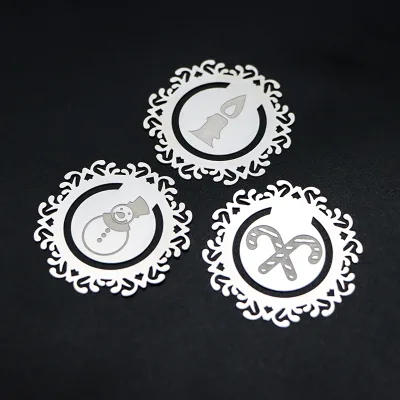


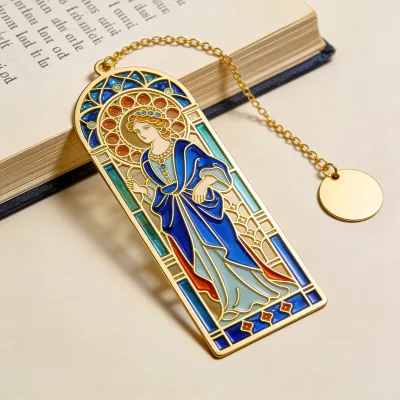
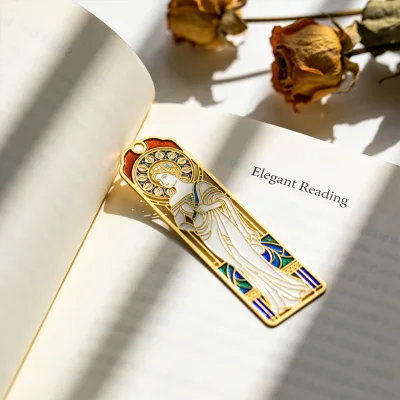


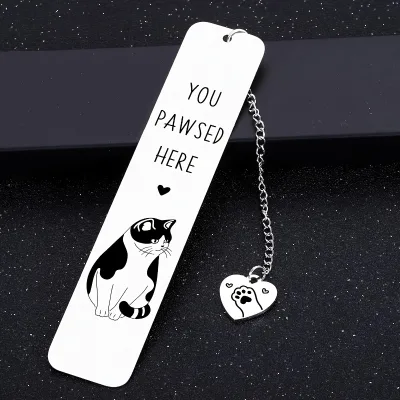


New Design Hape Logo Different Colors Customized Personalised Acrylic Bookmark
$0.27 - $0.83
MOQ: 100 Pieces

Comprehensive Sourcing Guide
Strategic Sourcing Guide for Customized Logo Bookmarks
The global market for promotional and functional stationery continues to expand, with Customized Logo Bookmarks emerging as a high-value, low-cost tool for brand visibility. For procurement professionals, sourcing these items requires a nuanced understanding of material science, manufacturing techniques, and supply chain logistics. The following guide synthesizes available market data to provide a disciplined approach to acquiring customized bookmarks, ensuring that buyers can navigate the complexities of OEM and ODM relationships without compromising on quality or compliance.
Material Selection and Technical Specifications
The foundation of a successful bookmark procurement strategy lies in the selection of appropriate materials. Market observations indicate a diverse range of substrates, with leather and vegan leather being prominent choices for premium segments. Specifically, products labeled as "Vegan Leather Bookmark" and "PU Leather Bookmark" suggest that polyurethane (PU) is a dominant material class, offering a balance between aesthetic appeal and cost efficiency. The standard specification for these items often cites "PU Leather" as the primary material standard, though some listings reference "customized" standards, indicating flexibility in material sourcing based on buyer requirements.
Technical specifications extend beyond material composition to include physical dimensions and manufacturing techniques. The thickness of the bookmark is a critical variable, with observed ranges spanning from 0.3mm to 1.2mm. This variance allows buyers to tailor the rigidity and feel of the product; a thinner profile (0.3mm) may be preferred for lightweight, flexible bookmarks, while a thicker profile (1.2mm) offers a more substantial, luxury feel. Furthermore, the production technique plays a significant role in the final product's durability and design fidelity. "Die-Casting" is noted as a specific technique, though this is more commonly associated with metal components; in the context of leather bookmarks, this may refer to the embossing or stamping processes used to apply logos. Other listed production techniques include "Stamping," "Casting," and "Photo Etching," suggesting that metal accents or complex logo applications are feasible.
Buyers must verify the exact material composition and thickness specifications with suppliers, as "customized" is a frequent descriptor. While some products are specified as "Silver" or "Gold" in color, others offer "Brown/Red or Customized" options. The ability to customize color and size is a standard feature, with "Customized Size" explicitly listed as a specification. This flexibility is essential for aligning the product with specific brand guidelines or event themes.
Compliance, Certification, and Quality Assurance
In the B2B procurement landscape, compliance and certification are non-negotiable elements that mitigate risk and ensure market access. The supply chain for customized bookmarks includes several high-confidence certifications that buyers should prioritize. These include SGS (Société Générale de Surveillance), GRs (Global Recycled Standard), and Disney Certification. The presence of these certifications indicates that the manufacturing facilities adhere to rigorous quality, safety, and ethical standards. SGS certification typically validates product quality and safety, while GRs certification confirms the use of recycled materials, which is increasingly important for sustainability-focused procurement strategies. Disney Certification suggests that the supplier has met specific character licensing and quality requirements, a benchmark for high-end promotional goods.
Management certification is also a critical factor, with "other" management certifications noted in the data. Buyers should explicitly request details on these certifications, such as ISO 9001 for quality management or ISO 14001 for environmental management, to ensure the supplier's operational integrity. Additionally, the "QC" (Quality Control) service is listed as a standard offering, implying that suppliers have internal processes to inspect goods before shipment. However, buyers should not rely solely on the supplier's QC; implementing a third-party inspection protocol is recommended for large orders to verify that the physical product matches the approved sample and technical specifications.
Cost Drivers and Pricing Dynamics
Understanding the cost structure of customized bookmarks is vital for budget planning. The observed price range in the market is between $0.05 and $1.90 USD per unit. This wide variance is driven by several factors, including material quality, customization complexity, and order volume. The lower end of the spectrum likely corresponds to standard PU leather bookmarks with simple printing, while the higher end may reflect premium materials, intricate die-casting or photo etching, and complex color customization.
Order Volume is a primary cost driver, with Minimum Order Quantities (MOQ) ranging from 100 to 5,000 units. Specific data points highlight MOQs of 100, 200, 300, and 2,000 pieces. Suppliers offering lower MOQs (e.g., 100 or 300 pieces) may charge a higher unit price to cover setup costs, whereas larger orders (e.g., 2,000 pieces) benefit from economies of scale. Buyers must balance their budget constraints with their inventory needs; a lower MOQ allows for testing the market with less capital risk, while a higher MOQ reduces the per-unit cost significantly.
Other cost drivers include the complexity of the logo application. Customized logos, whether stamped, cast, or etched, require additional tooling and labor. The availability of "Free Design Supplied" services can reduce initial design costs, but the production time for custom designs must be factored into the overall timeline. Shipping services, including DDP (Delivered Duty Paid) and DDU (Delivered Duty Unpaid), also impact the final landed cost. DDP services transfer the risk and cost of duties and taxes to the supplier, providing cost certainty for the buyer, whereas DDU requires the buyer to manage customs clearance.
Typical Applications and Market Segmentation
Customized Logo Bookmarks serve a versatile range of applications, making them suitable for various market segments. The primary use cases identified include "Home, Office & Library," "Souvenir," "Office," and "Gift." This broad applicability allows buyers to target diverse audiences, from corporate clients seeking office gifts to event organizers looking for souvenirs. The "Luxury" and "Creative" styles noted in the product attributes suggest that these items can be positioned as premium gifts for high-value clients or as creative tools for educational institutions.
Specific market segments include the "Gift" market, where bookmarks are often included in corporate gift boxes or event swag bags. The "Training" and "Competition" applications indicate that these items are also used in professional development contexts or as prizes in contests. The "Universal" suitability of the product further expands its potential, allowing it to be used in any setting where a bookmark is needed. The "Sponge Ball" usage mentioned in the data appears to be an outlier or a specific niche application, possibly referring to a promotional activity involving the bookmark, but the primary focus remains on stationary and gift applications.
Supplier Evaluation and Production Capabilities
When evaluating potential suppliers, buyers must assess their technical capabilities and production flexibility. The data indicates that suppliers offer OEM (Original Equipment Manufacturer) and ODM (Original Design Manufacturer) services, with "OEM/ODM: Accepted" and "ODM: Yes" being standard offerings. This means suppliers can manufacture products based on the buyer's designs or provide their own designs for customization. The ability to accept "Customized Logo" and "Customized" standards is a baseline requirement for any supplier in this space.
Production time is a critical metric for supply chain planning. Observed production times range from 10 to 20 working days. Some suppliers offer a 10-day turnaround, while others require 15-20 days. This variance may depend on the complexity of the customization and the current order volume. Buyers should clarify the production timeline during the negotiation phase to ensure it aligns with their project deadlines. Additionally, the availability of samples is a key indicator of supplier reliability. "Free, Customized Negotiable" samples are available, allowing buyers to evaluate the quality before committing to a large order.
The origin of the products is predominantly "Guangdong, China" or simply "China," which is a major manufacturing hub for stationery and promotional items. Buyers should verify the specific factory location to assess logistics and potential risks. The packaging specifications, such as "Individual Polybags," "1PC/OPP, 25PCS/Inner, 50PCS/CTN," and "OPP" with "Cartons" as the outer package, are standard practices that ensure product protection during transit.
Long-Term Procurement Considerations
Sourcing customized bookmarks is not a one-time transaction but part of a long-term procurement strategy. Buyers should consider the scalability of the supplier's operations. The wide range of MOQs (100 to 5,000 units) suggests that suppliers can accommodate both small pilot orders and large-scale campaigns. However, maintaining consistent quality across multiple orders requires a robust quality control system. The presence of "QC" services is a positive sign, but buyers should establish clear acceptance criteria and inspection protocols.
Sustainability is another long-term consideration. The availability of GRs certification indicates that some suppliers are committed to using recycled materials. Buyers seeking to meet corporate sustainability goals should prioritize suppliers with verified environmental certifications. Additionally, the "Customized" nature of the product allows for ongoing brand evolution. As brand guidelines change, the ability to quickly adapt the design, color, and material of the bookmarks is essential.
Finally, logistics and shipping services play a crucial role in long-term procurement. The availability of DDP and DDU services offers flexibility in managing international shipping. Buyers should evaluate which shipping terms best suit their logistics capabilities and cost structures. By building a relationship with a reliable supplier who offers flexible production times, robust quality control, and comprehensive certifications, buyers can ensure a steady supply of high-quality customized bookmarks for their ongoing needs.
Summary of Key Procurement Parameters
To facilitate quick decision-making, the following table summarizes the key parameters observed in the market for Customized Logo Bookmarks:
| Parameter | Observed Range / Options | Notes for Buyers |
|---|---|---|
| Material | Leather, Vegan Leather, PU Leather | Verify specific composition for sustainability goals. |
| Thickness | 0.3mm - 1.2mm | Select based on desired rigidity and feel. |
| MOQ | 100 - 5,000 Units | Lower MOQs may incur higher unit costs. |
| Price Range | $0.05 - $1.90 USD | Driven by material, customization, and volume. |
| Production Time | 10 - 20 Working Days | Confirm timeline based on design complexity. |
| Certifications | SGS, GRs, Disney, Other Management | Verify specific certificates for compliance. |
| Customization | Logo, Color, Size, Style | "Customized" is a standard offering. |
| Packaging | Polybags, OPP, Cartons | Ensure packaging meets shipping requirements. |
| Origin | Guangdong, China / China | Verify factory location for logistics planning. |
By adhering to these guidelines and verifying the specific details with suppliers, buyers can successfully navigate the market for Customized Logo Bookmarks, ensuring that their procurement strategy aligns with their quality, budget, and timeline requirements.
FAQs
What certifications are available for these bookmarks?
High-confidence certifications include SGS, GRs, and Disney Certification. These validate quality, safety, and ethical standards for recycled materials. Buyers should request specific documentation to ensure compliance with their corporate sustainability goals before placing orders.
How much is the minimum order quantity for these items?
Minimum order quantities range from 100 to 5,000 pieces depending on the supplier. Specific listings show MOQs of 100, 200, 300, and 2,000 units. Lower MOQs often incur higher unit costs, while larger orders benefit from economies of scale.
Can I get a free sample before placing a large order?
Free samples are available, though customization details may be negotiable. Suppliers offer this to let buyers evaluate quality before committing to bulk production. Buyers should confirm sample costs and lead times during the initial negotiation phase.
What is the typical production time for customized orders?
Production times typically range from 10 to 20 working days. Some suppliers offer a 10-day turnaround, while others require 15 to 20 days. The exact timeline depends on the complexity of the logo application and current order volume.
Which materials are commonly used for these bookmarks?
Common materials include leather, vegan leather, and PU leather. Specifications often cite PU Leather as the primary standard with thicknesses between 0.3mm and 1.2mm. Buyers must verify exact composition to ensure the product meets their specific durability and aesthetic requirements.
How are these bookmarks packaged for shipping?
Packaging options include individual polybags or 1 piece per OPP bag. Inner cartons typically hold 25 pieces, with 50 pieces per master carton. Outer packaging uses standard cartons to ensure product protection during international transit.
What customization options are available for the logo?
Suppliers accept customized logos using techniques like stamping, casting, or photo etching. Free design services are often supplied, and colors can be customized to match brand guidelines. Buyers should confirm tooling requirements for complex logo applications.