Source Customized Logo Camo Bag for Sports, Travel, and Camping
Explore 30 verified options for a Customized Logo Camo Bag suitable for sports, travel, and camping. Buyers can compare materials, capacities, and customization features to find the right supplier for their needs; compare the available evidence and request quotations based on your requirements.
Key considerations
Products List


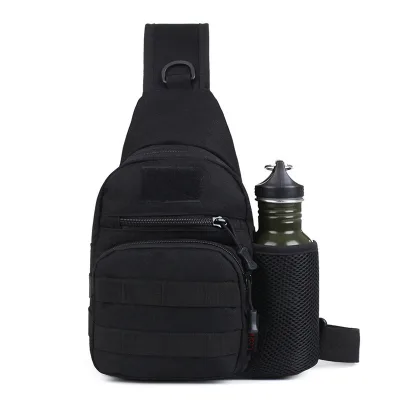
High-Quality Removable Tactical Waist Bag with Bottle Holder Custom Camo Tactical Bags
$13.00 - $15.00
MOQ: 50 Pieces

Customized Tactical Bag for Outdoor Cycling Traveling Sports and Climbing
$7.99 - $8.99
MOQ: 500 Pieces


Outdoor Tactical Bag Travel Backpack Hiking Backpack Double-Shoulder Bag
$18.99 - $19.99
MOQ: 500 Pieces



Comprehensive Sourcing Guide
Customized Logo Camo Bag Sourcing Guide
Buyers seeking customized logo camo bags must first navigate a market where product attributes vary significantly across listings. While some items feature polyester construction with candy color elements suitable for students, others utilize leather fabrics designed for tactical uses or outdoor camping. The observed product range includes models with specific dimensions like 193045cm or 3350.528CM, indicating that a single keyword search yields diverse structural profiles rather than a uniform item.
Procurement decisions should prioritize the specific usage environment, as the data shows distinct categories for sports, student life, and tactical applications. A bag intended for OL (office lady) environments may feature simplicity and contrast colors, whereas a model for camping might emphasize waterproofing or water-resistant coatings. Understanding these functional distinctions is critical before engaging suppliers, as the customization options for logos and the minimum order quantities often differ based on the intended application and material composition.
Product Scope and Observed Listing Signals
The product scope for customized logo camo bags encompasses a wide array of styles, from leisure wear with popular elements to rugged gear with multifunctional features. Listings indicate that customization is available for logos, allowing buyers to brand items for specific groups like junior high students or outdoor enthusiasts. However, the material composition varies, with some products listed as polyester while others specify leather, requiring buyers to verify the actual fabric before finalizing orders to ensure durability matches the intended use case.
Observed listing signals reveal significant variation in capacity and design elements, ranging from big capacity models to those with super capacity for extensive travel. Color options include yellow, camouflage, khaki, green, and black, suggesting that the "camo" descriptor may apply to specific patterns rather than a single universal look. Buyers must carefully review the fashion elements, such as candy colors or contrast colors, to ensure the aesthetic aligns with their target demographic, as the market offers everything from simple designs to complex tactical configurations.
Technical Specifications to Verify
Technical verification must begin with precise dimensional standards, as observed listings show conflicting size data ranging from 10cm * 15cm * 2cm to 36inch models. Buyers should confirm the exact length, width, and height requirements for their specific needs, noting that some products are defined by standard measurements like 302510 while others use imperial units. The bearing capacity also varies, with some items rated for 3-10 Kg, necessitating a clear definition of load requirements to prevent selecting a bag that cannot support the intended cargo weight.
Material properties and protective features require rigorous scrutiny, particularly regarding waterproofing claims which appear inconsistent across listings. Some products are explicitly marked as waterproof, while others carry a water-resistant coating or are noted as not waterproof at all. Additionally, hardness levels are described as medium soft, which impacts the structural integrity of the bag. Buyers must request physical samples to validate these specifications, ensuring the fabric and coating meet the environmental demands of sports, camping, or daily student use.
Compliance and Safety Documentation
Compliance verification is essential when sourcing bags intended for student or tactical use, as safety standards may differ based on the end-user demographic. While the provided data does not list specific certifications, buyers should request documentation confirming that materials meet regional safety regulations for textiles and leather goods. This is particularly important for products marketed to children or used in high-risk environments like tactical operations, where material flammability and chemical content must be strictly controlled to ensure user safety.
Documentation regarding the origin of goods is another critical compliance factor, as listings indicate origins in China and Fujian. Buyers should verify that the supplier can provide proof of origin and adherence to any import regulations relevant to their destination country. Although specific test results are not provided in the initial data, requesting third-party inspection reports for the specific batch is a prudent step to ensure that the claimed features, such as waterproofing or fabric strength, have been independently validated against industry norms.
Cost Drivers and Commercial Terms
Cost drivers for customized logo camo bags are heavily influenced by material selection, with leather and polyester presenting different price points and processing requirements. The minimum order quantity (MOQ) is a significant factor, as observed ranges span from 1 to 1000 units, with specific listings citing 500PCS as a standard threshold. Buyers must balance the unit cost against the volume required to meet their branding needs, understanding that lower MOQs might result in higher per-unit pricing or limited customization options.
Commercial terms and payment structures vary, with options like L/C and T/T commonly observed in the market. Lead times for samples are typically 5-7 days, but production timelines for bulk orders depend on the complexity of the customization and the supplier's current capacity. Buyers should clarify the total landed cost, including packaging details like one bag in one OPP bag or carton packing, as these logistical elements can impact shipping expenses and the overall budget for the procurement project.
Supplier Qualification and Quality Control
Supplier qualification should focus on their ability to handle customization requests and maintain consistent quality across different product models. The data indicates that logo customization is acceptable, but buyers must assess the supplier's process for applying these logos to ensure durability and precision. Verifying the supplier's track record with similar products, such as those used for sports or camping, helps confirm their capability to deliver items that meet specific functional and aesthetic requirements.
Quality control protocols must be established to address the variability in product attributes observed in the market. Since some listings show conflicting specifications for waterproofing and material hardness, implementing a pre-shipment inspection is vital. Buyers should define clear acceptance criteria for dimensions, bearing capacity, and fabric integrity before production begins. Regular communication with the supplier regarding the production status and sample approvals ensures that the final delivered goods align with the initial technical specifications and commercial agreements.
Long-Term Procurement Checks
Long-term procurement success relies on establishing a reliable supply chain that can adapt to changing market demands and product iterations. Buyers should monitor the supplier's ability to maintain consistent quality over multiple production runs, especially when dealing with complex customization like logos on different fabric types. Building a relationship that allows for flexible adjustments in order volume and design specifications will help mitigate risks associated with supply chain disruptions or sudden changes in material availability.
Continuous performance evaluation is necessary to ensure that the supplier continues to meet the evolving needs of the business. This includes tracking delivery times, response to quality issues, and the ability to provide updated product models that incorporate new fashion elements or safety standards. By maintaining a proactive approach to supplier management, buyers can secure a steady flow of customized logo camo bags that remain competitive in the market while adhering to the strict quality and compliance standards required for their specific applications.
FAQs
Can I add a customized logo to a camo bag order?
Yes, customized logo options are available for these bags, and logo customization is listed as acceptable across the product pages. You can typically submit artwork for printing or embroidery, though the exact method depends on the bag material. Sample time is generally 5 to 7 days, so you can review logo placement and quality before approving bulk production.
What is the minimum order quantity for customized logo camo bags?
The listed MOQ is 500 pieces for the featured product, though MOQ values across the category range from 1 to 1000 pieces depending on the model and customization level. Lower quantities may be possible for simpler logo applications or higher unit prices. Confirm the exact MOQ with the supplier before requesting a quotation.
What materials are used for these camo bags?
Polyester is the primary listed material for many models in this category, while some product pages reference leather fabric components. The choice affects durability, weight, and water resistance, with some items offering a water-resistant coating and others noted as not waterproof. Ask suppliers to confirm material composition for the specific model you plan to order.
How long does a Customized Logo Camo Bag sample take?
Sample time is listed at 5 to 7 days for the featured product. This covers producing a sample with your customized logo so you can verify color, stitching, and logo placement. Sampling cost and courier fees are typically separate from bulk pricing, and bulk production begins only after you approve the sample.
What payment terms are accepted for bulk camo bag orders?
L/C and T/T are the listed payment methods for these products. Letter of credit offers payment protection on large orders, while telegraphic transfer is common for deposits with balance before shipment. Confirm the accepted split, such as deposit percentage, directly with the supplier when negotiating your purchase contract.
Which sizes and capacities are available for camo bags?
Listed specifications include dimensions such as 19x30x45cm and 33x50.5x28cm for backpack-style models, plus smaller items around 10x15x2cm. Capacity ranges from big to super capacity, with a bearing capacity of 3 to 10 kg noted. Choose size based on intended use, whether student, travel, camping, or tactical purposes.
What colors and camo options can I choose from?
Listed color options include yellow, camouflage, khaki, green, and black, with camouflage being the signature pattern for this category. Some models feature candy color or contrast color fashion elements. Custom color matching may be possible at higher quantities, so confirm available patterns and dye lots with suppliers before ordering.
How are customized logo camo bags packed for shipping?
Packing methods listed include one bag in one OPP bag, one piece per polybag, box packing, and carton packing depending on the model. Individual polybag or OPP packing protects each bag during transit, while cartons are used for bulk shipment. Confirm carton dimensions and pieces per carton with the supplier to plan freight costs.