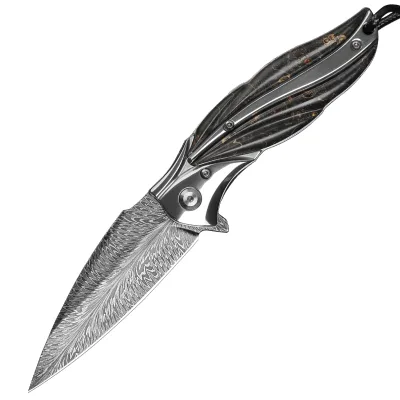
Source Damascus Steel Pocket Knife for Combat Hunting Camping
Explore 30 verified listings for the Damascus Steel Pocket Knife featuring folding options, stainless steel handles, and multi-purpose usage for combat, hunting, and camping. Compare specifications including blade length, weight, and customization options to find the right supplier.
Key considerations
Products List


Stainless Steel Knife Folding Knife Pocket Knife with Pocket Clip (#31126)
$1.00 - $10.00
MOQ: 600 Pieces


420 Stainless Steel Folding Knife Pocket Knife with Wooden Handle (#363)
$1.00 - $10.00
MOQ: 1200 Pieces

Stainless Steel Pocket Knife Folding Knife with Stainless Steel Handle (#31180)
$2.00 - $10.00
MOQ: 1200 Pieces




Comprehensive Sourcing Guide
Strategic Sourcing Guide for Damascus Steel Pocket Knives
Understanding Material Composition and Structural Integrity
When sourcing a Damascus Steel Pocket Knife, the primary focus must remain on the metallurgical properties of the blade and the structural integrity of the handle. Based on observed product attributes, the core material for the blade is explicitly identified as Damascus Steel. This material is characterized by a distinctive layered pattern created through the forging of multiple steel types, a process that historically enhances both aesthetic appeal and functional performance. However, in a B2B procurement context, the presence of the "Damascus Steel" label requires rigorous verification. Buyers must understand that the term describes a manufacturing technique rather than a specific alloy grade. The actual hardness, edge retention, and corrosion resistance depend on the specific high-carbon steels used in the lamination process.
The handle material observed in the supply chain varies significantly, with Stainless Steel and Wood being the two primary options documented. Stainless steel handles offer durability and resistance to environmental degradation, making them suitable for outdoor applications such as combat, hunting, and camping. Conversely, wooden handles provide a traditional aesthetic and a distinct tactile grip, though they may require more maintenance to prevent moisture absorption. The product specifications indicate a handle length of 116mm for certain models, suggesting a design optimized for leverage and control. The overall thickness of the blade is recorded at 4mm, a dimension that balances flexibility with the rigidity required for utility tasks. When evaluating potential suppliers, procurement teams should request mill certificates or detailed metallurgical reports to confirm the carbon content and the specific lamination count, as these factors directly influence the knife's longevity and performance under stress.
Technical Specifications and Dimensional Variability
A critical aspect of sourcing pocket knives is managing the variance in technical specifications across different product lines. The data indicates a wide range of dimensions, with blade lengths observed from 90mm up to 225mm. This variance suggests that the market offers everything from compact utility tools to larger tactical blades. For instance, one model is specified with a length of 225mm, while another compact variant measures 90mm. The overall length of certain folding models is noted at 20.5cm, with a closed length of 11.5cm, highlighting the importance of the folding mechanism in portable designs.
The following table summarizes the observed dimensional and structural specifications to assist buyers in matching product attributes to their specific operational needs:
| Specification Category | Observed Values | Application Implication |
|---|---|---|
| Blade Length | 90mm, 225mm | 90mm for compact carry; 225mm for heavy-duty tasks |
| Handle Length | 116mm | Standard grip size for control |
| Blade Thickness | 4mm | Robust construction suitable for prying or chopping |
| Overall Length | 20.5cm | Full-size tactical or utility configuration |
| Closed Length | 11.5cm | Compact storage and portability |
| Weight | 40g/45g, 57g | Lighter weights favor extended carry; heavier weights offer momentum |
| Folding Status | Folded, Unfolded | Indicates mechanism type and storage profile |
Buyers must verify that the "Length" specification refers to the blade only or the overall tool, as inconsistencies in reporting can lead to procurement errors. Furthermore, the standard length is sometimes listed as 22cm or 14.5cm, indicating that suppliers may use different measurement conventions. It is imperative to clarify whether these standards refer to the blade edge, the total length, or the handle length before placing an order. The "Thickness" of 4mm is a consistent observation for the heavier-duty models, which aligns with the "Combat Knife" and "Hunting Knife" usage categories.
Compliance, Certification, and Regulatory Verification
In the B2B sector, compliance is not merely a formality but a prerequisite for market access and liability protection. While the supplied data mentions a "prod_standard" of 225mm or 22cm, these appear to be dimensional references rather than safety or quality certifications. Buyers should not assume that a product labeled with a specific length automatically meets international safety standards. The origin of the products is listed as China and specifically Guangdong China, regions known for high-volume manufacturing. However, the country of origin does not dictate compliance status.
Procurement teams must actively verify that the knives meet the regulatory requirements of the destination market. This includes checking for compliance with local laws regarding blade length restrictions, which vary significantly between jurisdictions. For example, some regions prohibit blades exceeding a certain length for public carry, while others restrict specific locking mechanisms. The "Waterproof" attribute observed in the product list suggests a level of environmental resistance, but this claim must be substantiated through independent testing rather than supplier assertions. Similarly, the "OEM" logo capability indicates that the supplier can customize branding, but this does not imply that the product carries any specific third-party certification like ISO or CE.
Buyers should request evidence of compliance, such as test reports for edge retention, corrosion resistance, and structural integrity under load. If the knives are intended for military or law enforcement use, additional certifications regarding material safety and performance under extreme conditions will be necessary. The absence of explicit certification data in the product listing means that the onus is on the buyer to define the required compliance framework and audit the supplier's ability to meet it.
Cost Drivers and Pricing Dynamics
The pricing for damascus steel pocket knives is influenced by a complex interplay of material costs, manufacturing complexity, and customization requirements. The observed price range spans from 0.94 USD to 195 USD, a variance that reflects the difference between mass-produced utility items and high-end, hand-forged collectibles. The lower end of the spectrum likely corresponds to knives with simpler construction, perhaps using stainless steel handles and standard Damascus patterns, while the higher end may involve intricate forging techniques, premium wood handles, and extensive customization.
The "Customization" attribute is a significant cost driver. Suppliers offering OEM logo services and customizable packing can adjust the final price based on the complexity of the branding and the volume of the order. The "MOQ" (Minimum Order Quantity) range of 1 to 2000 units further illustrates the flexibility of the supply chain. Low MOQs allow for smaller batch testing but often come with a higher unit cost due to setup fees. Conversely, orders approaching the 2000-unit threshold may benefit from economies of scale, reducing the per-unit cost significantly.
Buyers must also consider the "Packing" costs. Options range from standard cartons to "at Your Request" custom packaging. Custom packaging solutions, such as branded boxes or protective cases, add to the overall cost but are essential for premium positioning. The "Weight" of the knife, ranging from 40g to 57g, also impacts shipping costs, particularly for large orders where freight charges are calculated by weight and volume. Understanding these variables is crucial for accurate budgeting and margin analysis.
Typical Applications and Usage Scenarios
The versatility of damascus steel pocket knives is evident in the diverse usage categories observed in the market. The primary applications include Combat Knife, Hunting Knife, Camping Knife, and Utility Knife. This broad spectrum indicates that the product is suitable for both tactical and recreational environments. The inclusion of "Office" in the usage list for certain models suggests a dual-purpose design, where the knife serves as a tool for daily tasks as well as outdoor activities.
The "Folded" and "Unfolded" attributes highlight the importance of portability. Folding knives are preferred for carry in pockets or bags, adhering to safety regulations in many public spaces. The "Portable" attribute reinforces this design philosophy. For hunting and camping, the "Waterproof" nature of the handle and blade is a critical feature, ensuring the tool remains functional in wet conditions. The "Hard" material classification for the handle suggests durability against impact and abrasion, which is essential for rugged outdoor use.
Buyers should align their procurement strategy with the intended end-use. Tactical buyers may prioritize blade thickness and locking mechanisms, while outdoor enthusiasts might focus on weight and corrosion resistance. The "Multi Functional Knife" classification indicates that some models may include additional tools, such as bottle openers or screwdrivers, adding value for camping and utility applications.
Supplier Evaluation and Quality Control Protocols
Evaluating suppliers for damascus steel pocket knives requires a multi-faceted approach that goes beyond price and lead time. The "prod_model" codes, such as CB059, CB-O0046, and SE-F115, serve as unique identifiers for specific product lines. Buyers should use these codes to track consistency across orders. A robust supplier evaluation process should include an audit of the manufacturing facility to verify the forging process and the quality control measures in place.
Quality control protocols must address the specific risks associated with damascus steel, such as delamination or uneven hardness. Inspections should verify the blade thickness, handle attachment strength, and the integrity of the folding mechanism. The "Condition: New" attribute confirms that the products are intended for resale or direct use, but buyers must ensure that the "New" condition is maintained through proper storage and handling during transit.
Given the "Customizable" nature of the products, suppliers must demonstrate the ability to maintain quality standards while executing custom orders. This includes verifying that the OEM logo application does not compromise the structural integrity of the handle or blade. Regular sampling and third-party testing are recommended to ensure that the products consistently meet the agreed-upon specifications.
Long-Term Procurement and Supply Chain Resilience
Sourcing damascus steel pocket knives is a long-term endeavor that requires building a resilient supply chain. The "prod_origin" of China and Guangdong indicates a mature manufacturing ecosystem, but buyers should diversify their supplier base to mitigate risks associated with geopolitical tensions or logistical disruptions. The "Lead Time" is not explicitly provided in the data, but it is a critical factor for inventory planning. Buyers should negotiate clear lead time commitments and establish contingency plans for delays.
The "Packing: Customizable" and "Packing: Carton" options offer flexibility in logistics. Standard cartons are cost-effective for bulk shipping, while custom packing enhances brand value but may increase handling time. Buyers should consider the total cost of ownership, including storage, distribution, and potential returns. The "Weight" and "Overall" dimensions are essential for calculating freight costs and warehouse space requirements.
Long-term success in this category depends on maintaining strong relationships with suppliers who can adapt to changing market demands. The ability to offer "Customized" colors and logos allows buyers to differentiate their products in a competitive market. However, this customization must be balanced with the need for consistent quality and reliable delivery schedules. By focusing on these strategic elements, buyers can build a sustainable procurement strategy for damascus steel pocket knives that delivers value to their customers and supports their business growth.
FAQs
What materials are used for the blade and handle?
The blade is made of Damascus Steel, while handles vary between Stainless Steel and Wood. This combination ensures durability and aesthetic appeal for combat, hunting, and camping applications.
Can I customize the logo and packaging for my order?
Yes, customization is available for both OEM logos and packing. Buyers can request specific packaging solutions, ranging from standard cartons to custom designs tailored to their brand requirements.
What are the typical dimensions for these pocket knives?
Blade lengths range from 90mm to 225mm, with a consistent thickness of 4mm for robust models. Overall lengths vary, with some folding models measuring 20.5cm when open and 11.5cm when closed.
How does the minimum order quantity affect pricing?
The minimum order quantity ranges from 1 to 2000 units, influencing the unit cost significantly. Lower MOQs allow for smaller batch testing, while larger orders near 2000 units benefit from economies of scale.
Are these knives suitable for office and utility use?
Yes, specific models are designed for office, utility, and multi-functional tasks alongside combat and hunting. Their compact folding design and portable nature make them versatile tools for various daily activities.
Where are these knives manufactured and what is the origin?
The products originate from China, with specific manufacturing hubs located in Guangdong. Buyers should verify local compliance regulations as origin does not automatically dictate safety certification status.